
- Release Year: 2023
- Platforms: Nintendo Switch, Windows
- Publisher: Morning Shift Studios, Ultimate Games S.A.
- Developer: Morning Shift Studios
- Genre: Adventure, Simulation
- Perspective: Third-person
- Game Mode: Single-player
- Gameplay: Puzzle elements
- Setting: Fantasy
- Average Score: 48/100
Description
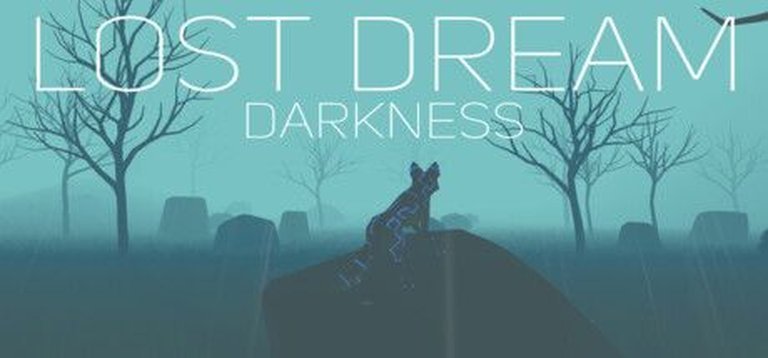
Lost Dream: Darkness is a meditative adventure simulation game where players control a mythical fox in a haunting fantasy setting. Emphasizing atmospheric exploration and minimal interactivity, the short experience involves navigating through dark, serene environments to escape encroaching shadows and move toward the light, with puzzle elements and a slow-paced, Zen-like journey.
Gameplay Videos
Lost Dream: Darkness Guides & Walkthroughs
Lost Dream: Darkness Reviews & Reception
christcenteredgamer.com (48/100): I don’t know what the purpose of Lost Dream: Darkness is. It felt like a school project.
Lost Dream: Darkness: A Review of an Empty Promise
Introduction: The Allure of the Void
In the vast, often-overlooked corridors of digital storefronts, certain games materialize not as bold statements but as faint whisper—titles that promise a serene escape, a meditative journey, or a fleeting emotional resonance. Lost Dream: Darkness is one such whisper, a game that entered the scene in April 2023 on Nintendo Switch and Windows with the stated aim of delivering a “silent story about a world eaten up by a sudden Darkness.” Its premise, centering on a fox’s trek from gloom to light, immediately evokes comparisons to masterpieces of atmospheric storytelling like Journey or Firewatch. Yet, a critical examination of its development, execution, and reception reveals a profound dissonance between aspiration and reality. This review argues that Lost Dream: Darkness is not merely a flawed game but a symptomatic case study in indie development: a technically competent shell that collapses under the weight of its own emptiness, failing to translate its beautiful aesthetic into a meaningful interactive experience. Its legacy, if any, will be as a cautionary tale about the perils of prioritizing vibe over substance.
Development History & Context: The Dream Factory
The Studio and its Output
Lost Dream: Darkness was developed by Morning Shift Studios and published by Ultimate Games S.A., a pairing that appears across several low-profile digital releases. Morning Shift Studios is an obscure indie team with a portfolio suggesting a focus on short, atmospheric, and mechanically simple projects. The Lost Dream series itself is a rapid-fire sequence: Lost Dream (2021), Lost Dream: Stars (2022), Lost Dream: Memories (2022), Lost Dream: Overgrown (2023), and Dream (multiple years). This prolific output, with titles often released within months of each other, points to a development model prioritizing volume and iterative prototyping over deep, crafted experiences. Darkness fits squarely into this pattern—conceived, developed, and ported with apparent speed.
Technological Constraints and Design Philosophy
The game was built in Unity, a common engine for indies, and released at a low price point ($4.99 on Switch, cheaper on PC). Its specifications on MobyGames reveal key design choices: a “Meditative / Zen” pacing, “Puzzle elements,” “3rd-person (Other)” perspective, and a “Fantasy” setting. Crucially, it lacks a saving system, a deliberate decision the developers noted, framing the game as a single-sitting, ~2-hour experience. This constraint, while aligning with a “zen” philosophy, severely limits accessibility and player agency. The Switch port, as noted by ChristCenteredGamer, suffers from significantly downgraded visuals (“flat green ground” versus PC’s “blades of grass”), indicating performance compromises typical of rushed hardware adaptations.
The 2023 Indie Landscape
Lost Dream: Darkness arrived during a golden age for atmospheric indie adventures. Titles like Sable (2021), The Artful Escape (2021), and the ongoing influence of Journey (2012) had established high benchmarks for emotional storytelling through environments. In this context, Darkness‘s lack of narrative depth, interactive world, and mechanical innovation made it stand out for all the wrong reasons. It felt like a relic of an earlier, less demanding era of “walking simulators,” released into a market that had evolved beyond bare-minimum environmental traversal.
Narrative & Thematic Deep Dive: A Silent Story Without Words
Plot Summary: The Unfolding Trek
The official description states: “Lost Dream: Darkness tells a silent story about a world eaten up by a sudden Darkness. Get up and go on a journey towards the light. The world will get brighter step by step.” In practice, the narrative is almost nonexistent. The player controls a fox (described as “mythical” or “futuristic” in some reviews) in a rain-drenched, gloomy starting area. A single text prompt (“it’s been raining too long”) is the only explicit narrative beat. The goal is implied: move forward. As the fox progresses through a linear series of zones (forests, caves, mountains), the lighting gradually shifts from dark and stormy to warm and sunny. The “light” is both a literal environmental change and a metaphorical goal. There is no dialogue, no cutscenes, no NPCs, and no explicit explanation for the Darkness, the light, or the fox’s purpose. The ending is abrupt, providing no resolution or thematic payoff.
Themes: Isolation and the Search for Light (But Why?)
The game attempts to explore isolation, perseverance, and a journey from despair to hope. The solitary fox in a vast, empty world visually represents loneliness. The transitioning environment from dark to light symbolizes a move from sadness to optimism. However, these themes are utterly unsubstantiated. Without character development (the fox is a blank slate; any “friend” mentioned in the broader Lost Dream series is absent here), narrative context, or emotional beats, the symbolism is inert. The journey feels like a mechanical process—a change in lighting—rather than an emotional arc. As Nintendo Blast (in Portuguese) critically noted, atmospheric elements like allegories or moral lessons can only enrich what is already pleasant; they cannot compensate for fundamental failures in script and direction. Here, they are the only content, and they are too vague to register.
Dialogue and Environmental Storytelling: The Great Silence
The game employs a “silent protagonist” approach, common in atmospheric titles. But where games like Journey or Firewatch use environmental details—ruins, graffiti, audio logs, subtle animations—to build lore and emotion, Lost Dream: Darkness offers a seemingly deliberate void. Its landscapes are described as “barren” (Nindie Spotlight), “generic” (AdventureGameDB analysis), and lacking “landmarks to discover, no secrets to uncover, no history to piece together” (GameArchives review). The world is not telling a story; it is merely being a backdrop. This turns the intended strength—silence—into a critical weakness. The “silent story” is not told; it is absent.
Gameplay Mechanics & Systems: The Illusion of Interactivity
Core Gameplay Loop: A Linear Stroll
The core loop is brutally simple: move the fox forward. The controls (run, jump, attack button) are functional, as noted by several critics (MKAU Gaming, Pure Nintendo). However, “puzzle elements” are virtually nonexistent. Obstacles consist of simple gaps to jump over, low walls to climb, or bodies of water that cause instant death (and a reset to the last checkpoint) if swum into. There is no inventory, no skill progression, and no collectibles. The “attack” button, present on the controller, has no discernible function, a point of specific criticism from MKAU Gaming (“I would love to see a story of some kind added to the game and maybe something to actually use the attack button on”). The experience is a guided tour, not a game in any traditional sense.
Absence of Systems
– Combat: None. The ESRB listing for “Mild Fantasy Violence” is baffling, as no enemies or hostile entities are present to interact with. As Cheryl Gress of ChristCenteredGamer wondered, “I’m not sure why fantasy violence is mentioned by the ESRB.”
– Progression: Purely environmental. No upgrades, abilities, or stats.
– UI/HUD: Nonexistent. No map, no health, no objectives. This aligns with the “immersion” goal but offers zero guidance, contributing to feelings of aimlessness.
– Save System: Nonexistent, enforcing the single-session design but also making the game’s 15-30 minute length (consistently reported as much shorter than the advertised 2 hours) a mandatory commitment with no pause.
Innovation and Flaws: A Missed Opportunity
The only potential “innovation” is the pure, unadulterated commitment to a meditative, non-interactive stroll. However, this approach only works if the journey itself—the visuals, sound, and subtle environmental changes—is meticulously crafted to hold attention and evoke feeling. Lost Dream: Darkness fails this test. Its landscapes are visually pleasant but homogenous and “barren.” The lack of any meaningful interaction—no objects to examine, no creatures to observe, no puzzles that engage the mind—means the player’s mind inevitably turns to the game’s profound lack of content. The “flaw” is not a bug but the core design: a walking simulator with nothing to walk to or through meaningfully.
World-Building, Art & Sound: A Pretty, Empty Postcard
Setting and Atmosphere: Beauty Without Depth
The game’s world is a series of自然 and fantastical environments: rainy forests, misty caves, sunlit meadows. The shift from “Darkness to the light” is the central atmospheric conceit. Visually, the game uses a soft, low-poly aesthetic with a pastel color palette that is undeniably pleasing and calming. Screenshots show a fox model with decent animations against simple but colorful backdrops. However, as multiple reviews state, this beauty is derivative—evoking Firewatch, The First Tree, and Journey without capturing their essence. The world feels like a generic asset collection, not a lived-in space. There is no sense of history, ecology, or narrative embedded in the geography. It is a series of pretty screens, not a coherent, intriguing place.
Visual Direction: Style Over Substance
The art style is the game’s strongest, yet most criticized, asset. It is competent but unoriginal. The fox is cute and animates well. The lighting transition is the headline visual feature. But the environments are sparse, lacking detail, variety, and iconic set-pieces. The “massive world” claimed in the description feels small and repetitive because there is nothing to do in it. The visuals serve only to be looked at, not interacted with, which fundamentally undermines the interactive medium of video games.
Sound Design and Music: The Sole Redeemer
The soundscape and soundtrack are universally cited as the game’s only unqualified positive. The Steam description promises “high quality soundtracks along with a bunch of high quality ambience sounds,” and reviews largely concur. The music is soothing and atmospheric, effectively complementing the intended meditative tone. Ambient sounds—rain, birds, wind—provide necessary aural texture in an otherwise silent world. However, as GameGrin noted, “if it wasn’t for its sound design and convincing nature setting, this game might be getting kicked off a mountain.” The sound is a band-aid on a gaping wound of emptiness. It makes the silence less awkward but cannot create meaning where none exists.
Reception & Legacy: A Dream Quickly Forgotten
Critical Reception: Overwhelmingly Negative
Lost Dream: Darkness holds a MobyGames critic score of 34% (based on 11 ratings) and similarly low scores across aggregators. The consensus is scathing and uniform in its criticism:
– 3rd Strike: “a bland walking simulator that offers no story, looks horrible, and has no retributing features. It is a shameless cash grab that should be avoided.”
– Movies Games and Tech: “one of the worst games I have ever played… pure boredom.”
– * LadiesGamers:* “This was not the meditation session I was looking for, leaving me more confused by the presentation of the game than relaxed.”
– Pure Nintendo: “no purpose, no direction, and an abrupt, unsatisfying ending.”
– Nindie Spotlight: “Is simply meandering through somewhat barren landscapes really ‘gameplay’, no matter how serene?”
The few relatively less negative reviews (MKAU Gaming, GamerBraves at 50%) still frame it as a “relaxing” but utterly bare-bones experience, with GamerBraves suggesting it could be improved with “more interactivity and a clearer sense of direction.” The word “boring” appears in nearly every review. The ChristCenteredGamer review provides concrete evidence: a completion time of 15 minutes, drastically shorter than the claimed 2 hours, and significant visual downgrades on Switch.
Commercial Performance: A Niche Failure
The game’s commercial success is opaque but likely minimal. Its low price, short length, and inclusion in bundles (like the “Morning Shift Collection” on Steam) suggest it was not a standalone hit. Its presence on the Nintendo eShop at $4.99 (or on sale for $2.49) positions it as an impulse buy for unsuspecting customers searching for “relaxing games” or “fox games.” The near-total absence of player reviews (1 rating on MobyGames, none on Metacritic) indicates minimal player engagement beyond the initial, refund-eligible playthrough.
Influence and Legacy: Nonexistent
Lost Dream: Darkness has no discernible influence on the industry. It did not pioneer a mechanic, define a genre, or spark critical discourse beyond its own failure. It represents a counter-example to successful atmospheric indies. Its legacy is confined to being a data point in discussions about:
1. The saturation of the “walking simulator” market with low-effort entries.
2. The importance of substance to support style.
3. The risks of the “short experience” model when that experience has no memorable moments.
The continued existence of the Lost Dream series (Stars, Memories, Overgrown) suggests Morning Shift Studios is iterating on a failing formula, but without addressing the core critiques of emptiness, these sequels are unlikely to alter its reputation.
Conclusion: A Beautiful Shell, an Empty Core
Lost Dream: Darkness is a paradox: a game that is both technically functional and artistically bankrupt. It achieves its minimal technical goals—it runs, it has a fox that moves, it transitions lighting—but utterly fails as an interactive narrative experience. Its world is a postcard without a story, its journey a path without a purpose, and its silence a void filled only by a decent soundtrack.
In the grand taxonomy of video games, it scarcely qualifies as one. It is an interactive screensaver with a premise. The critical abyss it fell into (34% aggregate) is not the result of jagged edges or game-breaking bugs, but of a fundamentalmisunderstanding of what makes a meditative game compelling. Meditation requires a focus, a point of contemplation. Lost Dream: Darkness provides only an empty room and a changing light bulb.
Its place in video game history is as a footnote—a cautionary label on the shelf of indie development. It demonstrates that beautiful visuals and a calming soundtrack are not sufficient; a game must offer reason to engage, meaning to traverse its spaces, and substance to justify its existence as a purchasable product. For every player who might find a moment of peace in its 15-minute runtime, a dozen more will feel cheated by the promise of a “dream” that was never built. In a library overflowing with genuine, heartfelt, and mechanically thoughtful indie adventures, Lost Dream: Darkness is a title best forgotten, a darkness from which no meaningful light emerges.
Final Verdict: 2/10 – A technically adequate but substantively void experience that fails to justify its own existence beyond the most transient of aesthetic appreciations.