
- Release Year: 2018
- Platforms: PlayStation 4, Windows
- Publisher: Active Gaming Media Co., Ltd.
- Developer: MercuryStudio
- Genre: Action, Driving, Racing
- Perspective: Behind view
- Game Mode: Single-player
- Gameplay: Boost system, Direct control, giant robot, Guided weapons, Mecha, Robot Customization, Shooter, Vehicular combat
- Setting: Futuristic, Sci-fi
- Average Score: 74/100
Description
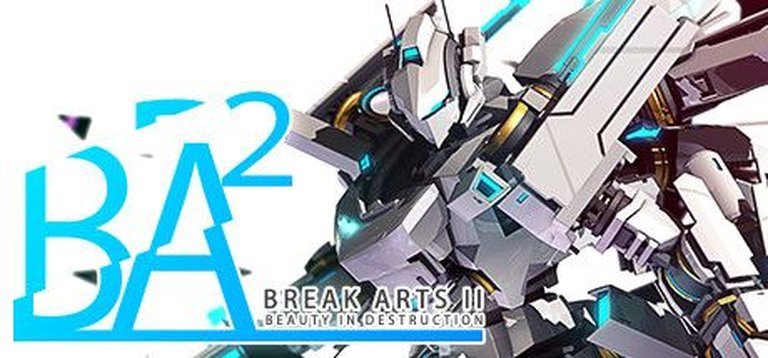
Set in a futuristic sci-fi world, Break Arts II is an action-packed racing game where players pilot and extensively customize giant mecha in high-speed ‘cyber battle races’ that blend vehicular combat, shooting mechanics, and competitive modes like online PvP and time-attack, emphasizing deep robot personalization and fast-paced gameplay.
Gameplay Videos
Where to Buy Break Arts II
PC
Break Arts II Free Download
Break Arts II Cracks & Fixes
Break Arts II Patches & Updates
Break Arts II Guides & Walkthroughs
Break Arts II Reviews & Reception
monstercritic.com : Break Arts II is a dream come true for any fans who have big ideas and want to create their own robotic units…
steambase.io (74/100): Break Arts II is a dream come true for any fans who have big ideas and want to create their own robotic units, as the customization has incredible possibilities.
metacritic.com (75/100): Break Arts II is a dream come true for any fans who have big ideas and want to create their own robotic units, as the customization has incredible possibilities.
store.steampowered.com : Break Arts II is a dream come true for any fans who have big ideas and want to create their own robotic units, as the customization has incredible possibilities.
Break Arts II: The Dream of the Customizable Mech Racer, Stalled by Its Own Engineering
Introduction: A Vision of Metallic Grandeur
The siren call of the giant robot—mecha—has echoed through gaming for decades, from the tactical grids of Super Robot Wars to the frenetic duels of Titanfall. Yet, the specific fantasy of building your own metallic steed from the ground up and then piloting it at breakneck speeds through futuristic circuits while blasting opponents into scrap metal remains tantalizingly rare. Break Arts II, the 2018 PC and PlayStation 4 release from Japanese indie studio MercuryStudio (published by PLAYISM), arrives as the sequel to a mobile original, promising precisely this: a “cyber battle racing” symphony where creativity and combat collide. Its thesis is audacious: to fuse the boundless artistic expression of a sandbox construction toy with the high-octane, competitive thrill of arcade racing. The result, however, is a game of profound and fascinating dichotomy—a title where the garage is a masterpiece of engineering, but the track is a bumpy, ill-signposted road. This review will argue that Break Arts II is an essential, flawed artifact for a specific niche, whose incredible depth of customization is ultimately shackled by inconsistent core mechanics, opaque systems, and a design philosophy that often seems at war with itself.
Development History & Context: From Pockets to PCs
The Studio and Its Origins: MercuryStudio, a small Japanese development team, laid the groundwork with the original Break Arts for mobile devices. The smartphone iteration established the core loop of robot racing with basic customization, but it was always a proof-of-concept for a grander vision. With Break Arts II, the studio leveraged the greater power and flexibility of PC (and later PS4) to realize that vision, dramatically expanding the graphics and, most critically, the “entirely new game system” centered on deep customization. The move to the Unity engine provided a versatile foundation, though its use also highlights the budget constraints typical of indie projects—the visuals are stylish and性能, but not technically ambitious.
The 2018 Gaming Landscape: Releasing in February 2018, Break Arts II entered a crowded but fertile indie scene. It coincided with a resurgence of arcade racers (Redout, Fast RMX) and the enduring popularity of physics-based mayhem like Rocket League. However, its specific blend of Wipeout-style anti-gravity racing with Armored Core-esque mech building placed it in a niche that had few direct competitors. The gaming world was also increasingly embracing player creativity through robust mod support and customization (as seen in games like Minecraft or Terraria), a trend Break Arts II directly taps into with its parts-based system.
Vision vs. Constraints: The developers’ vision was clear: empower players to create “the most awesome robot you can imagine.” The technical constraint was translating a mobile-friendly, touch-optimized interface into a precise PC control scheme, a transition the game never fully smooths over. The ambition to include “unfolding” parts and complex animations on a modest indie budget is commendable, but it also contributes to a visual clutter that can hamper readability during races—a critical flaw for a speed-centric game.
Narrative & Thematic Deep Dive: The Race is the Story (Almost)
Break Arts II is not a game driven by narrative. There is no plot, no characters with arcs, and no world to save. The “story” is purely procedural: you are an “Artist” (the game’s term for pilots) competing in cyber battle racing tournaments. The thematic core is pure, unadulterated creative expression and competitive dominance.
- The Theme of Creation: Every system revolves around building. The preamble, “Be artistic, be destructive,” perfectly encapsulates the duality. The satisfaction isn’t derived from a cutscene but from watching a bizarre, self-designed mech with spinning greebles and asymmetric weapon mounts finally navigate a corner smoothly or land a killing blow. It’s a game about the pride of engineering.
- Lack of Traditional Narrative: This is a significant and likely intentional omission. Where games like The Binding of Isaac (cited in the provided sources as a genre touchstone for customization and replayability) weave dark, personal tales, Break Arts II is abstract and sport-focused. Its “lore” is limited to the names of parts and the futuristic aesthetic of the tracks. This isn’t a failure but a design choice: the narrative is the player’s own journey from a clunky prototype to a finely-tuned champion.
- Humor and Tone: The Steam description promises humor, and it delivers in small, charming ways—the victory podium poses, the whimsically named parts (e.g., “Spike Tank” modules), and the sheer, joyful absurdity possible in the editor. It’s a tone of cheerful anarchy, far from the grimdark of many sci-fi settings.
Gameplay Mechanics & Systems: A Garage Built on Quicksand
This is where the game’s brilliance and its frustrations become inextricably fused.
The Core Racing Loop: Races are third-person, behind-the-mech views on winding, futuristic tracks. A defining, controversial mechanic is auto-acceleration. The player controls steering (left/right), a primary boost (forward), a novel side-boost (dodging/positioning), and weapon firing. This design aims to let players focus on strategy and combat, but it creates a fundamental disconnect. Speed is not a variable you control directly; you are always at the mercy of the track’s layout and your mech’s inherent acceleration stat. This leads to a constant, frustrating feeling of having either too much or too little speed in corners, a sentiment echoed in numerous Steam discussions.
The Crown Jewel: The Part-Based Construction System: This is where Break Arts II achieves legendary status among its fans. The customization is not merely cosmetic; it’s a full stat and functional simulator.
* Parts & Stats: Every component—head, core, arms, legs, weapons, boosters, even “decorative” parts—affects a web of stats: speed, acceleration, turn speed, boost energy, armor, weapon damage, reload time, and more.
* Kinetic Parts: The revolutionary feature is that many parts have moving components. Legs might fold, weapons might rotate or telescope, decorative elements might spin. These animations can be triggered by actions (reloading, boosting, braking), allowing for stunning, personalized visual feedback that makes your mech feel alive.
* Weapon Crafting: Weapons are not pick-ups; they are built from modules (barrels, grips, magazines, etc.), each modifying damage, fire rate, ammo capacity, and projectile behavior. This leads to an immense variety, from rapid-fire SMGs to slow, devastating shotguns and mine-layers.
* The Min-Maxer’s Paradise: As community member “Mayor Ignaeon” notes, the system allows for extreme min-maxing. You can build a fragile, lightning-fast speedster with barely any weapons, relying on boost and side-boost to win, or a lumbering tank designed to blow everyone away. The depth is, as COGconnected states, “simply sensational.”
The Flaws in the Chassis: The game’s systems are riddled with design decisions that actively work against the player’s enjoyment.
1. Opaque Systems & No Tutorial: The game provides almost no guidance. The relationship between part weight, center of gravity, and handling is a black box. Players must experiment through failure, a process the Jeuxvideo.com critic found “laborieuse” (tedious). You spend more time crashing and rebuilding than racing.
2. Questionable Balance & “Boost Spam”: The horizontal boost (side-boost) and the primary boost are so powerful and frequently available that racing often devolves into a boost-button-mashing contest with frequent, jarring collisions. The “boost too present” critique from Jeuxvideo.com is apt; it can dominate strategy in a way that feels less like racing and more like chaotic demolition derby with extra steps.
3. Enemy AI & Presentation: In single-player, opponent mechs are rendered as simple, glowing diamonds. As COGconnected’s review laments, this is a catastrophic failure of the game’s own premise. A huge part of the fun in a customization-focused title is seeing other players’ (or AI’s) creations. Seeing a diamond instead of a rival’s lovingly crafted monstrosity is deeply anticlimactic and severs the connection between your build and the competition.
4. Weapon Design & Satisfaction: While weapon variety exists, many projectiles are “auto-guided” (homing missiles), which reduces skill expression. Direct-fire weapons often feel unsatisfying due to unclear hit detection and enemy hitboxes. The combat is present but rarely feels as tactical or impactful as the racing or building.
5. Control Issues: The default keyboard/mouse layout is widely panned. The absence of custom keybindings (a noted community request) forces players to adapt to a scheme that feels imprecise for the twitch reactions the game demands. Controllers are strongly preferred, as the analog input better suits the steering and boost management, but even then, the auto-acceleration creates a persistent sense of not being fully in control.
World-Building, Art & Sound: A Gorgeous, Empty Circuit
Break Arts II presents a sleek, cyberpunk-inspired aesthetic that is one of its most universally praised aspects.
* Visual Design: The tracks are beautiful, neon-drenched landscapes floating in digital space or on alien worlds, with impressive draw distances for an indie title. The mech designs, both in presets and player creations, are fantastic, blending mecha realism with exaggerated, anime-inspired proportions. The “beautiful visual design” (Steam description) is undeniable. However, this beauty is sometimes a liability; particle effects from weapons, boost trails, and track lighting can create a cluttered visual field that makes judging turns and obstacles difficult, a major point of frustration in player discussions.
* Sound Design: The soundtrack consists of upbeat, electronic, and rock-influenced tracks that suit the high-energy racing well. Sound effects for weapons, crashes, and boosts are serviceable but lack the impactful crunch of AAA titles. The “humor” shines through in small audio cues, like quirky voice lines for certain parts (though these are limited). Overall, the sound is effective but not memorable.
* Atmosphere & World: There is no cohesive world. Each track is a disconnected arena with a distinct visual theme (cyber-city, lava canyon, organic cave) but no environmental storytelling or context. The atmosphere is one of isolated, stylish competition—you are alone on the track against diamond-shaped phantoms. The lack of a bustling pit area, other pilots, or any sense of place beyond the race makes the world feel thin, a mere backdrop for the core loop.
Reception & Legacy: A Cult Classic in the Making
Critical Reception: Reviews at launch were mixed-to-positive, consistently highlighting the same dichotomy.
* COGconnected (78/100): Called it a “dream come true” for customization fans but criticized the “clunky controls,” non-existent tutorials, and diamond opponents.
* Jeuxvideo.com (14/20 or 70/100): Praised the “sensationnel” creation system but found the experience “laborieuse” due to bad AI, design choices (auto-weapons, boost), and lack of tutorials.
* Cubed3 (70/100): Noted its “deceptively complex” nature and “dedicated hardcore fan-base” potential, but found combat “unsatisfying at times.”
* Destructoid (60/100): Most harshly, stating it “feels like a great mecha customization system in search of a game.”
The Metacritic aggregate for PC currently shows “Generally Favorable” user reviews (7.5/10 from a small sample), while Steam shows a “Mostly Positive” rating (74% of 661 reviews) as of late 2025. This indicates a game that resonates deeply with a subset of players while alienating others.
Commercial Performance & Community: Sales data is not public, but the Steam numbers (hundreds of reviews, steady activity years later) suggest modest but sustainable commercial success typical of a niche indie. The community that formed around it is passionate and supportive, as seen in the Steam discussions filled with build sharing, balance debates, and tips (“try a lighter mech,” “turn off motion blur”). The developer, MercuryStudio, has maintained engagement with bug reports and balance requests (the pinned “Bug Reports” and “Requesting Opinions on Balance Adjustment” threads). This active, if small, forum presence is a sign of a cult following.
Legacy and Influence: Break Arts II has not broken into the mainstream, but its legacy is secure as the definitive mech-building racer for a generation of players. It carved out a unique space between Armored Core (pure combat/construction) and Wipeout (pure racing). Its influence is likely indirect: it demonstrated the appeal of extreme mechanical customization in a competitive context. Its sequel, Break Arts III (listed in MobyGames’ related games, slated for 2025), is a direct testament to its cult status. It will be remembered not for revolutionizing a genre, but for perfecting a specific, beloved fantasy better than any game before or since, flaws and all.
Conclusion: A Fragile Masterpiece of Engineering
Break Arts II is a game of stunning contradictions. It offers perhaps the most liberating and detailed mech construction system ever put into a playable game, a digital toybox that sparks joy with every new, bizarre creation. Yet, this masterpiece of a garage is used to build vehicles for a race that is often confusing, unbalanced, and visually obscured. The core racing experience is undermined by auto-acceleration that removes player agency, AI opponents that are literally faceless diamonds, and a combat system that feels both overpowered and unsatisfying.
Its place in video game history is not that of a classic, but of a specialist’s classic. It is the Dwarf Fortress of racing games: beloved in spite of, or perhaps because of, its impenetrable complexity and brutal learning curve. For the player willing to endure the tutorials-that-aren’t, the controls that demand a controller, and the races where you spend more time rebuilding than racing, Break Arts II offers an unparalleled reward: the pure, unadulterated pleasure of piloting a machine that is, in every bolt and antenna, unequivocally yours.
For the vast majority seeking a polished, accessible racing game? Look to Redout or Wipeout. But for the tinkerer, the engineer, the artist who dreams of piloting their own surreal, spike-laden, boost-spamming metal dream? Break Arts II remains a glorious, frustrating, and ultimately essential monument to a very specific and wonderful kind of gaming fantasy. Its legacy is a promise: that one day, a game might marry this level of creative freedom with the tight, fair, and exhilarating gameplay it so clearly aspires to. Until then, we have this flawed, shining gem.