
- Release Year: 2020
- Platforms: Linux, Macintosh, Windows
- Developer: Vladislav Khorev
- Genre: Adventure
- Perspective: 1st-person
- Game Mode: Single-player
- Gameplay: Multiple endings, Visual novel
- Setting: Asia, Contemporary, Moscow
Description
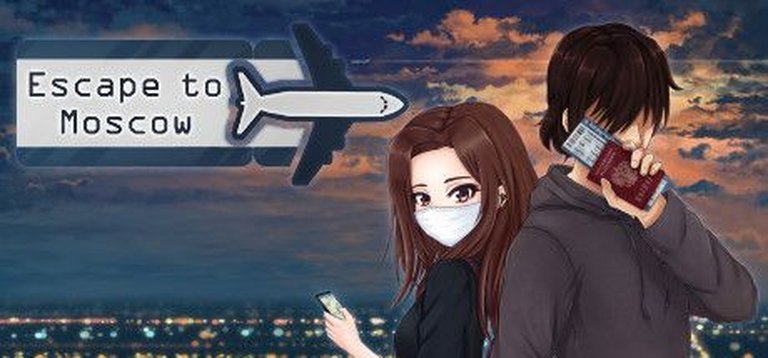
Escape to Moscow is a visual novel adventure set in contemporary Moscow, Russia, where players assume the role of Semyon, a freelance IT specialist who meets a girl from Dagestan online and helps her escape from her home, embarking on a journey with multiple endings influenced by player choices.
Gameplay Videos
Where to Buy Escape to Moscow
PC
Escape to Moscow Guides & Walkthroughs
Escape to Moscow: A Digital Journey Across Russia’s Cultural Fault Lines
Introduction: The Intimacy of a National Divide
In the vast and often homogenous landscape of visual novels, Escape to Moscow emerges not as a grand epic but as a quiet, intensely personal drama that uses its narrow narrative frame to dissect the vast socio-cultural chasms within modern Russia. Released free-to-play in December 2020 by the seemingly singular effort of Vladislav Khorev under the Fish Run Games banner, this Ren’Py engine title transcends its humble origins to become a fascinating case study in indie storytelling. Its premise—a freelance IT specialist from an unspecified locale aiding a young woman from Dagestan to flee her home and journey to the capital—is deceptively simple. This review will argue that Escape to Moscow’s true significance lies not in its technical prowess or genre innovation, but in its raw, player-driven exploration of trust, regional prejudice, and the fraught logistics of escape within a contemporary authoritarian state. It is a game that asks whether a connection forged in chat windows can survive the brutal reality of Russian geography and society, offering a poignant, if flawed, window into a world rarely depicted in interactive fiction.
Development History & Context: The Solo Dev and the Ren’Py Revolution
The Vision of Vladislav Khorev
The development history of Escape to Moscow is the history of Vladislav Khorev, who is credited as Producer, Developer, Scriptwriter, and part of the Sound Design team. This is a classic “one-person game” or a very small collaborative project, with credits also listing Darya Frolova (character sprites), Maria Sviridova (character sprites), Ssurikin, and others for art, alongside composer Romull and motion designer Dmitry Zhuravskiy. The project was built using Ren’Py 7.3.5.606, the industry-standard, open-source visual novel engine. This choice is profoundly significant: it democratized development, allowing a narrative-driven project with specific cultural ambitions to be realized without the resources of a major studio. The game’s existence is a testament to the power of accessible tools for telling regionally specific stories that the global industry often ignores.
Technological Constraints as Creative Catalyst
The technical specs (a 1.6 GHz processor, 2GB RAM requirement) place it firmly in the realm of accessible, low-fidelity indie projects. There is no 3D rendering, no complex physics—the “gameplay” is entirely textual and static-image based, with a first-person “perspective” achieved through descriptive text and character/background art. This constraint became a creative strength. The fixed/flip-screen visual style, common in classic adventure games, is repurposed here to create a sense of isolation and sequential progression, mirroring the protagonist Semyon’s own step-by-step navigation of an unfamiliar and hostile world. The “first-person” perspective is not a shooter’s POV but an immersive narrative lens, placing the player directly in Semyon’s mental and emotional space.
The 2020 Gaming Landscape: A Niche for Intimacy
Released in December 2020, the game entered a world still gripped by the COVID-19 pandemic, a time when digital connection was both a lifeline and a source of profound isolation. This context inadvertently amplified the game’s central theme: a relationship born and nurtured entirely online being tested by the physical world. Furthermore, the visual novel genre was experiencing a golden age on platforms like Steam and itch.io, with Ren’Py serving as its engine of choice. Escape to Moscow arrived not as a AAA contender but as a piece of “micro-literature” for a platform-savvy audience seeking narrative depth over mechanical complexity. Its competition wasn’t Cyberpunk 2077 but other hyper-specific indie VNs like Butterfly Soup or Heart of the Woods.
Narrative & Thematic Deep Dive: The Algorithms of Trust
Plot Architecture: A Road Movie in Text Form
The official synopsis provides the skeleton: Semyon, a freelance IT specialist, meets a girl from Dagestan online. Their relationship swiftly evolves beyond chatting; he agrees to help her escape her home. Their “amazing adventure” is a tense, multi-location odyssey from the North Caucasus to Moscow. The narrative structure is a branching tree where “choices you make” determine the outcome. Crucially, it promises “multiple bad endings and only one good ending,” immediately framing the player’s journey as a moral and logistical gauntlet rather than a power fantasy.
Characters as Cultural Artifacts
Semyon is an everyman, defined by his profession (digital, nomadic) and his贯穿始终的 agency—he is the actor, the planner. His anonymity is a narrative tool, allowing the player to project themselves onto him. The girl (whose name is withheld in promotional material, a fascinating choice that both universalizes her and reflects her status as a fugitive) is the emotional and thematic core. She is not a passive princess but a person with a traumatic past, navigating a society where her regional origin (Dagestan, a predominantly Muslim republic in the North Caucasus) marks her as an “other” in the eyes of many in metropolitan Russia. Their dynamic is the engine of the theme: can a bond built on digital intimacy survive the prejudices, bureaucratic hurdles, and physical dangers of the “real” Russia?
Themes: The Geography of Prejudice
Escape to Moscow is a masterclass in using a personal story to explore national fractures.
* Regionalism and “Othering”: The journey from Dagestan to Moscow is a journey into the heart of Russian power, but also into a culture that often views the Caucasus with a mix of fear, exoticism, and disdain. The game implicitly asks: Is Moscow a sanctuary or just a different kind of trap?
* The Digital vs. Physical Divide: Semyon’s skills are in the virtual realm (IT). His attempt to solve a profoundly physical, geographical, and social problem (a girl fleeing an oppressive family/community) using digital planning and communication forms the central tension. The game suggests that trust built in packets can be shattered by a single police checkpoint.
* Agency and Sacrifice: The “only one good ending” design is a brutal narrative device. It forces the player to consider what “good” means in this context. Is it a fairy-tale union? Or is it something more complex—survival, freedom, perhaps even a painful separation? The game’s themes are inextricable from its mechanics; the “good” ending is not just a reward but a thematic conclusion the player must work toward through specific, likely difficult, choices.
* Modern Russia as Setting: The description to “learn a lot about life in Russia” is not about historical factoids but about the feeling of contemporary Russian life: the omnipresent potential for authority, the vast distances, the economic disparities between regions, and the social codes governing interactions between ethnic groups.
Dialogue and Pacing
With Vladislav Khorev as scriptwriter, the dialogue is the game’s lifeline. Its quality is the single most critical factor for player immersion. Based on Steam review trends praising the “interesting story” but criticizing “plot execution” and “character development,” the writing is likely functional and compelling at its best moments but may suffer from unevenness or translation issues (a major point of criticism noted in the Niklas Notes analysis). The pacing, dictated by the visual novel format, allows for deep dives into conversations and internal monologues, building tension during planning phases and dread during travel sequences.
Gameplay Mechanics & Systems: The Tyranny of Choice
Core Loop: Conversation, Planning, Consequence
The loop is quintessential visual novel: read narrative text, select from dialogue or action choices, witness the consequences unfold in the next scene. The “gameplay” is almost entirely cognitive and emotional. The innovation lies in the context: choices aren’t about combat stats or romance points abstractly, but about logistical trust (“Do we take the bus or the more dangerous but faster private car?”), social deception (“What story do we tell the hotel clerk?”), and ethical sacrifice (“Do we involve this stranger who might help, risking betrayal?”).
First-Person Interface: An Immersive Menu
The “first-person” perspective is implemented through the interface itself. The player reads from Semyon’s viewpoint (“I see the dusty road ahead…” or “My heart pounds as the police officer approaches the window”). The “menu structures” are the choices themselves, presented as Semyon’s possible thoughts or utterances. This is a clever, low-tech way to deepen immersion, making the player feel as if they are in Semyon’s head, which is crucial for a story about the psychological weight of decision-making under pressure.
Progression and the Illusion of Freedom
Character progression is non-existent in a traditional RPG sense. There are no stats to raise, no skills to unlock. Progression is purely narrative, measured in miles traveled and trust built (or broken). The “multiple endings” system is the core mechanical hook. However, the design philosophy suggested by “only one good ending” points toward a puzzle-like structure. The game is not about exploring every path for fun, but about solving the “how do we actually succeed?” puzzle. This is reinforced by community guides on Steam explicitly titled “Easy way how to get to the good ending,” indicating that the optimal path is obscure and requires specific, non-intuitive choices—a hallmark of a challenging, deterministic narrative design.
Innovation and Flaws
* Innovation: The application of the VN format to a tense, geographically sprawling “escape thriller” is unique. It uses the genre’s strengths (deep focus on character psychology and dialogue) for a plot normally reserved for adventure or strategy games.
* Flaws: The Niklas Notes analysis correctly identifies “Gameplay Mechanics” as a negative point for 3% of reviewers. For many players, a VN with no meaningful mechanical engagement beyond clicking “next” and choosing from a binary menu can feel passive, especially during travel sequences. The line between “atmospheric” and “static” is thin, and some players likely found stretches of the journey monotonous. The “Short Length” (also 3% criticism) is a double-edged sword: a tight 3-4 hour experience is a virtue for a focused story, but for players expecting a 40-hour epic, it feels like a disappointment.
World-Building, Art & Sound: Painting a Russia of Contrasts
Setting: The Roads of Contemporary Russia
The game’s world is its greatest asset. By committing to specific, real locations on the journey from Dagestan to Moscow, it builds a documentary-like authenticity. The player isn’t exploring a fantasy kingdom but a recognizable, if perhaps foreign, modern landscape. The promise to “learn a lot about life in Russia” is fulfilled through vignettes: the specific etiquette of a rural roadside cafe, the suspicious gaze of a highway patrol officer, the cramped anonymity of a Moscow commuter train. It builds a world of subtle social rules and palpable tension, where a person’s accent, passport, or companions can dictate their safety.
Visual Direction: Anime Aesthetics for a Gritty Tale
The use of anime/manga art style is a fascinating dissonance. The character sprites (by Darya Frolova, Maria Sviridova, etc.) and backgrounds (by Quandial and others) employ a stylized, often beautiful, and exaggerated aesthetic that is culturally imported (from Japan) and applied to a hyper-local Russian story. This creates a unique cognitive space: the emotional expressiveness of anime (large eyes, dramatic poses) is used to portray experiences grounded in a specific, non-anime reality. It universalizes the characters’ emotions while grounding them in a particular place. The “fixed/flip-screen” presentation means the static images are carefully composed to tell the story, like panels in a graphic novel.
Sound Design: Ambience and Melancholy
The soundscape, credited to Vladislav Khorev and florienreichelt from freesound.org, alongside Romull’s music, is critical for atmosphere. In a text-heavy game, ambient sound (the hum of a bus engine, the clatter of train tracks, the murmur of a crowded station) does heavy lifting in establishing place and mood. Romull’s soundtrack likely provides the emotional underscore, shifting from hopeful, synth-driven melodies during moments of connection to tense, minimalist drones during sequences of danger. The sound design bridges the gap between the static visuals and the player’s imagination, making the long, silent stretches of travel feel palpable and often unnerving.
Reception & Legacy: A Quiet Success Story
Launch and Current reception: The Steam Phenomenon
The data reveals a stark dichotomy. On MobyGames, the game has a minimal footprint: 4 collectors, 1 player, an average score of 2.0 from a single rating, and zero critic reviews. It is, for all intents and purposes, a ghost in the traditional archival system. On Steam, however, it is a quiet triumph: as of the latest data, it boasts “Very Positive” reviews (86% positive) from 478 user reviews. This is a significant disconnect.
- Analysis of Steam Reviews: The Niklas Notes sentiment analysis (based on 500 reviews, likely an earlier snapshot) provides the crucial “why.” Players overwhelmingly praise the “Interesting Story” (14%), “Graphics Quality” (6%), and “Cultural Insight” (4%). The game succeeds precisely where it aims: delivering a compelling, culturally specific narrative with appealing visuals.
- The Criticisms: The negative feedback is equally telling and points to the game’s weaknesses. “Translation Issues” (3%) and “Plot Execution” (2%) suggest the English version, while accessible, may be clunky or lose nuance from the original Russian. “Short Length” (3%) and “Gameplay Mechanics” (3%) reflect the inherent limitations of its minimalist VN design. “Character Development” (2%) hints that the rapid escalation of Semyon’s commitment or the girl’s interiority might feel underdeveloped to some.
This profile paints a picture of a cult hit. It is not a mainstream success but a deeply resonant experience for a specific audience: players interested in Russian culture,Slice-of-life dramas, or tense interpersonal thrillers who are willing to accept technical and translational roughness for narrative authenticity. Its free price point (a major “pro” noted by players) eliminates barriers to entry, allowing curious players to take a risk on its niche premise.
Legacy and Influence
In the grand canon, Escape to Moscow is unlikely to be a genre-defining titan. Its influence will be subtle and regional.
1. Proof of Concept for Hyper-Local VNs: It demonstrates that a story tightly bound to a specific, contemporary, and politically sensitive region (the North Caucasus-Moscow corridor) can find a dedicated international audience via digital distribution.
2. The “Escape” Sub-Genre: It carves a niche within the “escape” or “road” narrative sub-genre of VNs, focusing on systemic and social barriers rather than fantastical ones.
3. Template for Crowdsourced Storytelling: The developer’s note that the game was “inspired by many stories spreading in Russian social networks, blogs and channels” positions it as a form of interactive folklore, adapting urban legends and real-life anxiety into a playable format. This is a powerful model for other indie devs.
4. Sequel Proof: The existence of Escape to Moscow 2 indicates the first game cultivated a enough of a following to justify a continuation, solidifying its status as a small franchise within the Russian-speaking indie scene.
Its primary legacy may be as a cultural artifact—a time capsule of certain anxieties and social dynamics in 2020s Russia, preserved in an interactive format. It offers non-Russian players a narrative-driven glimpse into issues that are typically only covered in news reports or dense academic papers.
Conclusion: An Imperfect, Essential Portal
Escape to Moscow is a game of profound contradictions. It is technically simple yet thematically complex. It is critically ignored by traditional outlets yet warmly embraced by its player base. Its anime art style contrasts with its gritty, realistic setting. Its first-person perspective creates intimacy while its choice system often feels restrictive.
These contradictions are not flaws but the very texture of its identity. As a historical document, it is invaluable: a player能动 experience of navigating the social landscape of modern Russia, built by a developer with an insider’s understanding. As a game, it is a masterclass in doing a lot with very little, using the barebones tools of the visual novel format to generate genuine tension and emotional investment. Its weaknesses—the translation, the pacing, the occasional narrative unevenness—are the trade-offs for its greatest strength: an unflinching, specific, and human story about connection across a national divide.
For the historian, it represents the zenith of the democratized, hyper-personal game development era possible on Ren’Py. For the journalist, it is a data point in the ongoing story of how games can reflect real-world geopolitical and social tensions in intimate ways. For the player, it is a haunting 3-4 hour journey that asks difficult questions about complicity, risk, and the cost of freedom, leaving a lasting impression far out of proportion to its file size.
Final Verdict: Escape to Moscow is an essential, if uneven, piece of interactive literature. It is not a perfect game, but it is a perfectly interesting one—a digital passport to a world most players will never see, and a stark reminder that the most powerful adventures are often the ones confined to a chat window and a long, dangerous road. Its 86% “Very Positive” Steam rating is not for impeccable polish, but for resonant truth. It belongs in the history books not as a landmark of technology, but as a landmark of cultural testimony.