
- Release Year: 2022
- Platforms: Windows
- Publisher: Sumerian Games
- Developer: Through Tunnel
- Genre: Action
- Perspective: 1st-person
- Setting: Horror
- Average Score: 87/100
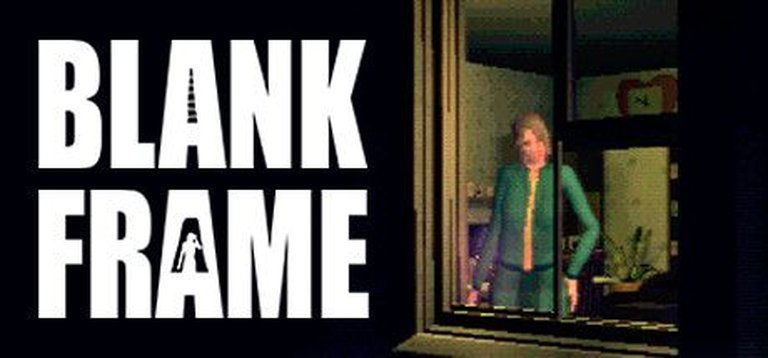
Description
Blank Frame is a first-person surreal horror game set in the town of Dim River, where protagonist Henri awakens to a mysterious crash that leaves a metal cabinet blocking his apartment door. As he navigates the peculiar, oblivious night life, players explore a haunting atmosphere reminiscent of early 2000s PC and PS2 games, combining point-and-click and walking simulator gameplay with rare death mechanics, all delivered through a slow-burn, story-focused experience lasting about an hour and a half with two endings.
Gameplay Videos
Where to Buy Blank Frame
Blank Frame Guides & Walkthroughs
Blank Frame: A Masterclass in Constrained Horror
Introduction: The Cabinet in the Room
In an era dominated by hyper-realistic graphics and combat-heavy survival horror, Blank Frame arrives like a whispered secret from a forgotten decade. This 2022 first-person surreal horror title from the tiny Finnish solo-dev studio Through Tunnel is not merely a game but a meticulously reconstructed artifact, deliberately engineered to feel plucked from the early 2000s PC or PlayStation 2 era. Its premise is brilliantly mundane and immediately claustrophobic: in the quiet town of Dim River, a man named Henri wakes to a thunderous crash, only to find a massive metal cabinet from the apartment above has shattered his front door, trapping him inside. The world outside his window continues its nocturnal rhythm, indifferent to his plight. My thesis is this: Blank Frame is a profound and masterful exercise in aesthetic and narrative constraint, using its deliberate technical “limitations” and slow-burn, puzzle-driven gameplay to craft an intensely psychological experience that prioritizes pervasive unease over cheap thrills. It stands as a vital, if flawed, testament to the power of atmosphere and specificity in independent game development.
Development History & Context: Born in a Tunnel, Forged in Unity
The Studio & The Vision: Blank Frame is the creation of Riku Lempiäinen, working under the banner Through Tunnel. This was not a debut from a seasoned AAA team but a fiercely personal, passion-driven project from a solo developer. The itch.io page and developer comments reveal a vision clear from the start: to create a horror experience that feels authentically of a specific time—the early 2000s—and that prioritizes “atmosphere and story instead of constantly startling the player.” Lempiäinen’s ambition grew during development, as he noted in a Steam community response: “I developed this game with a smaller vision initially and over time the project grew more ambitious.” This expansion, while enriching the game, also introduced some design friction, notably the admitted difficulty of implementing a save system late in development.
Technological Constraints as Aesthetic Choice: The game was built in Unity, a modern engine, but its visual and audio design is a love letter to a bygone era. The “look akin to early 2000’s pc/ps2 games” is not a budget compromise but a core artistic directive. The low-fidelity, minimalist pixel graphics, the blocky models, the limited color palette, and the intentionally “patchy” performance (a point user ‘Hoppimike’ raised) all serve to create a sense of digital nostalgia and unreality. This lo-fi aesthetic abstracts the horror, forcing the player’s imagination to fill gaps, a technique used to great effect in classics like Silent Hill and the early Fatal Frame series. The requirement for a Vulkan API for Linux and the modest system requirements (GTX 760) underscore that the “retro” look is stylistic, not a result of using ancient tech.
The 2022 Indie Horror Landscape: Released in January 2022, Blank Frame entered a thriving indie horror scene buoyed by the success of P.T.-inspired projects and the “haunted PS1 demo disc” aesthetic championed by collections like the Haunted PS1 Demo Disc. Its positioning as a “slow paced surreal/psychological horror” game placed it in a niche but appreciative community tired of jump-scare reliance. Its initial release on itch.io (where it had been available for nearly a year) and subsequent Steam launch (through publisher Sumerian Games, part of Behemoth Interactive) allowed it to build a cult following before a wider commercial release. The price point ($3.99-$4.00) was standard for a short, niche indie experience.
Narrative & Thematic Deep Dive: The Unmaking of Henri
Plot Deconstruction: The narrative is a tight, singular-night chamber drama. Henri’s immediate physical prison—the cabinet—is merely the literal manifestation of a deeper psychological and possibly supernatural entrapment. The gameplay involves him exploring his now-sealed apartment, interacting with mundane objects that increasingly behave bizarrely, and watching the eerie, mundane life of Dim River through his window. Contact with neighbors is mediated through intercoms, notes, and television screens, amplifying his isolation. The plot unfolds through environmental storytelling, fragmented dialogue, and surreal sequences that twist the familiar (a television, a plumbing issue) into sources of dread. The two endings depend on player choices, likely involving how Henri interacts with the mysterious forces at play and whether he seeks external help or succumbs to the apartment’s peculiar reality.
Character & Dialogue: Henri is an everyman, defined more by his situation than a deep backstory. His dialogue (internal or external) is sparse, reflective of the player’s own growing anxiety. The other “characters” are often distant voices or presences seen only through screens or heard through walls, reinforcing the theme of disconnected communication. The dialogue is functional and naturalistic, which makes the surreal events it describes or responds to even more jarring and effective.
Core Themes: Blank Frame is a rich text for thematic analysis:
1. Urban Isolation & Alienation: Henri is physically trapped but also emotionally and socially isolated in a town that continues obliviously around him. This reflects modern urban anxiety where one can be surrounded by life yet utterly alone.
2. The Fragility of Reality & Sanity: The apartment becomes a liminal space where rules bend. Objects move, perspectives shift, and logic degrades. This directly mirrors Henri’s—and by extension, the player’s—eroding grasp on what is real, a hallmark of psychological horror.
3. Architecture as Antagonist: The building itself is a character. The fallen cabinet is an act of violent, architectural intrusion. The apartment’s layout, its hidden spaces, and its connection to the outside world (the window, the door) become a puzzle box of terror.
4. Passive Horror & Helplessness: Unlike survival horror protagonists who fight, Henri’s primary tools are observation, puzzle-solving, and evasion. The horror is in the waiting, the listening, and the slow dawning realization that escape may not be the goal, but understanding is. As one Steam curator tag notes, it’s a game with “Noir” sensibilities—a mystery where the detective is also the victim.
5. Allegory & Personal Descent: User ‘AZUSA’ on itch.io identified the “allegory” as a key draw. The game’s descent can be read as a metaphor for depression, trauma, or mental breakdown—a personal “Dim River” of the mind where the external world becomes a distorted, hostile reflection of internal chaos. The “Aliens” tag on Steam, while seemingly out of place, hints at the truly other and inexplicable nature of the threat, resisting easy categorization.
Gameplay Mechanics & Systems: The Point-and-Click Walking Simulator of Doom
Core Loop: The gameplay is explicitly described as a “combination of point and click games and walking simulators.” The player navigates Henri’s apartment and immediate surroundings in first-person, interacting with a cursor-based interface to examine objects, combine items, and solve environmental puzzles. The pacing is deliberately slow, encouraging玩家 to soak in the atmosphere and note minute changes in the environment.
Puzzles & Progression: Progression is gated by puzzles that range from logical (finding keys, restoring power) to intuitively surreal (interpreting strange events or sequences). The puzzles are the primary driver of the narrative, each solved step revealing a new piece of the mystery or a new layer of the apartment’s weirdness. This is where the game’s most significant design schism lies. While many praised the engagement (‘soldancer’ called the story and setting “so engaging”), others found frustration. User ‘soldancer’ explicitly cited “pixel hunting, backtracking to find random event triggers, and a terrible timed action final sequence.” The reliance on finding tiny, specific interactive elements in detailed but visually homogenous environments can break the atmospheric flow, turning dread into irritation.
Death & Failure State: The game “is possible to die,” a notable feature for a genre often criticized for lacking stakes. However, death is framed as a rarity and is “avoidable fairly easily so deaths do not feel cheap.” This is a crucial design decision. It introduces tension without resorting to frequent, punishing combat. Death likely stems from failing a puzzle or lingering too long in a dangerous situation, punishing recklessness but not exploration. The major flaw, highlighted by ‘soldancer’, is the complete lack of a save mechanic. Developer ‘ThroughTunnel’ defended this on Steam: the game is “meant to be played in one sitting” (1.5-2 hours). However, the combination of potential pixel-hunting frustration and the risk of dying late in the game, forcing a total restart, is a significant point of player attrition. It is a purist, masocore-esque design choice that clashes with the slower, contemplative pace for many.
UI & Innovation: The UI is minimal, diegetic where possible (e.g., the cursor), and non-invasive. The innovation lies not in complex systems but in the constrained, focused design. There are no inventories full of junk, no skill trees, no combat upgrades. The “progression” is purely narrative and intellectual. The only “system” is the branching path to two endings based on player agency, though the exact triggers are kept opaque, encouraging replay or community discussion.
World-Building, Art & Sound: The Echo of a Dead Console
Setting & Atmosphere: The world is the small town of Dim River, but we only ever see it through the limited windows of Henri’s apartment and a few adjacent spaces. This creates a profound sense of “alone even within a busy city,” as user ‘Hoppimike’ astutely observed. The town is a character in its indifference—its lights, distant sounds, and occasional, mundane human activity (a neighbor walking a dog) become chillingly irrelevant. The apartment itself is a meticulously detailed, kitschy early-2000s time capsule, its normality making the intrusions all the more unsettling.
Visual Direction: The PS2/early 2000s PC aesthetic is the game’s defining visual signature. This means:
* Low-Poly Models: Characters and objects are blocky and simplified.
* Textured, Not Polished: Environments use basic textures with visible pixels and limited shading.
* Fixed Camera Angles? The developer hints at a love for this technique (“LOVI is put on hold… Next game… also utilizes fixed camera angles”), and while Blank Frame is primarily first-person, it occasionally employs subtle, cinematic framing that evokes that Resident Evil or Fatal Frame feel.
* Color Palette: Desaturated, with moments of stark, unnatural color (like the glowing television) used for maximum unsettling effect. User ‘basillicus’ specifically praised the “color palettes.”
This style does not aim for realism but for a “stylized,” “abstract,” and “psychedelic” (per Steam tags) representation that feels inherently unstable and dreamlike. It successfully evokes the “cozy” yet eerie feeling of old horror demos, as user ‘jenny ☆’ noted.
Sound Design & Music: The soundtrack by Robbert van Bruggen & Johann Hackl (Gazers) is consistently hailed as a masterpiece. Described as “strange and haunting” and “lo-fi,” it is a driving, ambient, often discordant score that pumps directly into the player’s anxiety. It avoids melodic cues for jump scares, instead providing a constant, oppressive psychic drone that defines the game’s tone. The sound design—creaking floors, distant city ambience, distorted intercom voices—is equally critical, building a soundscape where every ordinary noise could be a precursor to the uncanny. As user ‘basillicus’ vowed to buy the soundtrack, its impact is separable and highly effective.
Reception & Legacy: A Cult Gem with Cracks
Critical & Commercial Reception: Blank Frame flew under the radar of major critics. The only listed critic review is from PCGamesN, which simply noted its Steam release and recommended it for fans of “PS2-era horror games.” Its true life has been in the indie and enthusiast press, and most importantly, player reviews. On Steam, it holds a “Very Positive” rating (87% positive from 81 reviews). On itch.io, it maintains a stellar 4.8/5 stars from 47 ratings. This is a strong, dedicated fanbase for a niche title.
Player Consensus: Praise consistently centers on:
* Unmatched atmosphere and slow-burn tension.
* A compelling, winding story that rewards contemplation.
* The authentic retro aesthetic and haunting soundtrack.
* A refreshing lack of cheap jump scares.
Criticisms are equally consistent:
* “Pixel hunting” and obscure puzzle solutions requiring backtracking or walkthroughs.
* The infuriating lack of a save feature combined with the risk of long, punishing restarts.
* Occasional performance issues on lower-end hardware, which the developer acknowledged and attempted to address.
* A “termed timed action final sequence” that clashes with the game’s deliberate pace.
Evolution of Reputation: Its reputation has solidified as a cult classic for a specific subset of horror connoisseurs. It is frequently discussed in circles nostalgic for the aesthetic and pacing of early 2000s horror and is often favorably compared to the氛围 of Silent Hill or the surrealism of games like Device 6. The developer’s engagement with the community—responding to bug reports, discussing performance tweaks, and outlining future projects—has fostered goodwill and a sense of a game in conversation with its audience.
Influence & Place in History: Blank Frame is unlikely to spawn a thousand clones, but its influence is qualitative. It serves as a potent reminder that constraint breeds creativity. In an industry racing toward graphical fidelity and open worlds, it argues powerfully for tight, focused, auteur-driven experiences. It demonstrates that “retro” styling can be a profound artistic choice rather than a budgetary one. It sits in the lineage of games like Yume Nikki or 安娜 (安妮), where exploration and mood are paramount. Its legacy will be as a touchstone for atmospheric indie horror—a game that proves you can make players feel profound unease with blocky graphics, a single apartment, and a brilliant, oppressive soundscape.
Conclusion: The Frame That Holds
Blank Frame is a game of magnificent contradictions. It is a achingly beautiful yet technically crude experience. It is a slow, contemplative journey punctuated by moments of frustrating, archaic design. It is a deeply personal, auteur-driven vision that sometimes gets in its own way. Yet, for those willing to surrender to its specific rhythms—to accept its lack of a save function as part of its tense, unbroken nightmare, to pore over its pixelated details, to let its soundtrack seep into their bones—it offers one of the most potent and memorable horror experiences of the 2020s. It is not perfect, but its imperfections are inextricably tied to its ambition. It is a game that understands the power of a single, unsettling room, the weight of a silent night, and the horror of a door that does not open. In the history of video game horror, Blank Frame will not be remembered as a bestseller or a trendsetter, but as a quiet, defiant, and brilliantly executed masterclass in doing more with less. It earns its place not in the pantheon of genre kings, but in the curated cabinet of essential, singular, and unforgettable indie artifacts—a true blank frame onto which each player projects their own deepest, most constrained fears.