
- Release Year: 2014
- Platforms: Android, iPad, iPhone, Linux, Macintosh, Windows
- Publisher: Choice of Games LLC
- Developer: Choice of Games LLC
- Genre: Adventure
- Perspective: Text-based / Spreadsheet
- Game Mode: Single-player
- Gameplay: Interactive fiction, Text adventure
- Setting: Futuristic, Sci-fi
Description
Creatures Such as We is a sci-fi interactive fiction game using ChoiceScript, where players navigate a romantic and narrative-driven adventure on a moon expedition. They interact with the creators of a cherished in-game title, exploring themes of art, humanity, game theory, and player agency through a story that critiques game design and the role of escapism.
Gameplay Videos
Where to Buy Creatures Such as We
PC
Creatures Such as We Mods
Creatures Such as We Reviews & Reception
ifdb.org : A convincing essay on game theory camouflaged as romantic CYOA
Creatures Such as We: A Metafictional Masterpiece in Interactive Fiction
1. Introduction: The Moon, The Mirror, The Mechanic
In the sprawling, often procedurally generated cosmos of video games, certain titles achieve a rare alchemy: they become both a specific, tangible experience and a shimmering lens through which the entire medium is refracted. Creatures Such as We, a 2014 interactive fiction (IF) title by Lynnea Glasser and Choice of Games, is one such game. Its premise is deceptively simple—a lonely lunar tour guide hosts the creators of her favorite game—but this narrative seed blossoms into a profound, multi-layered meditation on art, agency, and the fragile contracts between creators and consumers. Released during a transitional period for both the IF genre and the broader indie scene, the game eschewed graphical pomp for the raw, imaginative power of text, using its ChoiceScript engine not just to tell a story, but to deconstruct the very act of storytelling. This review will argue that Creatures Such as We stands as a landmark of metafictional design, a work that leverages the intimacy of choice-based narrative to tackle heavyweight game theory questions with a grace and emotional core that few of its contemporaries matched. Its legacy is not in blockbuster sales, but in its resonant, critical intelligence—a quiet masterpiece that asked, in 2014, the very questions that would dominate gaming discourse for a decade.
2. Development History & Context: ChoiceScript in the Indie Cosmos
The Studio and Vision: Creatures Such as We was developed and published by Choice of Games LLC, a studio founded by Dan Fabulich and R. D. “R.D.” “R.D.” (Richard) “Duke” (Dallas) Dickinson. The studio’s philosophy centered on accessible, choice-driven interactive fiction written in their proprietary, web-friendly ChoiceScript engine. This allowed for complex branching narratives with statistical tracking (character stats, relationship points) to be published across multiple platforms—from early mobile phones to web browsers and eventually desktop via Steam. Lynnea Glasser, the game’s writer, was already an established voice in the Choice of Games lineup (Choice of the Petal Throne, The Fleet). Her vision for Creatures was explicitly philosophical and personal, aiming to create “a dating sim about how humanity connects through art, even out in the vastness of space,” as summarized on IFDB.
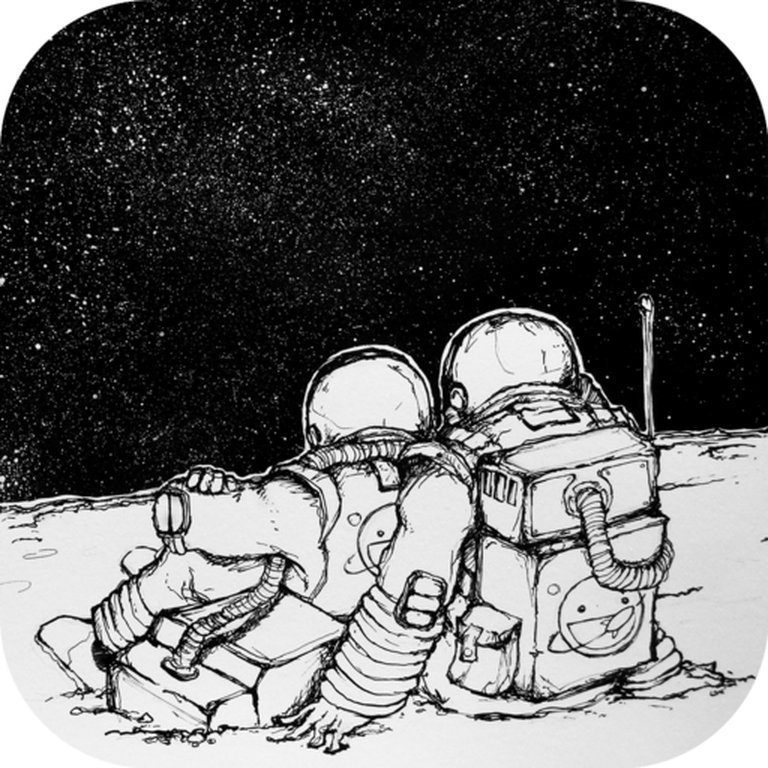
Technological Constraints & the 2014 Landscape: The game’s release in December 2014 (initially for iPhone/iPad/Android) placed it at a fascinating crossroads. The mainstream industry was deep in the eighth console generation, preoccupied with graphical fidelity and open-world scale. Simultaneously, the “indie renaissance” was in full swing, fueled by accessible digital storefronts like Steam and itch.io, and tools like Twine and ChoiceScript were democratizing IF. Creatures embodied this latter movement: its entire “graphics” were limited to a single, evocative cover illustration by Fabian Parker and its interface was pure point-and-select text. There was no sprite work, no background score, no voice acting—only prose and the player’s imagination. This austerity was not a limit but a core aesthetic choice, focusing all development resources on the density and quality of its writing—a 60,000+ word script that had to support intricate thematic debate, romantic character arcs, and a parallel in-game narrative. The mobile-first release was also strategic, targeting a audience comfortable with narrative-heavy, episodic play sessions.
Publishing Context: Choice of Games operated on a commercial “pay-what-you-want” model with a free web version and paid mobile/Steam releases (typically $4.99). This model balanced accessibility with revenue, common for the era’s IF scene. Creatures was thus a product of a specific, resilient ecosystem: a literate, design-conscious community valuing authorial voice and player choice over spectacle, existing parallel to—and often critically of—the AAA mainstream.
3. Narrative & Thematic Deep Dive: The Game Within the Game
Plot Architecture: The narrative operates on two interlocking planes. The primary frame casts the player as an unnamed tour guide for “Spacejoy,” a corporate lunar tourism venture. The protagonist is overworked, isolated on the moon, and a devoted fan of the acclaimed narrative game Creatures Such as We (sharing the title with our game). The day’s tour group is the development team behind that very game. The secondary plane is the “game-within-the-game,” which the player-character is playing on their device. This internal narrative is a sci-fi romance/drama involving a human and a non-human entity, culminating in a famously divisive “bad” ending that has sparked endless player debate.
The plot’s engine is the collision of these two worlds. The tour guide must professionally escort the developers while desperately trying to glean clues about the controversial ending. This dual role is literalized: at key moments, the player makes choices as the tour guide and, separately, as the character within the game-within-the-game. These choices are thematically linked—a conversation about artistic intent with a developer might mirror a choice about sacrifice in the nested narrative.
Character Archetypes as Theories: The six developers are not merely romance options; they are personified design philosophies. Each serves as an avatar for a specific stance on game creation and meaning:
* The Idealist: Believes games should be a pure, transformative art form, prioritizing emotional truth over player satisfaction.
* The Formalist: Values systemic integrity, rules, and the “game” as a structured challenge; the ending is a logical conclusion of the mechanics.
* The Populist: Advocates for the player’s experience above all; a “bad” ending that frustrates the audience is a failure of design.
* The Pragmatist: Concerned with business realities, corporate pressure (an “EA-like” acquirer looms), and marketability.
* The Pessimist/Realist: Explores dark themes like futility, death, and the limits of agency, finding meaning in tragic, unavoidable conclusions.
* The player’s chosen romance path deepens engagement with one of these philosophies, making the abstract debate intensely personal.
Core Thematic Tapestry: The game weaves several monumental questions:
1. The Authority of the Ending: This is the most explicit thread, widely read as a commentary on the infamous Mass Effect 3 ending controversy (though author Lynnea Glasser denies direct influence). It asks: who “owns” an ending—the authorial vision or the player’s invested journey? Is a tragic, authorially “correct” ending more valid than a happy, player-pleasing one? The nested game’s ending becomes a Rorschach test for the developers’ and player’s beliefs.
2. The Contract of Romance: The game critiques the “dating sim” mechanic where affection is quantified. As one review notes, romantic moments feel organically woven into the tour, not triggered by selecting dialogue options from a menu. The “stage magic” effect—where life-threatening events in the nested narrative always befall the chosen romance interest—highlights the manipulative, often patriarchal, conventions of the genre. It asks: is romance in games about genuine connection or narrative utility?
3. Art vs. Escape: The protagonist uses the game as escapism from the drudgery of their corporate lunar job. The developers debate whether games should mirror life’s complexities or provide pure, uncomplicated joy. The beautiful, lonely moon setting itself becomes a metaphor for both isolation and the sublime, challenging the player to find wonder in their “prison.”
4. Corporate Malfeasance & Labor: A persistent, chilling subplot involves Spacejoy’s negligence (covering up an employee’s illness, risking tourist safety for optics) and the looming acquisition of the indie studio by a faceless conglomerate. This grounds the philosophical debates in material, political reality. The game argues that artistic expression cannot be separated from the economic conditions of its production.
5. Metafiction as Critique: Creatures is ruthlessly self-aware. It is a game about games that performs the acts it examines. The moment the player confronts the developers is a breaking of the fourth wall that forces a confrontation with the real-world creator-player dynamic. Its structure is the argument.
4. Gameplay Mechanics & Systems: ChoiceScript as Philosophical Instrument
Core Loop & Interface: The game uses a minimalist ChoiceScript interface: descriptive text paragraphs followed by a list of clickable choices. There are no graphics or sound effects (per the Steam description: “entirely text-based–without graphics or sound effects”). The loop is read -> choose -> narrative consequence -> repeat. Its innovation lies not in mechanics but in thematic framing of choices.
The Six Paths & Relationship System: The central mechanical structure is the pursuit (or avoidance) of a relationship with one of the six developers. This is tracked through implicit and explicit relationship points, though the system is gentle—the path is determined more by consistent choice alignment with a character’s worldview and key romantic moments than by a numerical meter. The option to maintain strict professionalism is always present, making the “romance” a deliberate player strategy, not an inevitability. This directly engages its theme: you choose the type of connection (romantic, platonic, professional) and thus the type of story you inhabit.
The Game-Within-a-Game Interface: Brilliantly, the nested narrative is presented identically—as text choices within the main interface. This blurs the line between the player’s two roles. A choice made in the tour might inspire a choice in the nested game, or vice versa. The game occasionally asks the player to make a choice for their in-game avatar, explicitly reminding them of the layer of mediation. This is a mechanical representation of the “player-character” duality central to its thesis.
Illusory Choice & Railroading: Here lies the game’s most debated mechanical flaw, cited by several reviewers (notably “Fenix” on IFDB). Creatures is, by design, a highly linear narrative. The “illusion of choice” is sometimes shattered when the game presents options that are then greyed out, forcing the player down a specific path. The most infamous example, as described, is a stress test where the game systematically invalidates the player’s preferred response (e.g., “I am competent”) until only a predetermined “incompetent” or “flawed” option remains. This can feel like a betrayal of agency.
* Critical Interpretation: This is not a bug but a feature, albeit a risky one. It is a mechanical metaphor for the game’s central argument: players do not have absolute control. It mimics the experience of a “bad” ending in a game where the author’s vision overrides player wishes. The frustration is intentional, meant to evoke the helplessness the protagonist feels about the nested game’s ending. However, as the “Fenix” review notes, this can leave a “bitter taste” and hinder replayability, as the player knows certain paths are rigidly scripted. It’s a bold, didactic use of railroading that prioritizes theme over traditional IF player empowerment.
Inclusive Customization: A progressive and important mechanical element is the inclusive character creation at the start. The player can select gender identity, sexual orientation, race, and age. This isn’t merely cosmetic; it informs pronouns used in the text and subtly shapes social dynamics (e.g., reactions to certain character backgrounds). This was notable for 2014 mainstream-adjacent IF, embedding representation into the narrative’s fabric rather than treating it as an afterthought.
5. World-Building, Art & Sound: The Aesthetics of Lunar Solitude
Setting & Atmosphere: The world is the “Spacejoy” lunar tourist destination—a gleaming, corporatized version of the moon. Glasser’s prose excels at hard sci-fi realism: descriptions of pressurized habitats, recycled air, low-gravity movement, and the sheer, terrifying beauty of the Earth viewed from the void. The setting is a character itself: a place of profound loneliness and manufactured wonder, perfectly mirroring the protagonist’s inner state and the developers’ insulated creative bubble. Reviews consistently praise the “beautiful setting” (Steam) and note the “clear[ly] did research” (Renga in Blue) on lunar habitation, making the fantastic premise feel grounded.
Visual Direction: As a text-only game, “visuals” are conjured, not seen. The single cover art by Fabian Parker sets the tone: a stylized, almost dreamlike image of a figure on a lunar surface, looking at Earth. It suggests isolation and cosmic scale. In-game, all imagery is lexical. Glasser uses precise, sensory language to paint scenes—the “uninterrupted universe” blackness described in the Renga in Blue review, the sterile corporate corridors, the warm, cluttered common room of the developers. The player’s imagination is the rendering engine, and the writing is robust enough to support it.
Sound Design: There is none in the traditional sense. The “sound” is the rhythm of the prose and the silence between choices. This absence amplifies the themes of isolation and introspection. The only “audio” mentioned in sources is in the narrative itself (“audible sighs and gasps” during a stargazing scene), again relying on the player to imagine. This is a defining aesthetic of literary IF: the silence forces focus onto the words and the weight of each decision.
Synergy: The minimalist audio-visual palette is not a limitation but a thematic asset. It removes all distractions, funneling the experience into pure dialogue, internal monologue, and choice. The vast, silent moon outside the habitat window becomes a metaphor for the void that the characters—and the player—are trying to fill with connection, story, and art.
6. Reception & Legacy: From IFComp Stage to Cult Canon
Launch & Critical Reception (2014-2015): Creatures Such as We entered the 20th Annual Interactive Fiction Competition (IFComp) in 2014, placing an impressive 2nd. It also won the XYZZY Award for Best NPCs (for the developer characters) and was nominated for Best Individual PC. These awards from the IF community were significant, validating its narrative depth and character work within a competitive, purist field.
Critical praise from prominent voices was enthusiastic. Leigh Alexander declared, “You absolutely need to play through Creatures Such As We.” Emily Short called it “well-paced and richly written.” Rock, Paper, Shotgun’s S.EXE column hailed it as “an elegant, intricate meta-narrative,” comparing its cleverness to the iconic Max Payne. The Guardian called it “an incredibly engrossing tale of labour, life and loneliness in the future.” This cross-over attention from mainstream gaming press was rare for pure text IF and signaled the game’s success in bridging communities.
Commercially, as a Choice of Games title, it sold modestly but steadily through its mobile and later Steam releases (2017). Its business model ensured longevity and accessibility.
Player Reception & Evolving Reputation: On IFDB, it holds a strong average rating of ~4/5 stars from 100 ratings, with a dedicated 146 members having played it. Steam reviews show a 94% positive rating (33 positive, 2 negative out of 35 reviews as of data collection). The positive consensus praises its philosophical depth, characterization, and unique premise.
The criticisms are consistent and insightful:
1. Thematic vs. Gameplay Engagement: As “mr.jones” notes on IFDB, the most thought-provoking choices are the philosophical debates, not the plot-advancing ones, which can feel “bland.” The game prioritizes idea over traditional “gameplay.”
2. Agency Illusion/Frustration: The railroading moments, as detailed in section 4, are the primary source of negative feedback. Players feel their agency is not just limited but deliberately mocked.
3. Representation as Tokenism?: “autumnc” on IFDB observes that while the characters are “well-realized and unique, they feel sort of like tokens, both demographically and for their particular viewpoints.” This is a common critique of ensemble casts built to represent ideologies—the risk of becoming mouthpieces.
Interestingly, “autumnc” also notes the game improves in retrospect, stating that “after playing it more recently, I’ve come to appreciate it a lot more,” especially for those with experience in IF creation/analysis. This suggests its reputation may be solidifying as a “critic’s darling” or a game that rewards reflective engagement.
Influence & Legacy: Creatures did not spawn a genre clone, but its influence is felt in specific, meaningful ways:
* Metafiction in IF: It joined a small but notable canon of games about game development and theory (e.g., The Writer Will Do Something), proving that IF’s textual medium was uniquely suited to such self-reflection without breaking immersion.
* Design Philosophy Teaching Tool: Its transparent exploration of player/author dynamics makes it a frequent recommendation in game design courses and discussions, as cited by outlets like Game Theory Podcast.
* LGBTQ+ & Inclusive Representation: Its baked-in character creation options were ahead of the curve for mainstream-adjacent IF in 2014, contributing to a slow but steady trend toward normalization of inclusive mechanics in choice-based games.
* The “ChoiceScript Drama”: It stands as one of the most thematically ambitious entries in the Choice of Games/ChoiceScript library, which often focused on genre pastiche (fantasy, sci-fi, superhero). It demonstrated the engine’s capacity for quiet, literary philosophy alongside more conventional plots.
Its legacy is that of a cult classic—a game more discussed and analyzed than widely played. It lives on in “Recommended Lists” on IFDB (e.g., “Games about interactive fiction itself”) and is frequently cited in academic and critical writings about video games as an art form. It represents the peak of what the “text adventure” revival could achieve: a work that uses its formal constraints to ask the biggest questions about its own medium.
7. Conclusion: An Enduring, Uncomfortable Mirror
Creatures Such as We is not a flawless game. Its deliberate linearity and moments of mechanical authorial overreach will frustrate players seeking traditional interactive agency. Its character ensemble, while distinct, can feel like deliberate archetypes. Yet, these very traits are inextricable from its profound ambition. In an industry often obsessed with scale and option, Glasser and Choice of Games made a brave, compact game about the limits of scale and option—about the necessary, sometimes painful, boundaries between creator and consumer.
The game’s power derives from its perfect synthesis of form and content. Its text-only interface mirrors the protagonist’s own escapism into a textual game. Its lunar setting, a place of beautiful isolation, becomes the perfect pressure cooker for debates that usually happen in cozy internet forums. It uses the dating-sim framework not for titillation, but as a laboratory to examine how we simulate intimacy in mediated spaces.
Nearly a decade after its release, as debates about “player agency,” “artistic intent,” and “corporate influence in games” have only intensified, Creatures Such as We feels eerily prescient. It is a game that understood the coming conflicts of the 2020s. It does not offer easy answers, but it performs the invaluable service of framing the questions with unmatched clarity and emotional weight. It is a metafictional mirror, and like the best mirrors, it reflects something uncomfortable and true about the relationship between the game we play and the self that plays it. For its courageous thematic scope, its elegant use of minimalist mechanics, and its enduring status as a touchstone for critical discourse, Creatures Such as We secures its place not just as a high point of Choice of Games’ catalog, but as a significant, enduring artifact in the history of narrative video games.
Final Verdict: 9.5/10 – A seminal work of interactive fiction that achieves a rare synthesis of philosophical rigor and intimate storytelling, despite a divisive approach to player agency.