
- Release Year: 2019
- Platforms: Android, iPad, iPhone, Nintendo Switch, PlayStation 4, PlayStation Now, Windows Apps, Windows, Xbox One
- Publisher: Square Enix Co., Ltd., Square Enix, Inc., Square Enix Limited
- Developer: Square Co., Ltd.
- Genre: Role-playing
- Perspective: 3rd-person
- Game Mode: Single-player
- Gameplay: Crafting, Draw system, Exploration, Junction system, Mini-games, Turn-based combat
- Setting: Fantasy, Futuristic, Sci-fi
- Average Score: 85/100
Description
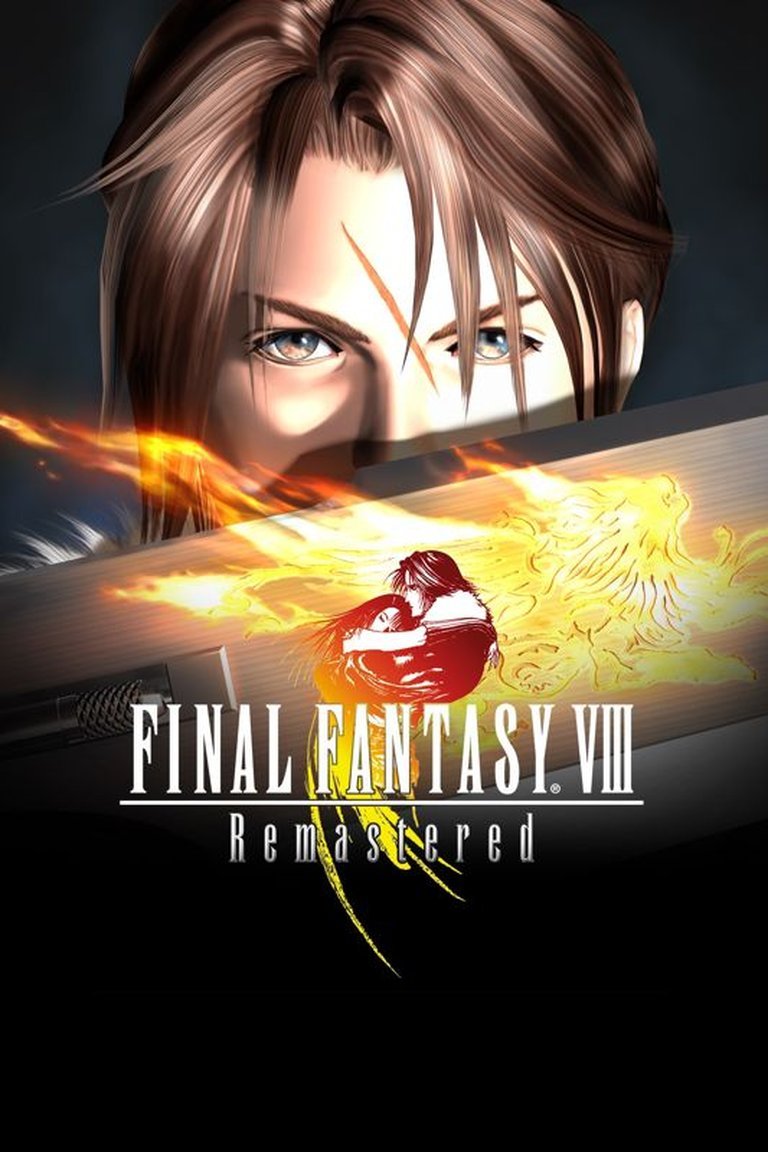
Final Fantasy VIII: Remastered is set in a world that blends contemporary realism with fantasy and sci-fi elements, following Squall Leonhart and his allies from the Balamb Garden military academy. The narrative begins with grounded, mission-based storytelling but rapidly escalates into a global conflict involving sorceresses and time-based threats, all while exploring teenage drama and a heartfelt central love story between Squall and Rinoa.
Gameplay Videos
Where to Buy Final Fantasy VIII: Remastered
Final Fantasy VIII: Remastered Free Download
Final Fantasy VIII: Remastered Reviews & Reception
thegamer.com (85/100): Final Fantasy VIII Remastered is finally here, and it looks better than ever.
Final Fantasy VIII: Remastered Cheats & Codes
Console Versions (PS4, Xbox One, Nintendo Switch)
| Code | Effect |
|---|---|
| Press left analog stick | Fast Speed |
| Press right analog stick | Battle Assist (Max HP and Limit Breaks) |
| Press both analog sticks | No Random Encounter |
PC Version (Steam)
Press the specified function key during gameplay to activate cheats.
| Code | Effect |
|---|---|
| F1 | Battle Assist (maxed HP, always full ATB, can always use Limit Breaks) |
| Escape | Brings up a menu for triggering various cheats (all items, all abilities, max GF levels, max Gil, max magic, having all cards) |
| F2 | No Encounters (doesn’t work for forced encounters, e.g. bosses) |
| F3 | Speed Boost (game plays at triple speed) |
Final Fantasy VIII: Remastered – A Timeless, Flawed Masterpiece Reexamined
Introduction: The Polarizing Pendulum of a Generation
To discuss Final Fantasy VIII is to step into one of the most heated and enduring debates in role-playing game history. Released in 1999, it was the bold, brash successor to the genre-redefining Final Fantasy VII, a game so monumental it seemed untouchable. Yet, VIII did not merely iterate; it revolted. It swapped the cyberpunk dystopia of Midgar for sun-drenched European academies, replaced a globetrotting eco-terrorist narrative with a school-drama romance, and scrapped traditional leveling for a stat-juggling “Junction” system that confounded as much as it captivated. Its legacy is a pendulum: dismissed by some as a beautiful catastrophe, revered by others as the series’ most emotionally profound and daring entry. This review argues that Final Fantasy VIII, especially in its 2019 Remastered form, is a profound, deeply flawed, and ultimately masterful work of interactive art—a game whose artistic vision and narrative ambition so completely transcend its mechanical hiccups that it secures a place not just in the Final Fantasy pantheon, but in the broader canon of video game storytelling. Its strengths are monumental; its weaknesses, fascinating.
Development History & Context: A Studio Riding High, Aiming for a “Lighter” World
The Post-VII Landscape and Directorial Vision
Development on Final Fantasy VIII began in 1997, amidst the English localization of FFVII. Under the direction of Yoshinori Kitase (who would later produce the FFVII Remake trilogy), with Shinji Hashimoto producing and Kazushige Nojima scripting, the team at Square was operating at the peak of its creative and technical powers. The game cost approximately ¥3 billion ($30 million at the time), a colossal budget involving around 180 staff. The explicit goal, as Kitase stated in a Game Informer interview, was to create something “much lighter in both visuals and tone” than its predecessor. Having tackled the “dark and weird” imagery of VII, the team sought a “bright, fresh Final Fantasy” inspired by the concept of “school days.” This thematic pivot was also a strategic one: a narrative centered on adolescent relationships and a contemporary-feeling world was seen as more universally accessible for international audiences.
Technical Prowess and Growing Pains
Technically, VIII was a showcase for the PlayStation’s capabilities. It featured over an hour of FMV sequences (20 minutes longer than VII), created by a 35-person team using motion capture for realism. The developers’ familiarity with computer graphics from VII‘s production allowed for more ambitious world design. A major challenge was rendering three real-time character models exploring pre-rendered backgrounds simultaneously—a significant leap from VII. Character designer Tetsuya Nomura aimed for “ordinary people” with realistically proportioned bodies, a stark departure from the super-deformed styles of the past. This pursuit of realism extended to the gunblade, Squall’s iconic weapon—a fictional hybrid where the “gun” mechanism added vibrational force to the blade’s strike, not projectile fire.
The Remaster: Reverence Meets Practicality
Two decades later, the Remastered version (developed in collaboration with Dotemu and Access Games) sought to make this classic accessible on modern platforms. Released in September 2019 for Switch, PS4, Xbox One, and PC, it presented a classic dilemma: how to update a game built on static, pre-rendered backgrounds. The solution was partial. Character and monster models were upscaled and smoothed, and three quality-of-life features were added: a 3x Game Speed Boost, the option to disable random encounters, and cheat-style modes to max stats and obtain all items/abilities. However, the pre-rendered backgrounds remained at their original resolution, resulting in a jarring contrast against HD character models—a point of consistent criticism across platforms. The 4:3 aspect ratio was also preserved, leading to black bars on widescreen displays. As one Jeuxvideo.com review noted, this was a “digne” (dignified) but not exceptional restoration, lacking the full reorchestration of soundtracks seen in other remasters like FFXII: The Zodiac Age.
Narrative & Thematic Deep Dive: A Time-Bending Melodrama of Trauma and Love
Plot Structure and Thematic Complexity
The plot of FFVIII is a labyrinthine epic that spans continents, decades, and ultimately, time itself. It begins with a grounded, almost mundane premise: Squall Leonhart, a mercenary cadet (SeeD) at Balamb Garden, is assigned to a mission to assassinate the sorceress Edea, who has seized control of the dystopian nation of Galbadia. The narrative explosively escalates from a military coup to a cosmic battle against Ultimecia, a sorceress from the future whose goal is “Time Compression”—collapsing all eras into a singularity where only she exists.
The genius of the story lies in its dual temporal narrative. Interspersed throughout are “flashback” sequences following Laguna Loire (a man Squall admires from childhood) 17 years prior. These are not mere backstory; they are integral to understanding the present, revealing connections to every main character (Rinoa’s mother Julia, Ellone’s origin, the founding of the Gardens). The mid-game revelation that Squall, Rinoa, Zell, Selphie, Seifer, and Quistis all grew up together in an orphanage run by Edea and Cid Kramer—and that their amnesia is a side-effect of using Guardian Forces—is one of the series’ most profound narrative pivots. It recontextualizes their entire relationship from colleagues to traumatized childhood friends.
Character Arcs: From Isolation to Connection
At its heart, FFVIII is Squall’s character study. Initially defined by his mantra, “Whatever,” and a fierce independence, his journey is one of forced vulnerability. The arrival of Rinoa Heartilly, a spirited resistance fighter, acts as the catalyst. Their romance is the game’s emotional spine, masterfully developed through shared trauma (the assassination attempt, Dollet, the prison break) rather than grand gestures. Squall’s famous line, “You okay?” after their first intimate moment, is a monumental breakthrough for his character. Critically, the game explores the cost of this connection—Rinoa’s agency is frequently compromised (possession by Ultimecia, being a damsel in distress), a legitimate point of critique that reflects the era’s storytelling limitations.
Supporting arcs are equally rich. Quistis grapples with her fall from instructor to SeeD and her unrequited feelings for Squall. Zell’s brashness masks loneliness and a desire for family. Selphie’s cheerful exterior hides the trauma of Trabia Garden’s missile destruction. Even the antagonist Seifer represents a dark mirror to Squall—a yearning for recognition and purpose that leads to rebellion. Irvine Kinneas, the sole main character without GF-induced amnesia, serves as the narrative anchor, remembering their childhood and providing crucial exposition.
Themes: War, Trauma, and the Mechanics of Memory
The narrative is steeped in potent themes:
* The Normalization of War: The “Garden” system—military academies that train teenagers as mercenaries—is presented as routine. Squall’s SeeD exam is literally a warzone. This critiques the institutionalization of conflict.
* Trauma and Amnesia: The Junction system’s side-effect of memory loss is a brilliant metaphor for the psychological cost of power and violence. The characters’ forgotten pasts at the orphanage symbolizes suppressed trauma.
* Cyclical Violence and Propaganda: The war between Galbadia and Esthar is shown to be driven by historical grievances and sorceress manipulation. The “SeeD” name itself—a tool created to fight sorceresses—has been co-opted into a mercenary brand, highlighting how revolutionary tools become oppressive systems.
* The Burden of Leadership: Squall’s reluctant appointment as SeeD commander forces him to shoulder responsibility for his friends’ lives, a weight that directly fuels his emotional growth.
The time-travel climax—where the party must chase Ultimecia through compressed time to defeat her in her era—is a narrative audacity few RPGs attempt. The ending, with Squall lost in time and space before reuniting with Rinoa, is famously ambiguous, leaving room for interpretation about the nature of their reality.
Gameplay Mechanics & Systems: A Revolutionary, Infuriating Ecosystem
The Junction System: Deep Customization or Tedious Grind?
The single most defining and controversial feature is the Junction system. Guardian Forces (GFs)—summoned monsters like Shiva, Ifrit, and Leviathan—are not just attack options. By “Junctioning” a GF to a character, you unlock the ability to equip magic spells to that character’s stats (Strength, Magic, Vitality, Luck, etc.). For example, junctioning Blizzard to Strength adds ice damage to physical attacks. This creates an immense, almost spreadsheet-like depth of customization. Stats scale based on the quality and quantity of spells junctioned, not level alone.
However, this depth comes at a steep cost. Spells are not bought; they are “Drawn” from enemies in battle or found at fixed points in the environment. This leads to the infamous “Draw Grind”—hours spent fighting low-level enemies repeatedly to stockpile 100 copies of Firaga or Ultima. The system’s flaw, as the Moby user review succinctly states, is that once you’ve junctioned all the best spells and learned all GF abilities, combat becomes redundant. The recommendation to avoid leveling up (since enemies scale with your level, making them tougher without proportionate stat gains) is a direct consequence of this design. It creates a paradox: the system encourages strategic stat-building through magic, but the method of acquiring that magic is repetitive.
Combat and Progression: ATB with a Twist
Battles use an Active Time Battle (ATB) system. A key innovation is that the traditional ATB gauge is replaced for characters who have Junctioned a GF; instead, a blue bar drains as they take actions, and when empty, they must wait to recover—a tactical consideration. Limit Breaks activate only at low HP under normal circumstances (unless boosted by the Aura spell), creating moments of desperate comeback. The party size is fixed at three, but temporary characters like Irvine or Selphie in specific sequences add variety.
The EXP system is also unique: a flat 1000 points per level. Enemies scale with the party’s average level, meaning a max-level party faces über-powerful foes with high HP and devastating spells. This was intended to negate traditional grinding, but it often felt punitive. The game’s progression is gated not by level, but by acquiring key GFs (like Bahamut or Crusader) and mastering their abilities, which unlock essential junction slots and commands.
Triple Triad and Minigames: A Shining Gem in the Rough
Amidst the junctioning grind, Triple Triad is a sublime distraction. Conceived by programmer Kentarow Yasui as a persistent, world-spanning card game (inspired by Magic: The Gathering), it features regional rule variations that evolve as you travel. Winning cards allows you to refine them into items, creating a satisfying feedback loop. It is widely considered one of the best minigames in the series. Conversely, other minigames, particularly the later “Dragon” mini-game (a frustrating and poorly controlled sequence), are frequently cited as some of the worst in the series, exemplifying the game’s uneven quality.
The Remaster’s Quality-of-Life Gifts
The Remastered version’s added features directly address some of these pain points. The No Random Encounters toggle is transformative, allowing for seamless exploration of grassy fields and dungeon corridors. The 3x Speed Boost makes the slow, ponderous World Map traversal (notably the Ragnarok spaceship, criticized in the user review for its “snail’s pace”) and menu navigation much faster. The “Max Stats” and “Obtain All” cheats offer an escape from the junctioning grind, letting players experience the story and boss fights without the preparatory tedium.
World-Building, Art & Sound: A Cohesive, European-Inspired Vision
A Contemporary-Fantasy Blend
FFVIII‘s world is a deliberate pastiche. It feels less like a traditional high-fantasy realm and more like a parallel Earth with advanced technology (airships, space stations, missiles) coexisting with magic and myth. Art director Yusuke Naora and Tetsuya Nomura crafted a “bright, fresh” aesthetic with predominantly European architecture—from the medieval streets of Dollet to the Art Deco futurism of Esthar and the rustic charm of Winhill. Flags, uniforms, and city designs reflect distinct national identities, reinforcing the war-political backdrop. The concept of “Garden” as a mobile, fortified academy is a brilliant fusion of school and military base.
The narrative structure itself is a world-building tool. The Laguna flashbacks (set in a more overtly ” Romero-inspired” cinematic style) show a world 17 years prior, revealing how historical conflicts (Adel’s tyranny, the Lunar Cry) shaped the present. Locations like the broken archipelagos in the south, scarred by a Lunar Cry, and the desolate rock formations of the “remote island” serve as permanent reminders of cataclysmic past events.
Character Design and FMV: A Leap in Realism
Nomura’s character designs were revolutionary. For the first time in the main series, characters were consistently and realistically proportioned, not chibi-style. Squall’s fur-lined jacket, Rinoa’s double-duster coat, and Seifer’s elaborate uniform were designed to be visually striking yet plausible. Motion capture was used extensively in FMV sequences to lend weight and fluidity to movements, from the iconic ballroom dance to the explosive Limit Break animations. The opening FMV—featuring Squall and Seifer sparring at dawn—is routinely ranked among the best in gaming, a perfect thesis statement for the game’s tone: a blend of youthful intensity, melancholy, and impending conflict.
Nobuo Uematsu’s Peerless Score
Composer Nobuo Uematsu crafted what many consider his finest soundtrack. It masterfully shifts from the Latin-choral fury of “Liberi Fatali” (used in the opening and the Olympic Games) to the melancholic piano of “Fisherman’s Horizon”. The centerpiece is “Eyes on Me,” a pop ballad performed by Faye Wong. Its inclusion—a full vocal track as a theme song—was unprecedented for a Japanese RPG and sold over 400,000 copies in Japan. The song perfectly encapsulates the game’s romantic core. In the Remastered version, the soundtrack is the least altered element; it remains the original, brilliant composition, a point of satisfaction for purists but a missed opportunity for full reorchestration noted by critics like those at Jeuxvideo.com.
Reception & Legacy: From Mixed Reviews to Cult Canon
Initial Critical and Commercial Response
Final Fantasy VIII was a commercial juggernaut. It sold 2.21 million copies and grossed $151 million in its first day in Japan (a record at the time), topped U.S. charts for over three weeks, and moved 6.08 million units worldwide by 1999’s end. Its sales eventually surpassed 9.6 million across all platforms.
Critical reception was far more divided. Aggregate scores were high (83% on Moby, 89% on GameRankings for PS1), but the nature of the reviews revealed the schism. Publications like Edge magazine called it “a far more accomplished game than FFVII,” praising its aesthetics and scope while critiquing its pacing and some plot twists. Electronic Gaming Monthly hailed it as “the pinnacle of its genre” with “the best character development of any RPG.” Conversely, Official U.S. PlayStation Magazine criticized the Junction system as a “major flaw,” and GameSpot‘s original review gave it a mediocre 6.7/10, citing the battle system’s complexity and the Draw mechanic’s grind.
The Evolving Canonization
Over the subsequent 25 years, the game’s reputation has undergone a significant rehabilitation. It is no longer seen as the black sheep of the PS1 trilogy but as a bold, idiosyncratic masterpiece. Game Informer ranked its opening FMV #2 on its “Top 10 Video Game Openings” list, and IGN ranked the ending #3 best for PlayStation. In 2024, the Video Game History Foundation’s Phil Salvador launched a dedicated essay site, ff8isthe.best, underscoring the game’s ongoing cultural resonance. Retrospectives, like those on JRPG.ca, now highlight its nuanced themes of trauma, neoliberalism, and emotional growth as ahead of their time.
The Remastered release in 2019 reignited this debate. Critics celebrated the return of the game (Metacritic 80 on PC, 82 on PS4) and its built-in cheats, which democratized the experience. However, the graphical inconsistency—crisp models against blurry, static backgrounds—was a universal point of criticism. As Retro Gamer noted, “we really do wish an AI was used to help upscale the backgrounds.” The Remastered version is thus a perfect time capsule: it preserves the original’s flaws while making its strengths accessible, forcing a new generation to grapple with the same design contradictions.
Conclusion: The Indelible “Whatever”
Final Fantasy VIII: Remastered is not a flawless experience. Its Junction system can devolve into tedious arithmetic; its mini-games are wildly inconsistent; its portrayal of Rinoa’s agency is dated; its remaster presentation is half-hearted. And yet, to dismiss it is to miss one of gaming’s most courageous narrative gambles. It dares to be a school romance set against an apocalyptic war. It dares to make its protagonist emotionally closed-off and his love story the engine of the plot. It dares to weave a time-travel epic where the past is literally a playable character.
Its place in history is secure not as the best Final Fantasy, but as the most human. While FFVII grappled with mythic archetypes and environmental allegory, VIII focused on the quiet, painful growth of its individual characters. The scar on Squall’s face, the dance at the SeeD ball, the scene at Fisherman’s Horizon where he finally opens up—these are moments of raw, relatable emotion rarely matched in the genre. The Remastered edition, with its welcome cheats, makes this journey less daunting, allowing players to focus on the story that has haunted fans for over two decades. Final Fantasy VIII is the game that taught a generation that vulnerability can be a heroic trait, that love can be a plot device as powerful as any summon, and that a RPG’s mechanics can—for better or worse—become a direct metaphor for its themes. It is flawed, brilliant, and utterly unforgettable. In the end, Squall’s “Whatever” is not apathy; it is the shell of a boy learning to feel. And that, perhaps, is the most Final Fantasy thing of all.