
- Release Year: 2023
- Platforms: Windows
- Publisher: Top Hat Studios, Inc.
- Developer: Cup of Pixels
- Genre: Action
- Perspective: Side view
- Game Mode: Single-player
- Gameplay: Platform
- Setting: Fantasy
- Average Score: 84/100
Description
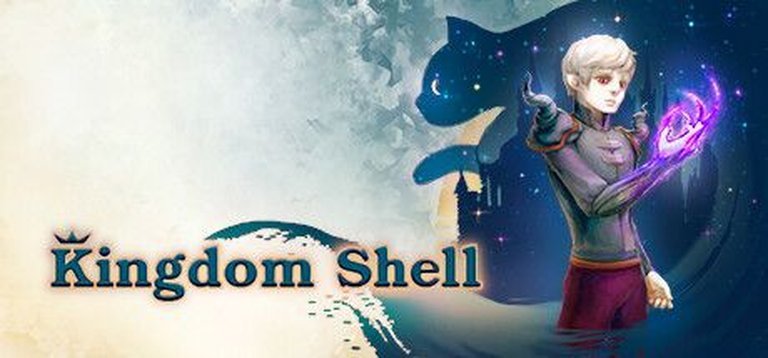
Kingdom Shell is an atmospheric 2D Metroidvania platformer set in a dark fantasy kingdom. Following the shattering of the magical Shell that protected the realm for centuries, nightmarish creatures overrun the land, prompting the White Temple to recruit Elias, a half-blood with nightmare-tainted blood, on a perilous journey to explore the kingdom, combat the invaders, and unravel the mysteries behind the Shell’s destruction.
Gameplay Videos
Where to Buy Kingdom Shell
Kingdom Shell Guides & Walkthroughs
Kingdom Shell Reviews & Reception
reddit.com : it was a solid and enjoyable experience overall for me in the end.
gamesreviews.com (80/100): Entering the world of darkness, escaping from reality into a fairy tale book, Kingdom Shell brings its players something magical that’s beyond one’s imagination.
Kingdom Shell: A Metroidvania Forged in Pixel and Principle
Introduction: The Shattered Shield and the Half-Blood’s Burden
In the crowded, fiercely competitive landscape of indie Metroidvanias, Kingdom Shell does not announce itself with a roar but with a haunting, melancholic whisper. Released in October 2023 by the singular vision of Cup of Pixels and published by Top Hat Studios, it arrived as a game deeply conversant with genre classics—Rygar, Castlevania, Momodora—yet determined to carve its own identity through a potent blend of dark fairytale atmosphere, deliberate, weighty combat, and a narrative steeped in symbolic conflict. It is not a flawless masterpiece, often stumbling under the weight of its own ambitions and the constraints of a solo development effort. Yet, for those willing to weather its initial slow burn and sometimes punishing structure, Kingdom Shell reveals itself as a deeply compelling, artistically coherent experience that stands as a testament to what one dedicated developer can achieve. Its legacy is not one of blockbuster sales, but of cultivating a devoted following and earning a respected place in the modern Metroidvania pantheon through sheer, unadulterated craft.
Development History & Context: A Solo Dev’s Obsession
The Studio and the Vision: Kingdom Shell is, above all, a passion project. It was developed almost single-handedly by “Roma” of Cup of Pixels, a fact repeatedly emphasized in interviews and community interactions. This solo development context is crucial to understanding the game: its scope is ambitious but contained, its systems are intricate yet sometimes lacking polish, and its world feels like a meticulously constructed diorama. Roma cited direct inspirations from the NES classic Rygar (for the foundational gameplay and the White Rocks area), the atmospheric depth of Momodora: Reverie Under the Moonlight, and the gothic architecture of Castlevania, particularly Symphony of the Night. However, the pivot to a baroque, fairytale aesthetic was a conscious choice to differentiate from the saturated gothic horror niche, inspired by the film Tale of Tales—hence the protagonist’s name, Elias.
Technological Constraints & The GameMaker Canvas: Built in GameMaker Studio, the game’s technical architecture reveals both the engine’s strengths and the limitations of a one-person team. The hand-drawn pixel art is stunningly detailed and atmospheric, with a 60 FPS target that delivers crisp, responsive animations. Yet, the game’s famously “heavy” or “weighty” controls, often cited by players as a point of adjustment, may be a direct consequence of the physics and collision tuning possible within a solo dev’s workflow. The game’s tiny install size (~200 MB) and low minimum system requirements (1.2 Ghz processor, 2 GB RAM) speak to efficient optimization but also hint at a scope that could not easily expand without significant restructuring. The multi-year development, with a major rework announced in 2022, shows a developer committed to iteration, refining mechanics and graphics based on internal feedback and early wishlist follower reactions.
The 2023 Indie Landscape: Kingdom Shell launched into a golden age for the Metroidvania genre. It followed hits like Hollow Knight and Ori, and contemporaries like Blasphemous 2 and Touhou Luna Nights. Its challenge level and dark fantasy tone immediately drew comparisons to Momodora and the “Souls-like” tag on Steam, positioning it for a specific, hardcore-leaning audience. Its late-2023 release placed it in direct competition with the year’s biggest indie titles, making its “quiet” success all the more notable.
Narrative & Thematic Deep Dive: Blood of Nightmares and the Weight of a Name
Plot as Consequence: The narrative is deceptively simple in premise but layered in execution. The ancient magical “Shell” protecting the Kingdom is shattered, not by an external evil, but through a vague, implied moral decay among its sovereigns (“succumbed to the temptation of filth”). This isn’t a story of a pure kingdom besieged by pure evil; it’s a story of a fallen world where the guardians (the White Temple) are complicit in the failure. The solution is not a pure hero, but Elias, a “half-blood” whose lineage is itself tainted by the “Blood of Nightmares.” His quest is a conditional pardon: prove his bravery to earn his freedom. This immediately establishes themes of inherited sin, cyclical corruption, and redemption through violent penance.
Elias: The Silent Protagonist and Symbolic Vessel: A critical point of discussion among reviewers (noted by Skoteinoulis on GOG) is Elias’s silence. He is not a blank slate like Gordon Freeman, but a defined character with a past and a biological curse. His silence makes him a vessel for player action, but also a symbol of the “half-blood” condition—neither fully one thing nor another, defined by what he does, not what he says. His power set, growing from a simple melee strike to devastating spells, mirrors the gradual reclaiming of a fractured identity.
Lore, Atmosphere, and Poetic Forcing: The world is “rich in lore and atmosphere,” as the official description states, but this lore is often delivered in cryptic fragments—through item descriptions, NPC rumors (a system praised in the Steam store blurb), and environmental storytelling. This approach has a double-edged effect. For invested players, it creates a mysterious, mythic quality where the White Temple’s motives, the nature of the “Nightmare Realm,” and the true history of the Shell are puzzles to solve. However, as the GOG reviewer “Magnitus” noted, the writing at times tries “to be poetic, but it felt forced.” This suggests a narrative tone that occasionally stumbles in its attempt to emulate the elevated language of fairytales and dark fantasy, creating moments of unintentional awkwardness amidst the compelling ambiguity.
Thematic Resonance: The core theme is the failure of absolutes. The Shell—a perfect, absolute protector—is broken. The White Temple—an absolute guardian institution—fails. The solution is an absolute outsider (a half-blood criminal). The “Inspiration” system, where players equip charms to customize their approach, mechanically reinforces this theme: there is no single “correct” path to victory, only a combination of strengths (inspirations) that a fractured hero must assemble.
Gameplay Mechanics & Systems: The Calculus of Combat and Exploration
Core Loop and Movement: Kingdom Shell adheres to a classic Metroidvania loop: explore a sprawling, interconnected map, defeat bosses to gain new abilities (like the Orb of Rage for breaking walls, the Dark Star for hitting distant switches, double jump), and backtrack to unlock previously impassable areas. The movement is deliberately methodical. As the Reddit reviewer “Shotgun-Justice” observed, it takes “a good 6 hours before I found a ‘movement’ type upgrade to alleviate some of this” slowness. This initial lack of mobility is a design choice that breeds familiarity with each zone’s layout but can test the patience of modern players accustomed to faster unlocks.
Combat: Precision over Panic: The combat is the game’s most celebrated and divisive element. Elias’s basic attack is a short-range, baseball-bat-like swipe. There is no automatic targeting; players must position precisely. This is augmented by four spell types (acquired over time) that serve as ranged options and puzzle tools, but are governed by a mana system. The combat philosophy is one of timing, spacing, and pattern recognition, drawing clear lineage to Momodora and the more demanding entries in the genre. The “Souls-like” tag on Steam is apt in spirit if not in literal mechanics: death is frequent, enemies hit hard, and boss fights demand observation and restraint. The Reddit reviewer compared its difficulty favorably to Cathedral and Environmental Station Alpha, placing it firmly in the hardcore tier.
The Inspiration System and Charms: The “Inspiration system” is the game’s primary customization layer. These charms, found throughout the world, offer small bonuses—increased damage, health regen, extended spell range, etc. The key, as noted in the Steam store features, is that they allow you to “customize your playstyle.” The GOG reviewer “Magnitus” confirmed he “coasted about 2/3 of the game on my exploration build without swapping,” indicating the system is impactful but not constantly demanding of reconfiguration. It’s a subtle RPG layer that rewards thorough exploration without overwhelming the player with build complexity.
Progression, Economy, and QoL Friction: Here, Kingdom Shell reveals its rougher edges. The game employs a gold-dropping-on-death mechanic with no bank. As “Magnitus” pointed out, this can lead to a vicious cycle: die repeatedly to a boss, lose enough gold to be broke, then require grinding to afford healing items or upgrades. The checkpoint system is also a frequent point of criticism. The Steam Community discussions are filled with posts like “Where’s the Puzzle key??” and complaints about save points being “20 seconds” away from boss arenas, creating what players perceive as “needless filler” and frustration during retries. The map system requires manual marking of points of interest (a trait some appreciate as old-school, others find archaic), but save points and merchants are auto-marked. These are not fatal flaws, but they represent a design philosophy that prioritizes deliberate tension and player accountability over modern conveniences, a stance that divides opinion.
World-Building, Art & Sound: The Kingdom as Character
Visual Direction: Baroque Fairytale: The pixel art is Kingdom Shell’s crown jewel. Rejecting the expected gothic or medieval fantasy, Roma opted for a baroque setting—ornate, grand, slightly whimsical, yet decayed. Top City, with its ornate architecture and moonlit skies, is a standout, evoking a ghostly, beautiful ruin. The White Rocks area is a stark, craggy landscape paying homage to Rygar. The Royal Palace is a sprawling, multi-sectioned castle that feels less like a Castlevania clone and more like a natural extension of its baroque roots. The enemy design is equally inventive, moving beyond generic monsters to “nightmarish creatures” with unique silhouettes—like the rolling Uroboros or the many-faced bosses—that fit the dark fable aesthetic. The animation is smooth and weighty, selling the impact of attacks and the menace of foes.
Sound Design and Musical Narrative: Composed by Semyon Dubovik, the soundtrack is a masterclass in biome-specific theming. It is not just background music; it is narrative text. The heavy, oppressive themes of White Rocks set a tone of grim determination. The standout, per Roma’s own interview, is the Gnome’s Caves, which injects a surprising, joyous 80s synthwave—a deliberate contrast to highlight the diligent, hopeful nature of its inhabitants. The Tower of Dreams and Royal Palace tracks are noted for their oppressive, atmospheric dread. This intentionality—where music defines place and mood so powerfully—is a significant contributor to the game’s immersive “atmospheric” quality, a tag it wears proudly on Steam. The sound effects for combat, spellcasting, and environmental cues are crisp and satisfying, completing the sensory package.
Atmosphere as a Core Mechanic: The art and sound work in concert to make the Kingdom itself feel like a character—a beautiful, broken entity being consumed by its own corrupted essence. The “nightmarish” foes aren’t just monsters; they are manifestations of a polluted reality, their designs echoing the “blood of nightmares” in Elias. This cohesion between theme, visual art, and audio is where Kingdom Shell transcends its mechanical quirks and becomes an experience.
Reception & Legacy: The Slow-Burn Cult Classic
Critical and Commercial Reception at Launch: Kingdom Shell did not launch to a explosion of critic reviews. On Metacritic, it currently shows a Metascore of “tbd” with no critic reviews, a common fate for many small indie releases. Its reputation was built entirely on user reception and word-of-mouth. On Steam, it holds a “Very Positive” rating (88% positive from over 150 reviews at the time of writing, with Steambase calculating a Player Score of 89/100 from 216 reviews). The GOG store shows a 4.3/5 from 3 reviews. Reviews consistently praise its art, sound, challenging boss fights, and rewarding exploration, while citing the slow start, occasionally repetitive music in early zones, “heavy” controls, and QoL friction points as drawbacks. The IGN page merely lists it with a placeholder “NR” rating, a sign of its niche, non-mainstream profile.
Evolution of Reputation: The game’s reputation has grown positively but slowly. The Opium Pulses review (though content was unavailable) likely echoed the common sentiment. The most telling analysis comes from the dedicated subreddit r/metroidvania. The review by “Shotgun-Justice” is instructive: initial impressions were negative due to jank and pacing, but the game “started to win me over. It was a slow burn.” He concludes it’s “very indie and easier to recommend to diehard metroidvania fans that have already played all the good stuff.” This “slow-burn cult classic” trajectory is its legacy. It is not an instant classic like Hollow Knight, but a game that earns its fans through persistence, rewarded by a coherent, challenging, and artistically distinct journey.
Influence and Place in the Industry: Direct influence is hard to measure for a solo-project Metroidvania in 2023. However, its successful combination of baroque fairytale aesthetic with punishing, pattern-based combat fills a specific niche. It stands as a modern heir to the NES-era challenge of Rygar and the atmospheric depth of Momodora, proving that this particular blend of old-school difficulty and new-age pixel artistry still has a dedicated audience. Its console port in 2025 (announced by Gematsu for PS5, Xbox Series, Switch, PS4, Xbox One) is a significant vote of confidence from publisher Top Hat Studios and a validation of its PC success, opening it to a wider audience. It is part of the wave of “souls-like Metroidvanias” that includes games like Blasphemous 2, carving out a space for games that are more about deliberate execution than fluid traversal.
Conclusion: A Kingdom Worth Saving, Trials and All
Kingdom Shell is not for everyone. Its deliberate pacing, initial lack of mobility, and insistence on player accountability in the face of punishing deaths will alienate those seeking a more accessible or fluid adventure. Its poetic writing occasionally misfires, and its solo-dev origins show in certain rough edges and repetitive elements.
Yet, for the patient and the persistent, it offers something rare: a completely unified artistic vision. From the baroque ruins of Top City to the synthwave洞穴 of the Gnomes, from the weighty clang of Elias’s sword to the oppressive chords of a boss arena, every element serves a dark, melancholic fairytale about a broken world and a half-blood outcast. Its combat is a satisfying dance of precision, its Metroidvania structure rewards obsessive exploration, and its world remains haunting long after the credits roll. It is a game that demands you meet it on its own, often difficult, terms.
In the grand tapestry of video game history, Kingdom Shell will not be remembered as a revolutionary landmark. Instead, it will be remembered as a magnificent, heartfelt artifact—a game that proves the indie Metroidvania genre can still spring from a single mind with a singular, uncompromising voice. It is a challenging, atmospheric, and deeply personal journey that cements Cup of Pixels as a developer to watch. For those who have “played all the good stuff,” Kingdom Shell is, indeed, very good stuff itself: a flawed, fascinating, and ultimately triumphant kingdom saved not by a perfect hero, but by a game with the courage of its own convictions.
Final Verdict: B+ (A strong, Cult-Favorite Metroidvania hindered by pacing and QoL issues, but elevated by unparalleled artistic cohesion and satisfying challenge.)