
- Release Year: 2024
- Platforms: Windows
- Publisher: Pierre Feuille Studio
- Developer: Pierre Feuille Studio
- Genre: Adventure
- Perspective: Diagonal-down
- Game Mode: Single-player
- Gameplay: Deduction, Point-and-click, Puzzle
- Setting: Europe
- Average Score: 80/100
Description
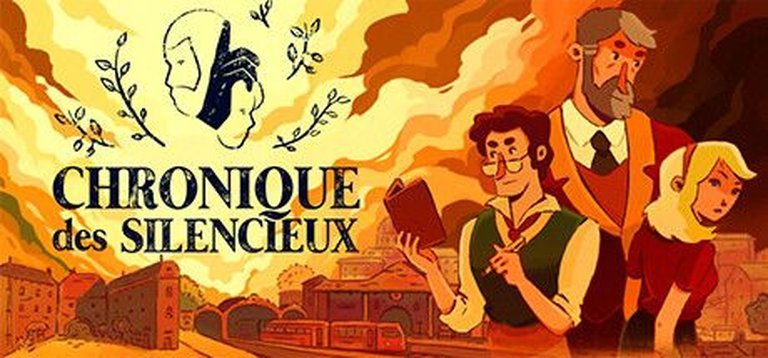
Chronique des Silencieux is a narrative-driven detective adventure game set in Europe, where players embody a private investigator named Eugene in an isometric, point-and-click world. With puzzle elements and a focus on player agency, the game challenges you to unravel mysteries independently, without hand-holding, against a backdrop of European locales and a compelling, twist-filled story.
Gameplay Videos
Where to Buy Chronique des Silencieux
PC
Chronique des Silencieux Free Download
Chronique des Silencieux Guides & Walkthroughs
Chronique des Silencieux Reviews & Reception
opencritic.com (80/100): Chronique des Silencieux is a wonderful detective game that never ever holds your hand, and if that sounds ideal to you then give it a look.
metacritic.com (80/100): Chronique des Silencieux is a wonderful detective game that never ever holds your hand, and if that sounds ideal to you then give it a look.
Chronique des Silencieux: Review
Introduction: A Detective Game of Ambition and Frustration
In an era where the detective genre has been comprehensively revitalized by titles ranging from the deductive rigor of Case of the Golden Idol to the narrative bombast of The Wolf Among Us, Chronique des Silencieux arrives with a distinct, fiercely European proposition. Developed by the French family studio Pierre Feuille Studio, this 2024 release promises an unflinching, hand-hold-free plunge into the murky waters of postwar French history, framed through the eyes of a rookie private eye. Its ambition is palpable: to create a “truest detective simulator” by demanding the player parse dense historical fiction, navigate complex webs of human lies, and literally connect truth with red string on a corkboard. Yet, for all its atmospheric triumphs and conceptual bravery, Chronique des Silencieux is a game perpetually at war with itself. Its gorgeous, Tintin-esque art and profound narrative themes are shackled by a frequently impenetrable English translation, finicky and sometimes illogical puzzle design, and a suite of technical bugs that sour its considerable promise. This review will dissect that dichotomy, arguing that Chronique des Silencieux is a flawed but fascinating artifact—a game whose heart is in the right place, but whose execution often leaves the player feeling more like a frustrated archivist than a brilliant detective.
Development History & Context: A Labor of Love from Bordeaux
Chronique des Silencieux is the magnum opus of Pierre Feuille Studio, a team led by brothers Tom (Game Design, Story, Code, Production) and Florent Allibert (Music, Sound Design, Dialogues). The project was born from a personal, familial impulse: a desire to explore the power of digging through family history and the nature of detective work itself. The development spanned approximately six years, a journey that included a successful Kickstarter campaign and the gradual expansion of the core duo into a 271-person credited team, though the creative vision remained firmly with the Allibert brothers.
The studio operated within the technological constraints and creative landscape of the modern indie scene. Built using the accessible GameMaker engine, the game’s isometric, hand-drawn visual style was a deliberate artistic choice to evoke the ligne claire aesthetic of classic Franco-Belgian comics like Tintin or Blake & Mortimer. This style served a dual purpose: it provided a distinctive, charming identity in a crowded market, and it efficiently communicated period detail and character expressiveness without resorting to photorealistic demands. The decision to localize a deeply French, historically specific narrative into English was a calculated risk to reach a global audience, but one that would prove to be the game’s most significant point of failure. The development team’s passion for its setting—1970s Bordeaux—and its themes of postwar reconciliation is undeniable, but the pressure of delivering a finished product after a long Kickstarter-backed development cycle likely contributed to the state of the English localisation and the persistence of game-breaking bugs at launch.
Narrative & Thematic Deep Dive: The Weight of Silence
The narrative structure of Chronique des Silencieux is its most praised and most punishing element. It is a story told in four parts: a sprawling, multi-hour prologue set in 1965, followed by two main chapters in 1970 and 1975, and an epilogue. The player assumes the role of Eugène Faury, a teenage Italian immigrant arriving in Bordeaux after his mother’s death. What begins as a simple search for his missing uncle, Flavio (a pimp at the “Pays de Galles” brothel), evolves into the foundational case that ignites Eugène’s lifelong passion for detection. This prologue is a masterclass in immersive world-building, introducing the seedy yet vibrant ecosystem of the Mériadeck district, its criminal underbelly, and its resilient inhabitants like the formidable Madame Solange.
The true thematic core arrives with the five-year timeskip. Eugène, now a fledgling private investigator with his own agency, is hired by the mild-mannered history professor Victor Dousvalon. Victor, inexplicably, wants Eugène to investigate his own past—a past shrouded in secrecy even from his daughter, Catherine. This premise launches the game into its profound primary investigation: a piece of historical fiction deeply intertwined with the real traumas of World War II, the French Resistance, collaboration, and the messy process of rebuilding a society. The “silent ones” of the title are not just reluctant witnesses but people running from the moral ambiguities of their wartime actions. The player must untangle identities (codenames like “Lefebvre” and “Grandsermand”), expose forgeries, confront assassins turned respectable citizens, and understand the lifelong burden of secrets.
The narrative’s strength lies in its “people’s history” approach. It avoids grand, bird’s-eye-view tales of heroism, instead focusing on the ground-level consequences: a brewery’s decline tied to a patriarch’s Nazi sympathies, a child scarred by violence, a woman’s nest egg jeopardized by past crimes. The cast is uniformly complex; even minor characters like the brothel’s working girls or the stalwart Inspector Yves Maleski are given weight and personal motivation. The central mystery concerning Victor Dousvalon is compelling, weaving together threads of identity theft, murder, and the ethical quandaries of vengeance versus forgiveness. However, the narrative’s greatest asset is also its weakness: its sheer density and refusal to guide the player. Important emotional beats can be lost in a blizzard of documents and dialogue options, and the prologue’s length and seemingly disconnected events can test the most patient player’s engagement before the main plot even begins.
Gameplay Mechanics & Systems: The Deductive Dance (and Its Stumbles)
Chronique des Silencieux attempts to translate the cerebral process of detective work into interactive systems with a unique, tactile interface. The core loop is three-phase: Exploration & Interrogation, Deduction & Hypothesis Forming, and Confrontation.
-
Exploration & Interrogation: The player navigates isometric, fixed-screen locations in Bordeaux and later Nérac. Movement can be via point-and-click or keyboard, but is notoriously clunky; the camera often zooms too close or far, and characters can “vanish” when the camera is panned, a persistent graphical glitch. Hotspots for interaction appear only when Eugène is near, encouraging careful exploration. Interrogation is a highlight: players select topics from portrait-based menus, unlocking new lines of inquiry and deeper levels of personal disclosure. A novel mechanic is the tape recorder, used to capture musical motifs (like a whistled tune or a jukebox song) that later serve as keys to unlock conversations or locations, adding a auditory layer to investigation.
-
Deduction & Hypothesis Forming: This is the game’s innovative, and most divisive, core system. After accumulating “Testimonies” (transcripts of conversations) and “Documents” (letters, reports, photographs), the player is tasked with finding “Connections”—either contradictions or thematic links—between them. This is done by selecting lines of text from each side and dragging a beautiful, physics-enabled red string with pushpins between them. A correct connection “files” the lead, freeing up new topics or locations. The system is visually charming and conceptually pure, simulating the detective’s “aha!” moment of linking two disparate facts.
The major flaw lies in its sheer, often bewildering, scope. With dozens of characters, hundreds of topics, and a briefcase full of documents, the potential combinations are staggering. The game rarely signals what kind of link it seeks—a direct contradiction, a shared name, a motive?—leading to extensive trial and error. The feedback system, where players can submit missed connections to the developers, is an admirably humble acknowledgment of this design challenge.
The “Hypothesis” screen, used to unlock character doors, is even more problematic. To form a hypothesis, the player must select a Verb Key (e.g., “Threaten,” “Kill,” “Finance,” “Protect”) and link it to two Story Elements (specific facts about characters or events). The verb selection is presented via padlock icons. This system is opaque. Verbs are often unclear in their application, and the Story Elements, while listed, are not always logically paired with the verbs the game expects. Players frequently report having deduced the narrative truth (e.g., “Character A blackmailed Character B”) but being unable to guess the specific game verb (“Intimidate” instead of “Threaten”) or the correct element (“The drug deal” vs. “Antique shop”) the puzzle requires. This creates a profound disconnect between player intuition and game logic, turning deduction into a frustrating guessing game.
- Confrontation: Once hypotheses are solved, the player confronts the suspect in a Phoenix Wright-style cross-examination. Here, the player must again select a line from the suspect’s testimony and connect it to a contradictory document or testimony. The key difference is a limit on incorrect attempts (usually 2-3), after which the NPC detective, Yves Maleski, automatically provides the correct answer, often with a patronizing tone. This punishes experimentation and makes the player feel foolish, undermining the game’s core promise of trusting the player’s deductive powers. A final chapter score tallies “mistakes” and hints used, adding a layer of punitive judgment to an already steep challenge.
The game does feature a hint system via Inspector Maleski, but it is notoriously unhelpful, often stating the obvious or saying more information is needed without pointing to its location. The abundance of irrelevant detail—pages of dialogue with no bearing on the core mystery—means players spend hours re-reading text, a process more akin to research than satisfying deduction. While the ambition to simulate the tedious, detail-oriented work of real detective work is commendable, the execution tips into masochism.
World-Building, Art & Sound: A Sublime French Comic Book
Where Chronique des Silencieux is undeniably, breathtakingly successful is in its artistic and auditory presentation. The game is a moving, interactive illustration in the ligne claire style. Characters are rendered with bold, clean lines, expressive features (e.g., the iconic red, pointed noses), and vivid, period-authentic color palettes. The 1970s Bordeaux is brought to life with sun-dappled café terraces, seedy brothel interiors, bustling market squares, and the solemn corridors of a university. The attention to detail in environmental storytelling—posters on walls, items on shelves, the specific fashion of each character—is exceptional and sells the historical setting completely.
The animated cutscenes, primarily in French with English subtitles, are beautifully crafted, retaining the comic-book aesthetic while adding fluid motion and dramatic timing. The soundtrack, composed by Florent Allibert, is a superb pastiche of 70s French cinema scores: funky basslines, smooth saxophone, acoustic guitars, and melancholic piano melodies that perfectly underscore the game’s mood of nostalgic mystery and quiet melancholy. The fully voiced French dialogue adds tremendous authenticity and character, though it is oddly low in the mix compared to the music.
This artistic cohesion creates an atmosphere so thick you could cut it with a knife. The world feels lived-in, historically grounded, and profoundly French. It doesn’t just look like a detective story; it feels like a lost French graphic novel or a film by a Jacques Tati-influenced crime director. This consistent, high-fidelity atmosphere is what compels players to push through the gameplay frustrations—the desire to remain immersed in this gorgeous, tangible world is powerful.
Reception & Legacy: A Cult Classic in the Making, Marred by Flaws
Upon its January 2024 release, Chronique des Silencieux received a polarized critical reception, reflected in its aggregate MobyScore of 6.5 (#19,455) and Metacritic score of 64 based on 7 critic reviews. The spectrum was wide: from LadiesGamers’ perfect 5/5 score praising its every promise, to somhrac.sk’s 40% and TheGamer’s 2/5 decrying its broken state. The consensus fracture centered on three核心 pillars:
- The Art & Narrative: Universally praised for its beauty, historical depth, and compelling, character-driven mystery.
- The Localization: Universally panned. Reviews from Rectify Gaming, Adventure Gamers, Jump Dash Roll, and Video Games Are Good specifically called out the poor English translation—stilted dialogue, grammatical errors, awkward phrasing—as a fatal flaw for a game whose puzzles depend on precise textual analysis. This was not a minor issue but a core impediment to playability.
- The Gameplay Design: Deeply divisive. Reviewers like God is a Geek (80%) and WhatIfGaming (70%) celebrated its uncompromising, hand-holding-free detective simulation. Others, like Gameluster (70%), Adventure Gamers (50%), and Jump Dash Roll (40%), found its difficulty spikes illogical, its systems opaque, and its pacing sluggish. The “fact-hunting”而非”pixel-hunting” was seen by some as a brilliant evolution and by others as tedious and unfairly vague.
Commercially, it found a niche but vocal audience. Steam user reviews are “Mostly Positive” (76/100 on Steambase from 34 reviews), indicating a dedicated cult following willing to overlook its flaws for its unique charms. The developers have been active post-launch, releasing patches addressing bugs, improving the hint system, and tweaking interrogation mechanics, suggesting a commitment to redeeming their vision.
Its legacy is currently being written. In the canon of detective games, it will likely be remembered as a bold, beautiful, and deeply flawed experiment. It shares DNA with Ace Attorney (cross-examinations, verb-based逻辑) and Papers, Please (document scrutiny as core gameplay), but pushes the “scrutiny” to an extreme that tests player endurance. It serves as a cautionary tale about the critical importance of localization quality for text-heavy narrative games and the fine line between challenging and frustrating design. Its most significant potential legacy may be in proving there is an audience for “slow,” literate detective simulators, encouraging future developers to iterate on its connective-tissue mechanics with more polish and player guidance.
Conclusion: A Flawed Masterpiece of Atmosphere and Ambition
Chronique des Silencieux is not a game for everyone. It is not for the impatient, the monolingual English speaker seeking a smooth ride, or the player who needs a compass to point the way. Its systems are demanding, its text is often mangled, and its technical state at launch was rough. Yet, to dismiss it entirely is to ignore a game of remarkable heart, beauty, and intellectual ambition.
It succeeds fundamentally in what it sets out to do: make you feel like a detective piecing together a real, muddy, historical case. The moment when three disparate threads—a forgotten song, a shared codename, a threatening letter—snap together on your corkboard is a genuine thrill. The setting is one of the most authentic and immersive in gaming, a love letter to a specific time and place rendered in stunning visual and audio detail. The narrative, when it breaks through the noise, is mature, historical, and emotionally resonant, dealing with themes of guilt, legacy, and the cost of silence with a gravity rarely seen in the genre.
Its failures, however, are monumental. The translation is a deal-breaker for many, transforming logical deduction into a chore of deciphering broken English. The hypothesis and confrontation mechanics often prioritize arbitrary game logic over common sense, creating a frustrating barrier between the player’s understanding and the game’s acceptance. The technical glitches—invisible characters, texture corruption, crashes—are the final insult.
In the grand tapestry of video game history, Chronique des Silencieux will not be remembered as a landmark like The Stanley Parable or Disco Elysium. But it deserves a place as a cult curio, a passionate and flawed testament to the idea that a detective game can be about history and human complexity, not just murder mysteries. It is a game that asks for immense patience and offers, in return, a uniquely immersive and intellectually taxing journey. With significant post-launch improvements already made and a clear core vision, its full potential may yet be realized in sequels or inspired successors. For now, it stands as a * gorgeously illustrated, brilliantly thematic, but ultimately frustrating detective saga*—a game that earnestly tries to let you think for yourself, but frequently makes you wish it would just tell you what it wants. Its place in history is that of a beautiful, troubled, and deeply human endeavor.