
- Release Year: 2017
- Platforms: Android, Windows
- Publisher: Big Fish Games, Inc, GameGlade.com, HH Games
- Developer: GameGlade.com
- Genre: Puzzle
- Perspective: 1st-person
- Gameplay: Tile matching puzzle
- Average Score: 73/100
Description
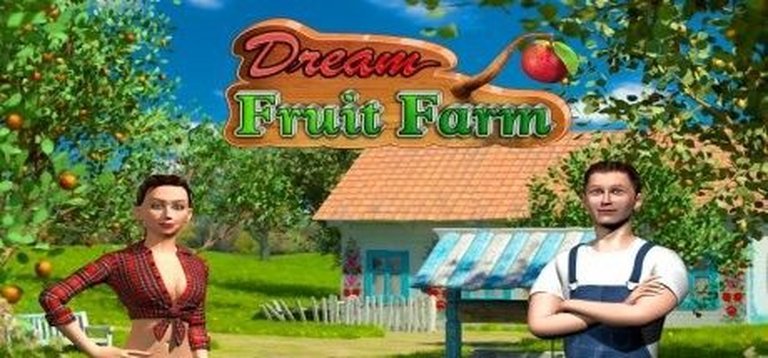
Dream Fruit Farm is a puzzle game where players help Tom and Charlize transform an old abandoned house and surrounding land into a thriving fruit farm through addictive match-3 gameplay. By collecting three or more identical fruits in horizontal or vertical lines to complete level tasks, players enjoy 120 challenging levels, two game modes (Moves/Time Limited and Relaxed), spectacular bonuses, and farm-building elements, all presented with colorful graphics and melodious music.
Gameplay Videos
Where to Buy Dream Fruit Farm
PC
Dream Fruit Farm: A Sun-Drenched Puzzle in a Field of clones
Introduction
In the sprawling ecosystem of casual mobile and PC gaming, the “match-3” puzzle genre is a monolithic, evergreen crop. Into this well-tilled soil stepped Dream Fruit Farm in 2017, a title that offers a seemingly simple proposition: combine the meditative logic of tile-matching with the gentle, aspirational fantasy of building a farm. To dismiss it as merely another entry in a crowded field, however, would be to overlook its role as a pristine case study in the execution of a proven formula by a small, dedicated team. This review argues that Dream Fruit Farm is not a revolutionary artifact, but a profoundly competent one—a game that understands the core therapeutic loop of its genre and executes it with unassuming clarity, serving as a quiet benchmark for what a focused, small-studio puzzle title can achieve within its self-imposed limitations.
Development History & Context
Dream Fruit Farm emerged from the crucible of the late 2010s casual gaming market, a period dominated by giants like King (Candy Crush Saga) andPlayrix (Gardenscapes, Homescapes). The developer, GameGlade.com, is a small, seemingly Ukrainian-based studio whose public footprint is minimal. The credited team—listed collectively as the “GameGlade team” for production, design, and sound, with Ivan Malashenko as sole programmer—speaks to a compact, multi-disciplinary development effort typical of the casual PC and mobile space. This was not a project from a AAA studio chasing trends, but from a smaller entity working within a well-established, highly profitable paradigm.
The game’s release strategy reflects this context:
1. Windows (June 2017): Initially published by the ubiquitous Big Fish Games, Inc., a major distributor in the casual PC market. This provided immediate access to a vast, pre-established audience of puzzle enthusiasts.
2. Android (December 2018): A port handled by the developers themselves via Google Play, expanding reach to the mobile dominant market two years after its PC debut.
3. Steam (January 2022): A later release via HH Games, marking its entry into the more eclectic but crowded Steam “casual” and “puzzle” categories.
Technologically, the game uses a fixed/flip-screen perspective and a point-and-select interface, suggesting a lightweight engine optimized for broad compatibility on low-spec systems and mobile devices. Its graphical style, while described in store pages as “excellent” and “colorful,” aligns with the bright, saturated, and simplified aesthetic standard for the genre—prioritizing readability and cheerful appeal over technical fidelity. The choice of Kevin MacLeod’s royalty-free music (licensed under Creative Commons) is a hallmark of independent and casual development, providing a professional, melodious soundtrack at a minimal cost.
Narrative & Thematic Deep Dive
Dream Fruit Farm’s narrative is not a complex tapestry but a functional scaffold, designed to subtly contextualize gameplay without demanding cognitive load. The premise, repeated across all storefronts, is immediate: “Tom and Charlize very love fruits and dream about their own fruit farm. They have a small piece of land, but there is nothing besides an old abandoned house. Apparently they have a lot of work. Will we help them?”
This ultra-simple setup establishes:
* Protagonists: A young, archetypal couple (Tom and Charlize) whose desire is specifically for fruit. This isn’t a generic farm; it’s a fruit farm, directly justifying the core mechanic of matching fruit tiles.
* The Stakes: The land is barren, save for an old house. The player’s role is one of restorative stewardship and entrepreneurial building.
* Player Agency: The question “Will we help them?” immediately positions the player as the active agent of change, the unseen force transforming the dream into reality.
The themes are lightweight but clear:
1. The Joy of Cultivation: The game maps the logical, progressive satisfaction of clearing a match-3 board onto the tangible, visual growth of a farm. Each level’s completion is not just a score, but a step towards planting trees and revitalizing the orchard.
2. Simplicity and Accessibility: The narrative avoids any conflict, villainy, or complex lore. It aligns perfectly with the game’s “Easy and fun to play, challenging to master” design philosophy, offering a stress-free, aspirational space.
3. Silent Storytelling: Any progression in the tale of Tom and Charlize is told entirely through the evolving state of the farm itself. The “story” is the farm’s transformation from the “old abandoned house” to a thriving operation, a narrative written in gameplay output rather than dialogue or cutscenes.
While not rich in character development or plot, this narrative approach is perfectly calibrated for its audience: a low-friction, positive reinforcement loop where the player’s puzzle-solving directly feeds a visually rewarding simulation of growth.
Gameplay Mechanics & Systems
At its heart, Dream Fruit Farm is a classic, unobfuscated match-3 puzzle game. Its genius lies not in reinvention but in the purity and polish of its execution of the formula.
Core Loop:
* Objective: The primary goal on any given board is to complete specific “level tasks.” These typically involve collecting a certain quantity of a specific type of fruit (e.g., “Collect 50 Apples”), clearing “dirt” or “ice” tiles by making adjacent matches, or gathering “fruit baskets” by matching fruits beneath them.
* Mechanic: The player swaps two adjacent tiles to form a horizontal or vertical line of three or more identical fruits. Successful matches disappear, tiles cascade down, and new ones fill from the top.
* Progression: Completing the task(s) for a level awards stars and currency, which is funneled into the secondary “farm-building” layer.
Innovative or Flawed Systems:
* The Farm Layer: This is the game’s signature “hook.” Between puzzle levels, players use earned currency to clear debris from their central farm screen and plant fruit trees. These trees then slowly generate a passive income of fruit (in the form of boosters or currency) over real time. This creates a compelling dual-resource loop: active puzzle-solving (to earn currency for immediate upgrades) feeds passive generation (which provides consumables for harder puzzles). It’s a light touch of social/clicker game mechanics, encouraging short, regular play sessions.
* Game Modes: The inclusion of Moves-Limited, Time-Limited, and Relaxed modes is a critical accessibility feature. “Relaxed” mode removes all move/time pressure, allowing for pure, stress-free board experimentation—a godsend for players who find the pressure of move limits anathema to relaxation. This acknowledges the diverse reasons people play match-3 games.
* Bonuses & Power-Ups: The game includes “spectacular bonuses” as advertised—likely match-4/5 special tiles and post-match power-ups (like bombs or row/column clearers). Their effects are standard for the genre but are integrated cleanly. A potential flaw, common to the genre, is that their creation and use can sometimes feel mandatory rather than strategic on certain levels.
* UI & Feedback: The interface is clean, point-and-select, with clear indicators for tasks and resources. The visual and auditory feedback upon a successful match—the pop, the satisfying clink or pluck sound—is crisp and rewarding, a non-negotiable element in a good match-3 game. The lack of intrusive energy systems (like lives that deplete and require waiting or payment) is a significant point in its favor for the “relaxed” experience.
The systems are not novel, but they are coherently interlocked. The puzzle provides the resources; the farm provides long-term goals and passive benefits. This creates a gentle, sustained engagement curve that respects the player’s time.
World-Building, Art & Sound
Given the game’s indie, budget-conscious origins, its presentation is a study in efficient, genre-standard aesthetics.
* Visual Direction: The game operates on two visual planes:
1. The Puzzle Boards: These are bright, top-down grids against cheerful, themed backgrounds (orchard scenes, barns, etc.). The fruit sprites are colorful, distinct, and easily recognizable at a glance—a paramount concern in a fast-paced puzzle game. The art style is cartoonish and soft-edged, evoking a sense of friendly, artificial abundance.
2. The Farm Screen: This is a simple, isometric or angled view of a small plot of land. It begins desolate with the “old abandoned house” and debris. As players spend currency, the debris clears, soil tills, and fruit trees are planted. The visual progression from gray, cluttered mess to a vibrant, organized mini-orchard provides a powerful secondary reward loop.
* Atmosphere: The atmosphere is one of sun-drenched, gentle productivity. There is no day/night cycle, no weather, no sense of urgency or threat. It is a perpetually pleasant, static afternoon.
* Sound Design: Composed by the prolific Kevin MacLeod, the soundtrack consists of his signature upbeat, cheerful, acoustic or light electronic tracks (such as “Carefree” or “Life of Riley”). The music is inoffensive and pleasant, perfectly setting a mood of casual enjoyment. Sound effects for matching fruits are clean pops and plucks; reward jingles are short and sweet. The audio design’s primary function is to reinforce positive feedback without ever becoming grating—a successful, if unremarkable, implementation.
These elements do not create a deep, immersive world. Instead, they create a consistent, frictionless, and aesthetically pleasing space that perfectly complements the puzzle mechanics. The world exists to serve the gameplay, and in that service, it is entirely effective.
Reception & Legacy
Dream Fruit Farm occupies a niche defined by quiet competence over loud acclaim.
- Critical Reception: The data is starkly telling. On Metacritic, it holds a “tbd” Metascore with zero critic reviews. On MobyGames, it has a “n/a” Moby Score and is “Collected By” only 1 player. This indicates it existed almost entirely outside the orbit of professional criticism, a common fate for games distributed through channels like Big Fish Games that cater to a less review-savvy demographic.
- Commercial & Player Reception: Its true metric is its continued presence on storefronts and its “Mostly Positive” (73/100) Steam rating from ~11 reviews. The small review sample is typical for an obscure casual title, but the positivity suggests it delivered on its promise for its target audience. Its bundling into massive “Match 3 Bundle” collections on Steam is the ultimate compliment in this market: it is deemed reliable, inoffensive filler that adds value to a package.
- Legacy & Influence: The game has had no discernible influence on the broader industry. It did not pioneer mechanics, redefine aesthetics, or capture cultural attention. Its legacy is one of participating successfully in a saturated model. It stands as a testament to the enduring viability of the classic match-3 + light-simulation loop when executed cleanly by a small team.
- Context in the Genre: Released between the peak of Candy Crush Saga‘s dominance and the rise of hybrid “match-3 + home renovation” games like Homescapes and Gardenscapes, Dream Fruit Farm is a purer, less narrative-driven example of the “match-3 + base-building” hybrid (seen earlier in games like Flora’s Fruit Farm from 2009). It lacks the elaborate story scenes and character interactions of its Playrix contemporaries, making it a more streamlined, perhaps more “old-school,” version of that hybrid formula.
Conclusion
Dream Fruit Farm is not a lost masterpiece. It is not a genre-defying innovation. By the metrics of critical discourse and industry influence, it is nearly a non-entity. Yet, to judge it solely by those standards is to miss its point and its quiet achievement.
As a professional analysis, its value lies in its crystallization of a successful, low-risk development template. It proves that with a clear vision (match-3 + farming), a tight gameplay loop, a respect for player time (via modes like Relaxed), and a polished, cheerful exterior, a small studio can create a functionally perfect specimen of its kind. Every element—from the clear fruit sprites to the passive farm generation—serves the core experience without friction or over-complication.
Its place in video game history is not on a pedestal, but in a well-organized catalog: it is a textbook example of executed competence within the casual match-3 genre. For scholars studying the economic and design structures of the casual game market, it is a pure data point. For the player seeking 120 levels of undemanding, colorful puzzle-solving with a satisfying meta-progression, it delivers exactly what the ad blurb promises. In a field of countless imitators, Dream Fruit Farm does not stand out; it simply fulfills its role with a quiet, sun-ripened adequacy that is, in its own modest way, definitive.
Final Verdict: 3/5 Stars – Competent Casual Craft. A solid, no-frills implementation of the match-3 + light-sim formula that satisfies its niche but leaves no lasting impression beyond the genre’s established boundaries.