
- Release Year: 2005
- Platforms: GameCube, PlayStation 2, PlayStation 3, Windows, Xbox
- Publisher: ak tronic Software & Services GmbH, Buena Vista Games, Inc., D3Publisher Inc.
- Developer: Traveller’s Tales (UK) Ltd.
- Genre: Action
- Perspective: Third-person
- Game Mode: Co-op, Single-player
- Gameplay: Action-Adventure, Character Switching, Collectibles, Combat, Hack and Slash, Puzzles
- Setting: Fantasy
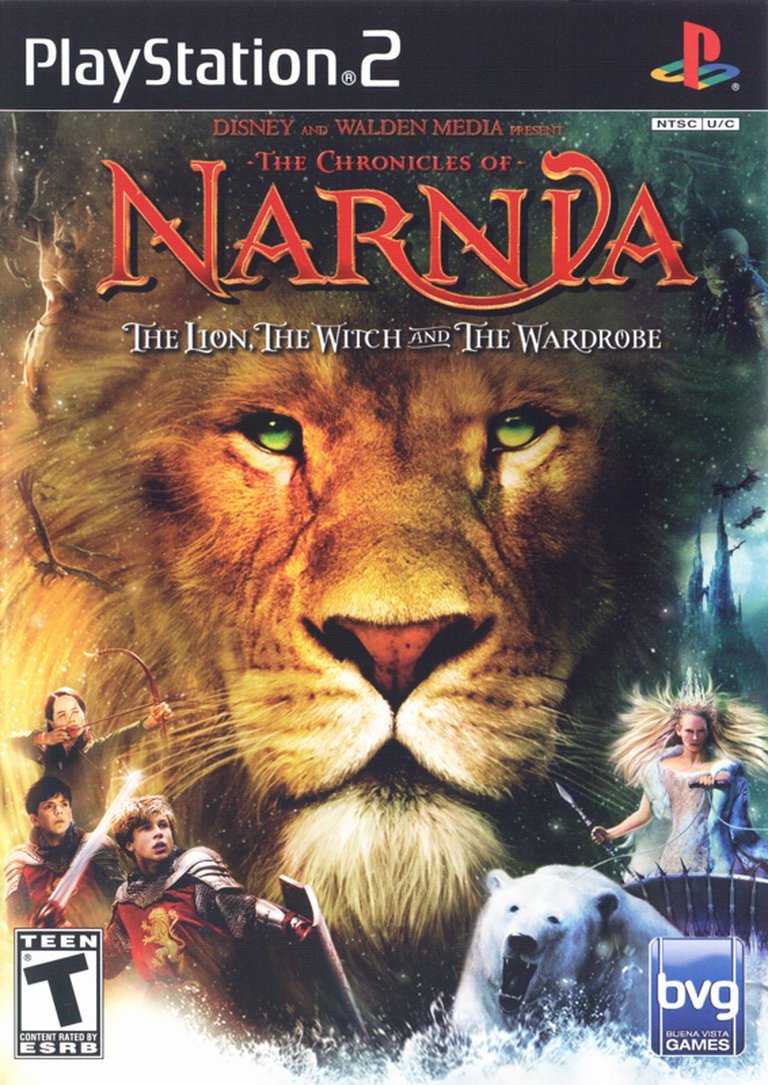
Description
Based on C.S. Lewis’s beloved novel and its film adaptation, this action game tasks players with controlling the Pevensie siblings—Peter, Susan, Edmund, and Lucy—as they journey from a World War II-era English home to the magical land of Narnia. Each child has unique abilities: Peter’s strength for combat and breaking barriers, Susan’s ranged attacks with arrows and projectiles, Edmund’s agility for climbing and ice traversal, and Lucy’s healing and small-space navigation, all utilized across levels set in iconic locations like the Professor’s house, Narnian forests, and London under siege to confront the White Witch’s forces.
Gameplay Videos
Where to Buy The Chronicles of Narnia: The Lion, the Witch and the Wardrobe
PC
The Chronicles of Narnia: The Lion, the Witch and the Wardrobe Cracks & Fixes
The Chronicles of Narnia: The Lion, the Witch and the Wardrobe Cheats & Codes
Xbox
At the title screen, press A, then hold L + R and press Down(2), Right, Up to enable cheat mode. The ‘Press The Start Button’ text will turn green to confirm. Then enter the following codes during gameplay or at specified screens.
| Code | Effect |
|---|---|
| Hold L and press Down, Left, Right, Down(2) during game play. | 10,000 more coins |
| Hold L and press Down, Left, Right, Left, Up during game play. | All abilities in inventory |
| Hold L and press Down(2), Right(2), Down, Right, Up while the Bonus drawer is highlighted. | All bonus levels |
| Hold L and press Press Up(2), Right, Up during game play. | Full combo meter |
| Hold L and press Down, Up, Down, Right(2) during game play. | Invincibility |
| Hold L and press Up(2), Right(2), Up, Right, Down at the Wardrobe level selection screen. | Level select |
| Hold L and press Down, Left, Down, Left, Down, Right, Down, Right, Up during game play. | Level skip |
| Hold L and press Down, Left(2), Right during game play. | Restore Pevensie children’s health |
The Chronicles of Narnia: The Lion, the Witch and the Wardrobe: Review
Introduction: A Wardrobe into Gaming Oblivion or Enchantment?
The mid-2000s were a wasteland for licensed video games. For every rare gem like Unto the Evil or Spider-Man 2, there were scores of cynical, rushed tie-ins—shovelware designed solely to capitalize on a blockbuster film’s opening weekend. Into this fraught landscape stepped The Chronicles of Narnia: The Lion, the Witch and the Wardrobe, a game adaptation of Andrew Adamson’s 2005 fantasy epic. Developed by Traveller’s Tales and published by Buena Vista Games, it faced the twin pressures of mirroring a visually majestic, Oscar-winning film and honoring C.S. Lewis’s beloved, theologically nuanced novel. The critical question was whether it could transcend the “movie game” curse. This review argues that while the game ultimately remains a product of its commercial constraints, it stands as a surprisingly competent and often charming action-adventure that captures the essence of its source material far better than most of its contemporaries. Its legacy is not one of watershed innovation, but of demonstrating that a licensed game could be mechanically sound, narratively faithful, and genuinely enjoyable for its target audience—a modest victory in an era of rampant exploitation.
Development History & Context: The Clock Was Always Ticking
Studio Pedigree and a Fork in the Road
The game was developed by Traveller’s Tales, a UK studio with a mixed portfolio pre-2005. While they had experience with licensed properties (including Crash Bandicoot and Pepsi Max branded games), they were not yet the household name they would become following the LEGO Star Wars revolution. Here, they operated in a more conventional, straightforward action-adventure space. The development was almost certainly dictated by a tight alignment with the film’s release schedule, a standard but pernicious practice in the industry. As noted in the source material, the film premiered in December 2005; the game’s releases across PlayStation 2, Xbox, GameCube, and Windows all occurred that same month. This indicates a development cycle measured in months, not years, with all the attendant risks of rushed design, unpolished systems, and a mandate to accurately reflect the film’s narrative and aesthetic.
Technological Constraints of the mid-2000s
The game targets the sixth-generation consoles (PS2, Xbox, GameCube) and early Windows PCs. This hardware defined its capabilities: character models are blocky but recognizable, environments are sparse with repetitive snow and forest textures, and loading times between areas are notably slow—a point specifically called out in multiple reviews (e.g., GamePro). The visual ambition to recreate the film’s epic scale inevitably outstrips the polygons available. Cutscenes cleverly interweave actual high-quality film footage with in-engine sequences, a practical solution to both save on rendering costs and ensure narrative fidelity. This hybrid approach became a staple of movie tie-ins but here feels more integral to the storytelling. The technological ceiling also explains the limited enemy variety (wolves, dwarves, ogres) and the relatively small, linear level designs.
The Gaming Landscape of 2005
The game’s competition was fierce. It arrived in the same holiday season as God of War, Resident Evil 4, and Shadow of the Colossus. More directly, it competed with other family-friendly fantasy titles like the Harry Potter games, which were also annualized tie-ins. The source material notes the developers’ aspirations: “Narnia stands as a near perfect example of how to make a movie-based videogame the right way” (IGN). This was a direct response to the stigma of licensed games. The studio’s later success with LEGO Star Wars: The Video Game (2005) shows they were experimenting with tone and accessibility, but Narnia represents their attempt at a more earnest, cinematic approach.
Narrative & Thematic Deep Dive: Faithful, But Filtered Through a Game Lens
Plot Structure and Pacing
The game’s narrative is not an adaptation of the book, but a direct translation of Adamson’s film. This is a crucial distinction. The plot progresses through a series of vignettes mirroring key set-pieces: the Blitz, Lucy’s first encounter with Mr. Tumnus, the escape from the wolves, the meeting with Father Christmas, the battle at the Stone Table, and the final confrontation. Each level is bookended by extensive film clips, ensuring players unfamiliar with the story are brought up to speed. This fidelity is a double-edged sword. For fans, it’s a nostalgic recreation of cinematic moments; for newcomers, it risks spoiling the film’s plot, as GameSpot cautioned. The pacing is uneven. The first act (the Professor’s house, initial trek through the snowy forest) is slow and tutorial-heavy, while the final battle is a chaotic, lengthy crescendo that some critics found frustratingly difficult.
Characterization Through Gameplay
True to its source, the game’s core narrative mechanism is the cooperation of the four Pevensie siblings. However, the game translates their book/film character arcs into gameplay roles, sometimes reductively:
* Peter is the straightforward leader and melee powerhouse, capable of breaking barriers. His narrative role as the eldest is reduced to “tank.”
* Susan is the ranged support, using a bow and arrows. Her maternal, cautious nature in the story is abstracted to “keep your distance.”
* Edmund’s redemption arc—his betrayal, imprisonment, and heroic turn—is the most narratively significant. Mechanically, he is the agile climber and ice-walker, abilities that reflect his resourcefulness but simplify his moral journey to environmental puzzles.
* Lucy embodies faith and healing. Her ability to restore health and access small spaces directly mirrors her innocent, compassionate core. Her narrative moments of unwavering belief (first seeing Narnia, tending to Aslan) are often relegated to passive cutscene witnessing rather than active participation.
This mapping is logical for game design but flattens the rich internal character development of Lewis’s work. The theological allegory (Aslan’s sacrifice mirroring Christ’s) is visually present in the Stone Table sequence but is not mechanically engaged with; it is an event to witness, not a system to interact with.
Themes: Sacrifice, Rule, and Childhood
The dominant themes of sacrifice (Aslan’s offering), rightful rule (the prophecy of the four thrones), and the transition from childhood to responsibility are all present in the game’s structure. Completing the gameliterally crowns the children Kings and Queens. However, the game’s thematic depth is entirely atmospheric. The icy, oppressive rule of the White Witch is conveyed through the environment (eternal winter, frozen creatures) and the grim visual design of her fortress. The warmth and vitality of Narnia under Aslan are contrasted in the final, spring-filled battle. These are effective cinematic translations but offer no interactive commentary. The game is about doing in Narnia, not understanding Narnia’s deeper moral or spiritual laws.
Gameplay Mechanics & Systems: Cooperative Conundrums
Core Loop and Character Switching
The central gameplay loop is a cooperative action-adventure with heavy puzzle elements. Each mission typically tasks a subset of the children with navigating an environment, overcoming obstacles, and fighting enemies to reach an objective. The ability to switch between any available character at any time (with a simple button press) is the game’s defining mechanic and its primary strength. The design encourages using specific characters for specific tasks: Lucy for healing and small passages, Edmund for verticality, Susan for distant switches or enemies, Peter for brute force. This creates simple, satisfying “aha!” moments when you realize you need to switch to the right sibling to proceed.
Combat: Simple, Repetitive, Flawed
Combat is the game’s most criticized element. It is rudimentary, consisting of light/heavy attacks, blocks, and special character-specific moves (e.g., Lucy’s healing ring, Peter’s charge). The system is susceptible to button-mashing, as 4Players.de noted. The AI is a consistent sore point. Both enemy AI—often charging mindlessly—and, more damningly, friendly AI is frequently “unhelpful and idiotic,” as GamePro stated. Siblings will stand idle while you fight hordes, get stuck on geometry, or fail to use their abilities in tandem, forcing you to micromanage all four characters yourself, which defeats the purpose of a cooperative design. Boss fights, in particular, are cited as “incredibly frustrating” (Game Informer), often relying on pattern recognition rather than mechanical depth.
Progression, Collectibles, and Ratings
Character progression is minimal. There is no RPG-like stat growth; the children’s abilities are fixed from the start. The only form of advancement is through collection. Each level is strewn with coins, pink/green gems, and hidden shields. These are tallied at the end of a stage to assign a rating (Fair, Good, Great, Outstanding). This system provides incentive for exploration and replayability but feels tacked-on and compensatory. It does little to enrich the core experience and often leads to tedious backtracking. The lack of meaningful progression undermines long-term engagement.
Innovation vs. Flaws
The game’s innovation lies entirely in its seamless character-switching within a linear, level-based structure. It prefigures the more polished teamwork mechanics in later titles like Warhammer: End Times – Vermintide or even Traveller’s Tales’ own LEGO games. However, the execution is hampered by the poor AI, simplistic combat, and occasional unfair difficulty spikes (notably in the Windows version, as per PC Powerplay’s comment on sudden enemy swarms). The level design often restricts you to narrow corridors, negating the potential of the ability-based puzzles. It’s a system with promise that is rarely demanded of the player beyond the most basic applications.
World-Building, Art & Sound: A Faithful, Flawed Facsimile
Visual Fidelity and Atmosphere
The game’s greatest achievement is its visual and auditory emulation of the film. Using a combination of actual film clips and in-engine graphics, it successfully transports the player to Narnia. The snowy landscapes of the film’s New Zealand locations are recreated with a chill, desolate beauty. The White Witch’s castle is a appropriately dark, imposing fortress of ice. Creature designs (the beavers, the centaurs, the minotaur general) are directly lifted from Weta Workshop’s film models, lending a sense of authentic weight and detail that was impressive for 2005. The art direction faithfully captures the “less dark and gritty than Lord of the Rings” aesthetic Richard Taylor of Weta intended.
However, the in-engine visuals suffer from the era’s limitations. Pop-in, low-resolution textures, and simple geometry are constant reminders of its console-generation pedigree. The cutscene transitions can be jarring, moving from pristine film footage to choppier real-time renderings. Environmental repetition is a major issue; forests and snowy plains begin to blur together over the game’s 6-8 hour duration.
Sound Design and Score
The sound design is a high point. The game features a soundtrack deeply inspired by Harry Gregson-Williams’ acclaimed film score, utilizing similar orchestral and choral motifs to evoke wonder, tension, and majesty. Sound effects for weapon strikes, creature roars, and environmental ambiance are clear and effective. The voice acting, however, is a mixed bag. The film’s main cast did not reprise their roles, so sound-alikes were used. The results are competent but lack the cinematic gravitas of the original performances, particularly for weighty characters like Aslan. This further distances the game from the film’s emotional core.
Atmospheric Cohesion
Where the game truly shines is in its ability to construct moments of atmosphere. The eerie quiet of the forest with only the crunch of snow underfoot, the sinister introduction of the White Witch’s sleigh bells, the grandeur of Aslan’s camp—these sequences benefit greatly from the sound design and art, briefly transcending the gameplay limitations to feel genuinely Narnian. It’s a shame these moments are so often interrupted by clunky combat or bewildering AI.
Reception & Legacy: A Decent, Forgotten Relic
Critical Reception: The “Pretty Good” Consensus
The critical reception, as aggregated by MobyGames’ 70% average from 50 critics, is best described as cautiously positive. The highest scores (Gamerz-Edge at 92%, IGN at 83%) champion it as “a rare treat” and “one of the better movie games of the past year,” praising its faithfulness, varied levels, and surprising depth. The middle-ground reviews (around 70-78%) from outlets like GameSpot, Yahoo! Games, and 4Players acknowledge its strengths—great cutscenes, fun co-op, good use of the license—while uniformly citing its flaws: simplistic combat, poor AI, short length, and a lack of innovation. The lowest scores (51-60%) from PC Games, GameStar, and GameBoomers are scathing, labeling it a “soulless action-adventure Klopper” and criticizing its unfair checkpoints, relentless enemy waves, and failure to capture the story’s spirit.
The split often correlates with platform and reviewer demographics. Some European and PC-focused critics were harsher on difficulty and AI, while family-oriented and console-centric reviewers were more forgiving of its simplicity. A common refrain is that it is “far better than the average licensed game,” which, in the mid-2000s, was a significant compliment but not a path to greatness.
Commercial Performance and Cultural Footprint
Commercial data is not provided in the sources, but the game’s simultaneous release with the blockbuster film (which grossed $745 million worldwide) guaranteed strong initial sales, especially as a holiday purchase for families. Its lasting cultural footprint is negligible. It is not remembered as a classic, nor is it cited as an influence. Its primary legacy is as a data point in the career of Traveller’s Tales. Released the same year as LEGO Star Wars, it represents the studio’s last major attempt at a “serious” licensed game before they found monumental success by embracing humor, charm, and genuine co-op innovation in the LEGO franchise. The AI problems and simplistic combat of Narnia were lessons seemingly learned and rectified in their subsequent work.
Position in the “Licensed Game” Ecosystem
Within the pantheon of movie tie-ins, Narnia occupies a respectable middle tier. It is not in the dreaded “worst of” lists alongside E.T. the Extra-Terrestrial or Superman 64. It is, as Digital Entertainment News stated, “a fantastic game that defies the standard rule about licensed games being crappy.” However, it also does not reach the pinnacle of adaptations like Spider-Man 2 (2004) or The Chronicles of Riddick: Escape from Butcher Bay (2004). It is a competent, faithful, but ultimately safe translation that prioritizes narrative recreation over gameplay innovation. It proves a movie game can be good, but not necessarily great.
Conclusion: A Portal to a Solid, Not Spectacular, Adventure
The Chronicles of Narnia: The Lion, the Witch and the Wardrobe is a game of profound compromise. It faithfully recreates the narrative and visual splendor of its cinematic source at the cost of mechanical depth. Its character-switching mechanic is a clever core idea, consistently undermined by brain-dead AI and simplistic combat. Its atmosphere is genuinely magical at times, yet marred by repetitive environments and long load times. For a child or a fan of the film in 2005, it provided a competent, engaging way to step into a snowy fantasy world for a few hours. For the discerning gamer, it was—and remains—a passable diversion, notable primarily for avoiding the bottomless pit of typical licensed trash.
Its place in video game history is that of a capable, mid-tier title from a studio on the cusp of greatness. It demonstrates that even under the tight deadlines and restrictive budgets of a film tie-in, a development team can craft a game with heart, respect for its source, and enough engaging systems to satisfy its intended audience. It is not a lost classic demanding rediscovery. Instead, it is a sturdy, well-made piece of craftsmanship from an era when such a thing was an exception worth noting. In the grand chronicles of gaming, Narnia is not a lion’s roar but a respectful, if unspectacular, meow—a pleasant surprise in a cupboard full of broken toys.