
Description
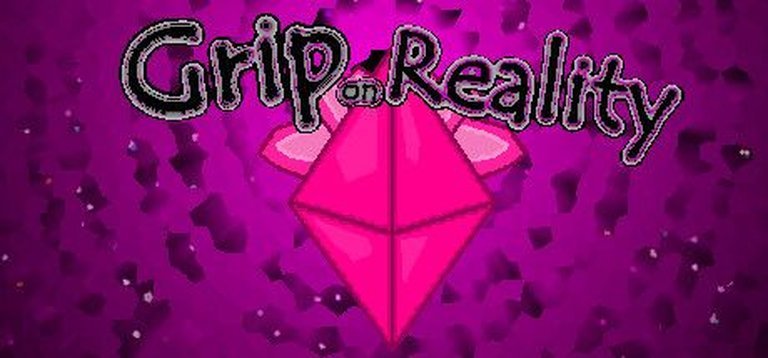
Grip on Reality is a fantasy roguelike platformer that follows the misadventures of a chaotic wizard whose spells are wildly unpredictable, often causing more harm than good. Set in a vibrant 2D world, the wizard embarks on a lengthy quest to investigate a mysterious cult that worships a powerful crystal—the very same crystal that energizes his staff—blending action, exploration, and humorous chaos in a procedurally generated adventure.
Where to Buy Grip on Reality
PC
Grip on Reality Guides & Walkthroughs
Grip on Reality Reviews & Reception
verticalslicegames.com (94/100): Critical reception to Death Stranding 2: On the Beach is overwhelmingly positive, with reviewers widely regarding it as a masterful sequel that improves upon the original in nearly every aspect.
Grip on Reality: A Review
Introduction: The Sublime Anarchy of Unpredictable Magic
In an industry often obsessed with balance, clear progression, and player agency, Grip on Reality arrives as a delightful, confounding act of rebellion. It is a game that actively works against the very notion of a “grip on reality,” both in its whimsical premise and its core mechanical philosophy. From the sparse documentation available, this 2023 indie title by developers Sean and Raphael Marty presents itself not as a traditional fantasy adventure, but as a systemic exploration of chaos. The thesis of this review is that Grip on Reality is a fascinating, albeit deeply niche, experiment in embracing randomness as a primary narrative and gameplay device, creating an experience that is less about mastering a system and more about narrativizing the unexpected. Its legacy, though currently confined to a small player base and near-total critical silence, may lie in its challenge to the roguelike genre’s conventions.
Development History & Context: A Small Studio’s Big Chaos
Grip on Reality emerged from the quiet confines of a two-person development team, Sean and Raphael Marty, who also handled publishing duties. Released on Windows via Steam in February 2023 after a brief Early Access stint beginning in January, the game represents a classic independent passion project. There are no interviews, no developer diaries, and no announced plans for major platforms beyond its initial PC release in the provided sources. The technological constraints are those of a modern but minimalist 2D indie project: built for low system requirements (Intel HD Graphics 5500, 2GB RAM), suggesting a focus on accessible, pixel-art or simple vector-based visuals over graphical fidelity.
The gaming landscape of early 2023 was dominated by sequels to major franchises and highly polished indie darlings. Grip on Reality did not enter this conversation with a marketing budget or established IP. Instead, it quietly carved a space for itself using the Steam tags it attracted: Action RPG, Platformer, Roguelike, Bullet Hell, Dungeon Crawler, Mystery Dungeon. These tags are telling—it sits at a crowded intersection of genres but advertises a unique twist: “Chaotic Spells.” In an era where player control and skill expression are paramount, the game’s stated goal of making spells “unpredictable” was a deliberate, almost counter-cultural, design choice. Its closest conceptual relatives are not mainstream titles but rather the “joke” or “anti-roguelike” experiments found in game jams or the chaotic spirit of early Mighty Switch Force! or Enter the Gungeon‘s more absurd weapon combinations, but taken to a foundational extreme.
Narrative & Thematic Deep Dive: The Madness of the Crystal Cult
The narrative of Grip on Reality is delivered with the brevity of a folk tale, eschewing cinematic cutscenes for environmental storytelling and sparse dialogue. The premise, as per the official Steam description, is deceptively simple: “You follow the adventures of the crazy wizard who casts spells and ruins lives. The wizards spells do not work as desired as they tend to be rather chaotic and unpredictable. The wizard finds himself embarking on a long quest across the world to uncover the mysterious cult worshipping a crystal, the same crystal powering the wizards staff.”
This is not a story about a chosen one saving the world with precise, heroic magic. It is a story about unintended consequences. The wizard is not “crazy” in a tragic, sanity-bending way (like in Amnesia), but in a comedic, slapstick sense—his fundamental disconnect from a stable magical reality is both his curse and his engine of plot. The central MacGuffin, the crystal cult, is a perfect narrative reflection of the gameplay. Just as the wizard cannot reliably control his spells, the world itself is controlled by a cult worshipping a single, inscrutable power source. The quest to “uncover” them is thus a quest to find the source of the world’s—and his own—inherent instability.
Themes are explored through systemic juxtaposition rather than dialogue:
* Chaos vs. Order: The entire game is a tension between the structured goals of a roguelike (descend, fight, get stronger, repeat) and the anarchic spell system that constantly subverts those goals.
* The Unreliable Protagonist: The wizard is a vehicle for player experimentation, but his canonical unreliability makes every “win” feel like a lucky accident and every “loss” a shared, humorous failure.
* Investigation and Cataloging: The mention of an “almanac” where you “catalogue the world and your findings” suggests a meta-narrative about a scholar (or madman) trying to impose order on chaos through documentation—a direct mirror of the player’s attempt to understand the game’s random systems.
The “secret language puzzles” mentioned in the features hint at a world with its own rules, further deepening the theme that reality is a construct to be decipher, not a stage to be conquered.
Gameplay Mechanics & Systems: Embracing the Random
Grip on Reality’s gameplay is its defining statement. It is a 2D side-scrolling roguelite with point-and-select interface (implying mouse-driven movement and targeting) and platforming elements. The canonical description lists “Hundreds of items,” “Randomly generated levels,” and “Randomly generated wands,” but the cornerstone is the “Chaotic Spells” system.
Core Loop: Enter a procedurally generated dungeon/area → explore, fight, collect items and wands → encounter a boss → die, start over with some persistent progression (implied by “Roguelite” tag and “character skins”).
The Chaotic Spell Engine: This is the game’s revolutionary (and divisive) core. Instead of a wand shooting a predetermined projectile (fireball, ice bolt), each cast selects an effect at random from a very long list of possibilities. The Steam description states: “Sheer chance can turn a dire situation into a triumphant victory, or bring even the most powerful wizard to their knees.” This is not critical hit RNG; this is effect identity RNG. A single cast could heal an enemy, spawn a harmless cat, create a block, teleport the player, summon a completely different spell, or do classic damage. The only “control” comes from “an assortment of collected items” that “can control said effects to some extent.”
This system forces a fundamental paradigm shift:
1. Strategy Becomes Reactive and Probabilistic: Players must assess the range of possible outcomes from a wand, not a single one. Do you fire into a crowd of enemies hoping for a beneficial area effect, or risk healing them?
2. Builds Are Defined by Mitigation, Not Synergy: Traditional roguelike build-crafting focuses on combining “+X% fire damage” with “burn on hit.” In Grip on Reality, build-crafting is about curating the chaos. Items that add more spell effects to the pool are dangerous. Items that reduce randomness, or add specific “good” effects, are precious. A “good” wand is one with a high probability of non-harmful randomness.
3. Narrativizes Failure and Success: A catastrophic loss because a healing spell hit a boss becomes a funny story. A victorious comeback because a randomly spawned platform allowed escape feels like divine intervention. The game’s story of a “crazy wizard” is lived in every playthrough.
Other Systems: The “Possession Mode” is a fascinating twist on co-op. Instead of a second wizard, a friend controls NPCs—enemies or friendly creatures—with “mostly full control.” This turns co-op into a dynamic of sabotage or assistance, perfectly complementing the chaotic main game. The “almanac” serves as both a bestiary, item log, and perhaps puzzle solution tracker, rewarding thorough exploration over combat prowess. The “tons of secrets” and “secret language puzzles” suggest a Metroidvania-like layer where understanding the game’s internal language or mechanics unlocks new paths.
Flaws (Inferred): The extreme randomness is almost certainly a double-edged sword. It would lead to immense frustration for players seeking mastery. The game’s balance likely hinges on the player’s perception of “fairness” in chaos, a notoriously difficult design problem. The “point-and-select” interface on a fast-paced 2D platformer with bullet hell elements could feel imprecise.
World-Building, Art & Sound: A Cartoony Canvas for Chaos
The available screenshots (not provided in text, but inferred from tags) and descriptions paint a picture of a “Cartoony,” “Colorful,” “Pixel Graphics” world with a “Medieval” yet “Alternate History” Fantasy setting. The “Family Friendly” and “Funny” tags reinforce a lighthearted, almost Saturday morning cartoon aesthetic. This art direction is a masterstroke for the theme: a bright, predictable-looking world where the underlying rules are anything but. The juxtaposition of a cheerful, Medieval-style wizard against the chaotic consequences of his magic provides instant visual comedy.
The “2D scrolling” perspective is classic for platformers and roguelikes, allowing for clear spatial awareness crucial in a game where a random teleport spell could place you over a pit. The inclusion of “Cats (obviously)” and numerous NPCs suggests a world bustling with life, populated by quirky characters whose behaviors might also be subject to the game’s chaotic rules.
Sound design, while not detailed, is implied by the “Full Audio” Steam listing. It would likely employ whimsical, magical sound effects that change with each spell cast—a library of whooshes, boops, zaps, and bellows that constantly surprise the player. The soundtrack probably oscillates between playful adventure tunes and tense, reactive melodies during combat, mirroring the unpredictable gameplay.
The atmosphere is one of playful uncertainty. You cannot trust your eyes, your wand, or the ground beneath you. This builds a unique tension that is more anxious and humorous than dread-filled.
Reception & Legacy: The Silent Cult Classic
Critical reception, as per Metacritic and MobyGames, is effectively non-existent. There are “no critic reviews” listed on either aggregator. The MobyGames entry itself was user-contributed and requests a “MobyGames approved description.” This places the game firmly in the realm of the obscure indie title with a tiny footprint.
Commercial performance is unknown, but the Steam store page shows a current price of $2.49 (down from $4.99), indicating a likely discount to maintain visibility in a crowded storefront. The “1 user reviews” on Steam (with no score yet generated) and the absence of reviews on MobyGames confirm a minuscule player community.
Its legacy is therefore one of potential and niche curiosity. It has not influenced the industry because it has not been seen by it. However, its design philosophy—making randomness the protagonist—is a fascinating outlier in the modern “player agency” focused design discourse. It can be seen as an artistic descendant of games like Dungeons of Dreadrock (which solved puzzles with multiple solutions) or the early accessibility experiments in The Legend of Zelda: Link’s Awakening DX’s secret color dungeon, but taken to a systemic extreme.
The official add-on, “Grip on Reality: The Jaguar” (released the same year), suggests a developer committed to expanding this chaotic universe, likely adding new items, spells, and areas, which is a sign of a dedicated, if small-scale, project.
Its “Wanted” status on MobyGames (“We need a MobyGames approved description!”) is perhaps the perfect metaphor for its current place in history: a game known to a few, undocumented by the many, waiting for someone to “grip” its reality and explain it to the world.
Conclusion: A Curious Artifact of Systemic Play
Grip on Reality is not for everyone. It will frustrate players who desire mastery, predictability, and optimization. It is not a polished gem like Hades or a sprawling epic like Elden Ring. It is, instead, a focused, Concept Album of a game—a pure expression of the idea that true randomness, embraced fully, can be a valid and hilarious foundation for a roguelike.
Its strengths are its unwavering commitment to its central mechanic and the resulting emergent, story-rich gameplay. Its weaknesses are the inevitable lack of balance, the probable scarcity of content compared to major roguelites, and its near-total obscurity.
In the grand canon of video games, Grip on Reality is a minor footnote, but a significant one. It is a proof-of-concept that questions a fundamental genre tenet. For historians and designers, it is a valuable case study in the extremes of procedural generation and player agency. For the handful of players who have discovered it, it is likely a cherished, chaotic secret. Its place in history is not that of a classic, but of a curious and brave experiment—a game that looked at the well-worn path of the roguelike and decided to see what would happen if it simply closed its eyes and pointed in a random direction. In doing so, it found a unique, if unstable, grip on its own fascinating reality.
Final Verdict: ★★★☆☆ (3/5) — A brilliantly conceived but niche systemic experiment, buried in obscurity. A must-play for roguelike designers and chaos theorists; a frustrating skip for completionists seeking the next Binding of Isaac.