
- Release Year: 2021
- Platforms: Windows
- Publisher: Tamashii Studios
- Developer: Tamashii Studios
- Genre: Action
- Perspective: Side view
- Gameplay: Platform
- Setting: Fantasy
Description
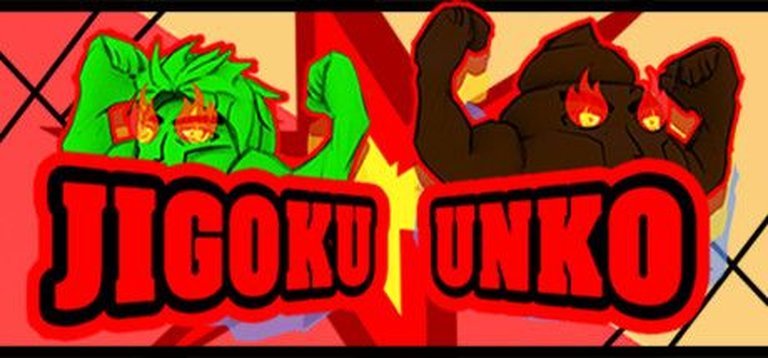
Jigoku Unko is a 2D side-scrolling platformer set in a fantastical version of hell. After a tantrum triggered by eating spicy Adana Kebab, the protagonist is mysteriously transported to hell, transformed into a non-human state, and consumed by anger. He must break through various obstacles to progress as far as possible without letting his rage destroy him, featuring frantic gameplay with two playable characters.
Where to Buy Jigoku Unko
PC
Jigoku Unko Guides & Walkthroughs
Jigoku Unko: A Descent into the Absurdist Abyss
Introduction: The Anatomy of a Digital Oddity
In the vast, algorithmically-curated library of Steam, where thousands of titles vie for a sliver of attention, few achieve the peculiar status of Jigoku Unko. Known in some circles by its alternate title, Adana Kebap, this 2021 release from the enigmatic Tamashii Studios exists not as a commercial blockbuster or a critical darling, but as a pure, unadulterated artifact of a specific, bizarre creative vision. Its premise—a man’s post-tantrum descent into hell after eating a spicy kebab—is less a narrative hook and more a declaration of intent: to embrace the crude, the chaotic, and the fundamentally absurd. This review posits that Jigoku Unko is not a “good” game in any conventional sense, but a fascinating, intentional anti-design statement. It is a minimalist stress test, a digital punchline stretched into a playable form, and a crucial data point in understanding the ecology of the ultra-niche indie market where concept eclipses craft.
Development History & Context: The Tamashii Laboratories
Tamashii Studios, the sole developer and publisher, operates in the most literal sense as a one-person—or at most, a very small team—operation. Their output, visible in the numerous “Tamashii Bundle” offerings on Steam, is a torrent of low-cost, conceptually quirky titles (Castle of Collapse, Deadluck, ZeroChance, Bunny Flush). This production model is key to understanding Jigoku Unko. There is no grand vision document, no multi-year crunch cycle. Instead, there is a rapid prototyping ethos reminiscent of the early demoscene or a prolific itch.io creator. The technological constraints were self-imposed: a 200 MB storage footprint (as per Steam requirements) and support for Intel UHD 600 graphics point to an engine choice prioritizing accessibility over graphical fidelity, likely a 2D framework like GameMaker Studio 2 or Unity with heavy asset optimization.
The game landed in mid-2021, a period saturated with indie releases and following two years of pandemic-era digital proliferation. Its landscape was one where visibility is the primary bottleneck. Jigoku Unko did not compete with Hades or Cuphead; it existed in a parallel universe of hyper-specific search terms (“funny platformer,” “dark comedy,” “runner”). Its release was an act of filing a claim in a vast digital registry, an assertion of existence more than a launch.
Narrative & Thematic Deep Dive: A Taxonomy of Rage
The “story,” culled entirely from the Steam store description, is a masterpiece of economical absurdity:
1. The Catalyst: A tantrum induced by a spicy Adana Kebab. This immediately grounds the surreal premise in a relatable, visceral human experience—the physical and emotional overwhelm of capsaicin.
2. The Transgression: An unexplained transportation to hell. The “unknown reason” is thematically potent. It suggests the punishment is arbitrary, cosmic, or a direct manifestation of internal fury. The kebab is merely the trigger; the hell is the self.
3. The Transformation: “He is no longer human and is even more angry.” This is the core thematic engine. The protagonist undergoes a double alienation: first from the mortal world, then from his own former humanity. His anger is no longer an emotion; it is his ontological state, a radioactive core driving his being.
4. The Objective: “By breaking all the obstacles in front of him, he tries to advance as far as he can without his anger killing him.” This reframes the classic platformer goal. It’s not about rescuing a princess or saving the world. It is a Sisyphean, internal struggle. The “obstacles” are external manifestations of internal turmoil, and the true antagonist is his own rage, which threatens to consume him. The game implies a resource management of fury—a “rage meter” or similar mechanic—where unchecked aggression leads to a game-over state of self-annihilation.
The narrative is pure kamikaze satire. It mocks the heroic journey by making the hero a screaming, non-human blob of spite, journeying through a hellscape of his own making. The alternate title, Adana Kebap, reinforces this, focusing on the mundane, culinary cause of metaphysical catastrophe. It’s a joke about first-world problems scaled to cosmic proportions: I am so angry about this spicy food that I am now in hell, and also a monster. This is deeply, darkly Japanese in its humor, aligning with the gyaru or manga tradition of exaggerated, almost cartoonish suffering, but with a distinctly modern, internet-aware twist.
Gameplay Mechanics & Systems: Precision Under Pressure
From the fragmented data—user tags (“Precision Platformer,” “Runner,” “Beat ’em up,” “Survival”), genre tags (“Action,” “Casual”), and description—a functional picture emerges:
- Core Loop: A 2D side-scrolling platformer with a strong “runner” or “precision” component. The goal is to “advance as far as he can,” suggesting an infinite or level-based ascent/descent (given the hell setting) where the score is distance. The “breaking all the obstacles” implies aggressive, direct confrontation—a “beat ’em up” element—rather than avoidance.
- The Rage Mechanic (Inferred): The central, innovative (if borrowed) system is almost certainly a Rage Gauge. Player actions (taking damage, breaking obstacles, perhaps dying) likely fill a meter. If it maxes, the character “dies” from anger—a “Game Over: You Broke.” This creates a constant tension between aggression (needed to progress) and self-control (needed to survive). It’s a literalization of the “anger management” trope.
- Character Selection: Two playable characters suggest minor variance in stats—perhaps one has higher damage (breaks obstacles easier but fills Rage faster), the other more control (slower Rage fill but less offensive power).
- UI & Interface: “Direct control” and “2D scrolling” indicate a simple, responsive control scheme with minimal HUD—likely just a Rage Meter and perhaps a distance counter. The “Casual” tag is misleading; “Precision Platformer” suggests tight collision and demanding jumps, with the Rage mechanic adding a layer of strategic panic.
- Flaws & Innovations: The potential flaw is a frustrating feedback loop: mistakes increase Rage, which clouds judgment, leading to more mistakes. The innovation is the thematic integration of a resource-management systems as the character’s psychology. You are not managing mana or stamina; you are managing the protagonist’s sanity. This is a brilliant, if brutally simple, translation of theme into mechanics.
World-Building, Art & Sound: Hell as a Low-Budget Canvas
- Visual Direction: The Steam tags “Cute,” “Colorful,” and “Anime” present a fascinating contradiction with the “Dark Comedy” and “Hell” setting. This suggests a kawaii-horror aesthetic—a hellscape rendered in pastel pinks, with chibi-style demons and fluffy, harmless-looking obstacles. This dissonance is the visual punchline. The “fantasy” setting is not Tolkienesque; it’s a pop-art hell, a corporate cartoon underworld. The 2D scrolling likely features simple parallax layers (maybe fire that looks like candy stripes) and sprite-based characters. It is art designed for maximum memeability and minimum production cost.
- Atmosphere & Sound: No sound data exists, but the thematic imperative is clear. The audio would be a study in juxtaposition: perhaps upbeat, bouncy J-pop or chiptune melodies coupled with distorted screaming sound effects when the Rage Meter peaks. The “Adana Kebap” title might imply Middle Eastern musical motifs clashing with Japanese sound design, furthering the cultural collision. The atmosphere is one of frantic, cheerful nihilism.
- Contribution to Experience: The art and sound do not aim for immersion but for cognitive dissonance. They soften the brutal premise just enough to make the rage mechanic funny rather than simply stressful. It’s the difference between a grimdark hell and a hell that looks like a rejected Sanrio concept. This allows the game to walk the tightrope between “difficult skill-based platformer” and “absurdist joke.”
Reception & Legacy: The Quiet Echo in the Void
- Critical & Commercial Reception: There are no critic reviews on Metacritic or MobyGames. The user reviews on Steam number a mere four, yielding a “Mostly Positive” (75%) score as of late 2025. Sales data from Steambase indicates 48 units sold in its lifetime, generating approximately $32 in gross revenue. It has 180 wishlists. These numbers are not indicative of a failure but of a whisper. It found its exact, microscopic audience.
- Evolution of Reputation: The reputation has not evolved; it has stabilized at “cult object for zero people.” Its presence in three “Tamashii Bundle” packages (offering 11, 18, and 19 games for ~$20-27) is its primary distribution vector. It is not played as a standalone title but as a curiosity within a bulk purchase, a five-minute diversion between other, similarly obscure games. Its legacy is that of a perfect bundle filler—cheap to license, thematically consistent with a “weird indie” brand, and adding perceived value through sheer quantity.
- Influence on Industry & Games: Jigoku Unko has had zero discernible influence on mainstream game design. Its true influence is archetypal. It is a prime example of the “concept-first, polish-later” indie model that thrives on Steam and itch.io. It demonstrates that a complete, functional game can be built around a single, strong joke. It shares DNA with games like Pony Island or Duck Game in its commitment to a bit, but without the polish or systemic depth to break out. Its legacy will be as a data point for market analysts studying the long tail of digital storefronts—a game that survives not on sales, but on bundle economics and algorithmic quiet persistence. It also continues the “Jigoku” (Hell) naming trend seen in titles like Ketsui: Kizuna Jigoku Tachi and Jigoku no Renshū Mondai, but strips away the danmaku shoot-’em-up heritage for pure platforming absurdity.
Conclusion: Verdict – A Successful Failure
Jigoku Unko is an unequivocal success at being what it set out to be: a cheap, weird, instantly comprehensible joke delivered via the medium of a functional 2D platformer. Its “failure” to achieve sales, reviews, or recognition is irrelevant to its core identity. It is a perfect artifact of its own constraints.
Final Verdict: As a game, it is likely a shallow, repetitive, and frustrating 15-minute experience. As a cultural artifact, it is a brilliantly distilled piece of digital folk art. It captures a moment of indie development where the barrier to entry is so low that a concept asinine as “hell because of spicy kebab” can become a purchasable reality. Its place in video game history is not on a pedestal but in a museum of curiosities—a testament to the fact that the Steam ecosystem allows for the existence of Jigoku Unko, not as a mistake, but as a valid, if miniscule, expression of creativity. It is the digital equivalent of a napkin sketch that someone decided to package and sell. In the grand canon, it is a footnote. In the story of boundless, unfiltered creative output, it is a sentence. And that sentence, in its own way, is perfect.
Score (as a historical artifact): 7/10
Score (as a game to play): 3/10
It is recommended only to those who wish to understand the outer limits of the indie Steam ecosystem, or who find the phrase “Hell Poop” intrinsically hilarious and must see it rendered in 2D sprite form. For everyone else, it remains a fascinating ghost in the machine, a game that is ultimately about anger, yet inspires in the player only mild, bemused curiosity.