
- Release Year: 2022
- Platforms: Windows
- Publisher: Big Mitten Games, LLC
- Developer: Big Mitten Games, LLC
- Genre: Strategy, Tactics
- Perspective: Diagonal-down
- Gameplay: Tower defense
- Setting: Fantasy
Description
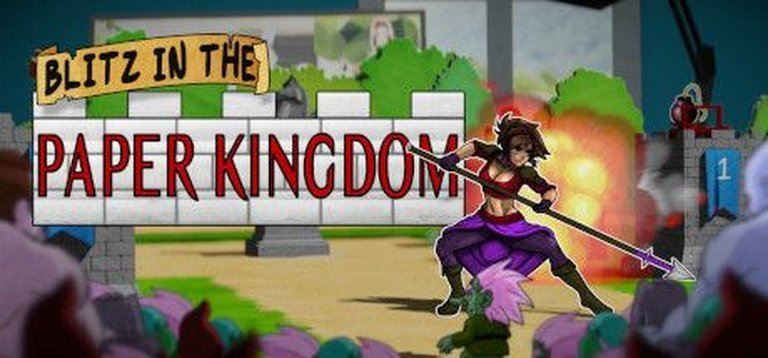
Blitz in the Paper Kingdom is set in the Paper Kingdom of Cyperus, a peaceful land where the evil Lord Vilmos seeks to destroy statues bearing his likeness. Players take on the role of one of four warriors commissioned by King Berghor to defend these artworks across 25 levels in a tower defense game that unfolds in a living sketchbook world, featuring upgradeable towers, character stats, and multiplayer options.
Gameplay Videos
Where to Buy Blitz in the Paper Kingdom
PC
Blitz in the Paper Kingdom: A Charming, Co-Op Tower Defense Caper That Defies Its Modest Origins
Introduction: A Kingdom of Paper, A Fortress of Fun
In an era where video games often strive for cinematic grandeur and sprawling open worlds, Blitz in the Paper Kingdom arrives like a neatly folded origami surprise—small, precise, and deceptively delightful. This 2022 indie title from Big Mitten Games LLC sneaked onto Steam with little fanfare, its premise as absurd as it is endearing: an evil lord, enraged by unflattering statues of himself, sends waves of minions to demolish them, prompting a peaceful kingdom to commission heroes for their defense. On the surface, it’s a throwaway gag married to a well-worn genre. Yet beneath this paper-thin narrative lies a tightly designed, co-op-focused tower defense experience that punches well above its weight. This review will argue that Blitz in the Paper Kingdom stands as a testament to the enduring appeal of accessible, community-driven game design—a hidden gem whose legacy is built not on blockbuster sales but on consistent post-launch support and a clear, joyful vision.
Development History & Context: A Small Studio’s Grand Sketch
Big Mitten Games, an independent studio hailing from West Michigan, entered the gaming arena with Blitz in the Paper Kingdom as their debut title. This origin story is crucial: the game embodies the “indie spirit” in its purest form—conceived, developed, and published by a small, passionate team without the backing of a major publisher. Released on June 17, 2022, for Windows (with Linux and macOS support hinted at via system requirements), the game was built using Unity, a popular engine for indies due to its accessibility and cross-platform capabilities. The technical specifications are intentionally modest—requiring only a 64-bit processor, 4 GB RAM, and integrated graphics—ensuring the game could run on a wide array of systems, from old laptops to modern Steam Decks.
The 2022 release context is also telling. The tower defense genre had evolved from Flash-era casual games to hybrid action-RPG titles like Dungeon Defenders and Orcs Must Die!. Big Mitten Games’ entry simplified this formula but infused it with a strong local co-op focus, a “refreshing” twist as described in the official blurb. At a time when online multiplayer dominated, the emphasis on 4-player shared/split-screen co-op (with remote play support) was a deliberate nostalgic callback, targeting couch gaming sessions and family play. The studio’s stated commitment to “free updates” and “community feedback” further situates the game within a modern indie paradigm where ongoing player engagement is prioritized over a one-and-done release. This approach would become a defining feature of its lifecycle.
Narrative & Thematic Deep Dive: Vanity, Art, and the Paper-Thin Veil of Conflict
The story of Blitz in the Paper Kingdom is unabashedly silly, yet it provides just enough narrative scaffolding to justify the gameplay. The kingdom of Cyperus is a utopian sketchbook realm ruled by the benevolent King Berghor and Queen Wendy. The inciting incident? The discovery of statues bearing the likeness of the evil Lord Vilmos, which he finds “very unflattering.” His solution—sending minions to destroy these artworks—is a satire of artistic ego and political pettiness. The king, fearing “backlash,” commissions four great warriors to defend the “priceless artwork.”
This premise is a masterclass in efficient storytelling. It frames the conflict not as a battle for survival, but as a defense of cultural heritage (however awkwardly rendered). The themes are light: the absurdity of vanity, the value of art, and the duty of guardianship. The characters are archetypal—the heroic warriors, the tyrannical lord—but the unlockable roster adds nuance. Blair, the “creepy lady,” is a suicidal bomber whose self-sacrifice mechanic subverts the heroic trope. The Gnome, described as “the very definition of cannon fodder,” is a challenge character who cannot attack, turning the player into a pure strategist. These additions inject personality into what could have been a generic cast, suggesting a world where even minions have stories (the Gnome is Vilmos’s “chronie,” a crony with a heart?).
Dialogue is sparse based on available sources, but the tone remains consistently whimsical. The narrative doesn’t aim for depth; instead, it embraces its own ridiculousness, aligning perfectly with the game’s paper-craft aesthetic. It’s a story that doesn’t take itself seriously, allowing players to focus on the cooperative chaos without narrative baggage. Yet, one could argue that its very frivolity is its strength—a reminder that games can be about fun first, meaning second.
Gameplay Mechanics & Systems: The Zen of Paper-Based Tower Defense
At its core, Blitz in the Paper Kingdom is a tower defense game with a significant action RPG twist. The players directly control a character while also placing automated towers. This dual-layer design is the game’s most innovative contribution to the genre.
Core Gameplay Loop:
– Each of the 25 campaign levels (plus arcade mode) presents a predefined path from an entrance to one or more statues (the “core” objects to defend).
– Enemies spawn in waves and march along this path. If they reach a statue, they deal damage; if a statue is destroyed, the level fails.
– The player character can move freely (diagonal-down perspective), attack enemies with melee or ranged weapons (depending on the hero), and place or upgrade towers using resources earned by defeating foes.
– Towers are automated defensive structures—likely including classics like arrow turrets, bomb throwers, etc.—that attack enemies autonomously.
– Character progression: During a match, players can upgrade their hero’s stats (speed, power, etc.) using resources. Crucially, these upgrades reset after each match, ensuring balance and encouraging strategic adaptation per level rather than permanent power creep.
– Multipliers: After completing a level, players canincrease the game speed and enemy count for subsequent runs, boosting their score and adding challenge. This systems encourages mastery and replayability.
Co-op Integration: The game supports up to 4 players locally (with remote play). Each player controls their own hero, shares resources, and coordinates tower placement. This social element transforms the experience from solitary planning to real-time collaboration and chaos. The Steam news logs reveal early multiplayer bugs (character select issues, missing coin icons) that were patched, indicating the developers prioritized smoothing the co-op experience.
Innovations & Flaws:
– Innovation: The combination of direct character combat with tower placement is not entirely new (e.g., Dungeon Defenders), but Blitz streamlines it for accessibility. The match-reset hero upgrades prevent snowballing, keeping challenges tight. The Gnome character (unlockable) introduces a “pure strategist” mode where you cannot attack, a fascinating constraint.
– Flaws: Early versions had notable bugs: players could place towers inside others, some enemies had artificially low health (suggesting balance issues), and the Blair character couldn’t attack the final boss in the initial release. These were addressed in patches, but they hint at a development cycle where polish came post-launch. The “I’m All I Need” achievement was initially impossible if any building was made, a quirky oversight fixed later.
– Depth vs. Simplicity: Some might find the system lightweight compared to deeper tower hybrids. But its simplicity is a virtue—easy to pick up, with enough modifiers (speed, enemy count) to satisfy hardcore players.
The gameplay is a tight loop of action and strategy: fight enemies, earn resources, build towers, upgrade hero, repeat. It captures the frantic satisfaction of both genres while remaining accessible.
World-Building, Art & Sound: A Sketchbook Come to Life
The paper kingdom concept is more than a gimmick; it’s the game’s visual and thematic cornerstone. The world is rendered as a pop-up sketchbook—all crisp lines, pastel colors, and flat, diorama-like landscapes. Enemies and heroes appear as cut-out paper dolls with visible folds and edges. This aesthetic achieves several goals:
– Cohesion: Every element feels handmade, from the fluttering enemy sprites to the static background. It creates a unified, whimsical atmosphere reminiscent of children’s storybooks.
– Readability: The diagonal-down perspective and clean art ensure enemies, towers, and statues are clearly visible, crucial for a strategy game.
– Charm: The stylized, slightly “anime” flair (as tagged by users) gives characters personality despite minimal animation. The Gnome’s rendering was even too small initially, a bug that speaks to the delicate visual balance.
Sound design is less documented, but the Steam store page notes full English audio. Given the budget, expect a functional soundtrack—likely cheerful, melodic tunes that underscore the lighthearted tone—with crisp sound effects for attacks, tower placements, and enemy noises. The updates mention lowering arrow and sword swing volumes, suggesting a mix that was initially too harsh but was tweaked for comfort.
The weather system added in an update (thunderstorms with fog) introduces environmental variety, breaking visual monotony and potentially affecting gameplay (visibility? not specified). This shows a commitment to expanding the world beyond static levels.
Overall, the art direction is a significant strength—it turns a simple tower defense into a memorable, aesthetically cohesive experience that resonates with players seeking something visually distinct from typical fantasy AAA titles.
Reception & Legacy: The Quiet Triumph of the Underdog
Blitz in the Paper Kingdom exists in a curious space: it has no critic reviews on Metacritic or MobyGames, and user reviews are scant but overwhelmingly positive. Steam shows only 2 user reviews (both positive) at the time of writing, while Steambase aggregates 6 positive reviews with a 100% score. This isn’t a breakout hit; it’s a niche title that has flown under the radar of mainstream gaming press. Its “Player Score” of 72 on some aggregators suggests a tiny but appreciative audience.
Why the low visibility?
– Minimal marketing: Big Mitten Games is a tiny studio; the game didn’t receive major press coverage.
– Crowded genre: The tower defense space is saturated, from mobile casual games to AAA hybrids. Standing out requires a unique hook—Blitz’s paper aesthetic and co-op focus might not have been enough to cut through the noise.
– Timing: Released in mid-2022, it competed with bigger indie darlings.
Legacy and Influence:
Direct influence is hard to gauge—no major studios have cited it. However, it contributes to a trend of accessible, co-op-focused indie strategy games (like Lovers in a Dangerous Spacetime or Catopult). Its post-launch support is exemplary: 12 news updates on Steam in roughly a year, adding:
– New characters (Blair, Gnome, Endora)
– Costumes
– Weather system
– Bug fixes (multiplayer, achievements, balance)
– Quality-of-life features (multiple building destruction, new coin display)
This responsiveness builds player loyalty and sets a standard for small studios: treat your game as a living project. The achievement list (60 achievements) also encourages completionism, extending playtime.
Comparisons to Dungeon Defenders are inevitable—both mix tower defense with hero action. But Blitz is simpler, more frantic, and less RPG-heavy. It’s closer to the arcade spirit of PixelJunk Monsters but with a stronger co-op bent. In the grand history of tower defense, it won’t be remembered as a genre-defining milestone, but as a curated, well-executed variant that prioritized social play and aesthetic charm.
Conclusion: A Worthy Defense of the Paper Realm
Blitz in the Paper Kingdom is not without flaws. Its narrative is paper-thin, its initial release marred by bugs, and its reach frustratingly limited. Yet, these shortcomings are overshadowed by what the game accomplishes: a cohesive, charming, and mechanically satisfying tower defense experience that runs on any PC, supports four players on a couch, and receives ongoing love from its creators. It’s a game that understands its audience—friends looking for a casual yet strategic romp—and delivers without pretension.
In the vast library of video game history, it will likely be a footnote. But for those who discover it, it becomes a cult classic of sorts. It exemplifies the indie ethos: a small team pouring heart into a unique vision, listening to players, and iterating post-launch. Its legacy is not in sales numbers but in proving that even in a saturated genre, there’s room for a game that feels like a handmade card—simple, sincere, and capable of sparking joy.
Final Verdict: 3.5 out of 4 paper crowns. A hidden gem for co-op enthusiasts and tower defense fans, Blitz in the Paper Kingdom is a delightful, if slight, adventure that defends its place in the indie hall of fame with wit, charm, and a well-placed tower.