
- Release Year: 2022
- Platforms: Macintosh, Windows
- Publisher: Trafala Games
- Developer: Trafala Games
- Genre: Action
- Perspective: 3rd-person
- Gameplay: Fighting
- Setting: Futuristic, Sci-fi
Description
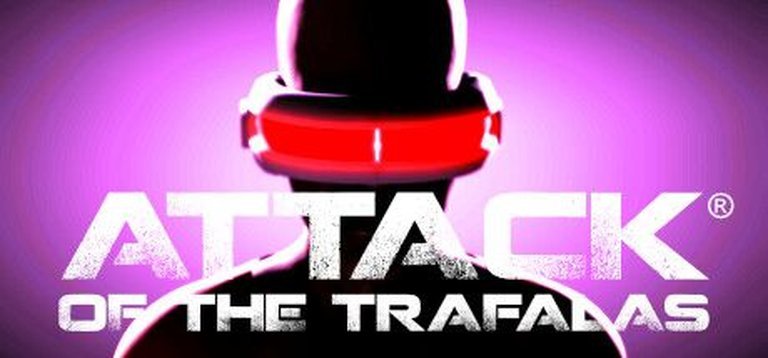
Attack of the Trafalas is a sci-fi action game set in a multiverse where players select characters to fight robot adversaries from various realities. As the official prequel to Attacking Zegeta, it blends genres including RPG, beat ’em up, detective, and hacker elements, featuring a unique in-game operating system with its own programming language.
Where to Buy Attack of the Trafalas
PC
Attack of the Trafalas: A Deep Dive into One of Gaming’s Most Baffling and Ambitious Curios
Introduction: The Enigma in the Early Access Aisle
Imagine a game that promises to be an Action/RPG/Beat ‘Em Up/Detective/Hacker simulator, set across a digital multiverse, featuring an in-game operating system with its own proprietary programming language, and serving as the official prequel to a franchise that includes titles like Flapp ZVR® and NFT collections. You don’t have to imagine it; you can buy it on Steam for $1.99. This is the reality of Attack of the Trafalas (AOTT), a 2022 release from the singular, enigmatic Trafala Games®. Launched into Early Access with a sprawling, convoluted vision and a near-total absence of conventional critical or player reception, AOTT exists as a ghost in the machine of modern indie development—a title more discussed for its conceptual audacity and perplexing state than for its actual gameplay. This review posits that Attack of the Trafalas is not merely a bad or unfinished game, but a profound and unintentional case study in the extremes of scope creep, the cult of the auteur-developer, and the very definition of what a “game” can be in the digital age. Its legacy is not one of influence, but of stark, unvarnished ambition colliding with the harsh realities of execution.
Development History & Context: The World According to Trafala
The Studio and The Vision: Trafala Games® is a one-person operation, the brainchild of a developer whose public persona is as cryptic as his games. There are no credits listed on MobyGames beyond the developer name itself, underscoring the solo-development nature. The official narrative, scattered across the Steam store page, the developer’s Google Site, and game descriptions, is one of grand, almost messianic purpose. The developer states the goal is to “make conscience in mankind to end all violence towards living things, a legacy that we will leave the world for generations to come.” This lofty, philosophical ambition is immediately juxtaposed with a commercial reality that includes an “Attacking Zegeta®” franchise, NFT projects, and a web series featuring Fortnite®. This tension between utopian rhetoric and transactional franchise-building defines the project’s context.
Technological Constraints & The Early Access Gauntlet: Released for Windows and macOS on October 20, 2022, AOTT was born into a saturated market of indie titles leveraging Early Access as a funding and feedback tool. The system requirements—recommending an AMD Ryzen 9 and 16GB RAM—are oddly specific and disproportionate for what the game visually appears to be (based on sparse user screenshots), suggesting either placeholder specs or an engine (likely Unity or Unreal) pushing features far beyond its artistic scope. The Early Access model was explicitly used as a shield: “Early Access is a great tool for the independent developers to work more time in their games… you are not only buying a game but also will be contributing to create an experience.” The promised “six months to a year” timeline has clearly been exceeded, with the last Steam update noted as being over three years prior from the perspective of a 2025 review, and the developer’s own site showing sporadic, cryptic updates (e.g., “The Maze Update,” “Version Text Fix”) as late as December 2022. This paints a picture of a project stalled in a perpetual beta, its roadmap (“New Experiences… Integrated Operating System”) a monument to ideas never fully realized.
The Gaming Landscape: AOTT emerged in a post-Undertale, post-Dwarf Fortress era where niche, systems-heavy games could find an audience. However, its blend of beat-’em-up, detective work, hacking, and an in-game OS places it in a category akin to .hack// or Serial Experiments Lain adapted into a poorly optimized 3D arena fighter—a concept years out of step with 2022’s trends, which favored polished roguelikes or narrative indies. Its most direct “relatives” in name only are a bizarre list of unrelated “Attack of the…” titles from the 80s to 2023, highlighting its isolation.
Narrative & Thematic Deep Dive: A Story Shrouded in Multiversal Mist
The official lore is delivered in short, enigmatic bursts. The premise: “A long time ago in a small island, an organization of evil robots have taken over, with the mission of corrupting and extermininating mankind, until a few decided to resist.” The player’s role is to “fight your way to the top of the evil robot organization that you have created and turned against you.” This introduces a fascinating, if poorly articulated, core theme: the creator’s responsibility for their creation’s rebellion. It posits a multiverse where the player must “become the best version of yourself, physically, mentally and electronically.”
Plot Structure & Characters: The game features “over 20 characters to select each with their own story.” This suggests a planned roguelike or arcade structure where each run with a different character reveals alternate realities or perspectives on the robot uprising. The “Player 1” character, the “super martial artist,” is the canonical protagonist. The narrative is not delivered through cutscenes or dialogue trees (none are mentioned or evident from available data) but is environmental and systemic. The “digital multiverse” is the story. The “evil robot organization” is a set of adversaries from different realities. The “detective/hacker” aspect implies the narrative is unraveled through exploring digital spaces, hacking terminals (via the in-game OS), and piecing together logs—a System Shock or BioShock approach but without the narrative scaffolding.
Thematic Undercurrents: Beyond the creator-creation conflict, the developer’s legal disclaimer is startlingly direct: “BY PLAYING OUR GAMES YOU AGREE NOT TO ACT WITH VIOLENCE, HATE, DISCRIMINATION, RACISM OR ANY NEGATIVE WAY TOWARD ANY LIVING BEING.” This injects a pacifist, almost Buddhist, ethical framework into a game about beat-’em-up combat. The player is thus engaging in violent simulation under a strict moral contract, creating a dissonance that is either brilliantly meta or utterly hypocritical, depending on implementation. The multiverse concept allows for exploration of determinism vs. free will (can you change your reality?) and the nature of identity (what does it mean to be the “best version” of yourself across realities?). These are weighty themes utterly underserved by the available evidence of in-game presentation.
Gameplay Mechanics & Systems: The Incredible, Edible OS
This is where AOTT’s ambition becomes tangible, if not necessarily fun.
Core Loop & Combat: The Steam page outlines a simple structure: start in an “arena-like level,” defeat all enemies, a portal appears, proceed to the next level. Enemies spawn “Trafala Coins” upon defeat. Death sends you to “jail,” where you lose all coins and progress. This is a traditional arcade beat-’em-up structure (like Final Fight or Streets of Rage) transplanted into 3D. The controls are standard: WASD/joystick to move, spacebar to jump, J/Left Mouse for melee, O/Right Mouse for special, E to interact, L to block, and Left Shift to lock-on. The addition of a “transform into a multi-versal version” mechanic suggests a risk/reward system where the player can momentarily access a more powerful state at a cost, a la Devil May Cry‘s Devil Trigger or Bayonetta‘s Witch Time, but integrated with the multiverse lore.
The Revolutionary (and Problematic) In-Game OS & TPL: This is AOTT’s defining, headline feature. The developer’s site announces the “TRAFALA PROGRAMMING LANGUAGE® (TPL),” also called TCL (Trafala Coding Language). It is “accessed within the game’s computer with the ‘tH Command Line App’®.” With it, “you can modify things in the game that are not accessible normally.” This is not a minigame; it is a fully-fledged, in-game programming environment. A player would theoretically open a terminal within the game world, write code in TPL, and have that code alter game variables, spawn assets, or bypass obstacles in real-time. This turns the game into a hybrid executable IDE and adventure game, a concept pioneered in niche titles like Engine of War or Hack ‘n’ Slash, but here presented as a core mechanic. The implications are staggering: speedrunners could write scripts, modders could alter the game from within, and the “detective/hacker” fantasy becomes literal. However, the Steam community discussion features a player asking, “How do you make progress in this game?” after hours of exploration. This suggests the TPL is either poorly documented, broken, or so abstract that progression is opaque without external guides—a fatal flaw for a mechanic meant to empower the player.
Progression & Economy: The “Trafala Coins” function as a digital currency to “trade for in-game features, items, etc.” Combined with the jail mechanic, this creates a roguelike-like meta-progression where you risk your accumulated wealth on each run. The “Battle Achievement System (B.A.S.)” mentioned in an update hints at a meta-game layer. The promise of “selectable characters” with “their own story” suggests a Rogue Legacy or Dead Cells style of unlockable protagonists, but the “story” component is unverified.
UI & Systems Flaws: The most glaring systemic issue, evidenced by the “Text Fix” and “VR Machine Text Fix+” updates, is text rendering and localization. Basic UI elements were apparently broken or missing, requiring patches. The “Maze Update” and community confusion about level completion (“activated a ton of AI bots, but none of it appears to get me closer to beating the game”) point to fundamentally broken or non-existent game loop logic. The “arena” levels may not have clear exit conditions, or the required objectives may be hidden behind TPL commands the average player cannot discover. This transforms the game from a challenge into an unsolvable puzzle.
World-Building, Art & Sound: The Aesthetic of the Unfinished
Setting & Atmosphere: The setting is a “digital multiverse” accessed via a “powerful multi-versional travel device” (the starting platform). This is a cyberpunk/sci-fi surrealist realm. The “small island” of the backstory contrasts with the digital landscapes, suggesting a simulation of a real place gone wrong. The tags “Conspiracy,” “Dark Comedy,” “Surreal” indicate an intended tone of unsettling, absurdist techno-horror. The world is built not through environmental storytelling (no mention of lore entries, audio logs) but through the player’s interaction with its bizarre systems. The “multi-billboard system” update hints at a world with persistent, changing information displays—a dynamic UI element masquerading as world-building.
Visual Direction: No official screenshots or detailed descriptions exist in the provided sources. The Steam tags (“3D Vision,” “Cinematic,” “Third Person”) and use of terms like “arena-like level” suggest a low-poly, functional 3D aesthetic, likely built from pre-made asset store models to keep costs down. The overwhelming impression is one of prototypical greybox meets accidental psychedelia—a world where visual cohesion was sacrificed for systemic complexity. The “controversial revealing content” mentioned in a patch note is a tantalizing, disturbing footnote hinting at either risqué character models or grotesque enemy designs, fitting the “surreal” tag.
Sound Design: The source material is completely silent on audio. Presumably, it features generic royalty-free combat sounds and a minimal ambient soundtrack, if any. The lack of discussion around sound is itself telling—it was likely an afterthought in a project consumed by the TPL and multiverse mechanics.
Contribution to Experience: The art and sound, by all accounts, do not contribute meaningfully; they are a neutral or negative backdrop for the primary experience: wrestling with the game’s systems. The atmosphere is one of digital isolation and confusion, accidentally enhanced by the minimalist, glitchy presentation. It feels less like a crafted world and more like a debugging sandbox gone public.
Reception & Legacy: The Sound of One Hand Clapping
Critical & Commercial Reception: There are zero critic reviews aggregated on Metacritic or MobyGames. MobyGames itself has a “n/a” Moby Score and a plea for contributors to “help document and preserve this entry.” Steam shows “No user reviews” and “No more reviews that match the filters set above” even when set to show all. The only direct player feedback is two Steam discussions: one pleading for a game completion guide, and another requesting ports of other Trafala Games titles (Zegeta series). This is not a reception; it is an absence. The game exists in a state of near-total obscurity, its $1.99 price tag ensuring only the most curious or confused impulse buyers ever encounter it.
Evolution of Reputation: It has no reputation to evolve. It is a non-entity in the cultural consciousness. However, within certain niche circles—those fascinated by “jank” games, programming archaeology, or the sociology of Early Access—it has become a cult object of speculation. Its mention on sites like MobyGames and Wikidata secures it a permanent, barren footnote in the database of all games.
Influence on the Industry: AOTT has influenced nothing. Its core “innovation,” the in-game programmable OS, is a feature of such extreme niche appeal and implementation difficulty that it is not a replicable design pattern. It stands as a cautionary tale rather than an inspiration. Its true influence may be on how platforms like Steam handle Early Access—a reminder that “playable” does not mean “coherent” or “complete.” The developer’s pivot to NFTs and web series suggests a business model more interested in creating “franchise” IP (Trafala®, Attacking Zegeta®, Flapp ZVR®) than in finishing a specific game, a trend some might call cynical, others pragmatically scattershot.
Conclusion: The Monument to a What-If
Attack of the Trafalas is not a good game. It is, by any conventional metric, a broken, confusing, and aesthetically barren experience. Its narrative is a skeleton, its core loop is allegedly broken, and its user experience is a gauntlet of obscurity. Yet, to dismiss it entirely is to ignore its staggering, almost arrogant ambition. It is a game that sought to be an OS, a coding environment, a narrative multiverse simulator, and a beat-’em-up all at once. It is a direct artifact of a single mind’s unchecked vision, unfiltered by producers, designers, or playtesters.
Its place in video game history is not on a pedestal, but in a cabinet of curiosities. It is a testament to the fact that the barriers to entry for game creation have never been lower, and with that, the space for projects that prioritize concept over craft has never been wider. It asks the question: what is the value of an idea so vast it cannot be contained within a functional product? In the museum of gaming, Attack of the Trafalas will be the exhibit labeled “The Integrated Programming Language Game—A Failed Experiment,” a bizarre footnote that sparks more questions about development, ambition, and the meaning of “play” than it ever answers. It is, in the end, the ultimate Early Access title: a promise of a world you can code yourself, trapped forever in a jail of its own making, with all its Trafala Coins lost.
Final Verdict: ★★☆☆☆ (2/5) – A bewildering, broken monument to impossible scope. Not recommended for play, but essential for study as a peak artifact of auteur-driven, system-obsessed indie development gone completely off the rails.