
- Release Year: 2010
- Platforms: Windows
- Publisher: dtp entertainment AG
- Genre: Compilation
- Average Score: 80/100
Description
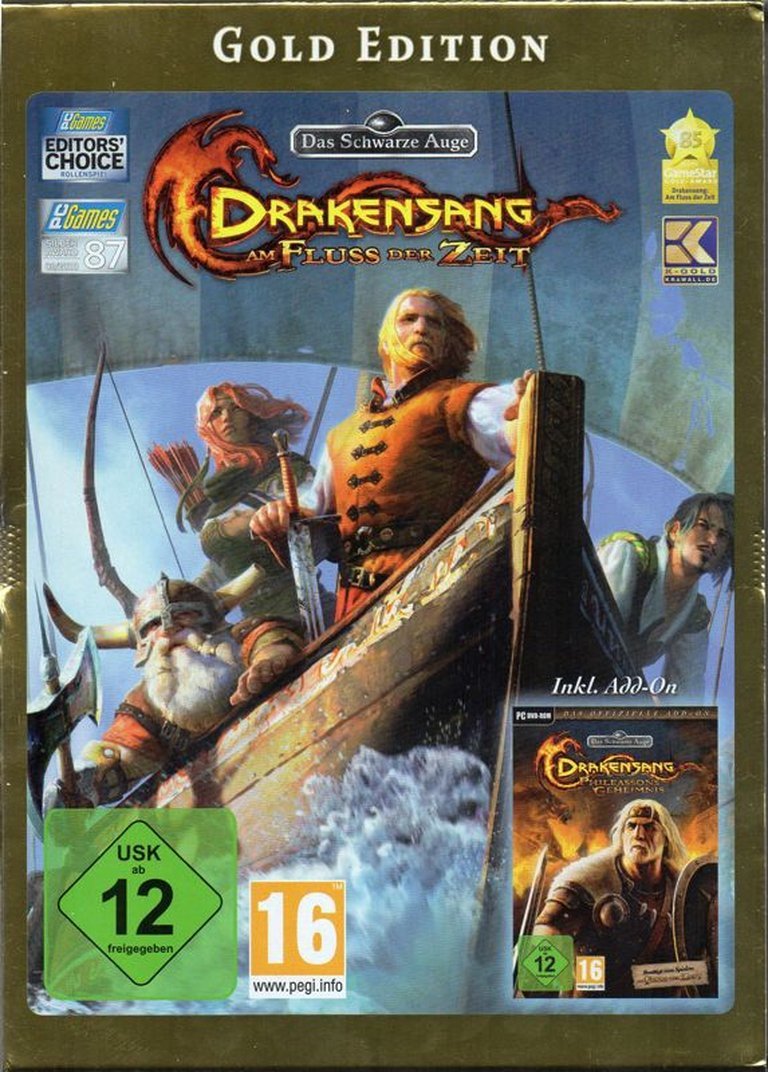
Das Schwarze Auge: Drakensang – Am Fluss der Zeit: Gold Edition is a compilation that bundles the base game ‘The River of Time’ and its expansion ‘Phileasson’s Secret’, both set in the fantasy universe of The Dark Eye. Players lead a party from the city of Nadoret along the Great River to investigate a series of pirate attacks, experiencing traditional party-based RPG gameplay with real-time-with-pause combat and a faithful adaptation of pen-and-paper rules.
Das Schwarze Auge: Drakensang – Am Fluss der Zeit: Gold Edition Reviews & Reception
en.wikipedia.org (80/100): was received positively in the German press and generally praised as an improvement over the first title.
Das Schwarze Auge: Drakensang – Am Fluss der Zeit: Gold Edition: Review
Introduction: A Prequel Forged in the Crucible of Commercial Ambition
To understand Das Schwarze Auge: Drakensang – Am Fluss der Zeit: Gold Edition is to understand a pivotal, bittersweet moment in the history of German role-playing games. It stands not as a standalone sequel, but as a sophisticated prequel that sought to deepen the lore of The Dark Eye (Das Schwarze Auge or DSA) while tactically refining the formula of its 2008 predecessor. Released at a time when the PC RPG genre was navigating the shadow of The Elder Scrolls and the resurgence of Fallout, this compilation—bundling the superb base game with its equally impressive expansion, Phileasson’s Secret—represents the zenith of Radon Labs’ craft and the tragic apex before its collapse. This review argues that Am Fluss der Zeit is a masterclass in faithful license adaptation and mechanical iteration, achieving a nearly perfect synthesis of tabletop ethos and digital convenience, yet its legacy is irrevocably tangled with the financial missteps that ended its developer’s independent existence. It is both a triumphant swan song and a cautionary tale.
Development History & Context: The Labor of a Devoted Studio
The Studio and Its Vision: Radon Labs, a Berlin-based studio founded in 2000, possessed a rare and potent expertise: a deep, abiding love for the Das Schwarze Auge universe. Their 2008 debut, Drakensang, was a monumental task—translating the exhaustive, percentile-based DSA 4.0 rule system into a real-time, party-based computer RPG for the first time in over a decade. Am Fluss der Zeit, directed by Bernd Beyreuther and designed by Fabian Rudzinski, was not originally conceived as a sequel but as an ambitious project set in a previously unmapped region of Aventurien. When the first game’s success demanded a follow-up, this project was seamlessly integrated into the Drakensang continuity as a prequel, allowing the team to reuse core technology and assets while expanding the world.
Technological Constraints and the Nebula Device: The game runs on Radon Labs’ proprietary Nebula Device engine (specifically Nebula 3), a middleware solution chosen for its flexibility and support for advanced shader effects. While capable of producing lush, detailed 3D environments with full shader 2.0/3.0 support and a “realistic, flexible physics system,” the engine was also a known quantity for the team. This allowed them to focus on content—expanding the talent system, adding new archetypes and classes, and significantly improving animations through extensive motion-capture (handled by Centroid). However, the era’s constraints are visible: character models, while more numerous and customizable, lack the polygonal density of contemporaneous AAA titles, and texture work, though atmospheric, can be repetitive. The use of Bink Video for cutscenes was standard but unremarkable.
The 2010 Gaming Landscape: The game entered a crowded RPG space. In the West, Dragon Age: Origins (2009) had reinvigorated the party-based formula with cinematic flair, while The Witcher offered gritty, personal storytelling. In Germany, the market was more parochial but fiercely loyal to the DSA brand. Am Fluss der Zeit competed directly with fantasy RPGs but carved its niche through unparalleled rule-set fidelity and a deeply authentic Aventurian setting, vetted by DSA’s original illustrators and authors. Its release in Germany in February 2010 (NA: January 2011) placed it in a strong position to capture the local holiday market, buoyed by scores in the high 80s from German magazines like PC Games (87%) and GameStar (85%).
Narrative & Thematic Deep Dive: A Story Told in Flashback
Structure and Framing Device: The narrative’s genius lies in its structure. The entire adventure is presented as a flashback, narrated by the dwarf Forgrimm to a listener (Kladdis/Gladys, a character from the first game). This isn’t mere exposition; it’s a diegetic framing that justifies the prequel nature. Forgrimm, a beloved companion from the first game, recounts events that shaped him and his friends 23 years prior, during the reign of Kaiser Hals. This creates a profound sense of history and weight—we are not just playing a story, we are being told a story by one of its participants, adding a layer of oral tradition befitting a fantasy realm.
Plot and Setting: The plot centers on a series of mysterious pirate attacks along the Great River, an inland waterway of paramount importance. Starting in the port city of Nadoret (south of Ferdok, the first game’s hub), the player’s journey maps the river from its delta to its source, revealing a conspiracy that threatens the fragile peace of the Mittelreich (Middle Kingdom). The river becomes both a literal and metaphorical conduit—“Am Fluss der Zeit” (On the River of Time)—connecting disparate regions and uncovering secrets that have been flowing, hidden, for years. The setting is a deliberate departure from the first game’s更多 northern and wild areas, plumbing the heartland of Aventurien with “historically authentic medieval” architecture and a sense of established civilization.
Characters and Companion Dynamics: The party composition is a highlight. The player creates a custom protagonist, but thetrue emotional anchors are the pre-defined companions:
* Forgrimm: The gruff, pragmatic dwarf narrator. His perspective colors the entire tale, and his personal arc—dealing with past failures and loyalties—is central.
* Ardo von Boarstock: The honorable warrior from the first game, here younger and perhaps more idealistic. His steadfastness provides a moral compass.
* Cuano (Cano): The street-smart thief. His cynicism and skills provide crucial utility and comic relief.
The dynamic between these returning characters is richer for knowing their future selves. Newer companions also flesh out the party, but the core trio’s chemistry, developed over both games, is the narrative engine.
Themes: Beyond the surface intrigue, the game explores the weight of history and secrets. The “river of time” metaphor suggests that past actions, like river currents, shape the present and can be diverted with effort. There’s also a strong theme of found family and loyalty within the party, contrasting with the political machinations and betrayals of the antagonists. The game interrogates how societies deal with external threats (pirates) and internal corruption, a classic DSA theme.
Gameplay Mechanics & Systems: Faithful, Deep, and Refined
Core Loop and Progression: The game is a classic, party-based, third-person RPG with a “real-time with pause” (RTwP) combat system, directly inspired by Baldur’s Gate and Neverwinter Nights. The loop is quintessential: explore, converse, complete quests, gather resources (for alchemy and blacksmithing), fight, and gain Adventure Points (AP) to level up. What sets it apart is the sheer depth and faithful implementation of the DSA 4.0 pen-and-paper rules.
The Talent System & Dice Rolls: Every action, from swinging a sword to bargaining with a merchant, is governed by a talent check. The game features eight core attributes (Courage, Dexterity, etc.), which in turn feed into dozens of specific talents (e.g., “Aimed Shot,” “Herbalism,” “Etiquette”). Investing AP raises these values. Critically, the game rolls virtual dice in the background for every interaction. Success depends on the relevant talent value, the attributes it uses, and potential “handicaps” (like injury). The player can optionally view all these rolls in a chat-like log window, a sublime feature for hardcore fans who want to audit the RNG. Dialogue choices are often gated by successful talent checks (e.g., a high “Intimidate” roll unlocking a coercive option), making character build meaningful beyond combat.
Character Creation and Classes: The Expert Mode is vastly expanded from the first game. Alongside standard human, elf, dwarf, and half-elf races, new archetypes like the brutish Clan-Warrior (with no etiquette) and the dwarven spellcaster Geode are introduced. This, combined with more character models and a wider spread of classes, offers tremendous customization. The ability to select a pre-generated character or build from scratch caters to both newcomers and min-maxers.
Combat System: Combat is tactical and demanding. Even trivial enemies like wolves require positioning, ability use (special attacks, spells), and crowd control. The pause function is essential, allowing the issuance of complex, multi-character orders. The system feels weighty; cooldowns, stamina, and action points govern abilities. A key improvement is the ability to switch equipped weapons visibly (draw/sheath), adding tactical flair (e.g., switching to a mace for armored foes).
Quality-of-Life Innovations: Am Fluss der Zeit directly addressed the first game’s major criticisms:
1. Open World Revisiting: Unlike the first game where areas often became inaccessible, players can always return to any previously visited location, often finding new quests, events, or vendors. This transforms the world from a series of linear chapters into a persistent space.
2. Fast-Travel: A waypoint system is unlocked as players explore. Once near a waypoint, instant travel between all discovered points on the current map is possible, drastically reducing backtracking tedium.
3. The Ship Hub: Replacing the player’s house from the first game is the party’s ship. All non-active companions stay here but still gain AP. The ship can be upgraded (e.g., with a workbench for crafting), serving as a persistent mobile base.
4. Difficulty Levels: The first game’s single difficulty is replaced with selectable difficulty settings.
5. Full Voice Acting: All dialogues are now fully voiced (in the German original, with a competent English dub), a significant production upgrade that breathes life into the extensive conversation trees.
World-Building, Art & Sound: An Authentic Aventurien
Setting and Atmosphere: The game’s greatest strength is its authentic, lived-in rendition of Aventurien. The regions traversed along the Great River—from the marshes of the delta to the rocky north—feel like genuine, unexplored corners of a established world. The architecture is grounded in a “historically authentic medieval” European style, eschewing generic fantasy for a distinct, low-fantasy Germanic aesthetic. This isn’t a world of gleaming spires but of timber-framed towns, stone keeps, and remote forest hamlets.
Visual Direction: Using the Nebula 3 engine, the game presents detailed, colorful 3D environments. While not a technical showcase by 2010 standards, the art direction is impeccable. Textures are improved from the first game, and the use of dynamic lighting and shaders creates a cohesive, atmospheric world. The character designs, overseen by Marcus Koch with input from original DSA artists, are iconic and perfectly capture the essence of elves, dwarves, and humans as described in the sourcebooks. Animations, thanks to motion-capture, are fluid and weighty, especially in combat.
Sound Design and Music: The audio, directed by Florian Bodenschatz, is exceptional. The soundtrack by Dynamedion is stirring and thematic, with leitmotifs for different regions and situations that enhance immersion without being intrusive. Environmental sounds—the lapping of river water, the bustle of a market, the ominous growl in a dark forest—are well-placed. The voice acting (original German) is uniformly excellent, conveying character and regional accents, making the talent-based dialogues feel genuinely consequential. The expansion, Phileasson’s Secret, continues this high standard, adding new regions and soundscapes.
Reception & Legacy: Critical Acclaim Followed by Corporate Collapse
Critical and Commercial Reception: Drakensang: The River of Time was a critical darling in its native Germany. It won the prestigious “Best RPG 2010” at the Deutscher Entwicklerpreis (German Developer Award) and garnered scores around 80% in international outlets like PC Gamer (US). Reviewers and fans praised it as a significant refinement over the first game—smoother, deeper, and more respectful of the DSA license. Its commercial performance in German-speaking markets was solid, cementing Drakensang as a premier German RPG franchise.
However, the financial reality was catastrophic. Despite critical success, the game did not meet sales expectations required to sustain Radon Labs. In May 2010, just months after the German release, Radon Labs filed for bankruptcy. It was swiftly acquired by the browser-game giant Bigpoint Games. This marked a brutal end to the dream of a sustainable, deep, single-player DSA RPG series from its most passionate developers. The Drakensang brand was immediately repurposed into a free-to-play online browser game, Drakensang Online, which abandoned the deep RPG mechanics and DSA license connection, much to the dismay of fans.
Evolution of Reputation: Over time, Am Fluss der Zeit’s reputation has only grown among hardcore RPG enthusiasts. It is now frequently cited as one of the finest, most authentic adaptations of a tabletop system ever made for computers. Its mechanical depth—the way it integrates every dice roll into the fabric of interaction—is seen as a lost art in an era of streamlined, cinematic RPGs. The existence of the Gold Edition, bundling the acclaimed base game with the substantial Phileasson’s Secret expansion (which adds a new coastal region, a nautical theme, and a lengthy storyline), is considered the definitive way to experience this lost relic.
Influence on the Industry: Its direct influence was tragically cut short. The bankruptcy of Radon Labs sent shockwaves through the German games industry, underscoring the financial peril of niche, high-budget single-player RPGs. The subsequent DSA video games took different paths: Daedalic’s Chains of Satinav (2012) and Memoria (2013) were point-and-click adventures; the Blackguards series (2014-2015) were turn-based tactical RPGs. None captured the same “classic party-based CRPG with full rule-set fidelity” magic. In this sense, Am Fluss der Zeit stands as the last great flowering of a specific design philosophy—the meticulous, uncompromising computerization of a complex tabletop system—before the industry largely moved on.
Conclusion: A Flawed Masterpiece from a Bygone Era
Das Schwarze Auge: Drakensang – Am Fluss der Zeit: Gold Edition is an essential, if profoundly melancholic, artifact. It represents the pinnacle of Radon Labs’ ambition: a game that respects its source material’s complexity, rewards player investment with unparalleled systemic depth, and tells a compelling, character-driven story within a rich, authentic world. The improvements over its predecessor are not marginal; they are transformative, addressing its flaws while expanding its strengths. The inclusion of Phileasson’s Secret makes this compilation an incredible value, offering over 60 hours of deep, tactical RPG play.
Yet, its historical significance is inseparable from its commercial failure. It is the magnificent, self-contained swan song of a studio that dared to make the exact RPG its fans wanted, only to be undone by the economics of a globalized market. For this reason, it holds a sacred place in the canon of cult RPGs. It is not a perfect game—the graphics show their age, the UI can be cluttered, and the sheer density of systems can overwhelm—but it is an authentic one. For anyone seeking the closest possible digital experience to sitting at a table with a Das Schwarze Auge handbook, or for historians studying the final gasp of a European RPG design tradition, Am Fluss der Zeit: Gold Edition is an indispensable, compulsory masterpiece. Its river may have run dry for its creators, but its waters continue to nourish those who discover it.