
- Release Year: 2014
- Platforms: Macintosh, Windows
- Publisher: Alawar Entertainment, Inc., Big Fish Games, Inc
- Developer: Alawar Friday’s Games
- Genre: Adventure, Puzzle
- Perspective: 1st-person
- Gameplay: Hidden object
- Setting: Fantasy
Description
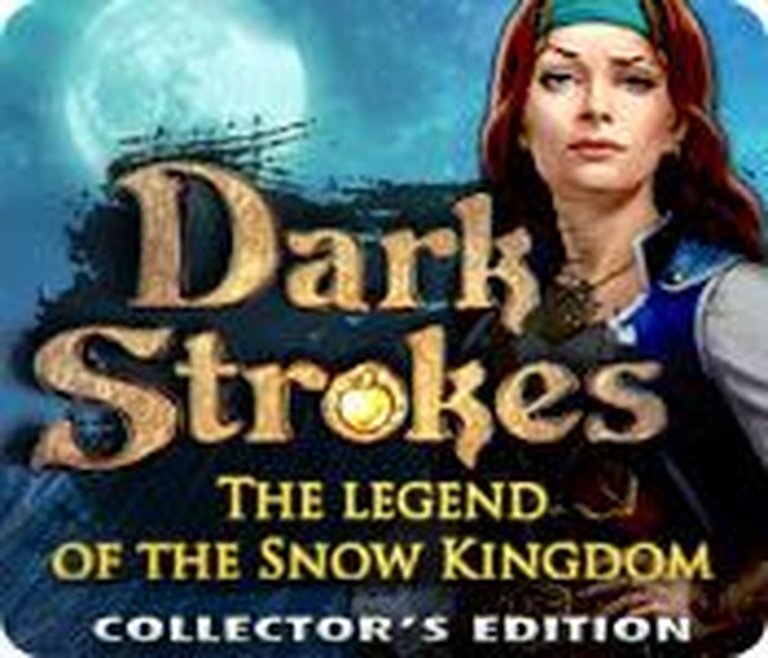
Dark Strokes: The Legend of the Snow Kingdom (Collector’s Edition) is a first-person hidden object adventure game set in a fantastical snow kingdom. Players explore intricate environments, search for concealed items, and solve puzzles to unravel a mysterious legend, with the Collector’s Edition providing extra content for an enhanced experience.
Gameplay Videos
Where to Buy Dark Strokes: The Legend of the Snow Kingdom (Collector’s Edition)
Dark Strokes: The Legend of the Snow Kingdom (Collector’s Edition) Guides & Walkthroughs
Dark Strokes: The Legend of the Snow Kingdom (Collector’s Edition) Reviews & Reception
absolutist.com : The game is awesome as a new presentation of a fairy tale.
Dark Strokes: The Legend of the Snow Kingdom (Collector’s Edition): Review
Introduction: A Frostbitten Fairy Tale for the Casual Age
In the bustling ecosystem of mid-2010s digital gaming, the “hidden object puzzle adventure” (HOPA) genre stood as a fortress of reliable, low-stress entertainment. Within this realm, few publishers were as prolific or as deftly adaptive as Alawar Entertainment. It was into this fertile ground that Alawar Friday’s Games (a subsidiary studio) released Dark Strokes: The Legend of the Snow Kingdom in 2014, later packaged as a Collector’s Edition. This title, inspired by the “timeless tales of the Brothers Grimm,” represents a crystallization of the genre’s signature charms: a fairy tale narrative scaffolded by meticulously crafted scenes of hidden object searchers, interwoven with a tapestry of logic puzzles and mini-games. This review posits that while Dark Strokes does not reinvent the HOPA wheel, it exemplifies the polished, player-centric design that made the format a cornerstone of the casual gaming market. Its value lies not in groundbreaking innovation but in the confident, soulful execution of a proven formula, wrapped in a visually enchanting package that leverages its Grimm-inspired setting to great effect. To analyze it is to dissect the very DNA of a successful casual adventure game from its era.
Development History & Context: The Alawar Assembly Line
Development Studio & Vision: The game was developed by Alawar Friday’s Games, one of several internal studios under the Russian publisher Alawar Entertainment, Inc., a company that had, by 2014, become a titan in the casual and free-to-play space. The project was helmed by a clear hierarchy: Executive Producer Stanislav Savvinykh, Game Designer Alexander Miheev, and Art Director Stepan Komarov. This structure suggests a production model where design and art vision were centralized but executed by a large, specialized team—the credits list 60 developers across numerous roles, from a Lead Artist (Ruslana Kulishova) to a dedicated team of Animation Artists and a long roster of Artists. This division of labor points to a production pipeline optimized for volume and consistency, where artists could specialize in environments, character art, or animation.
Technological & Market Context: Released initially for Macintosh in 2014 and then Windows (with a Steam release in 2017), the game was built for an era of modest hardware. The Steam system requirements—a 1.5 GHz processor, 512 MB RAM, and a DirectX 9.0b compatible graphics card—are relics of a time when accessibility was paramount. The game’s visual style, described in its marketing as “hand-drawn fairytale locations,” was a practical and aesthetic choice. Hand-drawn 2D art was less demanding than 3D modeling, allowed for a stylized, storybook look that fit the Grimm aesthetic perfectly, and could be produced efficiently by a large art team. This placed Dark Strokes firmly in the lineage of classic HOPAs like the Mystery Case Files or Dark Parables series, which prioritized beautiful, static scenes over real-time 3D exploration. Its release on platforms like Big Fish Games, WildTangent, Shockwave, and iWin confirms its target audience: players seeking a frictionless, downloadable experience on standard PCs, often through subscription or bundle models.
Legacy within Alawar: The credits reveal a studio operating at scale. The same core team (including Mikhail Belov, David Laprad, Anna Kosik) worked on numerous other Alawar titles like The Lake House: Children of Silence and Dark Strokes: Sins of the Fathers. This indicates a shared “Alawar Casual” house style—a recognizable template of gameplay loops, UI conventions, and artistic direction that could be reskinned for different narratives (snow kingdom, lake house, dark sins). Dark Strokes: The Legend of the Snow Kingdom is thus a product of a well-oiled machine, not a singular creative auteur project.
Narrative & Thematic Deep Dive: Ice, Magic, and Broken Curses
The narrative, as presented in store descriptions and extrapolated from the exhaustive walkthrough, is a classic fairy tale骨架 (skeleton) with specific, game-driven twists.
Plot Structure: The core story is one of rescue and restoration. A hunter protagonist must save his beloved princess from a warlock who has kidnapped her and cast an “icy spell over a once glorious kingdom.” This primary quest is framed by a prologue: a “breathtaking opening scene” where the hunter saves the princess from a Snow Knight—an early hint that the kingdom’s enchantment has corrupted its guardians. The ultimate goal extends beyond mere rescue; the hero must “uncover the truth about a tree with leaves of gold that holds a startling secret,” which is the key to lifting the kingdom’s curse. The Collector’s Edition substantially expands this with a bonus chapter that “delves even deeper into the mystery of the Snow Kingdom,” offering narrative continuity after the main conflict resolves.
Thematic Exploration: Thematically, the game is unambiguous. It explores love versus dark magic, restoration versus eternal winter, and the hero’s journey from commoner (hunter) to savior. The “golden tree” acts as a classic fairy tale MacGuffin—a source of life or power that has been twisted. The warlock represents a selfish corruption of natural order, while the princess is the literal and symbolic heart of the kingdom. The narrative’s “unprecedented depth” (as per the blurb) is relative to the genre; it’s more coherent than many HOPA plots, with cause-and-effect logic (finding items to progress, learning the warlock’s backstory via documents). The walkthrough reveals supplementary storytelling through collectible “STORY SLIDES” and scrolls/books/letters found in environments, which flesh out the history of the Snow Kingdom and the warlock’s origins, a common device used to pad narrative without cutscenes.
Character & Dialogue: Character development is necessarily lean. The protagonist is a silent player avatar. The princess is a classic damsel, though her rescue is the kingdom’s salvation. The warlock is a shadowy antagonist, his motives elaborated through found documents. Supporting characters—a helpful man, a girl, a king in a dungeon—are functional quest-givers or item sources. Dialogue is minimal and utilitarian, delivered through text boxes. The most notable “character” is the Lynx, a magical bobcat companion the player can name, which serves as a recurring tool for accessing hidden areas, embodying the animal helper trope common in fairy tales.
Gameplay Mechanics & Systems: The Engine of Engagement
Dark Strokes operates on a tightly defined HOPA core loop, refined over a decade of similar games.
Core Loop & Navigation: The game uses a first-person perspective with still, painterly backgrounds. Players navigate by clicking “hotspots” to move between static scenes, often with a map for fast travel. The primary verbs are “Look,” “Use,” and “Talk to,” triggered by cursor changes over interactive objects. This is the genre standard: a slow, contemplative pace that encourages scanning.
Hidden Object Puzzles (HOPs): These are the game’s bread and butter. The walkthrough uses the acronym HOP constantly. Scenes contain lists of items to find (e.g., “1-10” in Chapter 1). Searches are not purely visual; many require interactive items (color-coded in the guide) to reveal objects—using a Lynx to pull down a cloth, using a tool to break something open. This adds a layer of logic beyond simple spotting. The walkthrough notes different search types: “one item after another,” “by lists,” implying some variety in presentation. A key mechanic is the collection of “STORY SLIDES” (often 3 per chapter), which are special hidden objects that unlock narrative snippets and sometimes progress the plot.
Inventory & Item Combination: The inventory system is a classic “paper doll” grid. Players combine items constantly (e.g., ARROW + BOW, CREAM + BOWL, TOOL SET + CHISEL). The walkthrough is a labyrinth of these combinations, revealing a deeply interconnected web where items found in one scene are used several chapters later. This creates a sense of a sprawling, cohesive world rather than isolated levels.
Mini-Games & Puzzles: The game is punctuated by a wide variety of mini-games, a critical component for pacing and challenge. The walkthrough lists dozens:
* Logic/Routing: “Switch between paths 1-3 to avoid obstacles” (horse puzzle).
* Assembly: Putting together broken objects (turtle, fan wings, dwarf figure parts).
* Sequence/Code: Entering codes from environments (symbol activation, lock combinations).
* Pattern Matching: Aligning figurines on a “CASE,” matching tower images.
* Physics/Simulation: A “mini-game” involving pouring ingredients in a specific order (the potion-making sequence with teaspoon, powders).
* Word/Code: A “mini-game” where you place letters (P, Q, P) to solve.
* Platforming: A snowball-throwing game to hit a wizard.
* Timing/Puzzle: A clock puzzle with a cuckoo bird.
These mini-games range from trivial to moderately complex (the jigsaw-style puzzles have multiple hard/casual solutions detailed). Their purpose is to break the monotony of HOPs and provide “achievements,” as noted in the Steam description.
Tools & Special Mechanics: The Lynx is a persistent tool that appears in the inventory and is used to interact with specific environmental objects (pulling ribbons, removing cloth). Other tools like the CROSSBOW, FISHING ROD, and LEVITATION POTION are used to access new areas, creating the illusion of exploration. The Collector’s Edition adds a Strategy Guide and unlimited hints, explicitly mentioned as key features, which is a significant quality-of-life addition for the target audience that may struggle.
Difficulty & Pacing: The walkthrough distinguishes between Hard and Casual modes, primarily for speed in reaction-based mini-games (horse, snowball) and puzzle clue availability. The core logic remains the same. The structure of seven chapters (Clearing, The Fair, The Square, etc.) provides a clear sense of progression and a substantial playtime, which user reviews on Steam imply translates to “years worth of content” in the bundled collections it often appears in.
World-Building, Art & Sound: The Grimm Canvas
Visual Art & Direction: Under Art Director Stepan Komarov and Lead Artist Ruslana Kulishova, the team produced a consistent aesthetic of “hand-drawn fairytale locations.” The environments are rich in detail—the Clearing, the Fairgrounds, the Snow-covered Square, the Perfume Shop, the Dungeon. Each scene is a self-contained, highly illustrated tableau. The color palette is dominated by icy blues, whites, and muted tones for the kingdom, contrasted with warmer, derelict browns in dungeons and shops. The “golden tree” is a recurring visual motif. The art is not photorealistic but illustrative, evoking storybook illustrations. The character designs are simple but effective, and the animation (for things like the Lynx, the ship’s wheel, the prince’s movements) is fluid enough for a casual title. The “breathtaking opening scene” promised in the blurb is a scripted moment that establishes the tone: a dramatic rescue in a snowstorm.
Sound Design & Voice: The Steam store page confirms full audio support in nine languages (English, French, German, Korean, Dutch, Polish, Russian, Japanese, Czech). This indicates professional voice-over work for key characters and narration, a step above many HOPAs that rely on text-only. The Absolutist review explicitly praises the voice-overs as “nicely done” and the sound as “corresponding” to the visuals. The soundtrack is described in the Collector’s Edition features as a downloadable soundtrack, suggesting a memorable, thematic score that reinforces the magical and melancholy moods of the kingdom. The sound design likely emphasizes atmospheric elements: wind, cracking ice, magical chimes, and creature sounds.
Atmosphere & Cohesion: The synergy between art and sound sells the “enchanted realm.” The setting is a Fantasy “Snow Kingdom” that is both majestic and cursed. The world-building is environmental storytelling: a once-glorious place now under an “icy spell,” with details like broken machinery, frozen fountains, and overgrown fairgrounds telling the story of the decline. The progression from outdoor snowy scenes to interior shops and finally to the dungeon and secret room creates a journey through the kingdom’s social and physical layers. The consistent visual language—the golden leaves, the specific iconography of the warlock, the princess’s motifs—ties the disparate puzzle scenes into a single, coherent fantasy world.
Reception & Legacy: A Quiet Success
Critical & Commercial Reception: Official critical scores are virtually non-existent on aggregators like MobyGames (Moby Score: n/a, no critic reviews listed). However, user reception on Steam is strongly positive: “Very Positive (94% of the 75 user reviews).” This is a significant sample for a niche casual game, indicating deep satisfaction among its player base. The price point—$2.69 on Steam, frequently bundled—reflects its value-conscious market. Its appearance in bundles like the “Big Hidden Object Bundle!” (13 games for €59.28) and collections like “Darkness & Sorrow: 5 Game Pack” shows its role as a reliable inventory filler for distributors. Ratings on other portals like Shockwave (3.4/5) and WildTangent (4.6/5 based on 36 ratings) are also solidly average-to-good for the genre.
Legacy & Influence: Dark Strokes did not redefine its genre. Its legacy is as a textbook example of polished, mid-tier HOPA execution. It did not spawn a major franchise; the series includes Dark Strokes: Sins of the Fathers (2012), suggesting The Legend of the Snow Kingdom was a sequel or thematic spin-off building on existing assets and mechanics. Its influence is therefore indirect, contributing to the steady, low-risk output that kept the casual download market vibrant in the 2010s. It represents the apex of the “illustrated still scene” HOPA before mobile dominance and more 3D-influenced designs took over. For historians, it is a key data point in understanding the business model of companies like Alawar: develop efficient, attractive, content-rich games for a specific audience, localize them widely, and distribute them through a network of portals and bundles. Its Collector’s Edition model—with bonus chapter, art, soundtrack—standardized the “value-add” that justified a premium price in a market where base games were often cheap or free.
Conclusion: A Sovereign of Its Genre
Dark Strokes: The Legend of the Snow Kingdom (Collector’s Edition) is not a hidden masterpiece waiting to be discovered by the mainstream. It is, instead, a masterclass in its specific domain. It delivers exactly what its audience expects: a beautiful, lengthy, and mentally undemanding escape into a fairy tale world, with a satisfying cycle of seek-and-find, item manipulation, and puzzle-solving. Its strengths are its consistency, its cohesive aesthetic, and its sheer volume of content, amplified by the Collector’s Edition extras. Its weaknesses—a predictable story, repetitive core mechanic, and low-stakes challenge—are the genre’s weaknesses, not unique flaws.
In the grand tapestry of video game history, its threads are thin but brightly colored. It is a testament to the enduring appeal of accessible, story-driven puzzle games and the industrial prowess of studios like Alawar that could produce such titles with reliable quality. For the genre enthusiast, it is a prime specimen. For the historian, it is a clear marker of the casual gaming landscape circa 2014. For the casual player seeking a few dozen hours of peaceful, picturesque puzzling, it remains a Very Positive recommendation, a kingdom of frost and fetch-quests that knows exactly what it is and executes its mandate with quiet competence. It may not be legendary, but within its own borders, it rules wisely.