
- Release Year: 2018
- Platforms: Macintosh, Windows
- Publisher: Making Fun, Inc.
- Developer: Secret Level SRL
- Genre: RPG, Strategy, Tactics
- Perspective: Diagonal-down
- Game Mode: Online PVP
- Gameplay: Collectible card, Trading
- Average Score: 55/100
Description
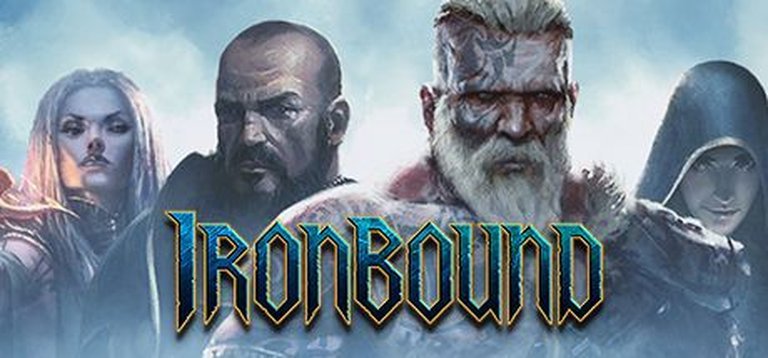
Ironbound is a free-to-play turn-based multiplayer strategy game that blends collectible card gameplay with tactical combat in a fantasy arena setting. Players engage in fast-paced 5-10 minute duel matches, selecting from heroes like the Berserker, Crusader, Assassin, or Witch, and customizing their decks with hundreds of weapons, shields, and magic trinkets to devise strategies and climb the ladder. The game includes an Arena mode for balanced competition and supports cross-platform multiplayer across Windows, iOS, and Android devices.
Where to Buy Ironbound
PC
Ironbound Guides & Walkthroughs
Ironbound Reviews & Reception
opencritic.com (55/100): I can’t see any reason why you would want to play Ironbound. It doesn’t do anything revolutionary or interesting. Instead, it wants to take all of your money in return for unrewarding gameplay in an economy built for pay to win
Ironbound: A Forge Struck in Obscurity
In the crowded arena of digital card games, few titles have arrived with less fanfare and vanished with more silence than Ironbound. Released in January 2018 by Romanian studio Secret Level SRL and published by Making Fun, Inc., this free-to-play, turn-based multiplayer strategy game represents a fascinating case study in niche competence. It is a game that borrowed liberally from established genre conventions—the Hearthstone model, the tactical sensibilities of games like Heroes of Might and Magic—but failed to ignite the player base or critical consciousness necessary for longevity. Ironbound is not a catastrophic failure; it is, instead, a meticulously crafted artifact of a specific moment in gaming history, a dark fantasy card battler that forged its own path into relative oblivion. This review will argue that while Ironbound possesses a robust and functional core combat loop and a commendable commitment to cross-platform play, its profound lack of identity, narrative depth, and compelling meta-game ultimately relegate it to a historical footnote—a solid technical exercise that could not transcend its derivative design to find an audience.
Development History & Context: A Quiet Launch in a Noisy Era
Ironbound emerged from Secret Level SRL, a small Romanian developer with a prior portfolio largely consisting of casual and mobile titles. The studio’s vision, as per the official Steam description, was to create a “turn-based multiplayer strategy game” that was “easy to pick up” yet offered “rich character customization” and a “deep meta-game.” This goal placed it directly in the crosshairs of a saturated market. The late 2010s was the golden age of the digital collectible card game (CCG), dominated by Blizzard’s Hearthstone (2014) and with strong contenders like The Elder Scrolls: Legends (2014) and Gwent (2018). For a new, unknown studio to enter this space required either a revolutionary mechanic or a显著 (significant) marketing push. Ironbound had neither.
The technological constraints were not prohibitive; the game is lightweight (a 200 MB download), uses a simple diagonal-down perspective, and is built for mouse-driven, browser-like interfaces. Its true constraint was one of visibility. With no major marketing campaign beyond its Steam and mobile storefront listings, and no compelling “hook” to differentiate it from giants, Ironbound was launched into a tidal wave of competition. The business model—free-to-play with in-app purchases for cosmetics and progression—was standard, but its implementation would later draw significant player criticism. Its most praiseworthy contemporary feature was its cross-platform multiplayer ambition, allowing account syncing between Windows, Mac, and mobile (iOS/Android) from launch—a forward-thinking move that, ironically, could not save it from its core issues.
Narrative & Thematic Deep Dive: A Setting in Search of a Story
Here lies Ironbound’s most pronounced weakness: a narrative vacuum. The game offers no campaign, no single-player story mode, and no contextualized world to explore. All narrative exists in the service of the multiplayer duel.
The setting is a generic dark fantasy realm, hinted at through class names and item descriptions. Players select from a roster of heroes: the Berserker (aggressive), Crusader (resilient), Assassin (stealthy), Witch (cunning), and later, the Pirate (reckless). These archetypes suggest a world of holy warriors, sorcery, and piracy, but there is no lore provided in-game. Contrast this with the richly detailed, thematically dense world of the Ironbound tabletop RPG (published by Broken Ruler Games), which is set in the kingdom of Alduire, a society forged in “iron and blood” that wages holy war against witches and warlocks. The video game appropriates this aesthetic—the “Ironbound” name, the class names implying a crusading order—but strips it of all substance. There are no characters, no plot, no dialogue trees. The “Witch” class might use “magic trinkets,” but there is no explanation of their origin or the society that hunts them.
This absence is a critical failure. In an era where games like Hearthstone invested in expansive single-player adventures (Knights of the Frozen Throne, Dungeon Run) and Gwent told a branching story tied to The Witcher, Ironbound offered nothing but a ranking ladder. The “deep meta-game” promised is purely mechanical—the chase for better cards and equipment—with zero thematic or narrative integration. The thematic depth exists only in potential, a missed opportunity to explore the “holy warriors vs. dark magic” conflict hinted at by its own title and art assets. It is a game about conflict stripped of the “why,” leaving only the “how.”
Gameplay Mechanics & Systems: Competent Card Combat, Flawed Progression
Ironbound’s core gameplay loop is its saving grace. Matches are fast-paced, 5-10 minute, turn-based duels on a 3×4 grid. Each player controls a hero with Health Points and an ability, backed by a deck of cards representing weapons, shields, spells, and items. The turn structure is simple: draw a hand, spend Action Points (AP) to play cards (which have AP costs and attack/defense values), and attack the opponent’s hero or their defensive cards. The diagonal-down perspective provides clear sightlines, and the card UI is functional if unadorned.
The hero classes provide the primary strategic differentiation:
* Berserker: High attack, lower defense. Rewards aggressive, face-rushing play.
* Crusader: High health, sturdy defenses. A control/tank archetype.
* Assassin: Low health, high mobility and evasive abilities. Rewards precise, hit-and-run tactics.
* Witch: Relies on “magic trinkets” (spells) with unique effects. A spell-caster control archetype.
* Pirate: (Unlocked later) Mixed kit focused on random effects and disruption.
This class system is well-conceived, offering clear playstyles that encourage deck-building around a hero’s strengths. The card variety—hundreds of weapons, shields, and trinkets—allows for experimentation. Mechanics like card durability (items break after blocking) and the interplay between melee weapons and ranged spells show thoughtful design.
However, the meta-game and progression systems are where Ironbound stumbles severely and incurred the brunt of player backlash. Progression is tied to an in-game currency (gold) earned per match, used to:
1. Unlock/Upgrade Heroes: Grind to make a hero viable.
2. Purchase Card Packs: Random packs to fill your collection.
3. Buy Individual Cards: From a rotating shop at exorbitant prices.
This creates a grind-heavy, pay-to-win-adjacent economy. New or free players face an immense uphill battle against veterans with fully upgraded heroes and complete card collections. The Arena mode, intended as an “even playing field” with predefined sets, is a good idea but inadequate offset to the main ladder’s imbalance. Player reviews on Steam (score: 68/100, Mixed) consistently cite this as the primary flaw: a game that rewards time spent (or money spent) over tactical skill, undermining its claim of rewarding “strategic thinking.” A critic from Old Grizzled Gamers bluntly stated, “It doesn’t do anything revolutionary or interesting. Instead, it wants to take all of your money in return for unrewarding gameplay in an economy built for pay to win.”
World-Building, Art & Sound: Functional Aesthetics
Given the game’s minimalist scope, its art direction is surprisingly cohesive. It employs a clean, hand-drawn 2D style with a dark fantasy palette—browns, deep reds, metallic grays. Hero portraits and card art are detailed and evocative, successfully communicating the archetypes (the Berserker’s fury, the Crusader’s plate armor, the Witch’s arcane trinkets). The board isnas are simple but effective, with no visual clutter distracting from the card play. It looks professional, if unremarkable.
The sound design is functional. Card plays have crisp, satisfying audio cues. Hero abilities have distinct sounds. The background music is a single, looped, synthesized track that is inoffensive but forgettable. There is no voice acting, which is expected given the lack of narrative. The UI/UX is the game’s greatest technical success. Matches load quickly, turns are snappy, and the drag-and-drop card interface is intuitive. For a multiplayer-focused game, this reliability is essential.
Ultimately, these elements serve the gameplay competently but inspire no particular awe. They create a clear, usable fantasy space for card battles but fail to build a world worth caring about.
Reception & Legacy: A Mixed and Minor Footnote
At launch, Ironbound existed in a critical vacuum. It holds no aggregate score on Metacritic, and only one critic review is recorded on OpenCritic (a 55/100). Its commercial performance is opaque, but Steam data shows a peak concurrent player count in the low hundreds, with a current (2026) total of only 263 user reviews. It is, by all metrics, a niche title.
Its reputation has not evolved. The Steam user review breakdown (178 positive, 85 negative) has remained remarkably stable for years, a hallmark of a game with a small, entrenched player base and no significant updates to alter perception. The negative reviews consistently cite the “grind,” the “pay-to-win” progression, and a lack of content. Positive reviews often come from players who enjoy the fundamental card combat loop and have invested in the ecosystem.
Influence on the industry is negligible. It did not pioneer mechanics. It was not a breakout hit that spawned clones. Its cross-platform play was a notable feature but not pioneering (Hearthstone had it earlier). Its legacy is purely as an example of a well-meaning but poorly balanced free-to-play model that failed to balance rewarding gameplay with fair monetization. It serves as a cautionary tale: in a genre where player skill expression is paramount, a progression system that gates core cards and upgrades behind immense grind or money creates a toxic, unsustainable community. It exists in the shadow of every F2P card game that learned (or failed to learn) from its mistakes.
Conclusion: A Forged Weapon, Never Wielded
Ironbound is the sound of a hammer striking an anvil in an empty forge. The fundamentals are there: a clear, fast, and strategically varied card combat system with a strong class foundation. For a brief moment in a match, it provides the tactical satisfaction of outmaneuvering an opponent, of using the right card at the right time. But that moment is enveloped by a hollow shell—a world without story, a meta-game without fairness, and a community without momentum.
Its place in video game history is that of a competent ghost. It demonstrates that Secret Level SRL understood the mechanics of a digital CCG but fundamentally misunderstood the experience—the need for a compelling reason to play beyond the next match, a progression system that respects player time, and a world that invites investment. In the grand museum of gaming, Ironbound is not displayed in the main hall. It is in a back room, labeled “Interesting Technical Implementation, Flawed Economic Model.” It is a game for no one, remembered by almost no one, yet standing as a silent testament to the immense difficulty of building a living world in the shadow of giants. It forged a weapon, but never forged a legacy.
Final Verdict: 5.5/10 – A mechanically sound but narratively barren and economically unfair competitive card game that failed to carve out an identity in a saturated market. Its only lasting significance is as a textbook case of how not to structure a free-to-play meta-game.