
- Release Year: 2015
- Platforms: Linux, Macintosh, Windows
- Publisher: Digital Tribe Entertainment, Inc.
- Developer: Ekuator Games
- Genre: RPG
- Perspective: Diagonal-down
- Game Mode: Single-player
- Gameplay: Turn-based combat
- Average Score: 79/100
Description
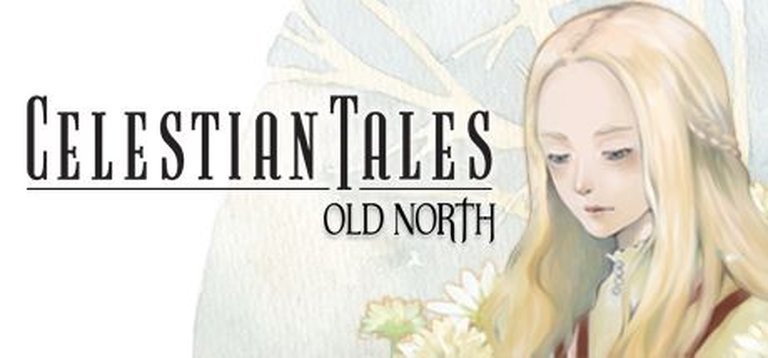
Celestian Tales: Old North is a Kickstarter-funded, JRPG-inspired turn-based RPG set in a medieval-inspired fantasy world. Players choose from six squires, each with distinct moral dilemmas and story arcs, as they navigate the path to knighthood in this first installment of a planned trilogy by Ekuator Games.
Gameplay Videos
Where to Buy Celestian Tales: Old North
Celestian Tales: Old North Cracks & Fixes
Celestian Tales: Old North Patches & Updates
Celestian Tales: Old North Guides & Walkthroughs
Celestian Tales: Old North Reviews & Reception
metacritic.com (60/100): This is a fun story driven RPG that shows classic elements from older turn-based and free roaming games of the sort alike to some of the original Final Fantasy games.
store.steampowered.com (99/100): With a fantastic atmosphere far beyond most indie RPG titles, and a large amount of replay value Celestian Tales is a game that JRPG fans should not miss… I would wager that it is one of the most well crafted Indie JRPG’s that I’ve played in recent years.
rpgamer.com : the game simply feels like a prologue to that larger tale and doesn’t quite offer a substantial enough experience in line with its promises.
Celestian Tales: Old North: A Kingdom of Shadows and Unfulfilled Promises
Introduction: The Prologue That Promised a Saga
In the crowded landscape of indie RPGs, few titles arrive with as tantalizing a premise and as profound a sense of narrative ambition as Celestian Tales: Old North. Emerging from the vibrant Indonesian game development scene and funded via Kickstarter, this 2015 release from Ekuator Games pledged to deliver a mature, morally complex fantasy saga inspired by the golden age of Japanese RPGs and the political grit of Western fantasy. Its core promise was revolutionary for an indie project: a three-decade-spanning story told across a planned trilogy, where player choices in this first installment would ripple through future games. Six distinct protagonists, a shared world, and a rejection of “chosen one” tropes hinted at a fresh, adult take on the genre.
Yet, to play Old North is to engage with a fascinating paradox—a game that is both a captivating character study and a frustratingly incomplete prologue. It is a title brimming with potent ideas, a haunting soundtrack, and a world that feels lived-in, yet consistently struggles under the weight of its own structural constraints and the undeniable reality of its first-part status. This review will argue that Celestian Tales: Old North is a game of significant, if unfulfilled, potential; a flawed but noble foundation stone for a series that never quite built the cathedral it envisioned. Its legacy is not one of classic status, but of a critical case study in indie ambition, episodic storytelling growing pains, and the enduring power of a great soundtrack and cast to overshadow systemic shortcomings.
Development History & Context: An Indie Vision Forged in Unity
Celestian Tales: Old North was born from the collective vision of Ekuator Games, an Indonesian studio founded by individuals like Cipto Adiguno (Producer/Director) and Ray Suryadiptya (Tech Director/Main Programmer). Their goal, as stated in the official Steam description and Kickstarter materials, was to “redefine the classic RPG” by moving beyond juvenile savior narratives toward a story about “the bare morals of a human being.” The game was developed using the Unity engine—a common but capable choice for indies at the time—allowing the small team to target PC, Mac, and Linux simultaneously.
The project’s lifecycle is intrinsically tied to its 2014 Kickstarter campaign. Successful crowdfunding provided a crucial budget but also imposed clear boundaries. This context is essential for understanding the final product: a game that feels both lovingly crafted within its means and visibly stretched thin. The scope—a trilogy spanning thirty years—was monumental for a first-time, self-published effort. The result is a narrative that confidently sets the stage (the formative years of six squires, the political tensions of the Old North, the threat of the Enders) but is forced to conclude with a whiplash-inducing cliffhanger that serves the sequel more than itself. As noted in multiple reviews (RPGamer, Operation Rainfall), this first chapter feels explicitly like a prologue, a fact the developers acknowledged but perhaps failed to fully mitigate for players expecting a complete journey.
Technologically, the game exists in an interesting indie space. It consciously mimics 16/32-bit JRPG aesthetics (detailed pixel-art sprites, turn-based combat) while using modern tools to render lush, hand-painted 2D backgrounds. This stylistic blend is a direct nod to the classics it admires (with TV Tropes noting a Suikoden inspiration), but the execution reveals the limitations of a small team. The “art shift” of the title sequence into classic 2D animation, as catalogued on TV Tropes, ironically highlights the inconsistency of the main game’s visual approach.
Narrative & Thematic Deep Dive: Morality in Monochrome
The narrative core of Old North is its ensemble of six squires—Aria, Cammille, Isaac, Lucienne, Reynard, and Ylianne—each representing a different philosophical and social perspective on the world of the Old North. This “Four-Philosophy Ensemble” (with some overlap) is not just a gameplay mechanic but the game’s primary engine for thematic exploration. Through their parallel, slightly divergent paths, the game dissects:
- Class and Fantastic Racism: The nobility’s condescension toward commoners is a constant, visceral theme. Isaac’s entire arc is born from this, as a commoner infiltrating noble society. Ylianne’s half-elf heritage subjects her to a different, more existential prejudice from her own kind—a “Fate Worse than Death” of outliving all her human friends.
- Family, Honor, and Legitimacy: The “Mama’s Baby, Papa’s Maybe” trope is central to the game’s explosive climax. The scandal over the Levant heir’s parentage, revealed through Cammille’s unique perspective, is a masterstroke of political storytelling that reframes the entire conflict. It pits biological truth against political legitimacy and familial duty.
- The Nature of Heroism and War: The war with the Enders is deliberately de-esogized. They are not mindless monsters but a people with understandable motives (“Not Evil, Just Misunderstood”). The resolution via “Combat by Champion” and Artur’s lute-playing (“Battle Chant” pacification) subverts the expected RPG war climax, suggesting diplomacy and understanding over brute force—though it’s undercut by Severin’s violent rage moments later.
- Moral Relativism and Personal Cost: The game’s signature “Story Branching” moments (the bandits at Orsea, the Fiellite funeral, the broken vase) force players to choose between abstract principle and concrete compassion, or vice versa. Crucially, as RPGamer’s review hammered home, these choices have virtually no impact on the immediate plot of Old North. Their weight is purely character-defining, intended to echo into the sequels. This creates a dissonance: players are asked to make weighty decisions that the current game itself treats as essentially cosmetic, a frustrating design for a self-contained experience.
The narrative structure itself is a key part of the thesis. By forcing a “Static Role, Exchangeable Character” model where the chosen squire is always the leader and decision-maker, the game ensures a consistent core narrative while allowing for “Another Side, Another Story” revelations. However, as both RPGamer and Operation Rainfall noted, the differences between playthroughs are too minor to justify six full repetitions for most players. The true “full story” is a mosaic, but assembling it requires immense patience for repeated, largely identical sequences.
The ultimate narrative failure of Old North is its “Wham Episode” ending. The knighting ceremony, a moment of triumph, is shattered by Severin’s attack on Alain and Sophia. This isn’t a climax to the Enders plot but a brutal, personal betrayal that shatters the party’s foundational trust and directly places them “on the wrong side” of a “dark conspiracy.” It’s a brilliant, shocking pivot that utterly fails as an ending for a standalone game, leaving every other thread (the Enders’ fate, the politics of the other houses, the personal arcs) hanging. It perfectly encapsulates the game’s nature: a stunning narrative act trapped in the body of a prologue.
Gameplay Mechanics & Systems: Solid Foundations, Shaky Execution
Celestian Tales employs a turn-based combat system that is competently designed but rarely inspired. Its most acclaimed innovation is the party-level system. Instead of individual levels, all six characters share a single level and XP pool. This elegant solution eliminates grinding for underused party members, a common JRPG pain point. However, it also removes a key layer of customization and attachment; your investment in “building” an individual character is significantly diluted.
The Stamina-based skill system replaces traditional MP. Stamina builds by 1 for attacking or 2 for defending, capping at 8. This creates a satisfying tactical rhythm of building resources for powerful “Passion Skills” and battle arts. The limitation to four equippable skills per character offers some customization, but the linear level-up progression (gaining one new skill every level up to 20) means builds feel prescribed rather than organic.
The Arbitrary Headcount Limit (three active party members, with the protagonist locked in) is mechanically justified in-universe (“Knight, Knave, and Squire” training) but feels restrictive. It encourages swapping but doesn’t foster deep attachment to a core trio.
Where the gameplay stumbles most prominently is in balancing and pacing.
1. Difficulty Spikes: RPGamer and user reviews consistently cite brutal difficulty spikes, particularly in the final two battles. The sin of a final boss with a powerful, repeatable healing move is a classic design misstep that can render a battle feel unwinnable without specific pre-battle preparation (status effects).
2. Pacing and Backtracking: The game’s linear story is punctuated by significant amounts of backtracking through previously visited areas. While explorative, it often feels like filler in a relatively short 5-10 hour first playthrough.
3. Underdeveloped Systems: The equipment upgrade system is rudimentary (grind items to enhance weapons, buy armor). The “Dynamic encounters” with visible enemy shadows are a nice touch for avoidance, but the game’s world lacks meaningful side content to make exploration rewarding beyond the main path.
4. “Anti-Frustration Features” vs. Depth: The shared level and post-battle healing reduce frustration but also diminish long-term strategic depth and the tension of resource management. The game prioritizes a smooth, story-forward experience over challenging, systemic gameplay.
In essence, the combat is a functional, occasionally fun vehicle for the story, but it lacks the strategic depth or memorable boss design of the classics it evokes. It serves its purpose but rarely elevates the experience.
World-Building, Art & Sound: A Gorgeous, Inconsistent Tapestry
Visually, Celestian Tales presents a study in contrasts. The hand-painted background art is frequently stunning, with a soft, pastel aesthetic that gives the Old North a dreamlike, storybook quality. Locations feel distinct and atmospheric. However, as Operation Rainfall’s review poignantly noted, these backgrounds sometimes clash with the animated pixel-art character sprites, which, while detailed and modern in their animation, can appear to “float” on the painted scenery rather than inhabit it. The infamous “standing on a painting of a boat” effect is a jarring break in immersion that speaks to the challenges of merging 2D art styles.
The character portraits are a high point. Emotive and well-drawn, they sell dialogue with a range of expressions that add significant nuance to character interactions. The UI is clean and functional, if uninspired.
Where the game achieves near-universal acclaim is its soundtrack. Described as “epic,” “fantastic,” and the game’s “saving grace” by critics and players alike, the score by Adrian Benigno Latupeirissa and Agate Simfonia is a sweeping, melodic triumph. It masterfully swells with the drama of the story and provides a pulse-pounding boss theme that众多 reviewers singled out. It is, without question, a classic JRPG-style soundtrack that does heavy lifting for the game’s emotional weight and epic stakes. The voice acting is not present; the game is text-only, which is a practical choice for an indie but means the great writing and portraits must carry all dramatic weight.
The world itself, the Old North, is effectively built through environmental storytelling and dialogue. The social hierarchy—Bladebearers, Inquisitors with their “Flowery Elizabethan English” (used to mark status, except for the sadistic Abel), the disdain for commoners—is clear. The “Eldritch Location” of the Summerlight Gardens in the Howl of the Ravager DLC showcases creative level design, even if it reuses assets (“Cut and Paste Environments”). The setting feels grounded in feudal politics and personal conflict, making the “War Is Hell” moments (like the bodies at Whiterock Hill) land with appropriate gravity.
Reception & Legacy: A Cult Cautionary Tale
At launch in August 2015, Celestian Tales: Old North received mixed to negative reviews from professional critics. MobyGames aggregates a 55% average from the two critic reviews available (RPG Site 60%, GamesTM 50%). The consensus was remarkably consistent: a promising, well-presented story with strong music and characters, but hamstrung by its prologue-like structure, limited impactful choices, short length, and gameplay imbalances. RPGamer’s 50%-equivalent review called it “a bit of an odd bag, feeling more like a prologue to something bigger.”
User reception is fiercely divided, as seen on Steam (Mixed, 69% positive from 348 reviews at the time of the Steambase data) and Metacritic (User Score 3.5/10, “Generally Unfavorable”). The negative reviews often zero in on the same points: the 5-6 hour length felt insufficient for the price, the “replay value” via six characters was seen as padding, and the Kickstarter funding model bred resentment among some who felt they funded an incomplete product. Positive reviews, however, passionately defend the game’s strengths: its mature themes, great soundtrack, and character writing, arguing it’s a “solid effort” deserving of patience for the planned sequels.
Its commercial performance is opaque but likely modest. It has maintained a low but steady presence on Steam and GOG, often heavily discounted (as low as $1.29 on GOG). The release of the Howl of the Ravager DLC (a prequel) in 2016 and the sequel, Celestian Tales: Realms Beyond, in 2020, confirms the studio’s commitment to the trilogy. However, the long gap between games (5 years for the sequel) and the lack of mainstream breakout success muted the series’ profile.
In terms of influence, Old North occupies a niche space. It is cited as an example of successful Southeast Asian indie RPG development and a title that took inspiration from both JRPGs (Suikoden, Valkyrie Profile—per TV Tropes shout-outs) and Western fantasy politics. Its most significant contribution may be as a proof-of-concept for moral-choice-driven, episodic storytelling in a traditional RPG framework, albeit one that highlighted the difficulties in making first-part choices feel consequential when the follow-ups are years away. It likely influenced other regional indies but did not achieve the paradigm-shifting impact its Kickstarter promised.
Conclusion: A Noble, Flawed First Movement
Celestian Tales: Old North is a game that demands to be judged on two, often conflicting, planes: as the standalone product it was sold as in 2015, and as the first movement of a planned trilogy.
On its own merits, it is a flawed but intriguing experience. Its greatest strengths—a mature, politically nuanced narrative centered on a brilliant ensemble cast; a haunting, memorable soundtrack; and a world with a palpable sense of history and prejudice—are consistently undermined by its weaknesses: a short, prologue-like story with negligible immediate consequences for its moral choices; uneven combat balance; backtracking padding; and a visual style that doesn’t always cohere. For a player today, it is a 5-10 hour investment best enjoyed at a steep discount, primarily for its story and music, with the understanding that you are watching the first act of a play whose subsequent scenes are still being written.
As an artifact of ambition, it is more significant. It represents a bold attempt by a small, non-Western studio to engage with the hardest parts of RPG storytelling—political intrigue, moral ambiguity, and long-form character development—using a classic genre template. Its failures are instructive: the perils of episodic storytelling without immediate payoff, the difficulty of making player agency feel real when consequences are deferred, and the challenge of delivering a complete narrative arc within a first-part budget.
Its final verdict in the halls of history is that of a noble, fascinating curio. It is not a lost classic, nor is it a disastrous misfire. It is a game that achieved what it set out to do in establishing world, character, and central conflict with prodigious skill, but failed to deliver a satisfying, self-contained chapter. The seeds it planted—the parentage scandal, Severin’s rage, the “dark conspiracy”—are potent, but they are seeds nonetheless, waiting for a sequel to bloom. For historians of gaming, Celestian Tales: Old North is a crucial case study in Kickstarter-era scope, indie JRPG development outside Japan, and the perennial challenge of marrying player choice to a pre-plotted multi-part narrative. It is a tale of tremendous promise, whose most memorable moments are often its whispers of what could be, rather than the story it is. The Old North remains a land of fascinating shadows, but in this first telling, the light of fulfillment never quite reaches its farthest corners.