
- Release Year: 2021
- Platforms: Android, iPad, iPhone, Macintosh, Stadia, Windows
- Publisher: Broken Arms Games Pty Ltd, Pixmain Pte. Ltd.
- Developer: Broken Arms Games Pty Ltd
- Genre: Simulation, Strategy, Tactics
- Perspective: Diagonal-down
- Gameplay: Business simulation, Managerial
- Average Score: 74/100
Description
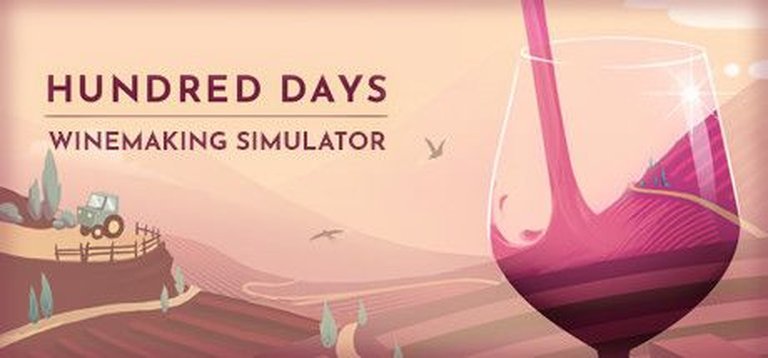
Hundred Days: Winemaking Simulator is a business simulation game where players take on the role of a vineyard manager, overseeing every aspect of wine production from grape cultivation and harvesting to fermentation, bottling, and distribution. Set in a realistic winery environment, the game offers deep strategic decision-making based on tasks like monitoring soil conditions, managing resources, and adapting to seasonal changes, providing an immersive experience in the wine industry.
Gameplay Videos
Where to Buy Hundred Days: Winemaking Simulator
Hundred Days: Winemaking Simulator Free Download
Hundred Days: Winemaking Simulator Mods
Hundred Days: Winemaking Simulator Guides & Walkthroughs
Hundred Days: Winemaking Simulator Reviews & Reception
metacritic.com (74/100): A wider Story Mode could have further enriched a title that was already solid.
Hundred Days: Winemaking Simulator: A Toast to Authenticity, a Warning Against Megalomania
1. Introduction: The Philosophy in a Glass
To load Hundred Days: Winemaking Simulator is to be met not with a splash screen or a title card, but with a stark, philosophical statement: “There is a thin line between courage and stupidity.” This line, which opens the game before the main menu, is no mere flourish. It is the Rosetta Stone to understanding Broken Arms Games’ 2021 title—a deeply personal, meticulously researched, and ultimately poignant meditation on winemaking, business, and the human cost of ambition. At first glance, Hundred Days appears to be a cozy, card-based management sim in the vein of Stardew Valley, inviting players to escape to a sun-drenched Italian vineyard. Yet, beneath its charming surface lies a complex simulation grounded in real agricultural science and a narrative core that quietly critiques the very systems it lets you build. It is a game that teaches the art of winemaking with patient grace, only to later ask if you’ve forgotten the soul of the craft in your pursuit of scale. This review will argue that Hundred Days succeeds not as a revolutionary technical marvel, but as a masterclass in thematic integration and authentic simulation, even as it stumbles under the weight of its own repetitive mid-to-late-game loop.
2. Development History & Context: From Hippie Roots to Pixelated Vines
Hundred Days is the product of an unusually intimate development history, deeply entwined with the life of its lead designer, Yves Hohler. The story begins not in a game studio, but in the 1980s Italian countryside. As detailed in Robert Purchese’s essential Eurogamer feature, Hohler’s Swiss-French parents, described as “the last hippies on Earth,” impulsively purchased an abandoned, unheated house in Italy’s Piedmont region with no winemaking experience, moving their six children—including infant twins—into the freezing, rain-ridden cellar. The family’s courageous, perhaps foolhardy, leap into viticulture became Hohler’s upbringing. From age five, wine was his reality; he later studied viticulture and oenology in Alba, eventually running the family winery himself after his mother’s death and his father’s mental health declined. His eventual departure from the family business and pivot to game development in 2011 founded Broken Arms Games, a small Italian studio based in the very wine country they simulate.
For nearly a decade, the studio worked on unremarkable mobile and console titles—motorbike games, shooters—feeling disconnected from their roots. The pivot to a wine simulator came from external advice: “Note your background.” Hohler also recognized a cultural moment, citing the millennial-driven elevation of wine culture via shows like Chef’s Table and a growing desire to demystify the subject. The team’s geographic and professional proximity to Piedmontese winemaking was pivotal. As their press kit states, “the entire team is deeply connected with the cultural heritage of Piedmont,” and real local data and machinery models were integrated. Built in Unity, Hundred Days was a deliberate, slow-cooked project aiming to bridge a gap: creating a game that was “pretty accurate” in its simulation but sectioned to avoid frustrating minutiae, as Hohler explained in a Steam FAQ. The game’s release on May 13, 2021, for PC (Windows, macOS) and later iOS, Android, Stadia, and consoles, was the culmination of this long, personal journey.
3. Narrative & Thematic Deep Dive: More Than a Tutorial in Disguise
Hundred Days’ narrative is delivered through its Story Mode, which functions as an extended, narrative-wrapped tutorial. Players assume the role of Emma, a city-dweller who inherits a dilapidated winery in the Langhe and Roero hills (a UNESCO site, explicitly named in-game and promotional materials). She is guided by a small cast: the wholesome, eager Teo; the curmudgeonly but knowledgeable oenologist Gianni; and the antagonistic Filippo, head of “The Consortium,” a corporate body representing ruthless, expansionist business interests.
The narrative’s simplicity is both its strength and weakness. On one hand, it efficiently establishes core conflicts: tradition vs. modernization, craftsmanship vs. corporatization, community vs. profit. Filippo is a clear villain archetype—the businessman who “only lust[s] after money and power”—a characterization that, while stereotypical, resonates with anyone familiar with wine industry consolidation. Emma’s arc from skeptical outsider to passionate defender of “good wine” provides a relatable entry point. The story’s true thematic power, however, emerges post-tutorial. As Vice’s Chris Lawn astutely observed, the game’s later stages accidentally become a potent commentary. When the player, driven by growth, shifts from selling to individual customers (represented by recurring, expressive portraits) to faceless bulk brokers, the soul of the interaction evaporates. The game forces a realization: in optimizing for scale and profit, you have functionally become Filippo. The joyful animations of cards being placed, the cheerful music—these early-game pleasures fade as the player’s attention shifts to spreadsheet-like optimization. The narrative, therefore, is not just about learning to make wine, but about the potential corruption of that initial, pure intent. The opening line, “courage and stupidity,” echoes here: was the player’s courageous expansion into a mega-winery actually a stupid abandonment of the craft? It’s a silent, systemic narrative that plays out in the mechanics far more than the scripted dialogues.
4. Gameplay Mechanics & Systems: The Elegant Cardboard Cellar
The genius of Hundred Days lies in its abstraction of the notoriously complex winemaking process into a digestible, yet deeply meaningful, card-and-tile system. Each turn represents a day; five turns comprise a season, twenty a year. The player’s vineyard and winery are represented by an expandable grid (starting at 3×3). Every action—from “Pruning” and “Disease Treatment” in the vineyard to “Pressing,” “Fermentation,” “Malolactic Fermentation,” “Aging,” and “Bottling” in the cellar—is a card placed onto this grid. Cards have a duration (number of turns they occupy a tile) and resource costs (money, labor points, specific equipment). The spatial puzzle is fitting these time-bound cards onto the limited board without overlap, forcing players to prioritize and sequence tasks.
This system brilliantly translates real-world winemaking constraints:
* Time & Seasonality: You cannot harvest in winter; certain vineyard tasks must precede others. The card duration mirrors the real-world passage of time foreach process.
* Resource Management: Money, labor, and specialized equipment (e.g., a crusher-destemmer vs. a press) are finite, creating trade-offs.
* Quality vs. Quantity: The core simulation tracks multiple quality vectors (Body, Sweetness, Tannins, Acidity, etc., on a 1-10 scale) influenced by hundreds of decisions: grape variety, soil analysis, harvest date, yeast strain, fermentation temperature, aging vessel (oak vs. steel), and bottle type. A “perfect” wine requires balancing these metrics to a grape variety’s ideal profile.
* Three Pillars of Play: The game cleanly divides into Vineyard Management (soil, planting, disease), Winemaking Process (the card-based cellar operations), and Sales & Marketing (matching wine characteristics to customer demands, setting prices, managing reputation).
The “Training” (Story) mode is a superb tutorial, introducing mechanics organically. “Endless” mode removes narrative constraints, allowing pure sandbox optimization. “Challenge” modes impose specific rules. The system’s innovation is its accessibility; as the press kit claims, it’s suitable for beginners and experts. You can ignore the nuanced pH and sugar data, relying on the simplified 10-point scales, or you can obsess over the precise numerical outputs. The flaw, however, is systemic repetitiveness. Once the initial learning curve is overcome and the upgrade trees are mapped, the core loop—place cards, wait, harvest, repeat—becomes a grind, especially when managing multiple grape varieties and large vineyards. The game’s depth is also its cage; the sheer number of upgrade paths (new tractors, yeast strains, buildings, marketing options) can feel like a checklist rather than a meaningful progression after dozens of hours.
5. World-Building, Art & Sound: The Taste of Piedmont
Broken Arms Games’ connection to Piedmont is not just a backdrop; it is the game’s lifeblood. The world is a lovingly rendered, isometric 2.5D representation of the Langhe and Roero hills. Specific real locations—Alba, the Chapel del Barolo, the River Tanaro, Barbaresco, Canale—are named and visually evoked, providing an authentic sense of place. The art direction, handled by freelancers Suzanne Dang and Sylvain Murat, employs a warm, saturated palette of earthy greens, golden yellows, and deep purples, evoking the Mediterranean sun and ripe grapes. The 2D scrolling visual style is clean and readable, crucial for a game where spatial tile placement is key.
The UI/UX, by Roberto Bernardini, is a highlight. Menus snap with satisfying tactile feedback; the journal page-turns flutter pleasingly. The card animations—a little grapevine growing, a fermentation tank bubbling—are small, consistently delightful rewards that reinforce the game’s core actions without being intrusive.
Sound design by Tumult Kollektiv complements the visual warmth. A gentle, acoustic guitar or string-led soundtrack underscores the relaxed pace, shifting subtly with the seasons. Ambient sounds of wind, birds, and bustling cellar activity create an immersive, peaceful atmosphere. Together, these elements cultivate a “cozy” (Stardew Valley-esque) vibe that initially disarms the player, making the later thematic punch of corporate monotony all the more effective.
6. Reception & Legacy: A Cult Classic with a Caveat
Upon release, Hundred Days received “generally favorable reviews” (Metacritic 74/100). Critics universally praised its unique premise, educational value, and charming presentation. IGN Italia (7.5/10) called it “an interesting journey… as unique as it is charming.” The Games Machine (80) highlighted how its structure “ensures we’re not left alone in learning the little tricks of the trade.” Eurogamer Italy (70) and SpazioGames (70) noted its simplicity and enjoyability, but both cited repetitiveness as a core issue, with SpazioGames stating it “doesn’t shine for long because of its repetitiveness.” The Vice review provided the most incisive critique, framing the later-game experience as an “accidental commentary” on the soul-crushing nature of scale.
Commercially, it found its audience as a niche but successful indie title, prompting ports to Mac, iOS, Android, Stadia, and later Nintendo Switch, PlayStation, and Xbox. The release of the Napa Valley DLC in 2021, adding new grape varieties (Cabernet Sauvignon, Pinot Noir, etc.), tools, and challenges, demonstrated the studio’s commitment to expanding the simulation’s scope and geographic authenticity.
Its legacy is twofold. First, it stands as arguably the most authentic and accessible mainstream wine simulation ever created. It has likely done more to educate the general public on the intricacies of viticulture and oenology than any game before it, fulfilling Hohler’s stated goal of “teach[ing] players about the process.” Second, it has carved a distinct niche in the management-sim genre by emphasizing careful, artisanal process over ruthless mechanized expansion—a philosophy that directly opposes the RollerCoaster Tycoon or Game Dev Tycoon growth-at-all-costs paradigm. While it didn’t spawn a wave of “beverage simulators” (a Steam FAQ query about beer/liquor was declined), it proved that hyper-specific, real-world vocational simulations can find a passionate audience if wrapped in compelling systems and authentic respect for the subject matter.
7. Conclusion: A Vintage Worth Savoring, But Not Cellared Indefinitely
Hundred Days: Winemaking Simulator is a remarkable, if imperfect, achievement. It is a game born from a specific place, a specific family’s history, and a deep respect for a millennia-old craft. Its card-based management system is an elegant masterstroke, translating complex chemistry and agronomy into an intuitive, puzzle-like loop that is initially captivating. The world of Piedmont is rendered with warmth and authenticity, supported by a UI and soundscape that prioritize a relaxing, almost meditative experience.
However, the game’s greatest strength—its unwavering commitment to simulating the process—becomes its Achilles’ heel. The late-game lack of narrative or systemic variety exposes the repetitive nature of its core mechanics. The pursuit of optimization strips away the early-game magic, leading to the “2042 problem” where players, like their in-game avatars, have mechanized their passion. This isn’t a fatal flaw, but a thematic inevitability that the game itself seems to lament.
Its place in history is secure. It is the definitive digital artifact for wine-curious gamers, a loving tribute to the “care and craftsmanship” Hohler champions, and a subtle, systemic critique of the corporatization of tradition. It asks players to consider: is your winery a business to be expanded, or a craft to be perfected? For its bold authenticity, its personal heart, and its quietly devastating commentary on growth, Hundred Days is a vintage to be remembered—a game that, like a well-made wine, leaves a lasting, contemplative finish. It may not be a “perfect” game, but it is an undeniably real one.
Final Verdict: 8.5/10 – A singular, heartfelt simulation that educates and entertains in equal measure, though its late-game repetition prevents it from achieving true classic status. A must-play for anyone interested in management sims, wine, or games with a profound sense of place and purpose.