
- Release Year: 2022
- Platforms: Windows
- Publisher: Mushreb Games
- Developer: Mushreb Games
- Genre: Action, Rolling ball
- Perspective: Behind view
- Gameplay: Platform, Rolling
- Average Score: 96/100
Description
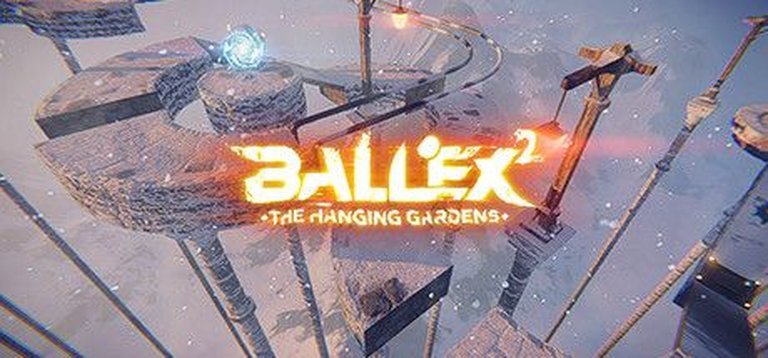
Ballex²: The Hanging Gardens is a third-person rolling ball puzzle-platformer and sequel to Ballex. Players control one of 10 unique balls, each with distinct characteristics, to navigate the scenic, seasonally-changing environments of the Hanging Gardens, overcoming obstacles and solving physics-based puzzles. The game features two control schemes, a robust Havok physics engine for realistic ball movement, and supports extensive user-generated content through Steam Workshop and a powerful, free level editor DLC that allows for custom assets and scripting.
Gameplay Videos
Where to Buy Ballex²: The Hanging Gardens
PC
Ballex²: The Hanging Gardens Free Download
Ballex²: The Hanging Gardens Reviews & Reception
gamevalio.com (96/100): Worth keeping an eye on.
Ballex²: The Hanging Gardens: A Rolling Ball Masterpiece Forged in Nostalgia and Innovation
Introduction: The Rolling Stone That Gathers No Moss, But Plenty of Praise
In the vast ecosystem of video games, certain genres exist as cherished, almost secret, gardens—tended by dedicated communities but rarely splashed across mainstream headlines. The “rolling ball” simulator, a niche born from the early 2000s physics experimentation of games like Ballance and Marble Blast, is one such garden. Into this verdant, vertiginous space steps Ballex²: The Hanging Gardens, a sequel seven years in the making that does more than just revisit its roots; it meticulously reconstructs and expands the very foundations of its genre. As a historian of overlooked digital spaces, I argue that Ballex² is not merely a competent successor but a definitive, modern crystallization of the rolling ball ethos. It masterfully balances profound mechanical depth with unprecedented creative freedom, crafting an experience that is at once a loving homage to Ballance and a bold leap forward, ultimately standing as one of the most significant and satisfying indie physics puzzles of the mid-2020s.
Development History & Context: A Small Studio’s Grand Vision
The Studio and Its Genesis
Ballex²: The Hanging Gardens is the product of Mushreb Games, a virtually anonymous independent studio. The original Ballex (2019) was a modest, well-received proof-of-concept that captured the Ballance spirit with a minimalist aesthetic and tight physics. Its success, though modest, provided the mandate and community feedback for a grander sequel. The development of Ballex² spanned from its Early Access launch on July 15, 2022, to its full 1.0 release on April 30, 2025. This three-year period in Early Access was crucial, allowing the team to iteratively refine physics,ballistic models, and, most importantly, build and stress-test the now-legendary Level Editor.
Technological Constraints and Ambitions
Operating on a clearly indie budget, Mushreb Games made savvy technology choices. The game is built in Unity, a powerhouse for indies, but its true secret weapon is the integration of the Havok Physics Engine. This is a non-trital decision; Havok is industry-standard for high-fidelity simulations (used in everything from Assassin’s Creed to Destiny), yet its licensing and implementation are complex. For a small team, this signals a monumental commitment to physical authenticity. The result is a “more stable and efficient physics simulation” where the “feel of controlling the ball has… reached a more comfortable state” after long adjustments—a claim borne out by player reports of consistent, predictable, and deeply tactile momentum.
The 2025 Gaming Landscape
By its full release in April 2025, the indie market was saturated with physics-based games (Human: Fall Flat, Poly Bridge, Gorilla Tag), but the specific, high-precision rolling ball genre remained relatively quiet post-Marble It Up! (2018). Ballex² arrived not as a lone voice, but as a culmination. It competed for attention in a crowded “Atmospheric” and “Puzzle” tag space on Steam, yet its explicit lineage to the revered Ballance and its breathtaking promise of user-generated content via a robust editor carved out a unique niche.
Narrative & Thematic Deep Dive: The Silence of the Spheres
It is a deliberate and telling design choice that Ballex² possesses no traditional narrative. There are no characters, no dialogue, no overarching plot. The “story” is purely environmental and mechanical, told through its title and its meticulously crafted stages: The Hanging Gardens. This is not a failure of writing but a philosophical stance. The game’s theme is the harmony between an object (the ball) and an architectural wonder. The “Hanging Gardens” are not just a setting; they are the antagonist, the puzzle, and the goddess.
- Environmental Storytelling: The 40 official levels are not merely obstacles but vignettes within a larger, impossible biome. The gardens are depicted in states of four seasons—a spring in bloom, a winter under snow, an autumn of falling leaves, a summer of parched stone. This cyclical, almost meditative progression suggests a world in stasis or eternal recurrence. The player’s ball is a transient visitor, a speck of iron or wood or helium, navigating corridors and ramps carved by a lost civilization.
- Thematic Core: Mastery Over Chaos: The underlying theme is precision through understanding. Each ball type represents a different philosophical approach to the world. The heavy Stone ball is brute force and momentum; the ephemeral Balloon is lightness and defiance of gravity; the Sticky ball is control and adhesion. The game posits that to conquer the beautiful, deadly serenity of the hanging gardens, one must learn to become the tool, to shed one’s human perspective for the sphere’s. The lack of a “jump button,” noted in its description, is fundamental: there is only gravity, inertia, and the player’s will. The challenge is not to overcome physics but to work within its unyielding laws.
- The Player as Architect (Thematically): This theme is perfectly completed by the Level Editor DLC. In creating their own gardens, players shift from visitor to god, from student to master. The narrative potential moves from “Can I pass this?” to “What garden will I build?” The modding potential, supported by JavaScript scripting, allows for entirely new game types, suggesting the Ballex² engine itself is the true protagonist—a malleable system for endless creation.
Gameplay Mechanics & Systems: A Symphony of Spheres and Scripts
The Core Loop: Roll, React, Repeat
The fundamental gameplay loop is brutally simple: roll your ball from a start point to an end point, avoiding falls and activating mechanisms. Its genius lies in the staggering complexity born from that simplicity. The entire experience is a masterclass in emergent complexity.
The Arsenal: Nine (or Ten) Balls of Destiny
The game’s taxonomy of spheres is its signature innovation. While the original Ballex (2019) featured a core set, the sequel expands this arsenal. Based on official descriptions and community consensus, the balls include:
* Wood: The balanced, default sphere. The player’s first teacher in momentum and friction.
* Stone: Significantly heavier. It plows through lightweight obstacles (like paper barriers) and maintains momentum on steep declines but is nearly impossible to stop quickly and sinks in “soft” materials.
* Paper: Extremely light. It can catch breezes (in scripted levels), float across water, and is destroyed by fire or sharp edges. A glass cannon of fragility.
* Balloon: Floats and is highly susceptible to air currents. Used for vertical navigation but fiendishly difficult to control precisely.
* Sponge: Shock-absorbent. It can survive high drops that would destroy other balls and muffles impacts to prevent triggering pressure plates accidentally. The tank of the roster.
* Sticky: Adheres to many surfaces, allowing for traversal on ceilings and vertical walls. Transforms the 3D space into a 2.5D puzzle.
* (Likely others based on “10 types” include Metal, Glass, etc., with distinct audio/visual feedback and interactivity with level objects like magnets, water, or fire).
The player must strategically select their ball at specific junctures, often mid-level, exploiting these traits to overcome obstacles. A stone ball might be needed to bash down a door, followed immediately by a switch to a paper ball to float through the ensuing wind tunnel. This isn’t a power-up system; it’s a palette swap of fundamental physical properties, requiring constant cognitive recalibration.
Control Systems: Precision vs. Immersion
The game thoughtfully acknowledges two player archetypes with its dual control modes:
1. Classic Four-Directional View: The purist’s mode, directly inherited from Ballex and Ballance. Arrow keys control cardinal ball movement, while A/D rotate the camera in 90-degree increments, and Space provides a tactical top-down view. This is strategic, grid-like, and deliberately restrictive, forcing the player to think in terms of planar puzzles.
2. Free-Look View: A more modern, third-person standard. WASD movement with mouse-controlled camera, and Space to snap the camera to 45-degree angles. This offers smoother, more immersive traversal but can sacrifice the precise spatial awareness of the classic mode.
The key innovation is that neither mode includes a “jump”. All verticality is achieved through momentum, ramps, and the inherent properties of the balls. This design pillar ensures the game remains a pure physics test, not a platformer in disguise.
Level Design & Progression: The 40-Fold Path
The official campaign comprises 40 meticulously crafted stages:
* 20 Mainline Levels: These are the “breathtaking aerial wonders.” They introduce mechanics sequentially, serving as a graduated tutorial wrapped in stunning visuals. A level might introduce wind with the Balloon ball, then friction with the Paper ball, then combine them with pressure plates.
* 20 Side Levels: Labeled as taking the “challenge even further,” these are expert-tier puzzles that demand flawless execution and deep system mastery. They often require perfect ball-switching sequences or exploitation of advanced physics quirks.
The progression curve is reportedly steep but fair, a testament to the developers’ iterative testing during Early Access.
The Crown Jewel: The Free Level Editor DLC
This is not an afterthought; it is the game’s ultimate legacy. The free “Ballex² – Map Editor (BME Pro)” DLC is a professional-grade toolset that elevates the game from product to platform.
* It allows use of all in-game assets.
* Critically, it supports importing custom 3D models, textures, and music, breaking the bounds of the official aesthetic.
* The showstopper is JavaScript (MiniScript) support. Creators can script custom game logic, trigger sequences, win conditions, and entirely new mechanics. This means the community can theoretically build anything from a racing game to a logic puzzle to a narrative adventure within the Ballex² engine. It directly addresses player requests (from the Steam community) for features like a “ghost replay” or “spectator mode,” as these can be scripted by modders.
* Seamless Steam Workshop integration ensures a potentially infinite lifespan. The official description’s call to “create levels of completely different game types” is a remarkably bold promise for an indie rolling ball game.
World-Building, Art & Sound: The Aesthetic of Precarious Beauty
Visual Direction & Atmosphere
The title, The Hanging Gardens, evokes the ancient wonder, and the game’s visual language leans into a stylized, serene medievalism. The environments are not historically accurate but feel like ruins of a fantastical, forgotten civilization. The use of four distinct seasonal palettes is a masterstroke for variety without requiring entirely new asset sets. A spring level is lush and green with flowing water; a winter level is stark, icy, and treacherous under snow. The art style prioritizes clarity and readability—the crucial gameplay surfaces (paths, triggers, hazards) are always visually distinct against the ornate background. The “Atmospheric” and “Nature” user tags are apt; there’s a quiet, contemplative loneliness to these floating gardens that contrasts beautifully with the intense focus demanded by the gameplay.
Sound Design: The Unheard Symphony
Official sources are silent on sound design specifics, which is a shame, as it’s likely a critical, though subtle, component. In games of this nature, sound is diegetic and functional. The clack of a wooden ball on stone, the hiss of a paper ball skidding, the low rumble of a stone ball on a metal ramp—these audio cues are primary feedback mechanisms. The background music is presumably minimalist, ambient, and non-intrusive, designed to put the player in a flow state rather than provoke emotion. It is the sound of mechanics, not of melodrama.
Synthesis: Why It Matters
The world-building serves the gameplay paradoxically by not distracting from it. The beauty of the hanging gardens is what makes falling so tragic and succeeding so triumphant. You are not just rolling a ball; you are dancing a marble through a cathedral of empty air. The atmosphere of serene isolation makes the player’s focused mastery feel like a personal, almost spiritual, accomplishment.
Reception & Legacy: A Cult Classic in the Making
Critical and Commercial Reception at Launch
Ballex² exists in a curious reception pocket. There are zero critic reviews aggregated on MobyGames as of this writing, reflecting its niche status. However, its user reception is overwhelmingly positive. Across multiple trackers:
* Steam: “Very Positive” (96.35% positive from 192 reviews, as of early 2026). The ratio has remained consistently above 95% since launch.
* Review Themes: Positive reviews consistently highlight the “satisfying” physics, the excellent ball variety, the incredible value of the free editor, and the game’s ability to evoke the magic of Ballance. Negative reviews (the tiny minority) often cite the brutal difficulty of later side levels or a desire for more official content. A common community request, seen in Steam discussions, is for a “ghost replay” or spectator mode to study top runs—a feature likely to emerge from the modding community.
* Commercial Performance: Data from Raijin.gg and Steambase indicates modest but solid sales for an indie title (estimated ~3,000 units sold in recent tracking periods). The concurrent player count is very low (often 0-1), which is typical for a deep, single-player puzzle game without a live service component. Its “Wishlist” count (~6,600) suggests latent interest. It is not a breakout hit, but a sustained, slow-burn success.
Evolution of Reputation and Influence
Ballex²‘s reputation has grown through its Early Access period. Initial releases may have had physics kinks, but the three-year public test phase allowed the developer to respond directly to community feedback, polishing the core experience to a shine. Its reputation now is that of a “diamond in the rough” for physics puzzle connoisseurs.
* Influence on the Genre: It carries the torch of Ballance directly but modernizes it. Where Ballance was a closed, perfect package, Ballex² is an open system. Its most significant potential influence is in demonstrating the power of giving players a full scripting-enabled editor. It joins games like Garry’s Mod and Super Mario Maker 2 in the pantheon of titles that transformed from game to creative tool. Future rolling ball games will be measured against its standard of ball variety and modding support.
* Cult Status and Community: The game has fostered a small but passionate community, evident in the active Steam Workshop (with user-created levels like “末日秽土” series and “Sky Temple”) and dedicated Discord server. The presence of non-English reviews (Simplified Chinese is a major language for the game) points to a strong international, if quiet, following. It is a cult classic in formation, revered by those in the know.
Conclusion: An Imperfect, Indispensable Gem
Ballex²: The Hanging Gardens is not for everyone. Its lack of traditional narrative, its punishing precision, and its quiet, contemplative pace will alienate those seeking cinematic spectacle or casual distraction. Yet, for the seeker of pure mechanical challenge, for the tinkerer who dreams of building worlds, and for the nostalgic heart that remembers the sweat-inducing glee of navigating a marble through the crystalline abyss of Ballance, this game is indispensable.
Its strengths are monumental: a deep, varied ball mechanics system that functions as a logistics puzzle; a dual-control scheme that respects both purists and modernists; a level editor of unprecedented power for its genre, supported by JavaScript; and an art direction that makes every successful run feel like a victory over a beautiful, lethal monument. Its weaknesses are the price of its niche: a tiny player base, no hand-holding, and a current lack of massive official level packs (though the Workshop solves this).
As a historical artifact, Ballex² is a landmark. It represents the maturation of a niche genre through the indie ethos: deep respect for a classic ancestor, fearless adoption of professional tools (Havok, JavaScript), and an unwavering commitment to community creativity. It is proof that a game without a story can have a profound narrative—one of mastery, creation, and the sublime joy of perfect,Physics-approved motion. In the annals of gaming, Ballex² will not be listed among the best-selling or most-awarded titles. But it will be cherished, modded, and remembered by a dedicated few as a near-perfect execution of a singular, beautiful vision: where gravity is not an obstacle, but a partner, and every sphere tells a story of balance.