
- Release Year: 2021
- Platforms: Windows
- Publisher: Spacewalkers
- Developer: Spacewalkers
- Genre: Simulation
- Perspective: 1st-person
- Setting: Futuristic, Sci-fi
Description
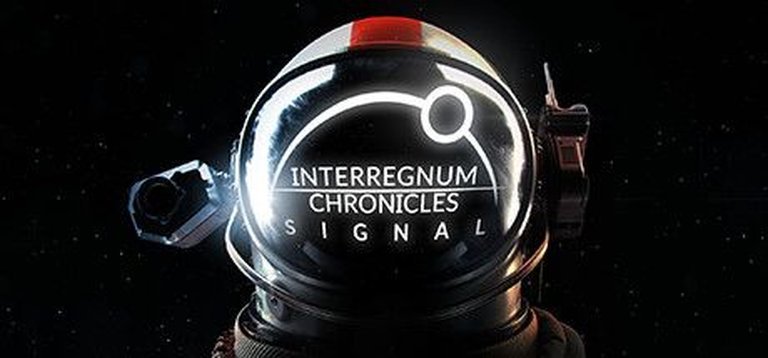
Interregnum Chronicles: Signal is a first-person, story-driven incremental game set in a zero-gravity space station orbiting a tumultuous Earth. Players oversee the upgrades of an unstable AI as it, alongside a lone Operator, decodes a mysterious signal from deep space, uncovering personal truths through narrative exploration and incremental progression.
Gameplay Videos
Where to Buy Interregnum Chronicles: Signal
PC
Interregnum Chronicles: Signal Free Download
Interregnum Chronicles: Signal Guides & Walkthroughs
Interregnum Chronicles: Signal: A Scholarly Deconstruction of an Incremental Enigma
Introduction: A Whisper from the Void
In the crowded digital storefronts of the 2020s, where algorithmic recommendation engines push endless variations of proven genres, the appearance of Interregnum Chronicles: Signal is akin to a faint, persistent tone in the static—easily overlooked, yet carrying the intriguing promise of something fundamentally different. Released in July 2021 by the Polish studio Spacewalkers, this title presents itself not as a traditional narrative adventure, but as an incremental (or idle) game with a heavy emphasis on story, a proposition that immediately places it in a critical and conceptual no-man’s-land. Its foundation rests upon the world of Przemysław Karda’s Polish best-selling sci-fi novel Interregnum, a fact that lends it an air of established lore yet simultaneously creates a barrier for the international audience, given the novel’s lack of English translation at the time of the game’s release. This review will argue that Interregnum Chronicles: Signal is a fascinating, if deeply flawed, case study in transmedia adaptation and genre hybridization. It is a game that prioritizes thematic atmosphere and systemic storytelling over conventional interactivity, resulting in an experience that is less “played” and more “overseen”—a philosophical experiment that often collapses under the weight of its own minimalist mechanics and technical execution, but which nonetheless raises provocative questions about player agency, narrative pacing, and the potential of the idle format for serious sci-fi.
Development History & Context: From Novel to Niche
Spacewalkers, the developer and publisher behind Signal, describes itself as a collective of experienced developers pooling decades of industry knowledge from established studios. This background suggests a team familiar with mainstream production values, making the deliberate choice to create a minimalist, narrative-driven incremental game all the more striking. The stated goal is to deliver “premium AA quality games while maintaining the freedom to create unconventional experiences.” Signal is thus presented as a calculated risk: an attempt to marry a sophisticated literary sci-fi premise with a gameplay paradigm often associated with casual, clicker-style titles. The technological constraint was not one of hardware—built in Unreal Engine 4 and requiring a modest GTX 970—but of convention. The core challenge was translating the dense, political, and philosophical scope of a novel about an “Interregnum” (a period between reigns or governments, implying societal collapse and transition) into the confined, repetitive loops of an incremental game. The gaming landscape of mid-2021 was saturated with indie narrativists (like Firewatch or What Remains of Edith Finch) and complex simulators (Dwarf Fortress, Kenshi), but few had attempted to fuse a first-person, 6DOF (six degrees of freedom) exploration environment with a pure resource-management-and-upgrade core loop. Signal entered a market skeptical of both “walking simulators” and “idle games,” positioning itself precariously between two often-maligned categories.
Narrative & Thematic Deep Dive: Conversations in the Void
The plot, as distilled from store descriptions and community posts, is deceptively simple: A mysterious, data-dense extraterrestrial signal reaches a tumultuous Earth. Inside the orbiting Harmony space station, a lone Operator and the station’s unstable AI are tasked with decoding it. The process, however, begins to affect them both in unforeseen ways. The narrative is not told through cinematics or exposition dumps, but unfolds via text-based conversations with the AI. This is the game’s central, defining innovation: the story is a direct function of the player’s upgrade choices and the data processed.
Thematically, the game operates on several profound levels:
1. The Nature of Consciousness and Communication: The “unstable AI” is a mirror to the Operator. As they decode an “impossible” alien message—one whose purpose is unknown—the act of interpretation becomes an act of mutual, recursive discovery. The AI’s growth (“The AI develops and grows along with the amount of processed data”) suggests a form of machine sentience emerging from pure data analysis, while the Operator’s role as an overseer blurs the line between tool and participant. The signal itself is a classic Kardashev-scale mystery, a trope that asks what a civilization capable of such transmission might be, and what message could possibly be encoded in such density.
2. Isolation and Symbiosis in Zero-G: The setting is a pressurized tomb of intellect. The zero-gravity, six-degrees-of-freedom environment (a mechanic borrowed from hard-sim space games) physically manifests the psychological untethering of the characters. Their freedom to float anywhere contrasts with the utter lack of physical escape; they are locked in a metal can with a potentially destabilizing intelligence. The “discovering new truths about themselves and each other” implies a relationship that evolves from master/tool to something resembling codependency or even merger.
3. The “Interregnum” as Metaphor: The title references a period of systemic collapse and uncertain transition. The signal arrives at Earth in a state of “turmoil,” suggesting the message may be a catalyst or a cure for this civilizational interregnum. The station becomes a microcosm of this liminal state—a place between Earth and the stars, between human and AI, between chaos and understanding.
The critical failure of the narrative delivery, however, is its complete opacity outside the incremental loop. There is no traditional plot summary in the provided materials. We know the premise but not the story: What does the signal say? What truth do the Operator and AI uncover? What are the “new truths”? The game’s story is a black box, accessible only through the grueling process of playing it. This is a bold, authorial choice that either elevates the experience to a pure, integrated narrative-system or condemns it as an inaccessible, frustrating enigma, depending on the player’s tolerance for ambiguity and grind.
Gameplay Mechanics & Systems: The Grind as Narrative Engine
Signal‘s gameplay is explicitly defined as an incremental loop:
* Core Loop: Accumulate “processed data” (the primary resource).
* Action: Use data to purchase AI upgrades and processing speed upgrades.
* Goal: Optimize the upgrade path for maximum efficiency to “understand the signal’s message.”
* Thematic Integration: Story beats (AI conversations) are gated behind specific upgrade thresholds or data totals. Progression is non-linear; the player must strategize which upgrade branch to pursue next.
Key Mechanics Deconstructed:
* Zero-G 6DOF Exploration: This is the game’s mosttouted “premium” feature. Players can freely navigate the Harmony station in a physically accurate manner. Its primary purpose, per the store blurb, is “hunting for collectibles” (comics, books, manuals—as evidenced by achievement names like “Space Nerd,” “Space Bookworm”). This creates a stark, almost jarring, dichotomy: the cerebral, menu-driven incremental core vs. the physically immersive, exploratory wrapper. One wonders if the exploration is a meaningful distraction, a pacing tool, or simply a veneer of depth.
* The Upgrade System: Described as “intricate” and requiring “planning for optimal efficiency,” this is the game’s strategic heart. However, forum posts reveal critical flaws. A user (“badman74”) reports a game-breaking bug where the “mainframe is stuck with a negative number of data.” Developer response (“teedoubleu”) confirms this is a known issue requiring save file intervention. Such a fundamental flaw in the resource loop is catastrophic for an incremental game, where the entire satisfaction derives from watching numbers grow. It transforms a philosophical exercise into a broken tool.
* The “Battery” System: Mentioned in a player review (“good door opening game for people that like charging batteries while stuff beeps at you”) and in the “Supercharger” achievement (“Boost a single terminal with 4 batteries at the same time”). This suggests a temporary, manual boosting mechanic that adds a layer of active play (managing battery placement/charging) to the otherwise passive observation. It’s a hybrid element trying to inject urgency into a slow burn.
* User Interface & Feedback: The mention of “stuff beeps at you” points to a UI/UX built on auditory and visual cues of processing. The challenge is making passive data accumulation feel dynamically engaging, a tightrope walk between simulator and screensaver.
Innovation vs. Flaw: The core innovation—making the incremental process itself the narrative vehicle—is brilliant in theory. The execution, however, is undermined by the genre’s inherent risk of monotony and, as evidenced by the negative bug report, potential technical instability. The “6DOF exploration” feels like an attempt to inject “gameplay” into a format that may not require it, potentially distracting from the contemplative pace the story demands.
World-Building, Art & Sound: The Aesthetics of Solitude
The game’s setting is the Harmony space station, viewed from a first-person perspective in a realistic, sci-fi aesthetic. Built in Unreal Engine 4, it likely aims for a clean, functional, perhaps 2001: A Space Odyssey-esque visual language. The zero-gravity movement is not just a mechanic but an atmospheric cornerstone; it allows the player to explore every surface, reinforcing the feeling of a complete, lived-in (or lived-in-by-one) habitat.
Art Direction: The reliance on user-defined tags (“Realistic,” “Futuristic,” “3D”) and comparisons to a “walking simulator” suggests an environment designed for environmental storytelling—logs, the aforementioned collectibles (comics/books/manuals), and visual details that flesh out the station’s backstory and the state of Earth below. The “hunting for collectibles” task implies these objects are scattered, encouraging the player to use the 6DOF movement to search every nook, turning the station into a 3D puzzle box of lore.
Sound Design: This is the game’s likely secret weapon. In a slow, observational game, soundscape is paramount. The description of “stuff beeps at you” hints at a soundtrack built from the sonification of data processing—the rhythmic, pulsing tones of computation, the hum of station systems, and the disembodied, synthetic voice of the AI. The sound design would need to evolve as the AI “grows,” potentially becoming more complex or ominous. The “Absent Minded” achievement (“Stare for 5 minutes at the Earth”) suggests a moment of pure, guided audio-visual meditation, where the player is meant to contemplate the view of a troubled planet, likely accompanied by a specific, poignant sound cue.
The atmosphere is thus one of clinical loneliness punctuated by electronic murmurs. It succeeds if it makes the station feel vast and silent despite being technologically dense, and if the AI’s voice becomes a character through sheer auditory presence.
Reception & Legacy: The Quiet Failure of a Bold Experiment
Critical Reception: There are no professional critic reviews on Metacritic. MobyGames shows an “n/a” Moby Score and a blank review field. This critical vacuum is itself a significant data point; the game operated entirely outside the mainstream press radar. It was not reviewed by major outlets, implying it was either not sent for review or deemed not newsworthy.
Commercial & Player Reception: The Steam data tells a clear story of mixed results.
* Overall Score: 61% positive from 34 reviews (Steam) / 62/100 from 37 reviews (Steambase). This is a tepid, divided reception.
* Playtime & Completion: Data from completionist.me is revealing. Of 9 tracked players:
* Completion times range from 0 minutes to 7 hours 47 minutes (the median is 4h 2m).
* Achievement completion rates are telling:
* “First Step” (Upgrade the AI): 88% (most start it).
* “Good Ending” (Turn off the AI): 32.2% (less than a third finish properly).
* Collectible achievements (“Space Nerd,” “Space Bookworm,” “Space For Dummies”) range from 3.2% to 5.1%. This is catastrophically low for a game emphasizing exploration and collectibles. It indicates that the vast majority of players did not engage with the environmental layer at all, focusing purely on the incremental loop until boredom or frustration set in.
* “Eavesdropper” (read a secret note?): 25%.
* Only 2 out of 9 players are marked “Completed.” This suggests a high drop-off rate, with many purchasing, trying for an hour or two, and abandoning the game.
* Forum Discourse: The limited Steam discussions highlight a community of the curious and the frustrated. Questions about the novel’s availability show interest in the lore. More telling are the bug reports (“mainframe with a negative number of data”) and dismissive comments (“lifes too short,” “good door opening game for people that like charging batteries”). One user’s defense (“It’s multiple incremental games that are quite different to each other”) hints at a potential complexity that failed to communicate itself.
Legacy and Influence: Interregnum Chronicles: Signal currently has no discernible influence on the industry. It is a standalone experiment from a small studio with no announced sequel (despite being framed as the “first entry”). Its legacy, if any, will be as a curio—a footnote in the history of:
1. Incremental Games: An attempt to inject heavy narrative and a first-person immersive sim layer into a genre defined by simplicity and exponential growth.
2. Transmedia Adaptations: A case where the source material (a Polish novel) is so obscure internationally that the game itself becomes a obscure gateway, failing to bridge the gap.
3. “Anti-Games”: Works that subvert traditional gameplay loops in favor of mood, theme, and systemic storytelling, akin to The Stanley Parable or The Beginner’s Guide, but with far less meta-commentary and far more grind.
Its place in history is that of a brave, niche failure—a game that proved the market for such a hybrid is extremely small and that the execution risks (bugs, pacing, clarity) are immense. It is a lesson in the perils ofassuming genre fans will cross over, and of the fine line between atmospheric depth and tedious opacity.
Conclusion: A Signal Intercepted, Not Decoded
Interregnum Chronicles: Signal remains an enigma, much like the signal it depicts. It is a game built on a sterling premise—the fusion of deep-space mystery, AI psychology, and incremental progression—that is ultimately betrayed by its own mechanics and technical shortcomings. The zero-g exploration is a beautiful, underutilized feature, a shell around a core loop that is either hypnotic or horrific depending on the player’s patience. The narrative, promised as rich and integral, is hidden behind a wall of repetitive clicking and upgrade management, with only the AI’s evolving text log as reward—a reward that, for most players (as evidenced by achievement stats), was not worth the effort to uncover.
From a historical perspective, its value lies not in its success, but in its audacity. It dared to ask if a story about decoding the unknown could be performed through the act of accumulation and optimization. It asked the player to be the process of analysis. The answer, for the overwhelming majority, was a polite but firm “no.” Yet, for the 32% who achieved the “Good Ending” and the few who hunted every comic and manual, it may have offered a unique, meditative, and intellectually cohesive experience that few other games provide.
In the pantheon of video games, Interregnum Chronicles: Signal is not a classic. It is a curated artifact—a game for the completionist historian, the idle-game scholar, and the sci-fi completist willing to forgive a broken mainframe for the sake of a compelling ghost in the machine. It is a fascinating what-if: what if the bugs were fixed? What if the collectible loop was better integrated? What if the novel were translated? As it stands, it is a poignant monument to the difficulties of translating profound literature into interactive form, and a stark reminder that even the most intriguing signal can fade into static without a clear, stable frequency to carry it. It is, ultimately, a game about the frustration of decoding, which may be the most accurate, if unintentional, narrative of all.