
- Release Year: 2024
- Platforms: Windows
- Publisher: Lonestone Studio
- Developer: Lonestone Studio
- Genre: Adventure
- Perspective: Text-based / Spreadsheet
- Game Mode: Single-player
- Gameplay: RPG elements, Time management
- Setting: 1970s, Alternate history, Futuristic, Sci-fi, Time travel
- Average Score: 84/100
Description
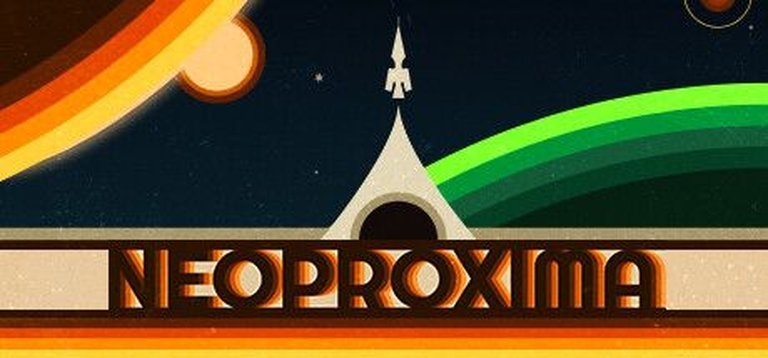
Neoproxima is an adventure game set in an alternate history sci-fi universe, featuring text-based and menu-driven gameplay with RPG elements and time management. Players navigate time loops to solve puzzles across environments like forests and ruins, learning from each iteration to improve skills and uncover a narrative involving characters such as Ivan and Farah, with outcomes influenced by choices made during play.
Gameplay Videos
Where to Buy Neoproxima
Neoproxima Guides & Walkthroughs
Neoproxima Reviews & Reception
metacritic.com (84/100): This is a brilliant idea, brilliantly executed, and absolutely shouldn’t be overlooked.
steamcommunity.com : What was there was good I just wanted more.
buried-treasure.org : This is a rich, complicated, and deeply original game.
Neoproxima: A Temporal Metroidvania of Cold War Cosmic Horror
In an era where the time-loop narrative has become a well-trodden path in independent game design, Neoproxima emerges not as a mere imitator but as a profound and idiosyncratic deconstruction of the form. Released in March 2024 by the French solo-dev studio Lonestone to almost complete commercial silence, this text-adventure RPG hybrid is a masterpiece of atmosphere, a tragic exploration of memory and entropy, and one of the most philosophically rich science fiction stories to grace the medium in years. It is also, incontrovertibly, a game held back by a catastrophic English localization. This review will argue that Neoproxima’s core mechanical and narrative innovations—particularly its radical, stress-free approach to temporal repetition and its devastating companion-swap system—elevate it far above its technical shortcomings, securing its place as a cult classic and a vital touchstone for narrative-driven game design.
1. Introduction: The Loop That Doesn’t Kill You
Neoproxima presents itself with the unassuming humility of a text adventure but reveals itself to be a complex, interlocking machine of profound emotional and intellectual weight. The premise is straightforward: in 1975, on the alien colony world of Neoproxima, treasure hunter Farah and her partners trigger a catastrophic event, die, and awaken in the local diner, the “Octopus,” at the start of the same day—trapped in a time loop. The genius of the game lies not in this premise, but in its execution. As critic John Walker noted in Buried Treasure, Neoproxima’s “lack of crushing pressure” distinguishes it from every other time-loop game. There is no doomsday clock, no punishing failure state beyond the loss of a day’s progress. Death is not an end but a reset, a deliberate tool for information gathering. This transforms the loop from a source of anxiety into a vast, patient puzzle box. The central, devastating mechanic is the “companion swap”: each loop, either Chen or Duncan is present with Farah, while the other is not only absent but unremembered by the world and by the companion who remains. This creates a dual-track emotional narrative about the fragility of memory and the trauma of losing a loved one not once, but repeatedly, with each reset. Neoproxima is, at its heart, a game about the finiteness of time and the infinite patience required to confront it.
2. Development History & Context: A Solo Flight in a Foggy Market
Neoproxima is the product of Lonestone Studio, effectively a one-person operation (or a very small team) based in France. The game was developed with a clear, focused vision but under significant constraint. In a Steam discussion, the developer candidly admitted: “Sadly we did not manage to find a publisher last year, and we had to finish faster than planned.” This is the crucial context for understanding the game’s scope and its rough edges. The decision to self-publish and rush to market explains the severe lack of polish in the English translation—a persistent, glaring flaw that haunts every text box. It also explains the relatively contained scope: a single colony, a handful of key locations (the Octopus diner, the canyon, the Soviet base, the monument sites), and a set number of puzzle threads.
The game’s aesthetic and setting are deeply rooted in a specific historical and literary imagination. The “alternate history” where the 1960s UFO crashes (the “Colossus” incident) accelerated the space race and altered the Cold War’s arena is a brilliant synthesis of The X-Files, period spy thriller, and classic sci-fi. The use of 1975-era technology to interface with alien artifacts creates a tangible, retro-futurist texture. The isometric map, rendered in a simple but effective 3D style, evokes the look of late-90s/early-2000s strategy games or Fallout‘s perspective, grounding the cosmic mystery in a gritty, analog realism. The release in 2024 placed it in a landscape dominated by big-budget titles and highly polished indies, making its lack of marketing and “zero press coverage” (as noted by Buried Treasure) a significant barrier to finding its audience. Its commercial performance appears minimal, with only 61 Steam user reviews at the time of writing, but its score is “Very Positive” (98%), indicating a powerful resonance with the small core of players who discovered it.
3. Narrative & Thematic Deep Dive: Entropy, Memory, and the Cold War in Space
The narrative of Neoproxima is its paramount achievement, weaving a tapestry of personal trauma and cosmic mystery.
The Premise and Core Mystery: Humanity’s access to faster-than-light travel, courtesy of the enigmatic “Colossus” aliens, has not led to utopia but to a new, frigid front in the Cold War. The USSR beat the USA to the moon, and now both superpowers, alongside a surprise contender in the French colony of Kairos, scramble to colonize Neoproxima and reverse-engineer the ruins left behind. The player, Farah, is a secular treasure hunter, an outsider to this geopolitical struggle. The game’s inciting incident—triggering the loop by activating a “key” (a nanotech bracelet)—positions her not as a chosenone, but as an accidental engineer of her own prison. The central questions are twofold: 1) What is the nature of the “sarcophagus,” the 300-meter monolith at the heart of Kairos that no one can enter? 2) Why is Farah looping, and what is the relationship between the loop and the Colossus technology?
The Dual-Track Tragedy: Chen and Duncan. The companion-swap mechanic is not a gameplay gimmick but the game’s emotional core. The player begins with both Chen (the pragmatic, grounded partner) and Duncan (the more optimistic, science-minded partner). After the first loop’s failure, the game severs this bond arbitrarily and cruelly. The player alternates between a world where Chen exists and Duncan is a forgotten ghost, and vice versa. The dialogue and internal monologues masterfully convey the shared, escalating horror of this experience. The survivor constantly searches for clues about the missing partner’s last known whereabouts, only to find all evidence erased. The memory-fading mechanic—where their recollections of each other become blurry and dreamlike—is a subtle but devastating touch, embodying the existential fear of losing the person you love to the erosion of time itself. The Steam user zyzz‘s insightful analysis points to a deeper layer: the AI-like entity Omega (revealed later as the sarcophagus’s consciousness) may be actively manipulating memories and events, “forcing hands” like Ivan’s, creating a meta-layer of trauma where the very fabric of reality resists the player’s attempts to mend it.
Thematic Synthesis: Entropy and the Finite Universe. The game’s sci-fi musings are explicitly about thermodynamics and the “heat death” of the universe. The Colossus are posited as entities who may have given humanity the keys to the stars not as a gift, but as a test, or as a means to offload entropy. The time loop itself is theorized as a localized failure of causality, a “temporal cancer” caused by misuse of their technology. The ending’s infamous “exposition dump” (criticized by player Arcanestomper) directly addresses these themes, revealing that the loop is a containment measure. The player’s final choice—which companion to bring into the sarcophagus—isn’t about a “good” or “bad” ending, but a philosophical decision: sacrifice one companion to endure an eternity of loop to monitor the sarcophagus (accepting a finite, personal hell for cosmic knowledge), or destroy the key and break the loop but leave humanity without the means to potentially avert a larger cosmic catastrophe. The lack of a “perfect” ending underscores the game’s thesis: some mysteries are unsolvable, and some costs are unacceptable.
Supporting Cast and Worldbuilding: The colony of Kairos is populated with memorable, grounded characters who exist outside the central tragedy. Ivan, the initially hostile Soviet soldier whose attitude mysteriously shifts, is a brilliant case study in the loop’s ripple effects. As zyzz deduced, his change isn’t a reward for puzzle-solving but a result of Omega rewriting his memories and circumstances to create a more formidable obstacle (“a bigger roadblock”). Bill Strongarm, the enthusiastic inventor doomed to crash his plane, provides a classic time-loop “save him from his mistake” thread that subverts expectations. Sonya, the Soviet officer, represents the rigid geopolitical order. These characters are not quest-givers but inhabitants of a living, reactive world whose personal stories are altered by the protagonist’s unseen interventions, making the world feel dynamically haunted.
4. Gameplay Mechanics & Systems: The Patient Metroidvania
Neoproxima’s gameplay is a deliberate, turn-based mélange of systems that serve its unique pacing.
The Core Loop & Resource Management: Each day begins in the Octopus diner. The player has a limited pool of Willpower (the primary resource for actions) and a fixed amount of in-game time until the loop resets at a specific hour. Time is divided into blocks (morning, afternoon, evening). Actions like driving the truck to a location, investigating a site, or engaging in dialogue consume both time and willpower. This creates a constant, gentle tension: you must prioritize. However, the critical innovation is that there is no penalty for running out of time except to enter the next loop. This removes the ” screw-up anxiety” of games like Outer Wilds or The Legend of Zelda: Majora’s Mask. You can intentionally waste a day to scout a dangerous area, die on purpose to test a hypothesis, or simply stare at the sky. The loop is your laboratory.
Expedition & Exploration: The world is an isometric map obscured by fog of war. Driving your “space van” to known locations or exploring to unveil new ones is the primary mode of discovery. Locations are fixed screens (the “fixed/flip-screen” perspective) with interactive hotspots. The joy is in the incremental unlocking of knowledge: the first visit is pure confusion; the second, armed with a clue from a dialogue option, reveals a new path; the third, with a specific item, allows you to bypass an obstacle. This is the “temporal Metroidvania” structure praised by Buried Treasure. Progress is gated not by new abilities, but by information gathered in previous loops.
Companion Skills and Inventory. Chen and Duncan possess different stats (e.g., Duncan might have higher “Science,” Chen higher “Mechanics”) which affect dice roll outcomes for certain actions. This forces tactical decisions: need to hack a terminal? Bring Duncan. Need to manually repair something or climb? Bring Chen. Their presence also unlocks unique dialogue options. The inventory system is simple but crucial. You can buy, sell, and store items at the Octopus (which persists across loops). The key item, the nanotech bracelet, cannot be removed but can be used as a tool. The potential for “inventory juggling” mentioned by player Arcanestomper is hinted at (trading starting gear) but underdeveloped—a likely casualty of the rushed development. Items are often single-use solutions to specific environmental puzzles.
Puzzle Design & Progression. The puzzles are generally straightforward logic or sequencing problems solved by combining item use with correct dialogue or stat checks. The four main monument puzzles (Airplane, Forest, Underwater, Ruin) form the backbone of the narrative progression. Criticisms from Arcanestomper are valid: they are on the easier side, and some (like the Underwater dialogue-choice puzzle) feel trivial. The frustration lies not in their difficulty but in their occasional lack of consequence or feedback. The “experience gain” system he noted—where attempting a task (like tree-climbing) manually could improve a skill—is present in the code but, as the developer admitted, not fully realized or impactful. The game’s brilliance is not in its challenge but in its exploratory satisfaction. Figuring out when and how to trigger an event is more rewarding than solving a hard logic gate. The “Strongarm” thread is the perfect example: learning his flight time, finding the crash site, retrieving the black box, and then discreetly feeding him the information in the past requires careful temporal choreography, not a difficult puzzle.
UI and Meta-Commentary. The game’s interface is a point of innovation. The footnote system is a masterclass in diegetic exposition. Hovering over a term like “Colossus” or “Kairos” provides context without cluttering the main text, keeping the narrative flow clean while building a dense lore. More strikingly, the UI itself becomes part of the narrative in the final act. As the loop destabilizes, the interface glitches, menus corrupt, and the player’s sense of control is directly undermined—a brilliant, fourth-wall-shattering moment that physically manifests the thematic unraveling of causality.
5. World-Building, Art & Sound: A 70s Dystopia in Isometric Grit
The setting of Neoproxima is a character in itself. It is not a gleaming Star Trek future. It is a 1970s vision of the future: wood paneling in the Octopus diner, analog computer terminals with blinkenlights, boxy Soviet utility vehicles, and a pervasive sense of analog grit. The alien technology is smooth, black, and monolithic, creating a stark visual and tactile contrast. This aesthetic choice makes the Colossus feel genuinely alien and ancient, not just advanced.
The isometric map is composed of simple, low-poly models and textures, but it is elevated by a moody, desaturated color palette and a persistent, foggy atmosphere. The alien landscape is rocky, dusty, and vaguely hostile. The use of lighting—long shadows from the twin suns, the gloomy interiors of ruins—is effective and contributes significantly to the game’s oppressive, lonely tone. The visual storytelling in the environment tells the story of rushed colonization: half-built structures, clashing architectural styles (Soviet brutalism vs. French colonial attempts), and the omnipresent, untouched Colossus ruins.
The sound design and music (a separate purchasable OST) are critically acclaimed by players. The soundtrack, available on Spotify/Apple Music, is described as atmospheric and synth-driven, perfectly capturing the melancholy and mystery. Sound effects are sparse but impactful: the crunch of gravel under the van’s tires, the hum of alien machinery, the distorted radios, and the haunting, non-diegetic score that swells at moments of revelation. The audio landscape is a huge part of the game’s immersive, contemplative power.
6. Reception & Legacy: The Critically Loved, Commercially Ignored Masterpiece
Neoproxima‘s reception is a study in the disconnect between critical adoration and commercial obscurity.
Critical Reception: The one published critic review (Metacritic’s Buried Treasure) is a 4-star rave, calling it “brilliantly executed” and “a brilliant idea, brilliantly executed.” The reviewer’s sole, repeated criticism is the “complete mess” of the English translation, which they call “a constant issue” and “a huge shame.” This sentiment is universal among the English-speaking player base on Steam. The game’s strengths—the innovative time-loop, the emotional heft of the companion dynamic, the dense lore, the patient pacing—are consistently and effusively praised. It is frequently compared to Citizen Sleeper (for its dice-roll text interaction) and The Outer Wilds (for its knowledge-based progression), but is seen as carving its own unique niche.
User Reception & Community Discourse: On Steam, with 61 “Very Positive” reviews, the player feedback is deeply analytical. Discussions revolve not around bugs or balance, but around lore interpretation (e.g., the nature of Omega, Ivan’s memory rewrite), puzzle optimization, and the philosophical implications of the endings. The two-endings structure (determined by which companion enters the sarcophagus) is seen as conceptually strong but commercially limited, as the developer confessed they couldn’t implement a “player choice at the very end” due to technical constraints of the dual protagonist structure. The community is small but intensely engaged, dissecting the story’s minutiae. The request for a GOG release and the hope for translation patches are constant themes, showing a committed fanbase that sees the diamond beneath the rough.
Commercial Performance & Legacy: With “zero press coverage” and minimal marketing, Neoproxima has flown under the radar. Its “Moby Score” is n/a due to too few collector entries. Its legacy is currently that of a cult classic in the making—a game whispered about in circles of narrative game aficionados, recommended with a caveat about the translation. Its influence is likely to be indirect but significant. It demonstrates that the time-loop mechanic can be stripped of all punitive elements and focused purely on empathetic, knowledge-based progression. Its “alternating companion” idea is a profound contribution to the genre, one that future designers will undoubtedly explore. Should Lonestone Studio (or another team) revisit the concept with a larger budget and proper localization, it could achieve the classic status its design merits.
7. Conclusion: An Imperfect, Essential Artifact
Neoproxima is a paradox: a粗糙 (cūcāo – rough/unpolished) gem of staggering beauty. Its flaws are not superficial but fundamental: the English text is often grammatically broken, occasionally incomprehensible, and perpetually distracting for a text-heavy game. The puzzle design can feel simple, and the scope is clearly truncated. Yet, these flaws do not obscure the monumental ambition and achievement of its core design. The decision to make time an ally, not an enemy, is a revolutionary act in game design that reduces anxiety and fosters a unique, patient curiosity. The companion-swap mechanic is one of the most emotionally devastating and narratively coherent uses of a game system ever conceived. The weaving of a personal, memory-based tragedy with a grand, cosmological mystery about entropy and alien motives is executed with a claustrophobic, literary precision rare in the medium.
It is a game that respects the player’s intelligence and emotional capacity. It asks you to sit with loss, to accept that some truths are costly, and to find meaning in the act of meticulous, compassionate investigation. For every player who can see past the translation hurdles, Neoproxima offers an experience that will linger in the mind—a haunting meditation on what it means to be trapped in time, and what we might do with an infinity of chances to make things right, knowing that some things can never be fixed. It is not a perfect game, but it is, in its best moments, a perfect expression of its themes. For that, it deserves to be remembered, studied, and, above all, fixed. A definitive edition with a polished script would instantly elevate it from a buried treasure to a canonical work. As it stands, Neoproxima remains a brilliant, broken monument to the power of indie vision—a sarcophagus of its own, containing a truth that is painful to access but impossible to forget.
Final Verdict: 8.5/10 – A landmark narrative design wrapped in a technically flawed package. Seek it out, endure the translation, and be prepared for a profound, melancholic, and unforgettable journey.