
- Release Year: 2015
- Platforms: Windows
- Publisher: ZOO Corporation
- Developer: ZOO Corporation
- Genre: Action
- Perspective: Side view
- Game Mode: Single-player
- Gameplay: Beat ’em up, brawler
- Setting: Ancient, Classical, Fantasy, Japan, Medieval
Description
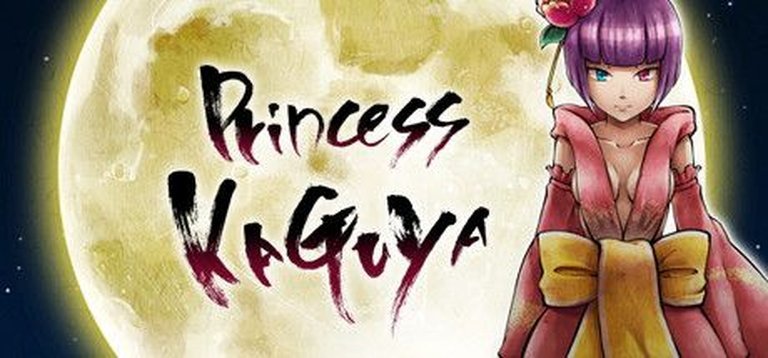
Princess Kaguya: Legend of the Moon Warrior is a 2D beat ’em up game loosely based on the Japanese folktale ‘The Tale of the Bamboo Cutter’. Players control Princess Kaguya, clad in traditional Japanese garb, as she journeys through a fantasy version of ancient Japan to rescue her twin sister Sakuya from enemies drawn from Japanese mythology. Armed with a kendama stick and a bow and arrows—switchable at any moment—Kaguya battles side-scrolling levels with assistance from rabbits, in gameplay reminiscent of classics like Final Fight.
Gameplay Videos
Where to Buy Princess Kaguya: Legend of the Moon Warrior
PC
Princess Kaguya: Legend of the Moon Warrior Free Download
Princess Kaguya: Legend of the Moon Warrior Reviews & Reception
gamesread.com : the varieties of enemies are not enough
Princess Kaguya: Legend of the Moon Warrior: Review
Introduction
In the vast pantheon of beat ’em up video games, few titles attempt to weave the delicate threads of Japanese folklore into the visceral, punch-drunk satisfaction of mowing down hordes of enemies. Princess Kaguya: Legend of the Moon Warrior, released in 2015 by the enigmatic Zoo Corporation, stands as such an attempt—a game that promises an epic journey through a mythic, scroll-bound realm but ultimately delivers a fleeting and uneven experience. Loosely inspired by the ancient folktale The Tale of the Bamboo Cutter (Taketori Monogatari), this title casts players as the moon princess Kaguya, embarking on a rescue mission within a magical scroll teeming with yokai and spectral threats. My thesis is clear: while Princess Kaguya exhibits genuine cultural ambition and moments of charming whimsy, it is fundamentally undermined by repetitive design, shallow mechanics, and a lack of refinement that consigns it to the annals of overlooked, rather than celebrated, indie brawlers. As a historical artifact, it reflects a period of experimentation within a stagnant genre, but its execution fails to elevate it beyond a curious footnote.
Development History & Context
Zoo Corporation, the developer and publisher behind Princess Kaguya, is a Japanese studio with a modest portfolio, often associated with casual and niche titles like the Pretty Girls puzzle series. Their expertise lies more in accessible, low-fidelity games than in crafting deep action experiences. In 2015, when Princess Kaguya launched, the beat ’em up genre was in a curious renaissance, driven largely by indie developers—games like Ragnarok Battle Offline, Scott Pilgrim vs. The World: The Game, and Castle Crashers had reinvigorated the genre with tight combat, co-op play, and engaging progression systems. Against this backdrop, Zoo Corporation’s entry felt both nostalgic and anachronistic.
The game was built using the Unity engine, a popular choice for indies due to its accessibility and cross-platform potential. However, this choice also highlights technological constraints: the visual approach combines 3D character models with 2D scrolling backgrounds, a hybrid that was cost-effective but resulted in aesthetic dissonance. The 3D models, while adhering to an anime-inspired design, often clash with the flat, painted backgrounds, creating a visual jarringness that feels more like a technical workaround than a deliberate artistic statement. In an era where pixel art and hand-drawn animation were being celebrated for their purity, Princess Kaguya’s mixed-media presentation seemed dated even at release. The studio’s vision—to create a “light-hearted” brawler steeped in Japanese mythology—was clear, but the execution was hampered by limited resources and perhaps a misunderstanding of what made contemporary beat ’em ups resonate: depth, replayability, and fluid animation.
Narrative & Thematic Deep Dive
Princess Kaguya reimagines the Taketori Monogatari with a fantastical twist. The original folktale tells of a bamboo cutter who finds a tiny girl inside a bamboo stalk; she grows into a beautiful maiden, Kaguya-hime, and eventually returns to the moon. Here, the narrative is expanded into a cosmic conflict: a Wicked God spreads plague and evil spirits, but a celestial maiden from the moon seals it within a scroll. Centuries later, in the Heian era, her descendants—the twin princesses Kaguya and Sakuya—are tasked with guarding the seal. When Sakuya is lured into the scroll by a mysterious voice, Kaguya bravely follows to rescue her.
The story is delivered via static images with text captions, a minimalist approach that feels archaic even for 2015. This method, reminiscent of early visual novels or Karate Master 2, strips away cinematic flair and reduces emotional investment. Character depth is sorely lacking: Kaguya is described as “carefree” and fond of kendama, while Sakuya is “closed and fearful,” but these traits are merely stated, not shown through dialogue or gameplay integration. The thematic cores—sisterly devotion, duty versus personal desire, and the intersection of celestial and terrestrial—are present but superficial. The game’s attempt to blend shintoistic motifs (the moon maiden, yokai) with a brawler format is intriguing, yet the narrative never transcends its functional role as a pretext for combat. There’s no exploration of the folktale’s poignant themes of transience and longing; instead, it defaults to a straightforward “rescue the sibling” plotline common in action games, as noted in the GamesRead.com review, which compared it unfavorably to Phantom Breaker: Battle Grounds for its banality.
Gameplay Mechanics & Systems
At its core, Princess Kaguya is a 2D side-scrolling brawler in the vein of Final Fight. Players navigate linear stages, battling waves of enemies with melee and ranged attacks. Kaguya’s arsenal consists of two weapons: a kendama stick (a traditional Japanese toy used for close-range strikes) and a bow with a limited quiver of arrows. The key mechanic is the ability to switch between these weapons seamlessly, a nod to tactical flexibility—the bow is essential for aerial foes, while the kendama handles ground-based enemies.
Combat is governed by a “Soul Gauge” in the upper-left corner. Attacking enemies and blocking fills this gauge, which can be spent on two “rush” moves—one for each weapon type—and, when fully charged, a berserk mode that enhances speed, damage, and attack radius. The rush moves include a unique “Yuzuki Usagi” attack where rabbits materialize to unleash arrow volleys, tying into the folklore theme. However, the system is underutilized: enemies are not diverse enough to necessitate strategic weapon switching, and the gauge fills quickly, making special moves feel less like earned abilities and more like occasional spam. The block mechanic has a “break” mechanic if overused, adding a layer of risk, but it’s a minor tweak in an otherwise shallow combat loop.
Progression is virtually non-existent. There’s no character leveling, skill trees, or meaningful upgrades. The only incentives are achievement hunting (e.g., killing 100 of a specific enemy type) and score maximization, as the GamesRead review starkly put it: “there are two incentives for overgrown [playing]—to knock out the ‘achivement’ from the category ‘eliminated 100 such ekayev’ yes complete the stage with the maximum amount of glasses.” Boss fights are described as “formidable” in official materials but are criticized for being trivialized by the berserk mode or simply lacking complexity, with one “cheat” final boss as an exception. The game comprises only four stages, all set within the enchanted scroll, and they suffer from severe repetition—environments copy each other, and enemy waves become monotonous. Compared to contemporaries like Guardian Heroes or Ragnarok Battle Offline, which offered branching paths, interactive elements, and richer combat systems, Princess Kaguya feels barebones. The lack of co-op play, a staple of the genre, further isolates it as a solitary, short-lived experience.
World-Building, Art & Sound
The setting is a literal journey through a magical scroll, a concept that allows for surreal, abstract environments. Heian-era Japan influences the aesthetic, with traditional architecture and costumes, but the “scroll” premise leads to levels that resemble the maze-like corridors of Gauntlet—barren, repetitive paths filled with enemy spawns. The world-building is superficial; there’s no environmental storytelling, no sense of a living realm beyond combat arenas. The yokai enemies—flaming wheels, one-legged scrolls, cats in sheets—are drawn from folklore but serve merely as cannon fodder, lacking the iconic presence of, say, the demons in Onimusha or the creatures in Muramasa: The Demon Blade.
Visually, the game employs 3D character models against 2D parallax-scrolling backgrounds. Kaguya’s design is undeniably adorable, with her traditional garb and animations reflecting her kendama prowess. However, the animation is criticized as “not smooth” (GamesRead), and the disconnect between 3D characters and 2D art creates a disjointed look. The four levels are near-identical in palette and layout, amplifying the sense of repetition. Sound design receives minimal mention in sources, but the Steam page confirms full audio in English and Japanese. Likely, it features traditional Japanese instrumentation to match the setting, but without dynamic tracks or impactful sound effects, it probably fades into background noise—a missed opportunity to enhance the atmospheric tension of the scroll’s eerie confines.
Reception & Legacy
Princess Kaguya landed with a quiet thud. On Steam, it holds a “Mixed” rating with only 41% of 36 user reviews positive, as of the latest data. MobyGames records a paltry average score of 3.0/5 from a single rating, and no critic reviews are archived there, indicative of its obscurity. The GamesRead.com review is scathing: it calls the game “incredibly short,” decries the “visual design” and “animation,” and asserts that even a decade-old title like Ragnarok Battle Offline looks “like a real masterpiece” in comparison. User reviews on Steam echo sentiments of disappointment, citing brevity, lack of content, and unpolished mechanics.
Commercially, the game likely underperformed. Priced at $10.99 on Steam, it has been collected by only about 18-21 players on MobyGames, a minuscule number for a commercial release. Its niche appeal—anime aesthetics, female protagonist, folklore themes—wasn’t enough to sustain interest in a crowded market. Legacy-wise, Princess Kaguya has had virtually no influence. It’s not cited as an inspiration by later developers, nor has it cultivated a cult following. In the context of beat ’em ups, it’s a forgotten entry, overshadowed by more ambitious titles that released around the same time, such as Onikira: Demon Killer (mentioned in the review as a superior alternative) and the enduring popularity of Scott Pilgrim. The game does have 40 Steam achievements and trading cards, but these are standard boilerplate for Steam games and don’t indicate deep design.
Conclusion
Princess Kaguya: Legend of the Moon Warrior is a game of missed potential. Its premise—a princess wielding a kendama and bow against yokai in a mythic scroll—is whimsical and culturally specific, offering a fresh coat of paint on the beat ’em up formula. However, the paint is thin. With only four repetitive stages, a shallow combat system devoid of progression, and uninspired visuals, it fails to engage beyond a brief, superficial romp. The narrative’s ties to Taketori Monogatari are nominal, adding flavor but not depth. As a historical piece, it exemplifies the risks of indie development in a niche genre: ambition without the resources or design acuity to match. In the grand timeline of video games, Princess Kaguya will be remembered, if at all, as a polite but forgettable echo—a game that looked to the stars of Japanese mythology but landed firmly in the dirt of mediocrity. For genre enthusiasts, it’s a curiosity; for everyone else, it’s a skip. Verdict: A charming idea lost in a scroll of its own making.