
- Release Year: 2017
- Platforms: Android, iPad, iPhone, Macintosh, PlayStation 4, Windows, Xbox One
- Publisher: Versus Evil LLC
- Developer: Tuatara Games
- Genre: Action, Defense
- Perspective: Side view
- Game Mode: Single-player
- Gameplay: Platform, Shooter
- Average Score: 73/100
Description
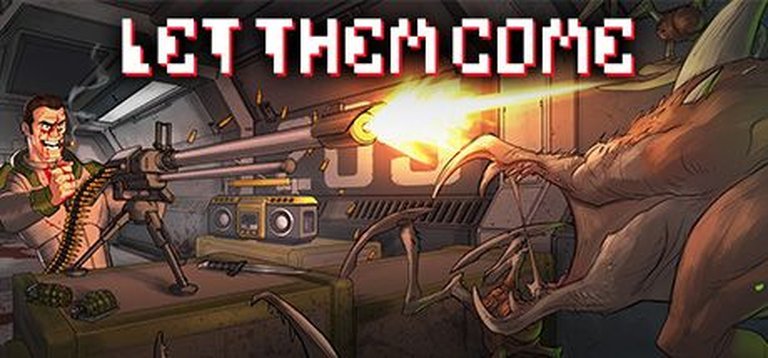
Let Them Come is a 2D side-scrolling platform shooter with defense mechanics, challenging players to fend off relentless waves of enemies in fast-paced, arcade-style combat. Developed by Tuatara Games, this indie title combines minimalist visuals and a dynamic soundtrack with surprisingly deep gameplay, offering an addictive experience that rewards skill and strategy despite its straightforward premise.
Gameplay Videos
Where to Buy Let Them Come
PC
Let Them Come Guides & Walkthroughs
Let Them Come Reviews & Reception
opencritic.com (75/100): Let Them Come takes a singular concept and wraps a whole game around it to great effect.
opencritic.com (85/100): Let Them Come is the ultimate turret sequence. The game blasts past expectations with simple arcade gameplay and a solid presentation that combines the best of 90s shooters with heavy synth beats.
opencritic.com (65/100): It may only grab your attention for a few short hours, but during that time, Let Them Come proves to be an enjoyable, uncomplicated and gore-laden alien blaster that has a certain 80s/90s sci-fi movie charm.
opencritic.com (60/100): A neat game that would be better on mobile than literally anywhere else.
opencritic.com (90/100): It’ll probably only take you two or three hours to make your way through Let Them Come’s campaign, but it’s an absolute joy from start to finish.
opencritic.com (80/100): You’re not going to be playing Let Them Come weeks and months down the line. In fact, you may not bother heading back for alien bashing even a couple of days after your purchase, but should you be looking for a game that brings a hugely addictive hit for a single evening, then Let Them Come is well worth checking out. Especially at the price.
opencritic.com (75/100): With nonstop action, varied and challenging enemies plus a good soundtrack, Let Them Come is a fun but short game that fails to offer a greater variety to the player besides the main campaign.
blastawaythegamereview.com : It honestly took me by surprise just how good this game was.
metacritic.com (84/100): Overall, I’m enjoying Let Them Come a lot, despite the issues with the controls and levels. The game looks great and the metal soundtrack is just fun to listen to, especially since you can change the tracks on a whim. Hopefully the difficulty and level issues get addressed soon, as its current state can be a bit unbalanced. And I hope to see improvements and optimizations to the aiming controls, as it would make the game a lot smoother.
metacritic.com (72/100): Let Them Come is an interesting corridor shooter, with plenty of upgrades and enemies but a very limited, repetitive gameplay.
metacritic.com (70/100): Let Them Come is a pretty cool gallery shooter, but it’s still just a gallery shooter.
metacritic.com (70/100): A frantic battle to the death, and then to the death again, that does lose a bit of its shine in the grind.
metacritic.com (60/100): You’re Rock Gunar, sole survivor of your unit and last bulwark against the extraterrestrial onslaught in this Aliens sentry-gun simulator. Illuminated by the flickering muzzle flash of your gun and the explosions generated by grenades, Molotov cocktails, and one highly combustible species of alien, your job is to aim high or low to take out herds of xenomorphs advancing along the floor, walls, and ceiling. It’s all a little bit mindless, but the upgrade path has a satisfying grind to it, and the chiptunes and faux 16-bit pixel art style are a winning combination.
Let Them Come: A Pixelated Pilgrimage into the Heart of the Turret Sequence
Introduction: The Unassuming Titan
In the vast, often overcrowded landscape of indie gaming, where procedural generation and roguelike mechanics dominate the discourse, Let Them Come arrives like a stray bullet from an unknown quadrant—unassuming, brutally direct, and startlingly effective. Released in October 2017 by the fledgling Tuatara Games and published by the venerable Versus Evil, this 2D side-scrolling shooter eschews complex narratives and sprawling worlds for a singular, potent proposition: you are a stationary gunner behind a tripod-mounted machine gun, and a seemingly endless tide of alien abominations is coming down a corridor. It is, on its surface, a concept as old as the “sentry gun” sequence in Aliens. Yet, through a masterclass in focused design, stylish presentation, and a deeply tactile combat loop, Let Them Come transcends its minimalist premise to become a cult classic and a testament to the power of a single, well-executed idea. This review will argue that Let Them Come is not merely a competent arcade shooter but a significant, if subtle, innovator in the “corridor defense” subgenre, whose legacy is defined by its unwavering commitment to player agency through loadout strategy, its unparalleled audio-visual synergy, and its divisive but memorable difficulty curve.
Development History & Context: From Vancouver Meetups to Global Consoles
Let Them Come is the debut title of a developer with an unlikely pedigree. Klemen Lozar, the sole credited coder, designer, artist, and writer for the game, was formerly a VFX artist at Rocksteady Studios in London, known for work on the Batman: Arkham series. His move to Vancouver in late 2014 placed him in the heart of a thriving indie scene. As Lozar recounts on his personal portfolio site, development began not as a commercial venture but as a personal exploration of new tools and art techniques during spare time. The prototype was taken to local indie meetups, where the immediate, visceral positive reactions from strangers proved pivotal. “I was captivated,” Lozar writes, “there was no going back. I was really making a game!”
This origin story is crucial. Let Them Come bears the hallmark of a passionate, solo-driven vision that was later shepherded by publisher Versus Evil (known for The Banner Saga and Guild of Dungeoneering). The partnership, formed after about a year of development, provided the expertise and infrastructure necessary for a multi-platform launch on Steam (Windows, Mac), Xbox One, PlayStation 4, and later mobile (iOS, Android). The choice of the GameMaker engine speaks to a desire for accessibility and rapid prototyping, common in indie circles, but the final product’s polish belies the engine’s sometimes simplistic reputation. The game’s 2017 release placed it in an era where premium indie experiences were solidifying their market, and its straight-to-console strategy (alongside PC) via Versus Evil’s channels was a confident, if risky, move for a unproven IP. The result is a game that feels simultaneously retro in aesthetic and modern in its platform-agnostic distribution and features like online leaderboards and Twitch integration.
Narrative & Thematic Deep Dive: Logs, Silence, and Macho Posturing
Narrative is not the primary draw of Let Them Come, and the game is refreshingly unconcerned with cinematic pretension. The plot is delivered through sparse, found-document style logs and mission updates found between waves. You are Rock Gunar, a mercenary with a absurdly over-the-top résumé (detailed on the game’s official website, let-them.com), sent aboard the Balaenidae to investigate the last-known location of a crew that fell silent seven months prior. The ship is infested with “mutant-alien things.” That is the extent of the setup.
This narrative minimalism is, in itself, a thematic statement. The story exists purely to justify the gameplay loop. The true “narrative” is written in blood spatter and spent shell casings. Thematically, the game is a celebration of cathartic, mindless power fantasy, deeply rooted in late-80s/early-90s sci-fi action tropes—the Aliens power loader fantasy, the Terminator unstoppable killing machine, the Doom marine’s lone-wolf brutality. Rock Gunar is a cipher, a avatar of pure, masculine-coded destruction, complete with cigar-smoking animations and a grimacing health portrait that becomes increasingly bloodied and finally reveals his exposed brain upon death. The “story” of the crew’s fate is irrelevant; the only truth that matters is the one you create with your gun. The found logs, while offering a thin veneer of sci-fi horror mystery, ultimately serve only to punctuate the action, their grim discoveries (“they’re… inside…”) immediately undercut by the next wave of screeching pixelated horrors. This creates a unique, almost satirical atmosphere where existential dread is constantly interrupted by the need to reload a grenade launcher.
Gameplay Mechanics & Systems: The Calculus of Carnage
Core Loop: The Elegance of Stasis
The genius of Let Them Come lies in its radical, counter-intuitive constraint: the player character does not move. You are fixed to the left side of the screen. All tactical consideration is shifted from positioning (as in a standard shooter) to pure target prioritization, resource management, and weapon selection. Enemies approach from the right, but they are not mindless; they climb walls, traverse ceilings, and attack in formations that demand you aim high, low, and center. This transforms every wave into a frantic puzzle of lead allocation.
The Loadout as Identity
The progression system is the game’s true beating heart. Between waves (and after death), you access a persistent shop using “credits” earned from kills. Here, you invest in:
* Primary Gun: Upgrades for rate of fire, damage, and cooling (overheating is a critical tactical concern).
* Secondary Ammo Types: Consumable, limited-use ammunition with special effects (Armor-Piercing, Electric, Incendiary, Freeze). These are absolutely critical against specific enemy types and bosses.
* Grenades & Specials: From standard explosives to Molotovs, mines, and the absurdly powerful Black Hole Generator.
* Melee Weapons: A last-ditch defense (knife, chainsaw, stun gun) for when enemies breach your line.
* Passive Perks: Upgradable bonuses like increased health, armor, or movement speed for the cursor.
This system creates a deeply engaging meta-game. Do you spend credits on a larger stockpile of Electric ammo for the next wave’s shielded foes, or save for a health upgrade to survive the upcoming boss? The permanence of purchases (except for consumables which must be repurchased) adds weight to every decision. As noted by critics, this can lead to brutal “soft locks” if you exhaust funds on the wrong upgrades before a boss with a specific vulnerability—a divisive but arguably intentional design choice that forces strategic foresight.
Boss Fights & The Combo Lifeline
Each of the five stages culminates in a boss battle, which are the game’s primary difficulty spikes. These are not just larger enemies; they are complex pattern machines with phases, weak points (often requiring specific ammo types), and devastating attacks. The PS4 review from PlayStation Country rightly criticizes the lack of an on-screen aiming reticule on console, making pixel-perfect targeting a chore compared to PC’s mouse precision.
To mitigate frustration, Let Them Come implements clever “lifeline” systems. If you die repeatedly on a standard wave, you can choose to shuffle the enemy types or take a random starting bonus (e.g., a free air strike, ammo refill). This is a brilliant design touch that prevents rage-quitting by offering a tactical reset. Furthermore, building a kill-combo meter by eliminating multiple enemies quickly grants a choice of three random perks mid-run (like “Unlimited Ammo” or “Airstrike”), creating thrilling comeback moments.
Flaws in the System
The most commonly cited flaw is the economy of consumables. As the Save or Quit review astutely questions: “Why does ice ammo cost $300 to unlock with 50 free shots, but then $750 to restock 50 shots again later?” This punitive restocking model feels archaic and can cripple a player’s run. The game also offers little long-term inventory variety; once you’ve unlocked the full suite of weapons and perks (which happens well before the final boss), the only progression is in upgrading their potency. The 100+ waves, while varied in enemy composition, can begin to feel repetitive with the same core toolkit.
World-Building, Art & Sound: A Masterclass in Style
If the gameplay is the skeleton, the presentation is the pulsing, gore-soaked flesh.
Pixel Art & Animation:
Lozar’s background in VFX is evident. The 2D pixel art is not merely retro; it is dynamic and exceptionally animated. Rock Gunar has a repertoire of idle animations (flicking cigarettes, adjusting his grip), and his reactions to damage are clear. Enemy design is vivid and grotesque, from tiny skittering parasites to hulking, multi-limbed horrors. The variety, while not enormous, is effective, with color coding and silhouettes making threats readable even in the chaos. The use of dynamic lighting—tracer fire and explosions temporarily illuminating the corridor—is a standout feature that adds tactical depth and atmosphere, especially in the game’s darker levels.
Sound Design & The “BoomBox” System:
This is where Let Them Come achieves iconic status. The game features a licensed-style soundtrack of 18 tracks composed by artists like Darren Jones (20SIX Hundred) and Adrien Drich Sahuc (Cartridge1987). The music ranges from ambient dread to thumping synth-metal, all perfectly synced to the on-screen carnage. The revolutionary “BoomBox” system allows you to curate your own playlist from unlocked “mixtapes” found in each level. You can change tracks during gameplay. This creates an unparalleled sense of personal ownership and rhythm. As multiple reviews raved, the soundtrack is not just background noise; it’s a core part of the experience, a motivator that turns each wave into a private concert of destruction. The only critique is that tracks loop indefinitely until manually changed—a minor quibble.
Sound effects for weapons and impacts, however, are noted as occasionally “muted” or weak compared to the weight of the visuals (Save or Quit). They serve their function but lack the crushing oomph of the best arcade shooters.
Atmosphere & Humor:
The game’s tone is knowingly cheesy. The loading screen showing Rock trudging down a hallway with his boombox and gun is a perfect piece of visual storytelling. The enemy gore is cartoonishly excessive—aliens explode into “gooey chunks” and “splashes of gore,” satisfying a primal urge for cathartic violence. It’s a world that doesn’t take itself seriously, which complements the minimalist narrative perfectly.
Reception & Legacy: A Cult Classic Forged in Steel
Critical Reception:
At launch, Let Them Come received generally favorable reviews, though not universal acclaim. MobyGames aggregates a 78% critic score from two sources. Jeuxvideo.com (75%) called it “the perfect example of the little indie game that doesn’t look like much at first glance but reveals itself to be deeper than it appears.” MAN!AC (80%) lauded it as “short but punchy action porn.” More mixed voices emerged, like CGMagazine (6/10), which felt it “would be better on mobile,” and Metacritic’s iOS aggregate (68) highlighted issues with touch controls and level balance. Common points of praise were its stylish presentation, fantastic soundtrack, and engaging upgrade system. Common criticisms centered on the punishing and sometimes unfair boss fights (exacerbated by control issues on consoles), the repetitive core loop after the novelty wears off, and the punitive ammo economy.
Commercial Performance & User Reception:
Commercially, the game found its audience. On Steam, it maintains a “Very Positive” rating (85% of 1,057 reviews as of this writing). User reviews consistently praise its addictive “one-more-wave” quality, its value for money (initially $7.99, often on sale for $1.59), and its perfect fit for short, intense play sessions. The cult following is evident in the high scores from dedicated outlets like Blast Away The Game Review (10/10) and TechRaptor (8.5/10), which championed its unique charm.
Industry Influence & Legacy:
Let Them Come has not spawned a wave of direct clones, but its influence is felt in the continued popularity of “arcadey,” single-concept indie shooters. Its most significant legacy is twofold:
1. The Vindication of the “Turret Sequence”: It demonstrated that a full game could be built entirely around the Aliens power loader fantasy, expanding it with RPG-lite progression and a dynamic soundtrack system.
2. The “BoomBox” as Design Feature: Integrating a player-curated, in-game music system as a core, rewarded mechanic was innovative. It pre-dated and arguably influenced later games’ approaches to player-selectable soundtracks.
3. The Solo Developer-to-Publisher Pipeline: Its journey from a Vancouver indie meetup prototype to a multi-platform release via Versus Evil serves as a modern case study in successful indie publishing partnerships for a design-driven game.
Its direct sequel, Let Them Come: Onslaught (announced for 2025), is a testament to the original’s enough of a cult following to warrant a continuation. It sits in the same genre space as games like Tower 57 or Devil Daggers, sharing that same intense, score-attack, retro-futuristic DNA.
Conclusion: A Bullet For the History Books
Let Them Come is a definitive case of style and substance forming a perfect, bloody symbiosis. It is a game of profound simplicity that, through a suite of smart, interconnected systems—persistent upgrades, consumable resource management, combo lifelines, and the revolutionary BoomBox—achieves remarkable depth and replayability. Its flaws are as integral to its identity as its strengths: the brutal boss fights that demand perfect loadout preparation, the archaic ammo economy that forces ruthless budgeting, and the repetitive visual patterns that are nonetheless elevated by phenomenal animation and lighting.
It is not a game for everyone. Those seeking a narrative masterpiece or a constantly evolving roguelike will be disappointed. But for players who appreciate the purity of a tight gameplay loop, the satisfaction of a perfectly optimized loadout, and the sheer, unadulterated joy of mowing down alien scum to a killer synth soundtrack, Let Them Come is an essential experience. It is a game that understands its core fantasy and executes it with unwavering confidence and bloody-minded precision.
Final Verdict: A cult classic and a masterclass in constrained design. Its legacy is secured not by revolutionizing the industry, but by being the undisputed, pixelated king of its particular, gloriously violent hill. A must-play for arcade shooter aficionados.