
- Release Year: 2016
- Platforms: Windows
- Publisher: Outer Planet Studios
- Developer: Outer Planet Studios
- Genre: Action
- Perspective: 1st-person
- Gameplay: Shooter
- Setting: Futuristic, Sci-fi
Description
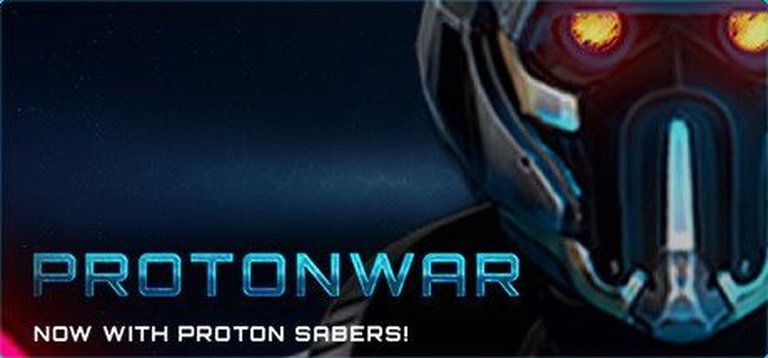
Protonwar is a multiplayer-focused, fast-paced arena first-person shooter set in a sci-fi futuristic environment. It emphasizes quick and flowing movement, supporting VR (with room-scale and seated options) and non-VR play, and features game modes like Deathmatch and Capture the Flag, along with customizable mutators and maps for dynamic combat.
Gameplay Videos
Where to Buy Protonwar
PC
Protonwar Reviews & Reception
steamcommunity.com : First off, the pace of the game is great.
Protonwar: A Vulgar Display of Motion – An In-Depth Review of VR’s Most Ambitious Arena Shooter
Introduction: The Ghost in the (Motion-Controlled) Machine
In the pantheon of first-person shooters, certain titles become landmarks by redefining movement, combat, or community. Protonwar, developed and published solo by the enigmatic “gozu” of Outer Planet Studios, does not achieve this through a sprawling narrative or cinematic spectacle. Instead, it stakes its claim as a pure, unfiltered experiment in the most fundamental FPS question: What does it feel like to move and fight with your entire body? Released into the volatile early days of consumer VR in 2016, this game is less a finished product and more a playground—a sometimes-janky, often-brilliant sandbox where the legacy of Quake‘s circle-jumping collides headfirst with the physical reality of a room-scale playspace. This review argues that Protonwar is an essential, if deeply flawed, artifact of gaming history: a passionate, indie-driven love letter to the “Arena FPS” (AFPS) genre that pushed the technical and physical boundaries of its nascent medium, ultimately serving as a crucial, if not always successful, bridge between the keyboard-and-mouse purity of the 1990s and the motion-controlled chaos of the 2010s.
Development History & Context: One Developer, Many Locomotion Systems
The story of Protonwar is, for all intents and purposes, the story of a single developer. Outer Planet Studios was, and appears to have remained, a one-person operation. This context is not just trivia; it is the lens through which the entire game must be understood. The ambition on display—full room-scale VR integration, a panoply of advanced movement mechanics, multiple game modes, and a dedicated server executable—is staggering for a solo project, yet the rough edges, missing features, and occasional jank are the inevitable fingerprints of that same solitary development.
The game emerged into a specific technological and cultural moment. 2016 was the year of the “VR Rush,” with the HTC Vive and Oculus Rift CV1 launching to consumers. The prevailing wisdom was cautious: VR was for seated experiences, teleportation was mandatory to avoid sickness, and complex locomotion was a demon to be exorcised. Protonwar was conceived in direct opposition to this. Its official description is a manifesto: “Fast paced AFPS with an emphasis on quick and flowing movement.” From its first announcement in early 2016, the developer’s ModDB posts were a running diary of wrestling Unreal Engine 4 and PhysX into submission to create strafe-jumping, wall-running, and climbing in VR—mechanics considered anathema to “comfortable” VR design.
The technological constraints were immense. Rendering a high-fps, low-latency world for two motion-tracked controllers and a headset, while simulating complex projectile physics and player prediction for online play, was a monumental task on 2016-era hardware (minimum a GTX 770, recommended a GTX 970/980). The game’s aesthetic—a serviceable, if unremarkable, sci-fi arena style using UE4’s default assets and simple geometry—speaks to the need to prioritize performance over graphical fidelity. This was a game about kinetics, not vistas.
Narrative & Thematic Deep Dive: The Absence of Story as a Story
Critically, Protonwar possesses no traditional narrative. There is no plot, no characters with dialogue, no lore to uncover in terminals or audio logs. Its “setting” is pure functionalism: abstract arenas named DM-Abyss, DM-Castle, SwampLands. This absence is, in itself, a powerful thematic statement within the lineage of AFPS. It is a direct descendant of Quake’s “arena” and Unreal Tournament’s “Liandri Tournament,” where combat is sport, spectacle, and existential ritual stripped of context.
The theme, therefore, is pure embodiment and capability expression. The game’s philosophy is encapsulated in one line from its store page: “Finally, if there is a wall you see that looks bad ass, you can climb right up that bad boy! Why? Because you can! and it’s fun!” This is the game’s narrative thesis. The “why” is irrelevant; the “can” is everything. The player’s journey is one of bodily mastery. You begin as a kinetic infant, clumsily teleporting or arm-swinging. Through the tutorials and practice against bots, you learn the language of the body: the flick of the wrist for a dodge, the precise downward yank of the motion controller to initiate a climb, the rhythmic combination of trackpad strafing and controller jumps to chain speed jumps. The “progression” is not numerical (levels, stats) but phenomenological—the felt sense of increased speed, control, and spatial awareness.
This creates a unique form of storytelling: a personal narrative of skill acquisition. Each successful wall-run, each double-jump dodging incoming rocket fire, is a sentence in a story only you experience. The “characters” are the player’s avatar and the anonymous opponents in the multiplayer arena, their interactions defined solely by the ballet of movement and the crack of weapon fire. The mature content warning (“Frequent Violence or Gore”) feels almost satirical; the violence is abstract, popcorn-fare compared to narrative-driven shooters, but the physicality of committing that violence—of launching yourself across a room to land a railgun shot—is the visceral core of the experience.
Gameplay Mechanics & Systems: The Laboratory of Movement
Protonwar‘s entire design orbits around its locomotion system, which is not a single feature but a branching tree of player choice and skill expression.
1. The Locomotion Spectrum:
* Teleport-Only: The safety net. Designed for VR newcomers or those prone to sickness, it allows point-and-click movement but fundamentally breaks the flow of an AFPS, where constant motion is key.
* Advanced Mode: The heart of the game. This is a toolkit:
* Arm Swing: Moving the controllers in a walking/running motion propels you forward. Simple but tiring.
* Player-Relative: Movement is relative to the direction your head (or controllers) are facing, allowing for more intuitive strafing.
* Trackpad/Joystick Movement: The primary method for high-level play, emulating traditional WASD.
* Physics-Based Jumping & Dodging: The revolutionary element. Jumping is not a button press but a gesture: holding a “climb” button, quickly moving a controller downward, and releasing. The timing and force of the release determine jump height and direction. A flick left or right while jumping performs a “dodge.” Combining a trackpad-initiated jump with a controller dodge enables complex “tricks.”
* Climbing: Any vertical surface can be climbed using the downward gesture. This is not a canned animation but a physics-based pull-up. The restriction—”You cannot shoot while you are climbing though, so watch your back!”—creates a exquisite risk/reward dynamic. Climbing to a surprise vantage point is a core tactical play.
* Wall Running/Jumping: Inherent in the physics system, allowing players to skim along walls for speed or rebound off them.
2. Weaponry & Combat:
The arsenal is classic AFPS, but with a crucial twist: no reloading. As clarified by developer “gozu” in response to player confusion, weapons use infinite ammo with rate-of-fire limits and projectile physics. This eliminates a major friction point in VR, keeping the focus on movement and aim. Weapons include hitscan (railgun), projectile (rocket, grenade), and a distinctive plasma weapon. The “Bullet Time” mutator adds a Max Payne/FEAR-style slow-motion layer, profoundly changing the feel of duels.
3. Game Modes & Structure:
The game offers a complete suite: Deathmatch, Team Deathmatch, Capture the Flag, Domination, and Horde Mode (co-op vs. bots). The inclusion of CTF and Domination on maps like OvergrownXL and Ruins shows a clear understanding of classic map design principles—flag routes, control point placement. The Horde mode’s randomized wave locations on all maps is a smart way to maximize content replayability.
4. Progression & Customization:
Character progression is purely cosmetic (two character models, unique sounds for the female model). The true “progression” is the player’s skill. Customization is extensive via config files and console commands, a direct nod to the PC-tuning traditions of Quake and UT, allowing hardcore players to tweak movement curves, FOV, and more.
5. Flaws & Frictions:
The system is not without pain. The advanced locomotion has a steep learning curve and can absolutely cause VR sickness. As one Steam reviewer noted, trackpad movement sometimes didn’t account for controller orientation, leading to disorientation. Weapon selection was initially “clunky,” requiring UI improvements (a weapon wheel was planned). The lack of a traditional reload, while elegant, confused players expecting it. These are not failures of vision but the growing pains of an aggressively innovative control scheme.
World-Building, Art & Sound: The Aesthetic of Function
Given the solo-dev context, the art direction is one of pragmatic necessity. The visual style is low-poly, high-saturation sci-fi. Textures are simple, lighting is functional (though DM-Ruins-Night shows an attempt at mood), and geometry prioritizes clear pathways and interesting jump lines over decorative complexity. The aesthetic is less Halo and more Quake III mod—recognizable archetypes (castles, ruins, swamps, futuristic stations) rendered with a utilitarian clarity. This clarity is a virtue: in a game where you are constantly in motion, readable silhouettes and pathways are more important than polygon count.
Sound design follows suit. Weapon sounds are punchy and distinct—the crump of the rocket launcher, the zap of the plasma gun—providing crucial audio cues. The soundtrack is minimal or absent, replaced by the immersive sounds of movement: the whoosh of a dodge, the clang of landing on metal, the environmental ambience of each map. The focus on spatial audio for footsteps and weapon fire is critical for situational awareness in the 3D space.
The atmosphere is one of kinetic potential. The maps are not stories but puzzles and racetracks. DM-Abyss with its deep central pit, DM-Castle with its vertical staircases and parapets, Overgrown with its twisting jungle pathways—each is designed first and foremost for movement. The “world-building” is implied by the possibility of traversal; the lore is written in the paths you can and cannot take.
Reception & Legacy: The Niche That Forged Itself
Protonwar never achieved mainstream success. Its Steam release date is listed as March 15, 2018, though it was in Early Access from July 5, 2016. As of the latest data, it has been collected by only 20 users on MobyGames and holds a “Very Positive” rating on Steam from 113 reviews (82% positive). These numbers cement its status as a deep niche title, a cult artifact for a specific subset of players: VR enthusiasts who are also hardcore AFPS fans.
Its reception was defined by the very tensions it embodied. Praise centered on:
* The Thrill of Movement: Reviews consistently highlight the joy of mastering the climbing and strafe-jumping. “It is very hard though,” noted developer “gozu” in a ModDB comment, “and when people say everything takes 10x as long they are not kidding!” This honesty about the skill ceiling was respected.
* The Asymmetry of Play: The ability to have VR and non-VR players in the same match was a unique selling point, though balance questions inevitably arose.
* The Commitment to Purity: No microtransactions, deep configurability, dedicated server support—these were hallmarks of a game made for its community, not for mass monetization.
Criticisms focused on:
* The VR Sickness Barrier: The advanced mode’s intensity was a legitimate barrier to entry.
* Jank & Incompletion: Clipping issues, UI problems, and a general “early access” feel persisted for years.
* Small Player Count: The inevitable consequence of a niche control scheme and minimal marketing.
Legacy and Influence: Protonwar’s direct industry influence is likely minimal due to its commercial obscurity. However, its conceptual legacy is significant. It stands as one of the earliest and most committed attempts to solve the “locomotion problem” in VR FPS not by avoiding it (teleportation), but by embracing and expanding upon the agile movement of classic arena shooters. It proved that strafe-jumping, wall-running, and complex jumping gestures were possible and could be fun in VR, even if uncomfortable for some. Games like Boneworks and Blade & Sorcery pursued a similar philosophy of physics-based, body-centric movement, but from a melee/Sandbox perspective. Protonwar remains the purest distillation of that philosophy within the competitive shooter framework. It is a curated experiment whose data points—successes and failures alike—informed the broader conversation about movement in VR for years.
Conclusion: The Proton War is Peace (Against Mediocrity)
Protonwar is not a great game by conventional metrics. It lacks a story, has a tiny player base, its graphics are dated, and its learning curve is a cliff. It is, by any reasonable commercial measure, a failure.
And yet, to judge it thus is to miss its profound, defiant purpose. It is a game that asked a daring question in the cautious early days of VR: “What if we made the most difficult, most physical, most traditionally game-y shooter possible?” Its answer was a technical marvel of jank and joy. The feeling of launching yourself from a wall, dodging a rocket mid-air, and landing with a railgun shot to an opponent’s head is a video game moment unlike any other—it requires your full body, your spatial reasoning, and your muscle memory.
In the canon of video game history, Protonwar belongs not in the hall of fame, but in the hall of important experiments. It is a testament to the power of a singular vision, unburdened by committee or budget, chasing a specific kinematic fantasy. It is a grammar primer for a language of movement that few have ever fully learned. For the historian, it is a vital document of the VR medium’s adolescence—the moment it tried to break free from teleportation and sit-down simulations and run. For the player willing to climb its steep slope, it offers a purity of action and a sense of embodied skill that remains, in 2025, remarkably rare. Its legacy is not in how many played it, but in what it proved was possible: that the ghost in the shell could, if you were willing to throw yourself at the wall hard enough, finally learn to climb.
Final Verdict: 7.5/10 – A flawed, fascinating, and essential curio for students of movement design and VR history.