
- Release Year: 2014
- Platforms: Macintosh, Windows
- Publisher: rondomedia Marketing & Vertriebs GmbH
- Developer: Reality Twist GmbH
- Genre: Simulation
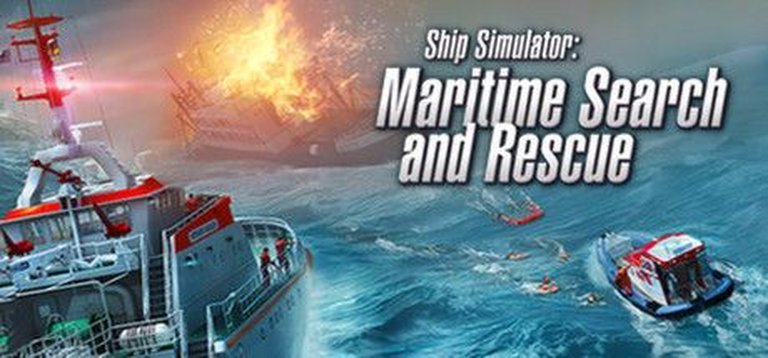
Description
Ship Simulator: Maritime Search and Rescue is a simulation game where players take command of powerful rescue vessels from the Maritime Search and Rescue Service. Set in treacherous high seas with extreme weather conditions like force 12 winds and crashing waves, the game tasks players with navigating dangerous waters to search for and save castaways in distress, emphasizing realistic maritime operations and dramatic rescue missions.
Gameplay Videos
Where to Buy Ship Simulator: Maritime Search and Rescue
PC
Ship Simulator: Maritime Search and Rescue Guides & Walkthroughs
Ship Simulator: Maritime Search and Rescue Reviews & Reception
steamcommunity.com : Sooooo much potential here.
Ship Simulator: Maritime Search and Rescue: A Storm of Ambition in Calm Waters
1. Introduction: The Call to a Noble, Niche Duty
In the vast ocean of the simulation genre, few sub-genres are as meticulously specialized—or as inherently dramatic—as maritime search and rescue. Ship Simulator: Maritime Search and Rescue (SS:MSAR) arrives not as a grandiose naval combat title, but as a solemn, operational homage to the real-world heroes of the German Maritime Search and Rescue Service (DGzRS). Released in 2014 by the then-little-known German studio Reality Twist GmbH and publisher rondomedia, the game promised an authentic, gritty experience piloting powerful rescue cutters through the treacherous North and Baltic Seas. Its thesis is one of sobering duty: you are not a warrior, but a guardian, facing the “sheer force of the elements” to save lives. Yet, this noble vision would become mired in a sea of conflicting design priorities, creating a sim that is simultaneously visually immersive and mechanically shallow, narratively earnest yet technically dated. This review will argue that SS:MSAR stands as a fascinating, deeply flawed artifact—a game that understood the romance of rescue work but consistently failed to grasp the rigor of its simulation, leaving it permanently anchored in a state of “what could have been.”
2. Development History & Context: A Small Studio’s Big Tides
Reality Twist GmbH, based in Munich, was not a household name in simulation circles prior to SS:MSAR. Their portfolio, as seen in MobyGames credits, consisted largely of niche “Simulator” titles like Fireworks Simulator, Roadside Assistance Simulator, and Recycle: Garbage Truck Simulator—games focused on replicating specific vocational or procedural experiences for a dedicated audience. This context is crucial: SS:MSAR was not an attempt to dethrone giants like VStep Ship Simulator or Ship Simulator 2008, but to carve out a hyper-specific, officially licensed niche. The game’s production was notably “kindly supported” by the DGzRS, a partnership that provided unparalleled access to vessel designs (the Hermann Marwede and Harro Koebke), mission protocols, and a veneer of operational authenticity. This collaboration was its greatest selling point and a significant burden; it obligated the small team to accurately portray a serious service, potentially stifling more ambitious gameplay experimentation.
Technologically, the game was built in Unity, a capable but by 2014 increasingly common engine for mid-budget titles. For a sim demanding realistic water physics and large-scale sea environments, Unity represented a compromise—capable of impressive surface rendering (as noted in reviews) but struggling with complex systemic interactions. The gaming landscape of 2014 was dominated by the rise of accessible “sim-lite” experiences (Euro Truck Simulator 2 was a benchmark) and the lingering PC-exclusive hardcore sim market. SS:MSAR sat awkwardly between these poles: too simplistic for hardcore naval simmers craving physics and damage models, yet too slow and structured for action fans. Its July 2014 release placed it in the shadow of bigger titles, and with minimal marketing beyond its niche channels and Steam, it inevitably became a cult curiosity rather than a mainstream success.
3. Narrative & Thematic Deep Dive: Scripted Serenity on Stormy Seas
SS:MSAR forgoes a traditional plot for a mission-based campaign structure, split into two geographical “scenarios”: the North Sea and the Baltic Sea. The narrative is delivered through pre-mission briefings and in-mission radio chatter with the Maritime Rescue Co-ordination Center (MRCC) and your crew. This creates a serialized, episodic feel—a “day-in-the-life” saga of a rescue captain. The story is not about saving the world, but about the relentless, cyclical nature of emergency service: you respond to a mayday, complete a salvage or rescue, return to port, and are dispatched again.
The game’s thematic core is professionalism under pressure. It emphasizes procedure: checking charts, monitoring tides, maintaining radio discipline, and executing standard operating protocols. The developers, with DGzRS input, clearly wanted to simulate the cognitive load of an On-Scene Coordinator. This is reinforced by the character system. With “up to 30 main and supporting characters,” all “elaborately dubbed” (a point of praise in user reviews), the game attempts to build a crew with personality. Voice actors like Christian Jungwirth (Piet Söhngen) lend a gruff, believable authenticity to the MRCC dispatchers and shipmates. The dialogue, however, is a weak point. User reviewer “Metasploit” noted its corniness and jarring tonal shifts—moments of quiet professionalism abruptly giving way to what he described as “Microsoft voice met Baltic Steve” or “yelling like a crazy terminator.” This unintentional comedy undercuts the gravitas the scenario demands, making the serious business of rescue occasionally feel like a soap opera at sea.
Underlying themes of man versus nature and collective responsibility are present but underexplored. The weather and sea states are marketed as a primary antagonist (“Wind force 12. Breakers beat on the bow deck”), yet the gameplay often fails to make this threat feel systemically real (more on this in Mechanics). The theme of supporting the DGzRS (“Every copy sold supports the work of the Search and Rescue Service”) is a genuine, commendable real-world tie-in that elevates the game from mere entertainment to a slight act of advocacy.
4. Gameplay Mechanics & Systems: The Hull Crack Beneath the Paint
This is where the simulation’s ambitious promise runs aground on fundamental design flaws.
Core Loop & Mission Design: The loop is mechanically sound: receive mission from MRCC via radio menu, navigate to coordinates (using a minimalist map), perform a task (extinguish fire, pump out water, launch daughter boat for recovery), and return/report. The 20 missions are structured in narrative sequences—a fire on a fishing vessel might be followed by an escort mission for the same damaged ship. This continuity is a standout feature, praised by reviewers for creating a sense of ongoing operational story. Missions vary enough to cover the “entire spectrum” ofSAR: person-overboard searches, vessel assistance, firefighting, and salvage. The inclusion of a time acceleration (4x speed) for transit is a necessary quality-of-life feature for a game set on the vast seas.
Ship Handling & Physics: The Fatal Flaw: This is the game’s catastrophic weakness. As brutally chronicled by the Mudspike review, the physics model isarciaically shallow. There is no wind drift, no current, and no meaningful damage model. A player can park a 3,000-ton rescue ship in a 25-knot wind, and it will sit perfectly still. You can ram piers, other vessels, or run aground at high speed with no consequence beyond a temporary stop. This fatally undermines the entire premise of “facing the sheer force of the elements.” Navigation becomes a simple matter of pointing and throttling, with no need to account for set, leeway, or current. Docking and alongside maneuvers—the bread and butter of a rescue tug—are trivialized. For a title bearing “Simulator” in its name, this omission is not a flaw; it is a fundamental betrayal of the genre’s core tenets. The Mudspike reviewer’s lament—”it makes docking… completely non-challenging”—echoes through every critical assessment.
Controls & Interface: The game offers a choice between “simplified” and “realistic” controls, but both are hampered by a crippling lack of configurability. The Steam community review highlighted the “horrible, horrible oversight” of no controller mapping, forcing HOTAS users to rely on default bindings. The bridge interface is a particular sore point. In first-person cockpit view, all displays are “blank”—no radar, no moving map, no engine instrumentation. It’s a ghost bridge, rendering that perspective almost useless for serious operation. All vital data (depth, speed, wind, course) is relegated to a permanent, non-dismissible HUD surrounding the external view. This HUD is functional but ugly, breaking immersion. The d daughter boat operations (launching the Verena or Notarius) are a neat idea but suffer from “nutty” low-speed handling, described as skidding “on ice.”
Progression & Systems: There is no character or ship progression. You command the same two vessels throughout. “Progression” is purely mission-based. The radio communication system is a highlight—a radial menu allows you to ask questions of the MRCC in a semi-non-linear fashion, though choices reportedly do not alter mission outcomes. The first-person movement on the ship is clunky (“walking with arm crutches”), making interior exploration a chore rather than a feature.
5. World-Building, Art & Sound: Beauty on a Troubled Sea
Where the simulation systems fail, the presentation often excels, creating a glaring contrast between form and function.
Visuals & Atmosphere: Using Unity, Reality Twist achieved a surprisingly potent and atmospheric seascape. The water, waves, and weather are universally praised. The depiction of “froth, waves, surface texture,” and particularly the “exceptionally moody” stormy skies and “nice raindrop effect on the camera lens” sell the feeling of being in a tempest. The transition from “brilliant sunsets to gloomy, rainy days” is dynamic and effective. The ship models (Hermann Marwede and Harro Koebke) are detailed and authentic, thanks to DGzRS cooperation. The North and Baltic Sea environments are well-realized with recognizable coastal geography, even if the nautical chart is starkly barren—no depth soundings, no place names, no labels, a major oversight for any maritime sim. The biggest world-building failure is the absence of civilian life; ports and coastlines are eerily devoid of people, boats, or activity outside of mission-critical vessels, breaking the illusion of a living sea.
Sound Design: The soundscape is strong. The crash of waves, the groan of the hull in heavy seas, the howl of wind, and the chug of engines are effective. The voice acting, while uneven in delivery, is professionally recorded in multiple languages (English, German, French, Spanish) and adds a layer of operational realism. The dissonance between the high-quality audio/visuals and the broken physics creates a profound sense of missed potential.
6. Reception & Legacy: A Curious Footnote
Upon release, SS:MSAR was met with immediate and consistent criticism from the simulation community it targeted. Steam reviews settled at a “Mixed” rating (50% positive from hundreds of reviews), a score that has stubbornly persisted. The core complaint, echoed across the Steam forums, Mudspike, and GamePressure, was the same: beautiful graphics and mission ideas are utterly sunk by the lack of true sailing physics, a dead bridge, and no damage.
Its commercial performance appears modest. MobyGames lists it as “Collected By” only 5 players, and GameRebellion estimates sales of ~22k units across retail and digital. Its low price point (regularly discounted to $1.99-$2.00 on Steam) and inclusion in compilation bundles like Die große Simulations-Box 5 suggest it was not a financial breakout hit.
In terms of legacy and influence, SS:MSAR has had almost none. It did not spawn a series or inspire clones. Its niche, officially licensed approach to humanitarian simulation remains largely untapped. Its true legacy is as a cautionary tale. It demonstrates that even with official endorsements, attractive visuals, and earnest mission design, a simulation fails if it does not simulate its core activity. It highlights the chasm between “action-sim” and “true sim.” Games like Coast Guard (mentioned as similar) or later titles like Maritime Calling (2022) learned from this, offering more robust physics. SS:MSAR is now primarily a curiosity for sim completists and a subject of discussion about the importance of systemic depth over cosmetic veneer.
7. Conclusion: Anchored by Its Own Contradictions
Ship Simulator: Maritime Search and Rescue is a profound paradox. It is a game that clearly cares deeply about its subject—the brave work of the DGzRS—and succeeds in making players feel the atmospheric drama of a North Sea gale. Its mission structures are thoughtful, its voice acting committed, and its visual rendering of water is arguably best-in-class for its budget and era. Yet, it is a catastrophic failure as a simulation. The absence of wind, current, and damage physics isn’t a minor omission; it is a core systems void that turns the act of piloting a ship from a tense, skillful maneuver into a simple point-and-click affair.
Its place in video game history is that of a noble wreck. It represents a sincere, well-researched, and artistically competent attempt to build a serious simulation around a non-combat, humanitarian theme—a direction the industry desperately needs more of. But it also represents how easily such a project can be derailed by technical shortcuts, a misunderstanding of what its core audience expects from a “simulator,” and perhaps the constraints of its modest budget and Unity engine. For the historian, it is a vital case study in the difference between theme and mechanics. You can buy the idea of maritime rescue for $1.99 on a Steam sale, but you cannot buy the reality of it here. SS:MSAR will forever be remembered not for the lives it saved in-game, but for the ambitions it shipwrecked.