
- Release Year: 2014
- Platforms: iPad, Macintosh, Windows Apps, Windows, Xbox Cloud Gaming, Xbox One
- Publisher: Amplitude Studios SAS, SEGA Europe Ltd., SEGA Games Co., Ltd.
- Developer: Amplitude Studios SAS
- Genre: Strategy, Tactics
- Perspective: Diagonal-down
- Game Mode: Online Co-op, Single-player
- Gameplay: Hero management, Procedural generation, Resource Management, Roguelike, Tower defense
- Setting: Futuristic, Sci-fi
- Average Score: 95/100
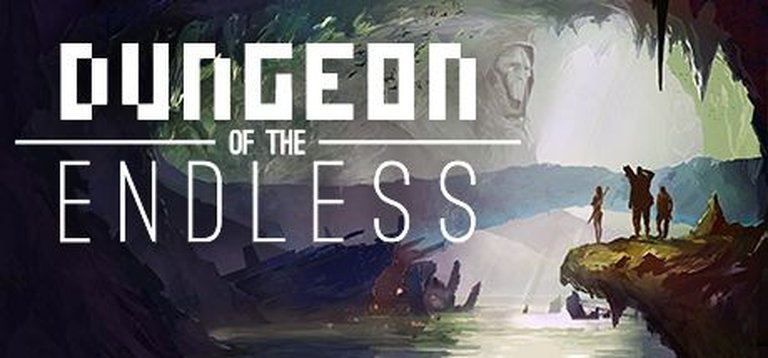
Description
Dungeon of the Endless is a roguelike tower defense game set in a sci-fi/futuristic universe, where players control survivors of a prison spaceship that crash-lands on a planet in the Auriga system. Tasked with colonizing the planet as slaves, these survivors must explore procedurally generated dungeons room by room, manage scarce resources like Dust to power defenses, balance relations between guards and inmates, and face various enemies and perils in a quest to reach the surface.
Gameplay Videos
Where to Buy Dungeon of the Endless
Dungeon of the Endless Free Download
Xbox One
Dungeon of the Endless Mods
Dungeon of the Endless Guides & Walkthroughs
Dungeon of the Endless Reviews & Reception
ign.com : Dungeon of the Endless absolutely nails that, with a simple premise offering much to learn.
fanboydestroy.com (95/100): Amplitude Studios’ brilliantly designed and gorgeously old-school experience mixes a bunch of genres.
Dungeon of the Endless: A Definitive Analysis of a Genre-Defying Classic
Introduction: The Prison Ship That Launched a Thousand Runs
In the crowded landscape of indie roguelikes, few titles manage to carve out a truly unique identity. Dungeon of the Endless, released by French studio Amplitude Studios in 2014, did just that by boldly fusing the tension of tower defense, the strategic resource management of 4X titles, and the unforgiving permadeath of classic roguelikes into a cohesive, punishing, and utterly compelling whole. Set within the expansive “Endless” universe that also spawned Endless Space and Endless Legend, the game transcends its origins as a side project to become a masterclass in systemic design. Its thesis is deceptively simple: guide a fragile energy crystal through 12 procedurally generated floors of an alien dungeon, using a handful of survivors and strategically placed defenses. Yet, through brilliant mechanical interlocking and relentless difficulty, it creates an experience where every opened door is a question of life or death, and every successful run feels like a hard-earned victory against impossible odds. This review will argue that Dungeon of the Endless stands as a pivotal, if understated, landmark in the modern roguelike canon—a game whose intricate, layered design rewards patient mastery like few others, even if its niche appeal and occasional pacing issues prevent it from achieving widespread mainstream acclaim.
Development History & Context: From Side Project to Flagship Precursor
Dungeon of the Endless emerged from an unlikely crucible: a small, scrappy team within Amplitude Studios working on a “crazy drinking evening” concept while simultaneously developing their ambitious 4X title, Endless Legend. This context is essential. In 2013-2014, Amplitude was a rising independent French studio known for deep, systemic strategy games, not tight, arcadey hybrids. The Endless universe was their narrative sandbox, but Dungeon represented a deliberate pivot in gameplay philosophy.
Studio Vision & Constraints: Co-founder Romain de Waubert de Genlis and a core team of just 4-5 developers (including designers Arthur Prudent and Simon Darras) sought to create something with a faster, more immediate feedback loop than their sprawling 4X projects. The choice of pixel art was practical—it allowed a small team to produce a visually cohesive game without the asset demands of 3D—but it also became a signature aesthetic, evoking 16-bit era charm while using modern lighting techniques to create atmosphere. The development was parallel to Endless Legend, meaning resources were shared but Dungeon retained a distinct, experimental identity. This “side project” status afforded it creative freedom but also meant it lacked the marketing push of a flagship title.
Technological & Market Context: Released in late 2014, the game entered a market saturated with roguelike-inspired titles following the breakout success of The Binding of Isaac and FTL: Faster Than Light (the latter being a direct cited influence). The Early Access model on Steam (December 2013) was still relatively new for indie strategy games, allowing Amplitude to iteratively balance its notoriously complex systems based on community feedback. The Unity engine provided a flexible foundation for the hybrid real-time/turn-based mechanics and procedural generation. The gaming landscape of 2014 was hungry for “one more run” games, but few had successfully married the slow-burn resource management of tower defense with the rapid, door-by-door tension of a roguelike.
Narrative & Thematic Deep Dive: Dust, Desperation, and the Aurigan Prequel
The narrative of Dungeon of the Endless is delivered in fragments—through hero barks, unlockable lore, and environmental storytelling—but it forms the crucial connective tissue to the broader Endless saga. The premise is grim: a prison transport ship, the Success, carrying convicts and guards in cryo-stasis, suffers a catastrophic landing on the mysterious, frozen planet Auriga. The survivors, emerging from their escape pod deep within ancient subterranean complexes, are not explorers but desperate criminals and their captors, united by a single goal: reach the surface.
The Aurigan Setting & The Dust Wars: Auriga is not a random planet. In the Endless timeline, it was a major hub of the ancient, god-like Endless civilization, later devastated in the cataclysmic “Dust Wars”—a civil conflict centered on the mysterious, self-replicating nanotech substance known as Dust. Dungeon of the Endless is a direct prequel to Endless Legend, which takes place centuries later on the same planet. The dungeon players navigate is the ruin of Endless technology, and the “monsters” are often failed Dust experiments or hostile indigenous lifeforms mutated by its influence. This lore is not merely window dressing; it justifies the procedural generation (ancient, shifting ruins), the crystal (a piece of Endless tech), and the very existence of “Heroes” (those with a latent affinity for Dust, a concept expanded in Endless Space 2).
Character & Faction Dynamics: The prisoner/guard dichotomy is more than a gameplay mechanic for team composition. Heroes have “psychoses” and backstories that influence their interactions. For example, taking a guard like Gork “Not Arnie/Duke Nukem” Koroser alongside a convict like Sara Numas creates innate tension, reflected in dialogue and sometimes stat modifiers. This reinforces the theme of forced cooperation against a greater threat. The rescue of other survivors (like the “Organic Matters” DLC’s “Brain in a Jar”) adds further layers, suggesting the crashed Success is not an isolated incident but part of a larger pattern of Endless-related disasters.
Underlying Themes: The game explores prison as a microcosm of society—can order (guards) and chaos (convicts) forge a functional unit? It also delves into hubris and decay, as the party scavenges the remains of a civilization that destroyed itself through its own creation (Dust). The permanence of death (permadeath) contrasts with the ephemeral nature of progress (each run is erased), echoing the tragic, cyclical history of the Endless themselves. The crystal—the literal and metaphorical light in the darkness—must be protected at all costs, a constant reminder of fragility in a universe of ancient, careless power.
Gameplay Mechanics & Systems: The Perfectlybalanced Storm
Dungeon of the Endless is a symphony of interlocking, often brutal, systems. Its genius lies in how it separates the timing of decisions (real-time) from the consequence of decisions (turn-based via door-opening).
Core Loop & The Door Mechanic: The entire game is structured around opening doors. Each door opened constitutes a “turn,” triggering resource income (Industry, Science, Food) and potentially spawning enemy waves in all unpowered rooms. This is the game’s masterstroke. It creates a pulsating rhythm: plan during calm periods, open a door to invite risk and reward, then scramble to defend against the resulting chaos. The tension is existential—every door is a gamble between resources/recruits and imminent death.
Resource Trinity & Dust Economy: The three core resources form a rock-paper-scissors of needs:
* Industry: Builds turrets, traps, and resource-generator modules.
* Science: Researches new module types and upgrades at artifacts.
* Food: Heals heroes, levels them up (increasing stats and abilities), and recruits new party members.
The critical fourth currency is Dust, harvested from killed monsters and used to power rooms. Powering a room lights it, preventing monster spawns there and allowing module construction. However, power is finite and drains over time. This forces agonizing choices: power a central defensive chokepoint or spread light to gather resources in distant rooms? De-power a room to reroute energy, disabling its defenses? Dust management is the game’s strategic heartbeat.
Heroes, Progression, and the “FIDS” System: Heroes are not blank slates. They have base stats (Health, Attack, Defense, Speed) and unique active/passive abilities. Crucially, they belong to职人员 (Guards) or inmates (Convicts), with some synergy bonuses/penalties. Progression occurs via Food, not experience points. Spending Food levels a hero, granting stat boosts and new skills. This creates a direct tension: use Food for immediate healing or invest it for long-term power? Heroes can also equip weapons, armor, and trinkets found in rooms or from merchants. The “FIDS” (Food, Industry, Dust, Science) acronym, used in the Endless series, perfectly encapsulates the constant juggling act.
Combat & Tower Defense Integration: Combat is largely automated—heroes in a room will attack nearby enemies. The player’s role is positioning, module placement, and ability timing. The tower defense layer comes from building turrets (e.g., Basic Turrets, Neurostunners) and traps (e.g., Spikes, Prisoner Pods that capture enemies for Dust) within powered rooms. The crystal must be physically carried by one hero to the exit, forcing a desperate final stand where all enemies converge. Bosses on certain floors (like the “Goliath” on Floor 8) require specific kiting and module strategies.
Permadeath, Unlockables, and Meta-Progression: Failure means starting over with a new, randomly generated dungeon. However, the game provides meta-progression through hero unlocks. Recruit a hero (e.g., from a captive pod or event) and survive 3 levels with them, and they become selectable from the main menu. Different escape pods (e.g., “The Library” focusing on Science, “The Refreezerator” with cryo mechanics) radically alter starting conditions and playstyle, essentially creating new game modes. This system ensures that while the core loop is static, the tools and constraints evolve, staving off repetition.
Flaws in the System: The game’s notorious difficulty is both its strength and weakness. The learning curve is steep, with a tutorial that covers only basics. Key mechanics—like how to properly level heroes or the importance of the Backpack for item storage—are obscure. The randomness can feel brutal; a poorly generated map with clustered monster spawns at the start can doom a run before strategy even matters. Later floors become a slog, with players spending significant time micromanaging spread-out defenses. The “repeatability” criticism is valid: after mastering the systems and seeing most hero combinations, the surprises dwindle. The lack of an in-game bestiary or module encyclopedia (relying on external wikis) is a persistent UI/UX failing.
World-Building, Art & Sound: A Pixel-Perfect Dystopia
The presentation of Dungeon of the Endless is a masterclass in stylized, atmospheric design that perfectly serves its gameplay.
Visual Direction & Pixel Art: The game employs a “2.5D” pixel art style. Characters and modules are detailed 2D sprites, but they exist in a 3D space with dynamic lighting and particle effects. This creates a gorgeous, moody aesthetic: the dark, monolithic corridors of the dungeon are lit by the warm glow of powered rooms and the cold blue of Dust energy. The pixel art is not retro for nostalgia’s sake; it provides clarity at a glance—you can instantly识别 a turret, a hero class, or a monster type. The visual feedback is superb: turrets have distinct firing animations, monsters glow when enraged, and the crystal pulses with danger when under attack. The environment tells a story of decay—broken Endless machinery, alien bioluminescence, and the crude additions of the human survivors.
Sound Design & Music: Composed by FlybyNo (a longtime Amplitude collaborator), the soundtrack is a highlight. It consists of atmospheric, synthesized chiptunes that perfectly match the game’s pacing: tense, ambient drones during exploration that swell into pulsing, rhythmic tracks during combat waves. The music is adaptive, changing with the floor’s danger level. Sound effects are crisp and informative—the clink of a turret building, the hiss of a monster spawn, the desperate beep of the crystal at low health. The audio is not just atmospheric; it’s a critical gameplay tool, signaling events you might have missed visually.
Atmosphere & Cohesion: The art and sound work in tandem to create a profound sense of isolation and dread. You are a tiny, fragile light in an immense, ancient, and hostile structure. The sci-fi prison setting is conveyed through hero designs (guard armor, convict tattoos), module aesthetics (utilitarian, jury-rigged), and monster designs (bio-mechanical horrors). Every visual and auditory cue reinforces the core gameplay loop: the darkness is danger, the light is safety, and the crystal is your fragile soul.
Reception & Legacy: A Cult Classic’s Journey
Critical Reception: Upon full release in October 2014, Dungeon of the Endless was met with widespread critical acclaim, reflected in its 79-80% aggregate scores on Metacritic and OpenCritic. Reviews consistently praised its innovative genre fusion. IGN highlighted its “brilliant design” and “fiendish and unforgiving challenge.” Rock, Paper, Shotgun called it “as brilliantly designed, challenging and cunning a package of ideas and aesthetic choices as anything I’ve seen this year.” Game Revolution noted its fairness despite difficulty. The primary criticisms were its steep learning curve (many found the tutorial inadequate), potential repetitiveness after the initial “what’s behind the next door?” wonder faded, and artificial difficulty spikes from procedural generation.
Commercial Performance & Platform Expansion: The game found strong success on Steam, selling over 600,000 copies by 2016 and eventually surpassing 1 million across all platforms by 2025. Its Early Access strategy and positive word-of-mouth were key. Sega’s acquisition of Amplitude Studios in 2016 was partly fueled by the success of their Endless series, including Dungeon. The game saw ports to iOS (2015), Xbox One (2016), and a “Definitive Edition” bundle for PS4/Switch (2020) by Playdigious. The mobile port, Dungeon of the Endless: Apogee (2021), was a significant revamp that included all DLC and touch-optimized controls, later made free on the Epic Games Store mobile in 2025, introducing it to a new audience.
Post-Launch Support & DLC: Amplitude strongly supported the game with free and paid DLC that directly addressed replayability concerns:
* Australium Update (2015): A crossover with Team Fortress 2, adding four themed heroes and items.
* Organic Matters (2015): A substantial free update adding a new “organic” pod, monsters, modules, an endgame sequence, and controller support—significantly deepening the strategic and narrative layers.
* Paid DLCs (Deep Freeze, Rescue Team, etc.): Introduced new hero rosters, ship modes, and biomes, providing fresh strategic constraints.
These additions were praised for seamlessly expanding the core gameplay without breaking its delicate balance.
Legacy & Industry Influence: Dungeon of the Endless did not spawn a flood of direct clones, but its hybrid design philosophy—rigorously combining disparate genres into a cohesive whole—has been influential. It demonstrated that roguelike elements could be a framework for deep strategy, not just fast-paced action. Its emphasis on spatial resource management (powering rooms) and escalating, wave-based tension informed later hybrids. The game is frequently cited alongside FTL and The Binding of Isaac as a benchmark for intelligent roguelike design. Its modding community, while smaller than some, produced tools like DustDevil that allowed for significant customization, a testament to its systemic openness.
Within the Endless universe, its role as a narrative prequel to Endless Legend is now canonical. The events on Auriga, the nature of Dust, and the origins of factions like the Vaulters are deeply tied to this game’s story. It paved the way for its spiritual successor, Endless Dungeon (2023), which evolved the formula into a twin-stick shooter with a heavier co-op focus.
Conclusion: The Enduring, Flawed Brilliance of the Aurigan Depths
Dungeon of the Endless is not a perfect game. Its tutorial is a masterpiece of omission, its later-game pacing can drag, and its reliance on procedural luck will frustrate players who prefer pure skill-based challenges. Yet, to dismiss it for these flaws is to miss its monumental achievement. It is a game of exquisite, punishing balance where every mechanic—from the turn-based door opening to the real-time turret construction, from the hero-leveling Food economy to the nerve-wracking crystal escort—serves a unified purpose: to make you feel the crushing weight of impossible odds and the triumphant euphoria of overcoming them through careful planning and quick adaptation.
Its pixel art has aged gracefully, its soundtrack remains haunting, and its core loop of “one more door” remains hypnotically compelling. It is a game that demands you learn its language, and in doing so, it teaches you about resource scarcity, risk assessment, and emergent strategy. As a bridge between the cerebral 4X strategy of Amplitude’s past and the accessible, addictive roguelike future, it represents a crucial evolution. It is a cult classic par excellence—a game revered by a dedicated fanbase who understand its deep, interconnected systems, yet never quite broke through to the broader consciousness of titles like Stardew Valley or Hades.
In the pantheon of roguelikes, Dungeon of the Endless occupies a unique niche. It is less about reflexive action and more about strategic foresight. It is less about narrative branches and more about systemic storytelling. Its legacy is a testament to the power of a small team with a big idea, executing it with such confidence that they created a timeless, formidable experience. To play Dungeon of the Endless is to step into a beautifully crafted, brutally efficient machine where every failure is a lesson and every success, no matter how small, is a testament to your growing mastery. It is, in the truest sense, endless in its capacity to teach, challenge, and captivate—a flawed, magnificent diamond in the rough of modern indie gaming.