
- Release Year: 2020
- Platforms: Nintendo Switch, PlayStation 4, Windows Apps, Windows, Xbox Cloud Gaming, Xbox One, Xbox Series
- Publisher: Team17 Digital Limited, Tencent Holdings Limited
- Developer: NEXT Studios
- Genre: Strategy, Tactics
- Perspective: Diagonal-down
- Game Mode: Single-player
- Gameplay: Dungeon crawler, Procedural generation, Roguelike, RPG elements, Turn-based combat
- Setting: Fantasy
- Average Score: 76/100
Description
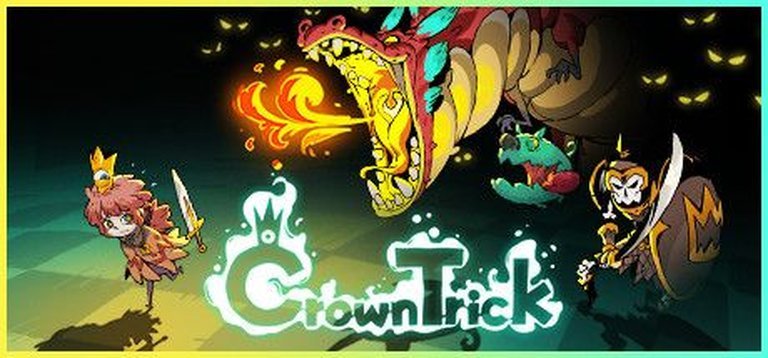
Crown Trick is a fantasy roguelike dungeon crawler that blends turn-based tactical combat with RPG elements. Set in a magical, procedurally generated world, players explore intricate dungeons using powerful abilities and direct control, facing challenging enemies and traps that test strategic skills while offering an empowering gameplay experience.
Gameplay Videos
Where to Buy Crown Trick
Crown Trick Cracks & Fixes
Crown Trick Mods
Crown Trick Guides & Walkthroughs
Crown Trick Reviews & Reception
opencritic.com (70/100): there’s fun to be found in Crown Trick
metacritic.com (83/100): Typical roguelikes are usually a nightmare for me, but Crown Trick turned out to be pure pleasure.
culturedvultures.com (75/100): builds its identity on an extremely deep well of interlocking gameplay mechanics
Crown Trick: Review
Introduction: A Dream Deferred, A Mechanic Perfected
In the bustling, often homogenous landscape of the roguelite genre—dominated by the frenetic, reaction-based action of Hades or Enter the Gungeon—Crown Trick arrives like a deliberate,战略性 chess move in a bar brawl. Released in October 2020 by the Chinese independent studio NExT Studios and published by the venerable Team17, this title did not merely iterate on a formula; it surgically grafted the meticulous, brain-burning sensibilities of turn-based tactical RPGs onto the permadeath, run-based scaffolding of the roguelike. The result is a game that is simultaneously familiar and utterly alien, a charming, hand-drawn nightmare that demands you slow down, think, and master a web of interlocking systems. Its legacy is not that of a mainstream bombshell, but of a cult classic and a critical darling—a testament to the enduring appeal of deep, systemic gameplay when wrapped in a package of surprising aesthetic warmth. This review argues that Crown Trick stands as one of the most sophisticated and rewarding hybrid genre experiments of its era, a game where every mechanic is a deliberate choice, and where the joy of discovery is matched only by the satisfaction of perfect execution.
Development History & Context: From Unheard to the Dreamrealm
NExT Studios, the creative force behind Crown Trick, was already a studio with a reputation for innovative, narrative-driven experiences. Their previous work, most notably the acclaimed audio-based detective game Unheard (2019) and the rhythm-brawler Bladed Fury (2018), demonstrated a willingness to experiment with core gameplay loops. Crown Trick represents a significant pivot, moving from pure narrative or rhythm mechanics into the densely populated roguelike space, but with a distinctly different philosophical core.
The technological constraints of the era were less about hardware limitations and more about the prevailing design zeitgeist. In 2020, the genre was defined by Hades‘s near-perfect synthesis of narrative and action. NExT’s vision was counterintuitive: slow the pace to a methodical, turn-based crawl. Built in the Unity engine—a workhorse for indies—the game’s technical requirements are modest, allowing its artistic vision to shine without demanding high-end hardware. This accessibility was key to its multi-platform release strategy (PC, Switch, PS4, Xbox One/Series) just months after its debut.
The gaming landscape at release was roguelite-saturated. Crown Trick’s challenge was to stand out. Its solution was not a flashy new visual gimmick, but a fundamental rethinking of the “real-time” expectation. Team17’s publishing provided crucial visibility, but the game’s soul was undeniably NExT’s: a focus on pure, systemic interplay where player agency and strategic foresight are paramount.
Narrative & Thematic Deep Dive: The Weight of Nightmares
The plot of Crown Trick serves as a slender, thematic scaffolding for its gameplay, but it is far more compelling than the typical “lore dump” of the genre. We follow Elle, a child chosen to enter the Dreamrealm to stop the “Plague of Nightmares” that is devastating her world. Her companion is the titular Crown, a sardonic, ancient entity who granted her powers out of begrudging necessity.
The narrative’s true depth is revealed through its antagonists. Crown Trick employs a “Big Bad Ensemble” trope, where each of the game’s five main dungeons (Realm of Nightmares, Gears of Sorrow, Witchcraft of Fear, Tsunami of Rage, King of Nightmares) has its own tragic final boss. These are not mustache-twirling villains but Anti-Villains:
* Vlad is a legendary commander wracked with guilt over his fallen army, using the Nightmare Realm to create soulless constructs so “no one else would die under his watch.”
* Dr. Frank is a mec hanician driven mad by grief, seeking to rebuild his deceased fiancée, Elena, as a Mechanical Bride.
* The Witch Triumvirate were scapegoats, imprisoned for spreading the plague while actually trying to cure it.
* The Heart of the Ocean is the collective rage of sea creatures against humanity’s pollution, willing to be defeated to test if humans can change.
* The Crown of Darkness itself is the corrupted guardian of the Dream Realm, consumed by eons of nightmares, seeking a human host to escape.
This structure elevates the story from a simple save-the-world quest to a meditation on guilt, grief, escapism, and environmental wrath. The dialogue, while light and often snarky (especially from the Crown), effectively humanizes these figures. The relationship between Elle and the Crown is a highlight, evolving from comically antagonistic to a genuine, heartwarming partnership. The themes suggest that true nightmares are born from unresolved trauma, and that overcoming them requires not just force, but understanding—a metaphor that beautifully mirrors the player’s journey of learning the game’s complex systems.
Gameplay Mechanics & Systems: The Calculus of Blink and Break
Crown Trick’s genius lies in its Synchronous Turn-Based Strategy. Time flows only when Elle takes an action—a step, an attack, a skill use. Enemies and traps react immediately after. This is not the slow, plodding turn-based combat of traditional JRPGs; it is a tense, reactive chess match where the board state changes with every move. This system grants the player unparalleled control, transforming evasion from a twitch reflex into a calculated plan.
The Blink mechanic is the cornerstone. Elle’s boots allow a short teleport that does not end her turn, crucial for dodging telegraphed attacks, crossing Bottomless Pits, or chaining breaks. Blink charges are recovered by breaking enemies, creating a vital risk/reward loop: get close to break foes faster to regain mobility.
Central to combat is the Break Meter. Every enemy has a hidden breakpoint. Hits reduce it, with attacks from adjacent tiles or against charging enemies reducing it by 2-3 points instead of 1. When broken, an enemy is stunned and takes increased damage for several turns. The player’s Break Gauge fills as they break foes; a full gauge provides a significant attack buff and restores Blink charges. Mastering break chains—stunning multiple enemies within a set number of turns—is the key to dominating encounters.
The Elemental Rock–Paper–Scissors system is exceptionally deep, with eight elements (Fire, Water, Wind, Earth, Lava, Ice, Electricity, Poison). Critically, elements apply Geo Effects to the battlefield tiles: Water creates Drenched (increased physical damage taken), Fire creates Scorch (max HP damage), Ice has a chance to Freeze, etc. The true depth emerges from synergistic combinations: igniting Oil tiles, electrifying Water puddles, or using Wind to spread Poison clouds. The environment is never neutral; it is a tactical tool.
Player progression is built on three synergistic pillars, chosen via player agency rather than pure RNG:
1. Weapons: Nine types (Sword, Axe, Spear, Rifle, Pistol, Shotgun, Bow, Staff, Dagger), each with unique attack patterns (e.g., Axe hits all adjacent tiles, Rifle penetrates in a line). Each weapon has a rarity tier (white, green, blue, purple, gold) that boosts stats and unlocks passive “aspects.”
2. Familiars: Defeating elite mini-bosses lets you capture their powers. Each familiar provides two active skills. You equip two familiar sets at a time, creating a vast spell arsenal. There are over 20 unlockable familiars, from explosive barrel-summoners to earthquake casters.
3. Relics: Passive buffs acquired from bosses or events, similar to Hades‘s Boons. These range from damage increase after killing an enemy to dodging attacks. They fundamentally shape your build.
The Meta-Progression system uses Soul Shards earned in runs to purchase permanent upgrades from rescued NPCs in the Hall of Reincarnation (e.g., more starting Blinks, better shops, extra elixirs). Blueprints for new weapons/items are found in-dungeon and must be delivered to a post-boss shop to unlock them for future runs. This creates a compelling “failing forward” loop where every run contributes to long-term power.
Flaws in the System: Critics and players noted significant balance issues. Some weapon types (like the high-risk Dual Blades) and familiar abilities are underpowered or situational. The random starting loadout can lead to frustrating runs with weak synergies. The “Cast from Money” mechanic—where a powerful corrupted statue buff drains Gold and Soul Shards to negate damage—is often seen as punitive rather than interesting. The most criticized design choice is the soul shard penalty: leaving the Hall of Reincarnation before spending shards causes you to lose a significant portion, a perceived “lazy attempt to drag out progression” that feels punitive rather than strategic.
World-Building, Art & Sound: A Oddly Adorable Apocalypse
Crown Trick’s greatest immediate asset is its visual identity. It eschews the grimdark pixel art common to roguelikes for a vibrant, hand-drawn 2D style reminiscent of a Saturday morning cartoon or a Studio Ghibli film. The character designs, especially Elle and the various familiars, are bursting with personality and fluid animation. The environments, while less varied (primarily castle, ocean, and mechanical themes), are beautifully detailed and atmospheric. This aesthetic creates a powerful dissonance: a cute, almost whimsical world teeming with lethal tactical combat.
The sound design is solid but less memorable. The soundtrack, composed by Laurent Ziliani with additional work from Edwin Wendler, is energetic and thematically appropriate, evoking a “grim silliness” akin to The Nightmare Before Christmas. However, as noted by RPGFan, it is rarely memorable or moving. Battle sound effects are functional. The lack of voice acting is a understandable omission for an indie but a missed opportunity for character depth.
The UI is a point of contention. While tooltips for every element (enemy stats, weapon aspects, elemental effects) are comprehensive and essential to the game’s accessible depth, several reviews (Nintendo Life, Cultured Vultures) note “UI niggles” and busy battles where visual clutter can make important tiles or enemy intents hard to read. The elemental tile effects are often criticized as too subtle, leading to accidental self-damage.
Reception & Legacy: A Cult Classic Forged in Strategy
At launch, Crown Trick received Generally Favorable reviews. Critic scores hovered consistently between 75% and 90%, with an aggregate Metascore of 83 on PC. Praise was nearly universal for its innovative combat system, deep strategy, charming art, and the sheer addictive quality of its core loop. Critics from Noisy Pixel (90%), RPGFan (88%), and Nintendo Life (80%) highlighted its success in merging two disparate genres into something cohesive and thrilling.
However, player reception was (and remains) more Mixed or Average, with a user score around 6.8 on Metacritic. The divide stems from the very mechanics critics praised. The heavy reliance on RNG for weapon/familiar choices, the perceived imbalance of certain options, the punishing soul shard loss mechanic, and the steep learning curve created a significant barrier to entry. For some, the deliberate pace was a virtue; for others, it was a slog. The game’s “length” is also debated; some find 25 hours sufficient to see everything (Mattyice23 on Metacritic), while dedicated players report 70+ hours still not seeing all content (RobinSkye).
Its legacy is that of a niche masterpiece. It did not redefine the roguelite genre in the way Hades did, but it proved a viable and deeply compelling alternative design path. It is frequently cited in discussions of turn-based roguelikes and dungeon crawlers, placed alongside titles like Mystery Dungeon series and Tangledeep. Its influence is seen in a handful of subsequent games that attempt to blend tactical depth with procedural generation, though few have matched its particular alchemy of systems. Its true legacy is as a cult favorite—a game that may not have broad appeal, but for the player who desires a cerebral, system-driven challenge wrapped in an unexpectedly charming package, it is considered essential.
Conclusion: The Crown Jewel of Tactical Roguelikes
Crown Trick is a game of profound contradictions. It is a roguelike that rewards patience over panic. It is a brutally difficult tactical simulator wrapped in the aesthetic of a gentle fairy tale. It is a game of immense systemic depth where the player’s most powerful tool is their own foresight, yet one where the whims of the random number generator can still scuttle a promising run.
Its flaws are not minor: the balance issues, the sometimes-cluttered UI, the divisive meta-progression penalty, and the unevenness of runs are genuine sticking points. Yet, when its systems are in harmony—when you chain breaks across a room, manipulate elemental tiles to electrify a puddle, and finish a boss with a perfect shot from your rifle—the game achieves a state of pure, tactile genius. The “aha!” moments are frequent and immensely satisfying.
Ultimately, Crown Trick earns its place in video game history not as a blockbuster, but as a masterclass in game feel and systemic interplay. It is a bold, uncompromising vision from NExT Studios that asked what a roguelike would be if it were a turn-based tactics game first and a roguelike second. The answer, for a significant and passionate audience, is a crown-worthy experience that remains one of the most strategically rich and delightful surprises of the past decade. It is a game that demands you earn your victories, and when you do, they feel truly earned. For those willing to learn its language of blink and break, it offers a dream worth descending into, again and again.