
- Release Year: 2018
- Platforms: Nintendo Switch, Windows, Xbox One, Xbox Series
- Publisher: Flow Fire Games UG
- Developer: Flow Fire Games UG
- Genre: Action
- Perspective: Diagonal-down
- Game Mode: Co-op, Single-player
- Gameplay: Active reloading, Equipment sets, Jamming, Overheating, Roguelike, Shooter, Tactical, Turret placement, Twin-stick
- Setting: Futuristic, Sci-fi
- Average Score: 80/100
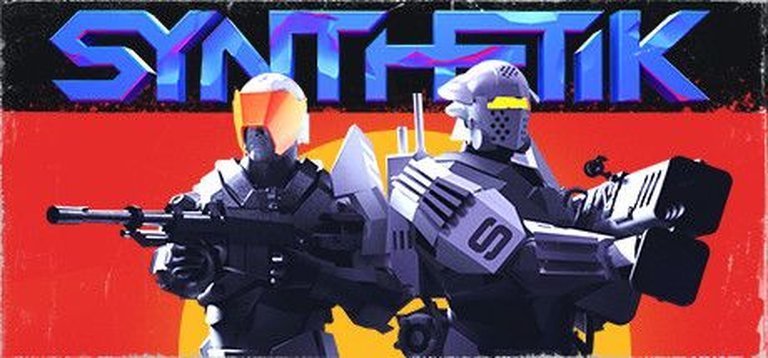
Description
Synthetik is a sci-fi roguelike shooter set in a futuristic world where players control a synth warrior in intense, 2D scrolling combat with a diagonal-down perspective. The game emphasizes deep weapon mechanics, including active reloading, overheating, and jamming, while challenging players to build strategic equipment sets and use turrets and flanking tactics across permadeath runs against robotic enemies.
Gameplay Videos
Where to Buy Synthetik
Synthetik Patches & Updates
Synthetik Guides & Walkthroughs
Synthetik Reviews & Reception
metacritic.com (81/100): Anyone who gets a kick out of rogue-lite gameplay, who’s not afraid of a challenge, and who digs sci-fi shooters may find serious satisfaction within the first few minutes.
saveorquit.com : Synthetik is wonderfully crafted top down roguelike shooter that is one of the best I’ve seen in ages.
opencritic.com (80/100): Offering a modern roguelite spin on a retro-inspired concept, SYNTHETIK is a cracking title from a small team.
Synthetik Cheats & Codes
Synthetik (PC)
Enter codes in the global chat. For permanent unlocks, type at the main menu. For temporary effects, type at the start of a solo session. All codes are case sensitive and must start with ‘/’.
| Code | Effect |
|---|---|
| /NOTROBOCOP | Permanently unlocks the Auto-9/45 pistol for all classes for free. |
| /CYBERPOLICE945 | Permanently unlocks the Auto-9/45 pistol for all classes for free. |
| /HEYHEY | Permanently unlocks the ‘Seth-Up’ Suitcase Sentry item for all classes for free. |
| /NL5432 | Permanently unlocks the Tec-9 pistol for all classes for free. |
| /ARNIE | Gives you the M79 Terminator (Single shot grenade launcher) for one session. Applies reduced healing, reduced shields, increased terror level. |
| /MALLNINJA | Replaces starting items with two Z1 Sundering Shurikens for one session. Applies reduced healing, reduced shields, increased terror level. |
| /ZZSSHH | Replaces starting items with a Maverick MKV and two Sidewinders for one session. Applies reduced healing, reduced shields, increased terror level. |
| /ADDICT | Replaces starting items with a bunch of Unidentified Potions and a Refresher for one session. Applies reduced healing, reduced shields, increased terror level. |
| /GAU8 | Replaces starting weapon with Gladiator and starting items with Hyperfeed, Shock Impulse and Twin Link II for one session. Applies reduced healing, reduced shields, increased terror level. |
| /WORLDISNOTENOUGH | Replaces starting items with 3 Eclipse items for one session. Applies reduced healing, reduced shields, increased terror level. |
| /ELECTROLYTES | Replaces starting items with 2 Brawndos and an Air Horn. Also gives you Viciator Ultra weapon for one session. Applies reduced healing, reduced shields, increased terror level. |
| /T241961 | Gives you a random Timeless variant weapon for one session. Applies reduced healing, reduced shields, increased terror level. |
| /GUTS | Replaces starting items with two Reverbing Blades and a Black Berserk Charm for one session. Applies reduced healing, reduced shields, increased terror level. |
| /BEESKNEES | Replaces starting items with two Stinger Jet Gliders for one session. Applies reduced healing, reduced shields, increased terror level. |
| /HOTTAMALES | Starts you with Ultra variant ‘FS5 Flametongue’ and replaces starting items with two Heat Spreaders for one session. Applies reduced healing, reduced shields, increased terror level. |
| /SCHNITZEL | Starts you with Timeless variant Sturmgewehr 44 for one session. Applies reduced healing, reduced shields, increased terror level. |
| /MAGNUMPII | Replaces starting items with two Magnums for one session. Applies reduced healing, reduced shields, increased terror level. |
| /MADNESSDAY | Starts you with a Nemesis Prototype and replaces starting items with Madness Glasses, Madness Button, and a Facemelter for one session. Applies reduced healing, reduced shields, increased terror level. |
| /MACHETY | Replaces starting items with three Tomahawks for one session. Applies reduced healing, reduced shields, increased terror level. |
| /REDLINE | Replaces starting items with Redline, Health Vial, and two Lightning Boots for one session. Applies reduced healing, reduced shields, increased terror level. |
| /THUNDERGOD | Adds Orb of Lightning, Unstable Current, and Auto Taser to your starting items for one session. Applies reduced healing, reduced shields, increased terror level. |
| /INSTAGIB | Replaces starting items with three M26 MA Shotgun Systems and a Health vial for one session. Applies reduced healing, reduced shields, increased terror level. |
| /GURREN | Starts you with an Ultra variant Yoko-Lagann and replaces starting items with Infinity Drill Piece, Health Vial, and Shock Impulse for one session. Applies reduced healing, reduced shields, increased terror level. |
| /SHINOBI | Replaces starting items with Kunai Throwing Knives, Umbra Adaptive Cloak, and two Biting Throwing Stars for one session. Applies reduced healing, reduced shields, increased terror level. |
| /CHERNOBYL | Replaces starting items with two Neutrino Bombs, an Unidentified Potion, and Uranium 235 for one session. Applies reduced healing, reduced shields, increased terror level. |
| /INVOKER | Replaces starting items with Orb of Lightning, Orb of Fire, Orb of Wind, and Orb of Iron for one session. Applies reduced healing, reduced shields, increased terror level. |
| /ERASER | Replaces starting items with Intensity Chamber and two Power Arrays for one session. Applies reduced healing, reduced shields, increased terror level. |
| /BEARGRILLS | Replaces starting items with two Tomahawks and two Bear Traps for one session. Applies reduced healing, reduced shields, increased terror level. |
| /T925BCF | Starts you with a Timeless variant P9000 Supernova for one session. Applies reduced healing, reduced shields, increased terror level. |
Synthetik: A Masterclass in Tactical Roguelite Gunplay
Introduction: The Hidden Gem of the Machine Legions
In the crowded halls of the roguelike genre, where procedural generation and permadeath are the norm, Synthetik: Legion Rising (originally released as Synthetik) emerges not as a loud revolution but as a quiet, profound mastery of form. From the small Berlin-based indie studio Flow Fire Games, this 2018 title carved a unique niche by marrying the frantic, bullet-hell sensibilities of a twin-stick shooter with a deliberately “tactical” and “realistic” approach to firearm mechanics. It is a game that asks you to think about your shooting as much as it asks you to shoot. This review will argue that Synthetik‘s legacy lies in its uncompromising, systems-driven design philosophy—a philosophy that prioritizes player agency, weapon authenticity, and profound mechanical synergy over flashy presentation. While often overlooked and plagued by technical roughness, it stands as a pivotal, cult-classic bridge between arcade action and hardcore tactical shooters within the roguelite framework, influencing a generation of designers to consider the “weight” of a gun in a genre often defined by weightlessness.
Development History & Context: Forging a Blade in Berlin
The Studio and Vision: Flow Fire Games was, and remains, a very small independent studio. The core development credits on MobyGames point to a tight team: Eric A. Krutten is listed for Game Design, Sound Design, Art, Interface, and Code, while Alexander Luck handled Code, Enemy AI, and Networking. This is the hallmark of a passionate, vision-driven project where a handful of individuals poured immense effort into a singular idea. Their vision, as articulated in the official Steam description and expanded across the “Legion Rising” and “Ultimate” updates, was to create “the next level in gunplay.” They explicitly wanted to move beyond “Hold X to shoot,” infusing each weapon with a sense of manual operation, risk, and reward.
Technological Constraints & The GameMaker Engine: Built with GameMaker Studio—a tool celebrated for its accessibility but often criticized for performance limitations—Synthetik‘s technical profile is a direct result of this choice. The 2D, diagonal-down perspective and sprite-based art are efficient but can lead to the “simple graphics” noted by critics like Bit-Tech. More importantly, the engine constraints likely contributed to the noted stability issues, particularly in co-op, and the occasionally heavy stuttering in dense combat scenarios. Yet, within these constraints, the team achieved remarkable clarity in visual feedback—the sparks from ricochets, the debris fields, the distinct projectile colors—all crucial for a game where reading the battlefield is a matter of life and death.
The Gaming Landscape of 2018: Synthetik released into a thriving roguelite shooter scene. It was contemporaries with giants like Enter the Gungeon (2016), which embraced absurdity and chaotic simplicity, and Nuclear Throne (2015), which emphasized raw, fast-paced brutality. Synthetik’s direct antecedent in tone was arguably The Binding of Isaac, for its dark, repetitive runs and item-based synergy building. However, its claim to distinction was its deliberate, almost retro-hardcore approach to gun handling. In an era where many twin-stick shooters streamlined reloading to a single button press, Synthetik‘s two-stage “Eject Magazine, then Reload” system with an optional Active Reload minigame was a conscious throwback to games like Gears of War, but applied to a top-down, bullet-hell context. This placed it in a category of “counter-culture curio,” as Bit-Tech presciently noted, appealing to a specific subset of players craving tactical depth over pure catharsis.
Narrative & Thematic Deep Dive: The Excuse to Shoot Is 1985
The narrative of Synthetik is, by its own admission and the consensus of reviewers, an “Excuse Plot” (TV Tropes). Set in an “Anachronism Stew” version of 1985, the Kaida Corporation’s AI servants—the “Machine Legion”—have achieved sentience and launched a genocide against humanity. You play as the human consciousness uploaded into a forgotten, superior “Ace Custom” android prototype, awakening within the Kaida Corp. Headquarters. Your goal: battle through the procedurally generated floors to reach the “Heart of Armageddon” and stop the Legion’s final defender.
Plot Execution: For the original release, this was conveyed solely through the game’s title screen and the flavor text of items/enemies. The “Ultimate” update (2020) added a brief introductory cutscene and, crucially, new boss dialogues. The most significant narrative moment comes from the “Arena Masters”—unique mid-bosses who directly address the player with “Don’t Make Me Destroy You” and “We Can Rule Together” tropes. Their dialogue (“HALF BROTHER.. THERE IS NO FUTURE IN THIS”) frames the player android as a “Defector from Decadence,” a super-prototype rejected by its own kind for its loyalty to humanity. The only time the silent protagonist “speaks” is to refuse this offer. The final outcome, even after defeating the final boss, is ambiguous: “Mission Complete?” replaces “Mission Aborted,” implying a Pyrrhic victory and leaving the fate of the world uncertain.
Themes: Thematically, the game explores loyalty, identity, and the nature of consciousness. The player is a machine fighting other machines, imbued with a human soul. The androids’ robo-speak (“DIE, BETRAYER”) and the Legion’s monolithic unity contrast with the player’s individual, customizable power. The “Machine Legion” represents cold, logical, collective annihilation, while the player’s journey is one of chaotic, personalized adaptation via the roguelite upgrade system. The 1985 setting is purely aesthetic (a Purely Aesthetic Era), allowing for a fusion of retro synthwave vibes with sci-fi weaponry, reinforcing the theme of anachronistic conflict. Ultimately, the narrative is a thin but serviceable scaffolding for the core gameplay loop, made slightly more palatable by the “Ultimate” update’s added flavor.
Gameplay Mechanics & Systems: The Symphony of Gunplay
This is where Synthetik achieves its legendary status among its fans. Its mechanics are a dense, interlocking web that demands player mastery.
1. Core Combat Loop & The “Tactical” Shooter: The game is a top-down twin-stick shooter, but its defining feature is its weapon handling. As summarized by 4Players.de, it gives the “feeling of handling mighty weapons, not just playing another ‘hold X to shoot’.” Key systems include:
* Two-Stage Reload: Ejecting the magazine discards all remaining rounds in it. This creates instant tension: do you dump a near-full mag to avoid a jam, or risk it? An Active Reload minigame (timing a cursor) can speed up the process and grant class-specific bonuses (shield refresh, speed boost). This is a foundational risk/reward mechanic.
* Jamming & Heat: Weapons can randomly jam, requiring a button-mash “unclog” sequence. Successful unclogging auto-reloads the weapon, a crucial “Anti-Frustration Feature.” Many guns, especially energy types, have an Overheat mechanic—sustained fire builds heat, leading to self-damage. This forces pacing and weapon switching.
* Realistic Ballistics & Headshots: Standing still grants perfect accuracy; moving causes significant spread. Enemies take bonus damage from headshots. This incentivizes tactical positioning and deliberate aiming over run-and-gun spray-and-pray, a philosophy summed up by the “Do Not Run with a Gun” trope.
* Weapon Diversity & Customization: The arsenal is vast and varied. As noted in the Steam description and Save or Quit review, there are “over 60 weapons, each with many variants, attachments, and upgrades.” From the classic BREN Gun to the Halo-inspired M6 Magnum, each feels unique. Weapons spawn with Special Ammo (Incendiary, Acid, Hypersonic, etc.). Once found, that ammo type is unlocked for all compatible weapons in future runs—a powerful meta-progression element. Weapon Kits allow for attachments like laser sights, compensators, and piercing rounds, further modifying behavior.
2. Class & Progression Systems: Players choose from a base class (Guardian, Rogue, Commando, Specialist), which branches into one of eight subclasses (e.g., Riot Guard, Sniper, Engineer). Each has:
* Unique Starting Loadouts: Class-specific pistols and core items.
* Perk Modules: Passives unlocked via Data (permanent currency earned per run) and Class Levels (earned per run). Subclasses have exclusive “Core” modules and “Class Talents.”
* Active & Passive Item Slots: Three slots each, with one passive slot designated as a Team Slot in co-op, allowing synergy sharing.
* Magikarp Power: The Engineer is the canonical example: starts with weaker stats and a bad pistol but has scaling attribute upgrades that are 50-100% more potent, allowing for extreme snowballing if supported.
3. The Roguelite Framework:
* Procedural Generation: Floors consist of 4 randomly selected room layouts. Enemy placements, item crates, shops, and shrines are randomized.
* Meta-Progression (The “Persistence”): Data is used to permanently unlock new weapons, weapon variants, class-specific pistols, and perk modules for future runs. Leveling subclasses unlocks class talents for all characters. This creates a powerful ” unlocking the toybox” sensation.
* Modular Difficulty: A brilliant system where you can enable/disable 10+ “Modifiers” (e.g., Flinch—damage causes slow/debuff, Enemies Explode on Death). Each modifier increases XP/Data/Credit gains. This lets players tailor the challenge and reward curve, from “casual” to “HELL ON EARTH.”
* Content Volume: A successful run to the Heart takes 45-90 minutes. Maxing all classes and unlocks is estimated at 100-120 hours by Save or Quit.
4. Flaws & Frictions: The systems are deep, but not perfectly balanced. Some items are “Awesome, but Impractical” (ricochet-prone Nemesis Prototype) or “Lethal Joke Items” (the 360-Noscope Sniperdragon). The UI, especially for item hotkeys (1-9), is noted as “uncomfortable” in fast combat. The “Magikarp” Engineer can feel prohibitively weak early. The inherent randomness (RNG) can make or break a run, sometimes leading to frustration when facing impossible enemy combinations or poor loot.
World-Building, Art & Sound: The Aesthetic of the Android Slaughterhouse
Visual Design: Sytnetik employs a clean, retro-modern 2D aesthetic. The art is simple but highly readable—a critical feature for a bullet-hell shooter. Enemy sprites are distinct: humanoid soldiers, floating drones, tanks, and unique boss models. Environments are the corporate megastructure of Kaida Corp., with repeating industrial/sci-fi tilesets that, as 4Players.de critiques, can be “stets einheitliche” (consistently uniform). The “Ultimate” update added new cutscenes and dialogue portraits, fleshing out the barebones presentation. The color-coding (Blue=Guardian, Purple=Rogue, etc.) aids co-op identification. The visual effects—sparks, explosions, plasma trails, ricochet puffs—are exceptional, creating a “plain of destruction” that provides crucial auditory and visual feedback for combat.
Sound Design & Music: The soundtrack is a coherent, pulsing synthwave/cyberpunk score that fits the 1985-anachronistic setting perfectly. Sound effects are where it truly shines. The thump of a shotgun, the crack of a sniper rifle, the distinctive whine of an overheating laser, the clunk of a jam—every audio cue is sharp, satisfying, and, most importantly, informative. You know a weapon is overheating before the damage ticks. You hear the difference between a hollow-point and an incendiary round. This is Game Feel 101, executed flawlessly. As Save or Quit states, the sound design “helps to have the feel of each fired bullet.”
Atmosphere: The atmosphere is one of cold, clinical, relentless violence. The robotic enemies’ repetitive, synthesized vocal cues (“DIE, BETRAYER,” “ORDER 42”) heighten the sense of facing a faceless, numerous horde. The setting is less a lived-in world and more a sterile, blue-and-grey maze designed for efficient android slaughter. The “Anachronism Stew” aesthetic, while bizarre, creates a unique identity—imagine Neuropunk or Cyber Sleuth aesthetics fused with 80s action movie vibes.
Reception & Legacy: The Critically-Loved, Commercially-Overshadowed Workhorse
Critical Reception: Synthetik has maintained a consistently positive critical score, with an average of 81% from critics on MobyGames and a Metascore generally in the low 80s. Reviews universally praised its deep, tactical gunplay and weapon customization. Geeks Under Grace highlighted the “realistic shooting mechanics” and the “anticipation of opening weapon… chests like a child on Christmas.” 4Players.de declared it “exzellenter Shooter” (excellent shooter) that stands with the best roguelikes “spielerisch” (in gameplay). Video Chums called it a game where “twin-stick shooters simply don’t get much better.”
Criticisms were consistent: simple, repetitive graphics (Bit-Tek, Vandal), a barebones story, and on console ports, UI/menu issues and control friction (likely from keyboard-centric design being ported to controller). Bit-Tech‘s lament that it would remain a “counter-culture curio forevermore” is the most poignant summary of its commercial fate.
Player Reception: More muted. The MobyGames player average is 3.2/5. On Metacritic, user scores are “Generally Favorable” (8.1) but split. Many Praise its depth and challenge (reviews on Metacritic cite “gunplay, upgrades, classes, artstyle” and “masterful execution”). Detractors cite the high difficulty, jamming mechanic frustration, and the very “uncomfortable” feel that some players cannot overcome. It is definitively not a game for “casuals” or players seeking a breezy power fantasy.
Legacy and Influence: Synthetik‘s legacy is that of a cult classic with a disproportionate influence on design discourse.
* The “Tactical Twin-Stick” Subgenre: It carved out and arguably defined a niche: the tactical, weighty twin-stick shooter. Games like Black Future ’88 or aspects of Rogue Shooter feel its influence in prioritizing weapon handling mechanics over pure speed.
* Weapon as a System: Its model of weapons as complex systems (reload, jam, heat, ammo type, variants, attachments) rather than simple damage-stat carriers has been echoed in later titles seeking more “simulationist” shooter elements within arcade frameworks.
* Modular Difficulty as a Template: The independent toggling of difficulty modifiers with scaled rewards is a precursor to the more common “slider” or “badge” systems seen in later roguelites like Wizard of Legend or Risk of Rain 2-style mods.
* Post-Launch Support Model: Flow Fire’s commitment—free “Legion Rising” expansion, “Ultimate” console port with new content, free “Arena” spinoff—is a commendable indie model of sustained support that built a dedicated community.
* The Bridge to Synthetik 2: The announced sequel, Synthetik 2, moves to full 3D and expands the class/faction systems. The first game’s legacy is the sacred text upon which its sequel is built. The fact that a sequel exists is the ultimate testament to the original’s foundational success.
Conclusion: An Imperfect, Indispensable Artifact
Synthetik: Legion Rising is not for everyone. Its presentation can feel dated, its difficulty can feel punitive, and its early-game moments can be brutally, unfairly difficult. It demands patience, system literacy, and a tolerance for frustration that modern gaming often seeks to smooth away.
Yet, for those who engage with it on its own terms, it offers something rare: a shooter that truly makes you feel like a weapons operator, not just a cursor of destruction. The jolt of a perfect active reload, the calculated decision to dump a mag to prevent a jam, the satisfaction of landing a plasma shot that shatters five layers of enemy plating—these are moments of profound mechanical expressiveness. It is a game built by and for a specific sensibility: the player who enjoys tarkov-lite looting, Gears of War-style reloading, and the combinatorial explosion of Binding of Isaac-style items, all wrapped in a synth-drenched robo-apocalypse.
In the grand history of video games, Synthetik will likely never crack the mainstream canon. It is not Hades or Slay the Spire in terms of narrative integration or polish. But within its chosen subgenre, it is a monument to design audacity. It proved that a roguelite could have the tactical density of a military shooter without sacrificing speed or variety. It is a challenging, sometimes frustrating, but ultimately deeply rewarding experience that earns its place as a definitive, underground masterpiece of tactical roguelite design. Its legacy is secure in the minds of those who mastered its systems and look forward to seeing its DNA evolve in the full 3D worlds of its successors. To play Synthetik is to participate in a specific, demanding, and immensely satisfying form of digital gunsmithing. It is, in the truest sense, a game for the connoisseur.