
- Release Year: 1996
- Platforms: Antstream, Browser, Genesis, Windows
- Publisher: Chuanpu Technologies, Piko Interactive LLC
- Developer: Chuanpu Technologies
- Genre: Role-playing
- Perspective: Top-down
- Game Mode: Single-player
- Gameplay: Open World, Turn-based combat
- Setting: Fantasy, Post-apocalyptic, Sci-fi
- Average Score: 71/100
Description
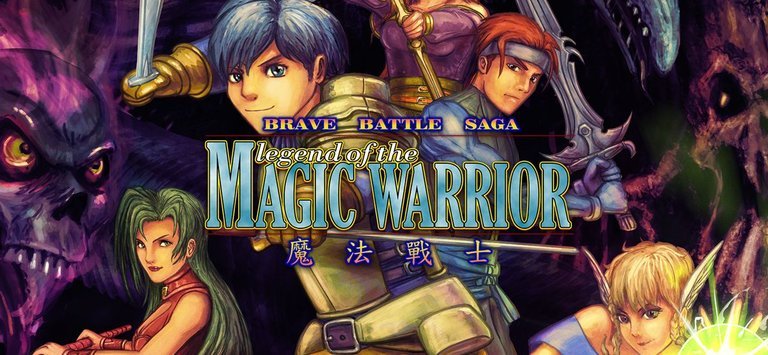
Brave Battle Saga is a traditional Japanese-style RPG featuring an Active Time Battle (ATB) system and an open, continuous world reminiscent of Secret of Mana. Set in a post-technological fantasy society millennia after a cataclysm caused by advanced weaponry, the story follows protagonist Tim who accidentally uncovers ancient technology and must rally allies to prevent an evil empire from reactivating these world-ending devices, weaving together elements of magic, sci-fi, and forgotten history.
Gameplay Videos
Where to Buy Brave Battle Saga
PC
Brave Battle Saga Free Download
Brave Battle Saga Mods
Brave Battle Saga Guides & Walkthroughs
Brave Battle Saga Reviews & Reception
familyfriendlygaming.com (71/100): Brave Battle Saga proves that retro style video games can be enjoyed decades later.
Brave Battle Saga Cheats & Codes
PC Version (Steam/Emulated)
Start the game and let introduction cutscenes play. At the logo screen, press the button sequence to activate the cheat.
| Code | Effect |
|---|---|
| Up, Down, Left, Right, A | Start at level 99 with all stats at 99 or 999 |
Brave Battle Saga: The Cursed Prince of 16-Bbit Imitation – A Definitive Historical Review
Introduction: A Phantom from the Far East
In the vast, crowded museum of 16-bit role-playing games, certain titles glow with the polished sheen of classic status—Chrono Trigger, Final Fantasy VI, Breath of Fire II. Others exist in the shadows, fascinating curiosities known only to hardcore archivists and underground preservationists. Brave Battle Saga (1996) is one such phantom. Originally released exclusively in Taiwan as Barver Battle Saga: Tai Kong Zhan Shi – Mo Fa Zhan Shi (“Space Warrior: Magic Warrior”), this unlicensed Sega Genesis title is a fascinating, frustrating, and fundamentally derivative artifact. It is a game built in the unmistakable, almost worshipful image of Square and Capcom’s mid-90s JRPG titans, yet through a curious cocktail of sincere homage, technological limitation, and inexplicable design choices, it carves out a niche all its own. My thesis is this: Brave Battle Saga is not a “bad” game in the traditional sense, nor is it a lost masterpiece. It is a profound historical document—a time capsule of a specific regional game development scene (Taiwanese homebrew/Megadrive-focused studios) at the end of the 16-bit era, revealing exactly what creators perceived as the essential components of a “proper” JRPG, and in doing so, exposing both the genre’s codified strengths and its most glaring, easily-copied weaknesses. Its legacy is not one of influence on major studios, but of a passionate, flawed love letter that found its true audience only decades later through fan translation and niche retro publisher Piko Interactive.
Development History & Context: The Unlicensed Underground
Brave Battle Saga was developed by Chuanpu Technologies (also rendered as Chuanpu, Ka Sheng), a Taiwanese studio operating in the vibrant, lawless, and creative space of unlicensed Sega Genesis/Mega Drive development. The mid-90s saw a thriving market in East Asia for unlicensed cartridges, often featuring games that riffed on popular franchises or simply filled gaps in the console’s library. The Genesis, with its accessible hardware and robust homebrew scene, was a prime target.
The technological constraints were the same as those faced by licensed developers: a 16-bit CPU (Motorola 68000), limited RAM, and the need for efficient sprite and tile management. However, unlicensed teams often lacked the formal tools, libraries, and optimization expertise of giants like Square or Capcom. This explains Brave Battle Saga’s most glaring visual trait: a heavy reliance on slightly altered borrowed spritework. As noted in the source material, the game utilizes “original and slightly altered borrowed spritework from various sources.” This was a common practice in the bootleg scene—editing existing assets to avoid direct copyright infringement while mimicking the aesthetic of beloved games. The result is a visual style that feels both comforting and “off,” like a dream where all the familiar details are just a little wrong.
The gaming landscape of 1996 was one of transition. The SNES and Genesis were in their twilight, with the PlayStation and Saturn ascendant. In the West, the 16-bit RPG was a sacred cow, with a devoted but shrinking retail presence. In regions like Taiwan, however, the Mega Drive remained incredibly popular, and the demand for local, Chinese-language RPGs was strong. Brave Battle Saga was a product of this specific moment: a last-gasp, homegrown attempt to capture the magic of the genre’s peak (1991-1995) using the tools and tastes of the era, aimed at a local audience starved for that specific experience.
Narrative & Thematic Deep Dive: A By-the-Numbers Apocalypse
The plot of Brave Battle Saga is a masterclass in conventionality, a checklist of JRPG tropes so dense it becomes a meta-commentary on the genre. The setting is a post-technological fantasy world. Millennia ago, a schism occurred: humanity embraced technology, demons embraced magic. Technology won, leading to a cataclysm—a “superweapon” called Babil (a clear nod to Final Fantasy‘s Babel, and later FFVII‘s Shinra building/Weapon tropes) destroyed the world. The survivors, both human and demon, sealed Babil using four elemental keys, dividing them among four human kingdoms. A thousand years of peace pass.
The plot kicks off when the protagonist, Tim, a seemingly ordinary youth, accidentally uncovers a cache of ancient technology. This immediately draws the attention of the Zak Empire, an evil empire (of course), who are seeking the four keys to reactivate Babil and achieve global domination. Thus, the classic “save the world from a megalomaniacal empire seeking an ancient superweapon” narrative is set in motion.
Character archetypes are deployed with precision:
* Tim: The reluctant hero (spearheaded by a dagger—an “Heroes Prefer Swords” aversion).
* Supporting cast: Includes a runaway princess, a stoic warrior (Ray, the swordsman), and presumably other stock characters (the “magic user,” the “healer”).
* The Antagonists: The Zak Empire, led by a mustache-twirling commander, seeking Babil—a literal Kill Sat-in-waiting (though “merely” an orbital weapon that fires beams of destruction).
Themes are shouted rather than explored: the dangers of unchecked technological progress, the fragility of peace, and the cyclical nature of history (“the mistakes of the past seem fated to repeat”). The integration of fantasy (demons, elemental temples) and sci-fi (ancient tech, orbital weapons) is direct and unsubtle, lacking the nuanced synthesis of, say, Xenogears or Shadow Hearts. It’s a surface-level blend, perfect for a plot that moves from one plot-mandated location to the next with little room for character development or philosophical depth. The story is not the vehicle; the tropes are the destination.
Gameplay Mechanics & Systems: Competent, Constrained, and Strangely Linear
The game’s design philosophy is clear: emulate the successful formulas of the early-to-mid 90s.
Battle System: The centerpiece is an Active Time Battle (ATB) system, explicitly “modelled after Final Fantasy and Breath of Fire.” This means a time gauge fills for each combatant (ally and enemy), and once full, they can select an action (attack, magic, item, flee). The implementation is noted as having no automatic wait function (except when in menus), which can create pressure. However, as a Steam community user who completed the game noted, it “never gets too hectic or too difficult” provided grinding is done. This points to a system that is functional but rigid. There is no innovation here—no FFV Job System, no Breath of Fire’s dragon transformations—just straightforward ATB.
Spell/Ability Acquisition: The magic system offers a slight, curious twist. Spells can be equipped to any character, and multiples can be purchased to give to different party members. This is described as a “simpler version of Final Fantasy VII‘s materia system.” It’s a resource-management layer that allows for basic customization but lacks Materia’s fusion mechanics or growth. It’s a hint of depth that remains purely logistical.
World Structure & The Fatal Flaw: Here lies the game’s most criticized, defining flaw. While MobyGames claims it has “an open, continuous game world similar to Secret of Mana,” this is profoundly misleading. The Lunatic Obscurity blog review delivers the damning truth: it is “one of the most linear RPGs I’ve ever played.” You are “totally unable to do anything or go anywhere except straight forward to the next plot destination.” This antithesis of “open world” creates immense frustration because the game arbitrarily blocks advancement until you have “spoken to the right people in the right order.” This is not non-linear exploration; it is a locked corridor where the keys are NPCs in specific towns. The “open” world is an illusion. You cannot backtrack freely to revisit areas for secrets or grinding without triggering a game-over “you can’t go that way” barrier. This fundamental design choice betrays a misunderstanding of what made Secret of Mana or Final Fantasy‘s world maps feel alive: player-directed agency and the joy of stumbling upon optional content.
Progression & Grinding: Standard RPG progression via leveling up and equipment purchases. Grinding is explicitly necessary and encouraged (“battle as often as possible”), fitting its 1996 Genesis-era design. The User Interface is straightforward menu-driven, copying the layout sensibilities of its inspirations.
World-Building, Art & Sound: The Best-Looking Imitator in the Pen
This is Brave Battle Saga’s strongest suit. For an unlicensed title, its visual production values are unusually high.
* Art Style & Sprites: The game employs a detailed anime/manga aesthetic. The heavily borrowed sprite work, while derivative, is animated and plentiful. Environmental tilesets are varied (forests, deserts, towns) and colorful for the Genesis’s limited palette. Character sprites in battle are reasonably large and animated. The blog notes it’s “probably one of the better-looking RPGs on the Mega Drive, probably down to trying to copy the kind of highly-detailed spritework seen in Square’s SNES RPGs.” It achieves the look of a Square RPG, even if it lacks their unique identity.
* World Design: The world map is top-down and scrolling, but its linearity (as discussed) drains it of atmosphere. Locations feel like sequential sets rather than a cohesive world.
* Sound Design: The music is consistently praised. It ranges from peppy overworld themes to more dramatic battle tunes. It’s original, melodic, and effectively evokes the heroic/fantasy moods of its inspirations. The sound effects are serviceable but generic. The audio is a clear strength, avoiding the often-atrocious soundscapes of many unlicensed games.
The atmosphere is one of competent pastiche. You feel like you’re playing a Final Fantasy game from 1994, but one where all the little details that made those worlds unique (the subtle environmental storytelling, the character portrait expressiveness in dialogue) are absent or simplified. It’s a skin-deep world.
Reception & Legacy: From Russian Bootleg to Steam Curiosity
Contemporary Reception (1996): As a Taiwan-exclusive unlicensed release, critical reception was virtually non-existent in Western press. Its primary audience was local Taiwanese/Mandarin-speaking players. There is no data on commercial success, but its obscurity suggests modest, regional sales only.
Post-Release Obscurity & Bootleg History: The game would have faded into absolute oblivion were it not for the Russian bootleg scene. It received a infamous bootleg release in Russia titled Final Fantasy. As the source material states, this translation was “typical…with a lot of misspelled words and character names, as well as sentences which can make no sense at all.” It was also “riddled with slowdowns and bugs,” later fixed by a ROM hacking team. This bizarre second life—masquerading as the world’s most popular RPG—is a fascinating footnote in bootleg culture, demonstrating how games were repackaged and mis-sold to unsuspecting consumers.
Fan Translation & Rediscovery (2010): The first proper English fan translation patch emerged in 2010, after years of beta releases fixing translation bugs. This patch was crucial. It allowed Western audiences to finally understand the game’s derivative plot and evaluate its mechanics. The Lunatic Obscurity review (2016) is a product of this era—a critical assessment by someone experiencing the game through the fan patch.
Piko Interactive Revival (2018-Present): The game’s modern legacy is secured by Piko Interactive, a publisher specializing in licensing and re-releasing obscure retro titles. They acquired the rights, used the fan translation, and released Brave Battle Saga: The Legend of the Magic Warrior on Steam (2018), GOG.com, and later Antstream, Browser, and physical Evercade/Genesis cartridges. This legitimized the title, moving it from ROM-hack obscurity to an official commercial product on modern storefronts. The Steam community discussion confirms its legitimacy and provides anecdotal playtime estimates (20+ hours).
Critical Consensus (Modern): The fragmented modern reviews coalesce around a consistent theme:
1. It is not original: It is a clear, unfiltered copy of early-to-mid 90s JRPG conventions.
2. It is visually impressive for an unlicensed Genesis game.
3. Its gameplay is fundamentally flawed by extreme linearity and arbitrary progression blocks.
4. Its music is a highlight.
5. Its value is purely as a historical curiosity or for completists who have exhausted the classics.
The Family Friendly Gaming review (score 71/100) embodies this nuanced take: acknowledging its retro charm, graphics, and music, while noting its odd story, lack of attire/enticement (content warnings), and the era’s required grinding. The Lunatic Obscurity verdict is harsher: “not very interesting to play…way too linear…isn’t a single original thing about it, aesthetically, narratively or mechanically.”
Influence: Its influence on the industry is nil. It did not inspire Western or major Japanese developers. Its influence is purely preservational and cultural within the niche of unlicensed game history and retro revival publishing. It serves as a perfect case study of how JRPG tropes were perceived and replicated by overseas developers in the late 16-bit era.
Conclusion: A Flawed Time Capsule, Not a Lost Treasure
Brave Battle Saga is not the hidden gem its translucent, pastiche presentation might hope to be. It is, instead, a brutally honest mirror held up to the JRPG genre at its most formulaic. Every one of its elements—the ancient superweapon, the four elemental temples, the ATB system, the linear “talk-to-everyone” progression—was a solved problem, a box to be checked. Chuanpu Technologies checked those boxes with competent technical skill (for an unlicensed team) and a clear eye for the aesthetics of its heroes, but with none of the directorial vision, narrative ambition, or willingness to innovate that defines true classics.
Its redemption—and the reason it earns this detailed historical review—lies entirely in its context. As a document of Taiwanese 16-bit development, it is invaluable. Its journey from a regional bootleg to a Russian mislabeled pirate copy, to a fan-translated curiosity, and finally to an officially re-released product by Piko Interactive, tells the entire story of game preservation in the internet age. It is a game that was almost completely lost, saved by the dedication of ROM hackers and the business acumen of a niche retro publisher.
For the historian, Brave Battle Saga is essential. For the player seeking a new classic to love, it is a frustrating, derivative, and often-boring experience. Its final, definitive verdict is this: it is a competently constructed imitation that forgot to add a soul, and whose sole lasting contribution is to stand as a stark, high-definition reminder of exactly what made the games it copied so irreplaceable.
Score: 60/100 – A historical curiosity for archivists and genre scholars, but a repetitive and linear slog for everyone else. Its legacy is its existence, not its quality.