
- Release Year: 2014
- Platforms: Windows
- Publisher: Headup Games GmbH & Co. KG, Merge Games Ltd.
- Developer: Digital Furnace Games
- Genre: Action
- Perspective: Side-view
- Game Mode: Single-player
- Gameplay: Air Attacks, Challenge Arenas, Combat, Combos, Double jump, Environmental Hazards, Orb Collection, Platform, Wall Jump, Weapon switching
- Setting: Ancient Japan, Underground
- Average Score: 65/100
Description
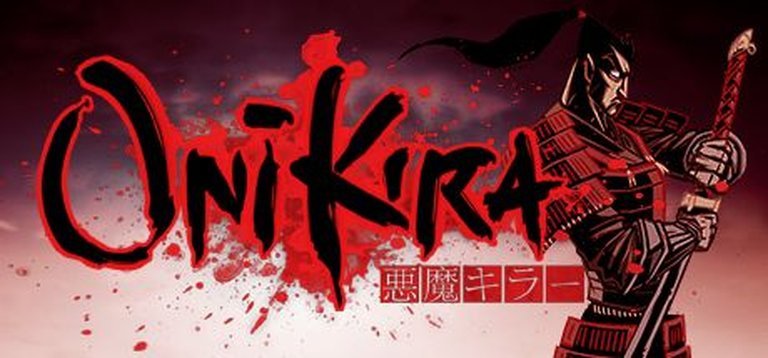
Onikira: Demon Killer is a 2D side-scrolling platform game set in ancient Japan, based on a legend where binding a dragon’s soul grants immense power. The player controls a warrior merged with the last dragon, Mizuchi, in an endless underground battle against the tyrant Emperor Hirumo, who wields underworld magic to dominate both dragons and humans. Gameplay emphasizes combo-based combat with light and heavy attacks, aerial maneuvers, and platforming challenges, supplemented by orb collection for health and upgrades, all presented with a distinctive visual style.
Gameplay Videos
Onikira: Demon Killer Reviews & Reception
metacritic.com (65/100): Onikira has a solid foundation for its combat system, but the rest of the gameplay design feels a little bit dull, and we think developers could have found a way to help the concept reach its full potential.
chalgyr.com : In honesty this must be one of the best tutorial sessions that I have ever done.
honestgamers.com : A killer indie title bogged down by bugs
Onikira: Demon Killer: A Flawed Gem of Ambition and Atmosphere
Introduction: The Allure of the Unrealized Potential
In the crowded landscape of indie 2D action-platformers, few titles from the 2010s promised as intriguing a fusion of styles as Onikira: Demon Killer. Conceived by the Dublin-based Digital Furnace Games, it aimed to transplant the deep, stylish combat systems of 3D classics like Ninja Gaiden and Bayonetta into a side-scrolling, feudal Japanese setting. The result is a game that consistently feels on the verge of transcendence, only to be repeatedly pulled back to earth by a constellation of technical and design shortcomings. This review argues that Onikira is not a failed game, but a profoundly frustrated one—a title whose exceptional core combat, striking visual identity, and ambitious systems design were ultimately undermined by a rushed development cycle, persistent technical instability, and a failure to fully realize its own complex ideas. Its legacy is that of a cautionary tale about the perils of scope and a testament to the talent required to build something truly special.
Development History & Context: Ambitious Roots in a Small Studio
Digital Furnace Games emerged from the Irish indie scene with a clear, audacious goal: to create a 2D action game with the mechanical depth of a 3D spectacle fighter. According to a 2014 interview with Keengamer, the studio was founded around this project, peaking at 11 developers—a sizable team for an indie effort. The vision was born from a desire to fill a perceived gap; as one developer stated, “when we started, there wasn’t really anything like that that you could play.”
This ambition, however, came at a significant cost. The development cycle was turbulent, spanning approximately two and a half years. Crucially, it included one complete artistic overhaul nine months in and a full engine switch. This context is vital for understanding the final product: a game that bears the scars of its own reinvention. The team’s passion is evident in every detail—the hand-painted environments, the weighty and reactive combat animations—but the seams of its difficult birth are equally visible in the unstable code and unbalanced progression.
The choice of a Japanese samurai mythos, rather than local Celtic folklore, was a deliberate move towards what the developers saw as a more universally “mysterious” aesthetic, consciously avoiding themes they felt had become saturated. This decision placed them in direct conversation with a vast lineage of games, from Samurai Shodown to Onimusha, setting an incredibly high bar for tone and style that their resources struggled to meet consistently.
Narrative & Thematic Deep Dive: A Legend压缩 into Text Scrawls
Onikira‘s story is presented entirely through sparse text boxes between levels, a choice that prioritizes gameplay momentum over narrative immersion but significantly undercuts the game’s thematic weight. The premise is a classic mythic struggle: millennia ago, Emperor Hirumo stolen draconic magic from the underworld to achieve tyranny. The last dragon, Mizuchi, bonds her soul to a mortal warrior—the player’s protagonist, Yamazaki Jiro—to challenge this power. The conflict is an “endless battle in the underground,” framing the game as one episode in a cyclical war.
The narrative’s execution is its greatest weakness. The “ancient Japan” setting is purely aesthetic, borrowing no overt elements from Shinto, Buddhist, or historical lore. The characters are archetypes without development: Jiro is a silent vessels of vengeance; Hirumo is a distant, evil emperor; Mizuchi is a plot device. The themes of sacrifice, bound souls, and cyclical conflict are stated but never explored. The text is functional at best, cryptic at worst, and lacks the poetry or gravity such a mythic duel deserves. This narrative minimalist approach might have been a concession to the small team, but it leaves the game’s epic scope feeling strangely hollow, like a skeleton without flesh. The soul of the story—the bond between warrior and dragon—is reduced to a gameplay mechanic (the dragon companion collecting health orbs) rather than an emotional anchor.
Gameplay Mechanics & Systems: A Brilliant, Fractured Core
Here lies Onikira‘s singular triumph and its most profound tragedy. The combat system is a masterclass in potential. Built on a foundation of light and heavy attacks that chain into dozens of stylish combos, it immediately invites mastery. Four distinct weapons—the balanced Katana, the heavy Tetsubo, the long-range Naginata, and the rapid Kama Blades—each unlock a suite of special moves (up to 50 in total, with 100 promised for the full release). Switching weapons on the fly is seamless, encouraging players to adapt their style to enemy types and environmental hazards.
The integration of 2D platforming into combat is the game’s defining innovation. Wall jumps, air dashes, and a grappling hook aren’t just traversal tools; they are integral to the fight. launching an enemy with a heavy attack, wall-jumping above them, and slamming down with a Katana Slam feels dynamically emergent. Environmental awareness is rewarded: slicing pillars to crush foes, knocking enemies into spikes or pits, and navigating crumbling platforms while under assault creates a thrilling, physics-aware ballet of violence.
The Bushido Focus mode (mentioned as a planned core mechanic for the full version, but its implementation in the released state is unclear from sources) was intended to be a heightened state, likely tying into the game’s style-based scoring. The scoring system itself is noteworthy, grading players on Time, Kills, and “Stylish” points, which are maintained by not getting hit—a direct echo of Devil May Cry‘s style rank. This creates a compelling risk/reward loop where defensive perfection fuels offensive spectacle.
However, this brilliant core is buried under layers of frustration. The lack of a mid-level save system—a conscious design choice to “not pander” to casual players, as stated by developers—becomes a punishing ordeal in the game’s lengthy levels. Dying near a boss means replaying a 10-15 minute section, draining all sense of progress and reward. The Soul Shop, where blue orbs are spent on new moves, is a good idea but suffers from unclear pricing and the fact that grinding for souls in difficult, lengthy sections can feel like a chore rather than a reward.
Most damning are the numerous technical and control issues cited in reviews. The Steam user base reports frequent crashes, freezes (especially when selecting levels), and the game “hanging.” The 4Players.de review explicitly states, “Technik!… Von Hängern, Abstürzen bis hin zu Steuerungsmacken funken immer wieder Probleme dazwischen.” (Technology!… From freezes, crashes to control quirks, problems constantly interfere.) These aren’t minor nitpicks; they are fundamental breaks in the play loop that transform a challenging game into an unfair one. The inability to rebind controls, mentioned in Steam forums, is another baffling omission in a game demanding precision.
World-Building, Art & Sound: A Gorgeous, Unstable Stage
Visually, Onikira is a standout. The team’s artists, led by Tom Moore (environments) and Tom Mathews (characters), crafted a stunning hand-painted aesthetic. The backgrounds are a gorgeous mix of fiery, apocalyptic sunsets, rain-drenched villages, and volcanic infernos, with a vibrant, almost painterly palette that contrasts beautifully with the darker, more detailed sprite work of the enemies and protagonist. The animations for the main character are particularly praiseworthy, described as “moving flawlessly” and “realistically” by reviewers, selling the weight and impact of each weapon swing.
The sound design complements this perfectly. The weapon impacts are “amazing,” with distinct, satisfying audio feedback that helps players discern successful hits. The soundtrack is “wonderful” and “upbeat,” capturing the game’s frantic pace. However, like much of the game, it’s buggy; reviewers noted the music would frequently stop or restart upon death, breaking immersion.
The world itself, however, lacks the environmental storytelling and variety to match its beauty. Enemy types are limited (five in the Early Access build), and while they have specific vulnerabilities (e.g., a flying Mempo mask encouraging air combat), their designs and attack patterns become repetitive. The level design incorporates clever platforming challenges—disappearing platforms, spreading fire—but these often feel like afterthoughts amidst the dense enemy clusters. The “seven areas” promise diversity (mountaintops, destroyed cities), but without a cohesive narrative or environmental logic, they feel like a series of beautiful but disconnected arenas. The world of Yomi, the underworld, is referenced but never visually explored beyond soul portals, a missed opportunity to deepen the aesthetic and lore.
Reception & Legacy: Caught Between Promise and Reality
Onikira‘s reception was a study in dichotomy. Critics uniformly acknowledged its exceptional combat foundation but crucified its execution. Metacritic aggregations show a “Mixed or Average” score (55 from critics, 38% positive user reviews on Steam). Brash Games called it “lacklustre” and “designed by an overly controlling parent,” critiquing its punishing design choices. 4Players.de was harsher, stating, “Technik!… kills the fun,” while others like Vandal and Ragequit.gr noted “monotonous gameplay” and “unpolished mechanics” prevented it from reaching its potential.
Commercially, it was a quiet release, surviving on its Steam presence and low price point. Its legacy is therefore one of cult obscurity and poignant “what if.” It is frequently cited in discussions of great indie combat systems that went unrecognized, a ghost in the machine of the beat-’em-up genre. It did not spawn a wave of imitators, likely because its technical instability served as a warning rather than an inspiration. However, for those who discovered it, it remains a beloved, broken masterpiece—a game played not for its story or polish, but for the sheer, unadulterated kinetic joy of its combat when it works.
Its place in history is that of a significant footnote: a game that proved the 2D plane could support the complexity of a 3D spectacle fighter, but also a stark example of how quality assurance, balanced progression, and narrative cohesion are not optional extras. The studio’s subsequent work, including a port to a Chinese console (the Fuze) and discussions of a PS4 version, never materialized into a full sequel or significant patch to address the PC version’s core issues, leaving the game in a perpetually broken state.
Conclusion: The Demon That Remains Unslain
Onikira: Demon Killer is a game of magnificent, haunting contrasts. It features one of the most expressive and satisfying 2D combat systems ever devised, wrapped in a breathtakingly beautiful and artistic presentation. Yet it is shackled by debilitating crashes, a punishing and archaic save system, repetitive level and enemy design, and a narrative so thin it might as well not exist.
It is not a bad game. Its heart, its core mechanical genius, is unmistakable. But it is an incomplete game, a victim of its own ambition and the constraints of indie development. To play Onikira is to witness a constant, tense negotiation between brilliance and brokenness. Every exhilarating, combo-heavy victory is tempered by the fear of a crash. Every moment of awe at a crumbling, fiery backdrop is muted by the monotony of its enemy types.
Ultimately, Onikira: Demon Killer earns its place in history not as a classic, but as a critical artifact. It is the proof of concept that a 2D Bayonetta is not only possible but thrilling. It is also the cautionary tale of how that concept can crumble without the discipline of iterative design, robust engineering, and cohesive world-building. It remains, like its titular demon, a powerful and frustrating force of nature, frozen in a state of beautiful, perpetual conflict. For the historian, it is a must-study case of ambition; for the player, it is a deeply flawed but intermittently glorious experience—a demon that, for all its power, was never quite able to slay its own development dragons.