
- Release Year: 2016
- Platforms: Windows
- Publisher: Reiza Studios Ltda.
- Developer: Reiza Studios Ltda.
- Genre: Driving, Racing
- Perspective: 1st-person
- Game Mode: Single-player
- Setting: South America
Description
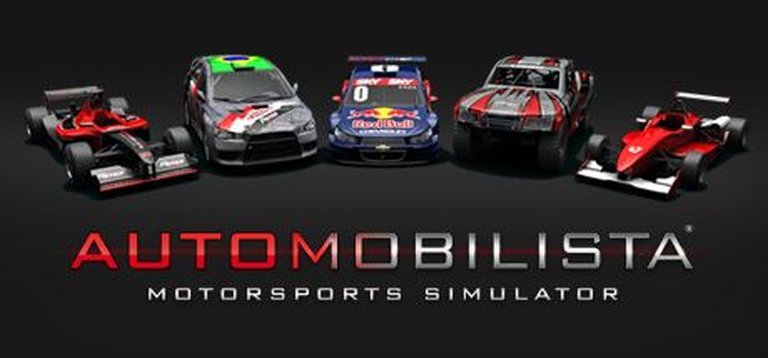
Automobilista is a detailed racing simulation game set in South America, with a primary focus on Brazilian motorsports. As the successor to Stock Car Extreme, it authentically recreates premium Brazilian racing series such as Stock Car V8, Copa Petrobras de Marcas, and Formula 3 Brasil, featuring all cars and tracks from their 2015 championships for an immersive and diverse driving experience.
Where to Buy Automobilista
Automobilista Free Download
Automobilista Mods
Automobilista Guides & Walkthroughs
Automobilista: The Unheralded Titan of Simulation – A Comprehensive Historical Review
Introduction: More Than a Game, a Motorsport Museum
In the crowded pantheon of racing simulators, where franchises like Gran Turismo and Forza dominate the mainstream consciousness and iRacing and rFactor 2 vie for the hardcore sim crown, there exists a quiet, brilliantly idiosyncratic masterpiece from Brazil. Automobilista (often abbreviated AMS), released in 2016 by the plucky Reiza Studios, is not merely a game; it is a meticulously curated门户 to a wildly diverse motorsport universe, anchored in the passionate racing culture of South America but extending its tendrils across every conceivable discipline of car competition. Its thesis is radical in its inclusivity: true simulation fidelity is not found in hyper-focusing on a single series, but in capturing the vast, chaotic, and thrilling spectrum of motorsport, from entry-level karts to 800-horsepower prototypes, from historic Formula 1 machinery to monstrous Brazilian stock cars and even Formula Truck rigs. This review will argue that Automobilista is a landmark achievement in simulation philosophy—a “jack of all trades, master of many”—whose technical ambition, authentic content, and community-driven spirit cement its legacy as one of the most important and underrated racing sims of the 2010s.
Development History & Context: From Stock Car Extreme to a Crowdfunding Triumph
The Reiza Studios Vision: Automobilista is the direct evolution of Reiza Studios’ 2013 title, Stock Car Extreme (SCE). Led by Renato Simioni, the Brazilian developer built its reputation on an uncompromising simulation of the Stock Car V8 series, Brazil’s wildly popular touring car championship. SCE was praised for its raw, physics-focused handling and authentic representation of a series largely unknown outside South America. The transition to Automobilista represented a monumental leap in scope and technology, driven by both internal ambition and external community support.
The SimRacing Bonanza & Technological Leap: A pivotal moment was the SimRacing Bonanza, a crowdfunding campaign integrated into the game’s development. This wasn’t just a pre-order; it was a direct democratic process where backers voted on which cars and tracks to prioritize for inclusion. This model fostered an unprecedented level of community involvement and ensured the game’s content roadmap reflected the desires of its most dedicated players. Technologically, AMS moved from SCE’s base to a heavily modified version of Image Space Incorporated’s gMotor2 engine (the same underpinning as rFactor 1 and F1 Challenge ’99-’02). The team’s technical achievements are staggering: they upscaled the physics engine to a staggering 720 Hz calculation rate with 500 Hz input processing. This was a generational leap in simulation tick-rate, promising smoother, more detailed forces and responses than nearly all its contemporaries. New features like dynamic track rubbering-in and marble buildup, advanced tire damage and dirt pickup, and a sophisticated aerodynamic wake model for following cars were woven into this framework.
The 2016 Landscape: Reiza’s release in early 2016 (leaving Early Access in August) placed it in a fascinating slot. It followed the high-fidelity but sometimes brittle rFactor 2 and predated the community sensation of Assetto Corsa (2014) and its own modding boom. It competed with the polished, accessible Project Cars (2015) and existed in the shadow of the behemoth iRacing. AMS’s unique selling proposition was its unmatched content diversity and its laser-focus on simulation purity over cosmetic flair—a philosophy it shared with its spiritual predecessor, Grand Prix Legends.
Narrative & Thematic Deep Dive: The Story is the Sport Itself
It is crucial to state upfront: Automobilista has no traditional narrative, plot, characters, or dialogue. It is not a story-driven game. To analyze it through this conventional lens would be a profound misunderstanding of its design intent. The “narrative” of Automobilista is the player’s personal journey through the vast landscape of motorsport. The game’s core thematic statement is that simulation value lies in systemic authenticity and breadth of experience, not scripted drama.
- The Theme of Democratic Motorsport: The game’s structure is its narrative. Starting in a humble Formula Vee, the player is implicitly invited to “write their own story.” Will they master the brutal, high-lift, low-downforce challenge of a 1970s Formula 1 car on the ancient Nürburgring? Will they feel theSUCK of aerodynamic turbulence in a modern IndyCar? Will they endure the physicality of a Stock Car V8 on the tight, bumpy street circuits of Brazil? The narrative is one of progression not through a story, but through competence across vastly different mechanical and aerodynamic regimes.
- The Theme of Regional Authenticity: While global in scope, the game’s heart beats with a distinct Brazilian rhythm. The inclusion of the complete 2015 seasons of Stock Car V8, Copa Petrobras de Marcas, Formula 3 Brasil, and the Mitsubishi Lancer Cup is not an afterthought but the foundational pillar. This is a love letter to a motorsport culture that is fervent, unique, and often overlooked by northern hemisphere-focused developers. The tracks—like the incredible Interlagos (with its daunting “Subida do Lago” incline) and Curitiba—are rendered with a palpable sense of place and history.
- The Theme of Mechanical Honesty: The game’s physics and systems tell a constant story of cause and effect. The narrative of a lap is written in tire temperatures, brake wear, fuel load, and track evolution. Driving a vintage car with a dog-ring gearbox requires a different “story” of clutch control and rev-matching than piloting a modern Formula 3 car with a seamless semi-automatic. This systemic storytelling is the game’s true, and brilliant, narrative core.
Gameplay Mechanics & Systems: A Physicist’s Playground
Core Loop & Philosophy: The loop is classic sim racing: select a series/car/track, configure setup (an incredibly deep and realistic process), and race. The magic is in the feedback and the consequences.
- Physics & Force Feedback: The 720 Hz/500 Hz architecture is AMS’s crown jewel. The force feedback is exceptionally detailed, communicative, and smooth. It conveys subtle tire slip, road imperfections, and aerodynamic balance shifts with clarity. It’s less ” Hollywood” than some rivals and more “engineering readout,” which veterans adore. The tire model is complex, with distinct phases of slip angle and a strong relationship between tire temperature, wear, and grip.
- Vehicle Diversity & Mechanical Nuance: This is where AMS transcends. The difference between:
- A Formula Vee (light, low-power, sensitive) and a Formula Truck (colossal diesel torque, incredible stopping distances, unique Speed Trap rule).
- A 1972 Ferrari 312B (ferocious V12, narrow tires, tricky handling) and a 2016 Chevrolet Camaro Stock Car (heavy, powerful, reliant on momentum and bump drafting).
- A Kart (instantaneous response, no downforce) and a Le Mans Prototype (immense downforce, complex hybrid systems).
…is not just visual; it’s fundamental to the driving experience. Each class demands a different approach, vocabulary, and skill set.
- Dynamic Environments & Systems: The dynamic track is a game-changer. The racing line literally becomes a grippier, darker band of rubber as the race progresses, while the off-line becomes a treacherous carpet of marbles. This creates a profound strategic layer: where you run early in the race is suicide late. Coupled with tire damage (from curbs, debris) and dirt pickup, it makes every lap a negotiation with a degrading circuit.
- Game Modes & Structure: The primary modes are Championship, Quick Race, and Practice. A notable, and debated, absence is a traditional “career mode.” Reiza staunchly focused on the purity of the simulation and the flexibility of custom championships. The Custom Season Tool (promised in dev blogs and delivered via mods/updates) allowed players to design their own seasons, mixing classes—a feature that deeply embodies the game’s “write your own story” ethos.
- AI & Multiplayer: The AI is a point of contention. It can be extremely fast and challenging at high strengths but has traditionally exhibited some unnatural behaviors in traffic and fuel/strategy calculations (issues noted in the 2016 dev blog as being addressed). Its role is primarily for single-player practice and championship. The game’s soul, for many, lies in organized multiplayer leagues, where its consistent physics model and diverse car roster shine. The community hub is vital for finding these events.
- Flaws & Friction Points: The dated gMotor2 graphics engine is its most visible flaw. While functional and often atmospheric (especially in night racing with its 24-hour cycle), it lacks the visual fidelity, particle effects, and lighting of contemporary sims like Assetto Corsa Competizione. The UI can be clunky, and the lack of a career mode is a barrier for players seeking guided progression. VR support exists but is unofficial and community-maintained.
World-Building, Art & Sound: Authenticity Over Spectacle
- Setting & Atmosphere: The world is our world, but filtered through a South American lens. The tracks are the stars: Interlagos‘s undulating sweep, the bumpy, concrete-lined Buenos Aires, the technical Brasília circuit. The “Legendary Tracks” DLC (Adelaide, Imola, Hockenheim) brought historic layouts with painstaking detail. The atmosphere is one of functional realism. There are no Hollywood camera angles, no dramatic orchestral scores. The sound of the crowd is sparse; the sound of the engine, wind, and tires is everything.
- Visual Direction: Pragmatic. Tracks are accurately modeled with 3D bumps and distinct surface properties that you can feel. Car models are highly detailed for their era but lack the PBR (Physically Based Rendering) materials of later engines. The visual style prioritizes readability—you can see the track limits, the curbs, the environment. The 24-hour cycle and dynamic weather (in later updates) are not just eye candy; they are core simulation elements that radically change track conditions and car behavior.
- Sound Design: A standout feature. Engine sounds are sampled from real cars (a point of pride in the dev blogs). The audio is not just noise; it’s critical feedback. The change in intake roar, exhaust note, and mechanical whine as you approach redline, the scream of a V10 F1 car versus the lumpy idle of a NASCAR engine, the distinct clunk of a dog-ring gear change—all are present and dynamically mixed with tire noise, wind, and chassis sounds. The sound revisions mentioned in the 2016 dev blog (improving tire scrub, wind interaction) show a commitment to this being a living, reactive audio landscape.
Reception & Legacy: The Cult Classic’s Journey
Launch & Critical Reception: Automobilista emerged from Early Access to a muted mainstream critical response. The single critic review on MobyGames is 70%. Metacritic’s user score sits at a mixed 5.3. This disconnect speaks to its niche appeal. Mainstream critics, perhaps expecting a Forza or Gran Turismo competitor, saw dated graphics and a lack of career mode. But within the hardcore sim racing community, its reception was, and remains, fervently positive. Steam reviews currently sit at “Very Positive” (89% of 1,677 reviews)—a remarkable score for a niche sim. Players consistently praise its “best-in-class” physics, unparalleled car diversity, and the sheer joy of its unique content.
Evolution & DLC Strategy: Reiza’s post-launch support was exceptional, especially for a small studio. The 2016 end-of-year dev blog (from OverTake.gg) reveals a passionate, transparent development process. They released substantial free updates (v1.20 with audio overhauls, AI fixes) and a robust DLC roadmap: the Brit Pack (Caterhams, classic Brit tracks), Imola, Adelaide, Hockenheimring, Formula Truck, and more. The Formula Truck DLC, with its unique Speed Trap rule, is a perfect example of AMS’s willingness to simulate niche, rule-heavy series with dedication. This model of “core game + expansive, thematic DLC” kept the community engaged for years.
Legacy & Influence: Automobilista’s legacy is twofold:
1. Proof of Concept for Diversified Sim Design: It demonstrated that a sim could be a “hub” for multiple, disparate disciplines without compromising simulation quality. This philosophy directly influenced its successor, Automobilista 2 (2020), which expanded on this with even more content and a modernized engine.
2. A Guardian of Regional Motorsport: It is the definitive digital archive for Brazilian touring car and formula racing of the 2010s. Series like Stock Car V8 gained an international audience solely through AMS. It gave a global platform to a rich, vibrant racing culture.
3. Community Benchmark: For league racers seeking a consistent, deep, and unique physics model, AMS became and remains a gold standard. Its dedicated community created legendary mods—most notably, the unofficial F1 cars in accurate liveries and massive track packs (like the “Automobilista Ultimate Trackpack”) that address any perceived content gaps.
Its limitations—the aging engine, the lack of a career mode— highlight what the market valued at the time. It stands as a testament to the idea that a small, passionate team with a clear vision and direct community engagement can create a masterpiece of simulation that rivals, and in some aspects surpasses, the titans of the genre.
Conclusion: The Definitive Verdict
Automobilista is not for everyone. Its lack of cinematic gloss, its demanding physics, and its absence of a hand-holding career mode will alienate casual players and those seeking a “gaming” experience. But for the devout sim racer, for the historian of motorsport, for the driver who believes that understanding the difference between a Formula Vee and a Supertruck is the very essence of racing purity, Automobilista is an essential, period.
It is a game of immense integrity. It does not simulate a race; it simulates racing in its boundless variety. Its technical achievements in physics tick-rate and dynamic systems were ahead of their time. Its content library, anchored in passionate Brazilian series but reaching globally and historically, is uniquely comprehensive. Its post-launch support was a masterclass in developer-community rapport.
In the history of video games, Automobilista will not be remembered for blockbuster sales or cultural saturation. Instead, it will be revered as a cult classic of the highest order—a fiercely intelligent, uncompromising, and deeply rewarding simulator that captured the soul of motorsport’s diversity. It is the insightful, specialist encyclopedia in a library full of glossy magazines. Its place in history is secure as the pinnacle of the “Jack-of-all-trades” sim racing philosophy and a loving, meticulously crafted monument to the world’s racetracks, from Interlagos to Imola, from karting circuits to the thunderous ovals of Formula Truck. To play Automobilista is to participate in that ongoing, beautifully chaotic narrative of motorsport itself. It is, unequivocally, a masterpiece of simulation design.