
- Release Year: 2014
- Platforms: PlayStation 4, Windows
- Publisher: Rocket City Studios, Inc.
- Developer: Rocket City Studios, Inc.
- Genre: Action
- Perspective: Diagonal-down
- Game Mode: Co-op
- Gameplay: Hack and Slash, RPG elements, Zombie shooter
- Setting: Post-apocalyptic
- Average Score: 84/100
Description
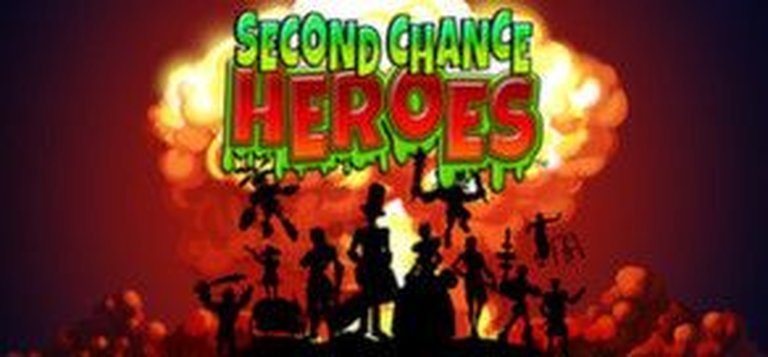
Second Chance Heroes is a 2014 action role-playing hack and slash game where players control clones of historical figures such as Abraham Lincoln, Joan of Arc, Napoleon, and Elizabeth I as they fight through swarms of enemies across 26 apocalyptic levels in a post-apocalyptic arena. Developed by Rocket City Studios, it features cooperative multiplayer, deep RPG progression, and isometric gameplay, though it was removed from all digital marketplaces shortly after release for unknown reasons.
Gameplay Videos
Second Chance Heroes Guides & Walkthroughs
Second Chance Heroes Reviews & Reception
metacritic.com (84/100): But despite the minor hiccups along the way, for a free-to-play Diablo-like experience on a mobile device, you really can’t go wrong with Second Chance Heroes.
gamewatcher.com : At just 70 pence on the UK App Store, you’d be hard pressed not to recommend Second Chance Heroes for its comedic, fast-paced action, and handy pick-up-and-play delivery, however, at a tenner on Steam, this recommendation becomes a lot less.
Second Chance Heroes: A Historiographical Review of a Vanished Cooperative Curio
Introduction: The Clone Army of Forgotten Fun
In the crowded pantheon of zombie apocalypse games, Second Chance Heroes proposed a premise so delightfully absurd it nearly defied critique: what if the world’s last hope wasn’t a grizzled soldier or a plucky survivor, but a mismatched squad of cloned historical figures armed with anachronistic weaponry? Released in 2014 by Canadian indie studio Rocket City Studios, the game promised a chaotic, co-op-heavy hack-and-slash romp where Abraham Lincoln wielded a chainsaw, Napoleon rode a self-propelled cannon, and Marie Curie blasted enemies with a laser. Yet, for all its quirky charm and a surprisingly strong critical reception on mobile, Second Chance Heroes remains a ghost—a title that appeared on PC and PlayStation 4, garnered tepid reviews, and was then unceremoniously yanked from all digital storefronts, leaving behind a faint but fascinating footprint in gaming history. This review argues that Second Chance Heroes is not a lost masterpiece, but a poignant case study in platform misalignment, tonal inconsistency, and the precarious existence of mid-tier indie games. Its legacy is defined not by its gameplay, but by its enigmatic disappearance and the stark divide between its mobile and PC/console incarnations.
Development History & Context: From Tablet to Steam, a Bridge Too Far?
Rocket City Studios, a small Canadian team, conceived Second Chance Heroes as a natural evolution of the twin-stick shooter genre tailored for touchscreens. The early 2010s saw a boom in accessible, session-based mobile games, and the studio’s vision was clear: a “pick-up-and-play” co-op experience with deep RPG-lite progression, wrapped in a veneer of irreverent humor. The technological constraints of iOS at the time—limited processing power and control schemes—dictated a design focused on clear visual feedback, simple tap-and-swipe controls, and short, repeatable levels. This origin is the key to understanding the game’s core architecture: 26 apocalyptic levels, a roster of 12 historically-themed clones, and a loop of kill, loot, upgrade, repeat.
The game’s trajectory, however, reveals a common indie pitfall: the quest for broader platform legitimacy. Following a successful iOS launch on February 17, 2014 (where it met with generally favorable reviews, scoring 84/100 on Metacritic), Rocket City Studios announced ports for Windows, OS X, and PlayStation 4. The PC release, originally slated for June 20, 2014, was delayed until July 4 to avoid the Steam Summer Sale rush—a decision that speaks to a small team’s struggle with visibility in a crowded digital marketplace. The PS4 version followed on September 30. This multi-platform push was ambitious but ultimately fatal. The game’s design, optimized for quick mobile sessions and simple touch controls, resisted transplantation to more involved PC and console play. The result was a product that felt fundamentally misplaced, a mobile-first game judged by the standards of a more demanding audience.
Narrative & Thematic Deep Dive: A Satirical Sandbox Without a Shovel
The narrative of Second Chance Heroes is less a story and more a justification for its chaotic premise. The “official description” from its Steam page lays it bare: the modern world, weakened by “kitten videos, reality TV and ironic photos of bacon,” is utterly unprepared for an apocalyptic cascade of “evil robots, nuclear missiles, sentient fast food, alien invasions and hordes of the undead.” The solution? A history teacher, in his infinite wisdom, has been secretly cloning historical figures to serve as humanity’s last line of defense.
This setup is pure, unadulterated satire, targeting both the unseriousness of contemporary culture and the gravitas we attach to historical icons. The character descriptions—found in the game’s official blurb and promotional material—are the narrative’s strongest element, each a punchline wrapped in anachronism:
* Abraham Lincoln: “Prior to taking office, he was best-known for his skills as an orator and a series of amazing pulled pork barbecue recipes.”
* Queen Elizabeth I: “Also invented beer pong.”
* Napoleon Bonaparte: “Little known fact: He was ACTUALLY over seven feet tall.”
* Joan of Arc: “Also invented break-dancing.”
* Nikola Tesla: “His only hobbies were collecting mustache wax and yodeling.”
The plot itself, traversing 26 levels with locations like “Hungerton Mall” and a “once majestic underground kingdom of hobos,” is a scaffolding for gameplay. It presents a world where the apocalypse is a kitschy, enemy-of-the-week affair (zombies, vampires, werewolves, “reanimated cheeseburgers”). The theme is one of absurdist remediation—using the perceived strength and gravitas of history’s “heroes” to combat a nonsensical, pop-culture-infused doom. However, the game fails to develop this satire beyond the initial character introductions and level theming. There is no narrative arc, no character development, and no meaningful commentary. The thematic potential—commentary on hero worship, the recycling of pop culture, or the fragility of civilization—is left entirely dormant, a missed opportunity buried under repetitive combat. The humor is broad, repetitive, and often juvenile, relying on the single joke of “historical figure + modern weapon/anachronism” without varying the formula. By the fifth level, the joke has largely expired, leaving only the mechanical loop to sustain interest.
Gameplay Mechanics & Systems: A Co-op Engine Running on Empty
At its core, Second Chance Heroes is a top-down/isometric, twin-stick hack-and-slash with light RPG elements. Players select two characters from their unlocked roster for each mission, with the ability to tag between them on the fly. Each character has a standard attack (left-click/mapped button) and a special “signature move” (right-click/mapped button) with a cooldown governed by an XP gauge that regenerates automatically or via pick-ups.
-
Combat & Progression: The combat is straightforward, often devolving into button-mashing as enemies swarm from all directions. The isometric “diagonal-down” perspective, as cataloged on MobyGames, can make targeting and spatial awareness difficult, especially in the chaos of four-player co-op. Character progression occurs via two systems: 1) Level-based XP, which upgrades core stats (health, damage, speed) for each hero, and 2) Unlockable Relics, which provide passive perks (e.g., “increased gold find,” “chance to stun on hit”). This creates a compelling short-term loop of “earn XP, feel stronger,” but the depth is superficial. The Steam store page advertises “deep character progression,” but in practice, upgrades are linear and lack meaningful customization.
-
Level Design & Repetition: The 26 levels are competently designed with multiple paths and environmental interactions (explosive barrels, distracting objects like disco balls). However, as noted in the GameWatcher review, repetition sets in quickly. Mini-boss types are recycled, and enemy variety—while nominally including zombies, werewolves, and vampire types—doesn’t evolve significantly. The game’s pace, initially frantic and fun, begins to feel like a grind as later levels simply throw more numbers at the player, making character level disparities trivialize challenge.
-
The Co-op Crux: This is the game’s undeniable saving grace and its central contradiction. The four-player co-op is where the chaotic premise sings. Coordinating abilities, reviving fallen clones, and carving through hordes as a ludicrous historical pantheon is genuinely entertaining. As one Steam user succinctly noted in a screenshot caption: “The best team up in the whole of history…………..except for Iron-Maiden anyway!!” However, the system also exposes the game’s balance issues. Certain characters are clearly designed for support in a co-op context, making solo play a more lonely, difficult experience. Furthermore, as multiple reviews (Hooked Gamers, GameWatcher) lament, finding a full party was a persistent challenge, a critical flaw for a game so dependent on its social mechanic. The matchmaking system was minimal or non-existent, forcing players to rely on friends or public lobbies that rarely filled.
-
UI and Controls: The PC port, in particular, suffered. The game was designed for direct control and intuitive touch interfaces. Mapping twin-stick controls to keyboard/mouse or a gamepad felt functional but not refined. The UI, while clean, offered little strategic depth beyond health/XP bars and cooldown timers. The transition from mobile to PC exposed a lack of configurability and polish expected in the PC space.
World-Building, Art & Sound: Charm in the Details, Chaos in the Whole
Second Chance Heroes’ world is a post-apocalyptic pastiche, blending recognizable locations (a mall, a bunker, a hobo kingdom) with a bizarre enemy roster. The art direction is functional and colorful, employing a cartoony, exaggerated style that fits the game’s comedic tone. Character designs are the highlight: seeing the stern, iconic portraits of Lincoln, Elizabeth I, or Genghis Khan rendered as sprites wielding chainsaws, lasers, or cannons is the core visual joke. Enemy designs are similarly silly—”sentient cheeseburgers,” zombie chickens, and “cuddly” evil creatures reinforce the parody of apocalyptic tropes.
However, the technical execution is mixed. On PC and PS4, the graphics are simple, almost rudimentary, and lack the visual polish or effects of contemporary indie darlings. The isometric view sometimes leads to visual clutter, making it hard to parse threats in the heat of combat. Performance was generally stable, but the game never looked like a premium product, which hurt its value proposition at its $10-13 price point (as criticized on Steam).
The sound design and soundtrack received consistent praise. The official Steam description highlights a “good” soundtrack, and reviews (Gamegravy, GameWatcher) echo this. The music is an energetic, genre-blending mix that effectively underscores the chaotic action. Sound effects for weapon fire, enemy sounds, and signature moves are punchy and satisfying, providing crucial audio feedback in the visual mess. It’s one area where the game’s production values feel adequate and even engaging.
Reception & Legacy: A Tale of Two Platforms and a Sudden Disappearance
The reception of Second Chance Heroes is a story of schismatic platforms and curated amnesia.
- iOS Launch (Feb 2014): The game was a critical success. With Metacritic and GameRankings scores hovering around 84/100 (83.33%), reviewers on TouchArcade, Gamezebo, and Pocket Gamer praised its perfect fit for mobile: “great place to start” for twin-stick fans, “gut-splattering historical hysteria,” and a “ton of mobile entertainment.” Its free-to-play model (with IAPs for hero unlocks) made it an easy recommendation. It was, in its native habitat, a well-regarded title.
- PC/PS4 Launch (July/Sept 2014): The ports were met with mediocrity. MobyGames aggregates critic scores of 55% (Gamegravy, PS4) and 50% (Hooked Gamers, PC). The criticisms were consistent: the game felt shallow and repetitive without the portable context, the price was too high for the content, and the co-op, while fun, was hard to organize. GameWatcher’s Joe Donnelly delivered the most damning verdict: the game’s refusal to take itself seriously backfired, leaving him questioning “why I should either.” The humor, once fresh on mobile, felt thin on a larger screen. The PS4 version, as a “Console Generation Exclusive,” found almost no audience.
- Commercial Fate & Disappearance: Sometime shortly after its console/PC releases, Second Chance Heroes was removed from all digital storefronts—Steam, PlayStation Network, and presumably the App Store. The reason is unknown; Rocket City Studios has never commented. Speculation ranges from poor sales (likely, given the reviews and community chatter about its $13.49 price being “overpriced”) to licensing issues with the historical figures or music, to the studio moving on to other projects. This sudden erasure is the game’s most defining legacy. It transformed a mediocre release into a digital ghost, a title with no legal means of purchase, preserved only in review archives, forum lamentations (“Sadly.”), and YouTube videos.
Its influence on the industry is negligible. It did not pioneer mechanics, define a genre, or achieve cult enough status to inspire clones. Its one notable contribution is as a cautionary tale: a game that found its audience on one platform, alienated it on another, and then vanished without a trace. In the era of digital preservation and subscription services, its absence is a small but stark reminder of how easily interactive art can be lost.
Conclusion: The Unmarked Grave of a Charming Idea
Second Chance Heroes is a game of profound contradictions. It possesses a brilliant, high-concept hook—historical clones in a zombie apocalypse—executed with consistent, silly charm in its character design and premise. Its co-operative gameplay, when functioning, provides bursts of genuinely fun, mindlessmayhem. Yet, it is also a game crippled by its own simplicity, lacking the depth, narrative incentive, or mechanical variety to sustain interest beyond a few hours. Its mobile success and PC/console failure reveal a fundamental truth about game design: context is everything. A game built for quick, tactile, portable sessions can feel thin and tired when stretched for longer play on a more demanding platform.
The game’s ultimate fate—vanishing from history—cements its status as a footnote. It is not a “lost classic” to be rediscovered, but a “what-could-have-been”. A more skilled studio might have leveraged its core idea into a sustained franchise (Onechanbara meets Freedom Force). Instead, Second Chance Heroes remains a curious artifact: a game you can no longer play, remembered primarily for its clever premise and its quiet, unceremonious exit from the digital stage. It stands as a monument to the risks of platform expansion and the fleeting nature of indie success in the 2010s. Its final, ironic verdict is that it never got the second chance its title promised.
Final Verdict: 6/10 – A genuinely fun co-op idea trapped in a repetitive, platform-misfired shell, now lost to the void. Recommended only for historical curiosity and YouTube Let’s Plays.