
- Release Year: 2012
- Platforms: Windows
- Publisher: Nordic Games GmbH
- Game Mode: Online PVP, Single-player
- Average Score: 85/100
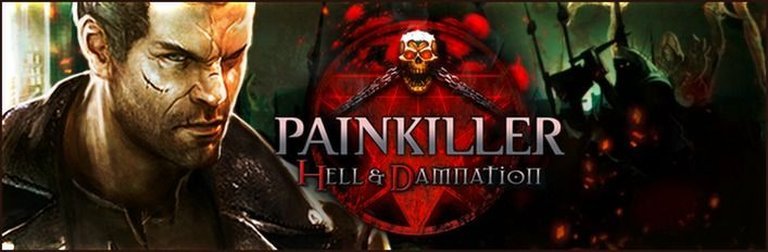
Description
Painkiller: Hell & Damnation is a first-person shooter that serves as both a remake and sequel to the original Painkiller. Following his victory over Hell and Purgatory, Daniel Garner is denied entry to heaven to reunite with his wife Catherine, leaving him faithless and stranded in a cemetery. He must then battle through waves of demons across diverse infernal levels—featuring settings like castles, monasteries, and graveyards—using a mix of classic and new weapons in a relentless campaign.
Painkiller: Hell & Damnation (Collector’s Edition) Guides & Walkthroughs
Painkiller: Hell & Damnation (Collector’s Edition) Reviews & Reception
metacritic.com (85/100): The developers have masterfully adapted everything that made the original Painkiller so enjoyable to a new engine that looks fantastic and plays liquid smooth.
ign.com : Painkiller’s AI is straight up bad.
Painkiller: Hell & Damnation (Collector’s Edition): A Slaughter in Stasis – A Definitive Historical Review
Introduction: The Last Bastion of the Arena Shooter
In the early 2010s, the first-person shooter landscape was dominated by a monolithic orthodoxy: tightly scripted, cinematic experiences, regenerating health, loadout customization, and a grimly serious tone. Against this backdrop, Painkiller: Hell & Damnation arrived not as a revolution, but as a deliberate, almost anachronistic act of preservation. It was a game that screamed, with a chainsaw mounted to a chaingun, “Remember when shooting hundreds of demons was its own reward?” This Collector’s Edition, bundled with physical artifacts and digital trinkets, serves as a curious time capsule—a beautifully rendered, monetized shrine to a bygone era of pure, unadulterated arcade FPS design. It is both a loving tribute to its legendary predecessor and a stark demonstration of the difficulties inherent in faithfully remastering a cult classic. This review will dissect Hell & Damnation not merely as a product, but as a historical document: a game caught between the past it idolizes and the present that has moved on, its Collector’s Edition packaging a silent testament to a business model for nostalgia that was already beginning to feel its age.
Development History & Context: From Polish Passion to Nordic Publishing
The Painkiller series was the brainchild of the now-legendary Polish studio People Can Fly, whose 2004 original became a instant cult hit for its breakneck speed, over-the-top weaponry, and sheer, mindless joy. By 2012, however, the core PCF team had been absorbed into Epic Games and was working on Bulletstorm and later Gears of War: Judgment. The rights to the Painkiller IP, however, had passed through several hands, ultimately landing with Nordic Games (now THQ Nordic).
The development baton was passed to The Farm 51, another Polish studio founded by former members of People Can Fly. This lineage is crucial: Hell & Damnation was not being made by the original creators, but by a team with intimate knowledge of the source material’s DNA. Their vision, as stated in promotional materials, was to “recreate the sensations and hardcore gameplay of the original Painkiller” using the far more modern Unreal Engine 3. This was a dual-edged sword. On one hand, it allowed for a dramatic visual overhaul, bringing the gritty, gothic hellscapes into the high-definition era. On the other, it meant rebuilding a game designed for the older, more proprietary PAIN engine from the ground up, with all the attendant potential for losing the subtle, intangible “feel” that defined the original.
The year 2012 was a period of transition. Series like Call of Duty and Battlefield had perfected the military shooter template. Pure arena shooters were niche. Releasing a game with “NO AK-47, NO M16” as a selling point was a defiant, almost desperate, stance. The game’s development was not without hiccups; its console ports (PS3, Xbox 360) suffered multiple delays, finally arriving in mid-2013. Furthermore, the infamous “toned down” version for German markets—refused an age rating for being “deemed too evil”—speaks to the game’s uncompromising, over-the-top identity, even as it highlights the regulatory challenges of such extreme content in a more cautious global market.
Narrative & Thematic Deep Dive: A Coma’s Convenience
The story of Hell & Damnation is where its identity as a “remake and sequel” becomes most convoluted. Picking up after the events of the original Painkiller and its expansion Battle Out of Hell, our perpetually tormented protagonist, Daniel Garner, is still denied eternal peace with his wife, Catherine. The narrative framework is cleverly reused: Death himself appears, offering a bargain—7,000 souls for a reunion. Daniel, the “Curse of Darkness” and “Toy of Light,” accepts and is armed with the new centerpiece weapon, the Soulcatcher.
What follows is a retread of familiar locales and conflicts from the first two games, but with a twist. The old ally/enigma Eve reappears, warning of Death’s treachery. The plot’s(true) genius, and its greatest narrative failing, is revealed in the climax. After Daniel collects 6,999 souls and spares Eve, he defeats Death and passes through a white portal—only to wake up in a hospital bed. The entire purgatorial campaign was a hallucination suffered while Daniel was in a coma. The souls he collected didn’t free him; they empowered Death to reunite with his fellow Horsemen of the Apocalypse (Pestilence, Famine, War), who now plan to invade Earth. The game ends with the demon Belial calling Daniel to rise and fight, setting up a sequel that would never materialize in this form.
Thematically, the game grapples with cycles of violence, broken promises, and false hope. The twist reframes Daniel’s entire journey as a manipulation, a cosmic-scale con. However, the execution is brutally trim. The “greatest hits” level selection means key story beats from the original games are missing, robbing the narrative of its epic scale and emotional punctuation (notably, the sublime, time-frozen finale of the first game is gone). The new cutscenes, while technically superior to the pre-rendered FMV of 2004, are often criticized as clunky and less atmospheric. The attempt to add “humor”—like headbanging witches or trash-can-pushing zombies—falls flat, feeling like forced whimsy in a setting that thrived on oppressive, gothic Serious Sam-style intensity. The story becomes a series of connective tissue for the shooting, a justification for revisiting old arenas that ultimately undermines its own supposed weight.
Gameplay Mechanics & Systems: The Essence, But Not the Soul
At its core, Hell & Damnation succeeds in capturing the immediate, visceral feedback that defined the original. The movement is fast, the weapons are ludicrous, and the core loop of “see demon, reduce demon to paste” remains intact.
The Arsenal: The returning weapons—the electrifying Electrodriver, the explosive Painkiller (the weapon, not the game), the Stakegun, the Rocket Launcher—are perfectly preserved in their chaotic glory. The star is the new Soulcatcher, a dual-mode weapon that fires spinning saw blades and, in its secondary fire, acts as a soul-sucking vacuum. Sucking up souls allows Daniel to temporarily transform a fallen enemy into an ally. This is a fun, synergistic addition, even if its tactical utility is limited. The game proudly advertises its “Key Anti-Features”: no killstreaks, no auto-heal, no modern military rifles. This is a deliberate, almost punk-rock rejection of contemporary trends, and for fans of the genre, it’s a breath of fresh (if gore-filled) air.
Levels & Progression: The campaign is a curated 14-level “greatest hits” pulled from the 34 levels of the original Painkiller and Battle Out of Hell, organized into four chapters with a boss at the end of each. The level design is a direct port of the original architecture, now with higher-resolution textures and more detailed models. This is both a strength and a fatal weakness. The iconic, sprawling gothic castles and nightmarish theme parks are instantly recognizable and visually stunning in UE3. However, the selection is puzzling. It includes the notoriously tedious Arena level from Battle Out of Hell (sans its original jumping puzzles, but still a padding bore) and omits the original game’s breathtaking, mythic final level. The campaign lasts a mere 4-5 hours, a fact universally noted by critics, and feels both dense and strangely sparse.
AI & Gameplay Feel: This is the game’s Achilles’ heel. As IGN’s Nathan Grayson states, the AI is “dumb and often glitchy.” Enemies exhibit a single, relentless behavior: run straight at the player. They possess no tactical awareness, no use of cover, and are notoriously prone to getting stuck on geometry. This breaks the pacing entirely. A frantic battle can be shattered by the need to scour a corner for a single stuck demon to advance a checkpoint. Boss fights, while epic in scale, are often trivialized by this AI; circle-strafing around their legs while unloading shotgun shells becomes the universal strategy, draining encounters of any real threat. The superb “feel” of the weapons cannot compensate for enemies that are essentially moving target dummies. This was a flaw in the original, but it feels more pronounced and less charming in a 2012 remake where expectations for basic AI had risen.
Multiplayer & Co-op: The game attempts to modernize with features the original lacked. Co-operative campaign is a welcome addition, allowing two players to tackle the story with dynamic difficulty scaling. However, user reports and critic notes indicate it often feels too easy and lacks a partner location indicator, creating its own frustrations. The PvP modes (Deathmatch, Team Deathmatch, Capture the Flag) and Survival mode (8-player horde defense) aim to recapture the arena spirit. In theory, they succeed—the fast-paced, bunny-hopping gameplay is a pure skill-based blast. In practice, they are plagued by lag, instability, and a catastrophic lack of players. As Grayson’s review notes, North American servers were nearly empty for months after launch, making the multiplayer component functionally dead on arrival for most Western players. The level editor and Steam Workshop support are forward-thinking inclusions, but for a game whose lifeblood is competitive chaos, the empty arenas were a fatal blow.
World-Building, Art & Sound: A Hellscape Reborn
Where Hell & Damnation is unquestionably triumphant is in its presentation. The shift to Unreal Engine 3 is a masterclass in visual refurbishment. The environments are richer, darker, and more detailed. Gargoyles leer with newfound texture, stone walls have depth, and atmospheric lighting casts long, haunting shadows. The iconic “Psycho” Barn from the original game is a standout, its peeling paint and gruesome tableaux now rendered with gruesome fidelity. The enemy designs, while sometimes less varied in type, are grotesquely beautiful in their high-polygon glory. The game’s “100% UNCUT” status means the extreme, cartoonish gore is preserved and enhanced—limes fly, creatures explode into vibrant chunks, and the screen is frequently painted with digital blood. It’s a deliberately juvenile, over-the-top aesthetic that perfectly matches the gameplay’s tone.
The sound design is equally committed. The soundtrack, composed by Adam Skorupa and others, is a headbanging fusion of heavy metal and industrial, perfectly synced to the action. The iconic roar of the Electrodriver, the satisfying thwack of the Stakegun, the chaotic whirr of the Soulcatcher—every weapon has a distinct, powerful audio identity. The ambient sounds of howling winds, distant screams, and dripping water build a consistently oppressive atmosphere. It’s an auditory experience that is as aggressively “on” as the visuals.
Reception & Legacy: A Curious Artefact of Nostalgia
The reception to Painkiller: Hell & Damnation was mixed, and deeply divided along platform and expectation lines.
- PC Critics: Scores ranged from Destructoid’s 8/10 (“Farm 51 has put Painkiller back on its pedestal”) to IGN’s 5/10 and PC Gamer’s 58/100. Aggregate scores sit at 64/100 on Metacritic and 67.48% on GameRankings. Praise consistently landed on the graphics, weapon variety, and pure, fast-paced fun. Criticism zeroed in on the short campaign, shallow/broken AI, poor new boss fight, and fundamentally regressive design that cut content from the superior Painkiller: Black Edition.
- Console Critics: The ports suffered disproportionately. Metacritic scores plummet to 40/100 (PS3) and 53/100 (X360), indicating significant issues with control, performance, or perception on those platforms.
- User Reception: This is where the story gets interesting. On Steam, the game holds a “Mostly Positive” rating (72% of ~965 English reviews), with over 2,800 total reviews across all languages. User scores on Metacritic are higher (6.5) than critic scores. This divide suggests that for a dedicated segment of players—those seeking a pure, uncut old-school shooter fix—the game delivered exactly what they wanted, flaws be damned. The user review cited from a beta tester on Metacritic is a passionate testament to the small team’s dedication.
Legacy-wise, Hell & Damnation occupies a strange space. It is not remembered as a classic, nor as a disaster. It is a curious footnote: a technically proficient but creatively conservative remake that failed to expand its audience beyond the existing cult. It demonstrated that the Painkiller formula could be updated visually, but that the series’ deeper issues—repetitive level design, simplistic AI—required more than a visual polish. Its legacy is one of “what could have been.” The later flood of DLC—* City Critters, *Heaven’s Above, Medieval Horror, etc.—painted a picture of a game supported with content long after its initial relevance had faded, a monetization strategy for a niche audience. In the grand history of FPS games, it is a testament to the enduring, if limited, appeal of the pure arcade shooter, but also a cautionary tale about the perils of remaking a game without critically reassessing its foundational design choices. It preserved the body of Painkiller but lost some of its wild, unhinged spirit.
Conclusion: The Unholy Relic in the Display Case
Painkiller: Hell & Damnation is a game of profound contradictions, and the Collector’s Edition only amplifies these tensions. The physical art book, stickers, and poster evoke a bygone era of premium retail editions, while the digital tarot cards and skins speak to the nascent era of DLC. It is a product of transition.
As a game, it is a beautifully rendered, mechanically faithful, but ultimately shallow experience. It replicates the surface thrill of the original—the absurd weapons, the relentless pace, the gothic overload—but fails to capture its soul, which resided in a more cohesive world, a more varied bestiary, and a narrative that felt mythic rather than convenient. The crippled AI, the truncated campaign, the barren multiplayer; these are not mere nitpicks but fundamental erosions of the design that made the 2004 original a masterpiece of its kind.
As a historical document, it is invaluable. It stands as the last major, high-profile attempt to resurrect the pure, no-frills arena shooter in the 2010s. It shows the limits of a “greatest hits” approach to remakes. It represents a Polish studio’s love letter to a genre its countrymen helped define, produced under the commercial realities of a Western publisher and a market that no longer had a place for such unapologetic, pure-genre games.
Final Verdict: Painkiller: Hell & Damnation (Collector’s Edition) is a meticulously crafted museum piece that you can actually play. It is essential for historians of the FPS genre and completists of the series, offering a polished but incomplete glimpse into a pivotal, now largely extinct design philosophy. For everyone else, it is a frustrating artifact—a game that proves you can upgrade the graphics on a classic, but you can’t necessarily recapture the lightning in a bottle. Its true legacy may be as the final, loud, and beautifully gory gasp of an era, packaged in a collector’s box that sits uneasily between the past it mourns and the digital future it barely understands. For the faithful, it’s a serviceable pilgrimage; for the curious, a warning tale; for history, a complex and compromised monument.