
- Release Year: 2024
- Platforms: Windows
- Publisher: SHB Games, Ltd.
- Developer: SHB Games, Ltd.
- Genre: Action
- Perspective: 1st-person
- Setting: Futuristic, Sci-fi
- Average Score: 74/100
Description
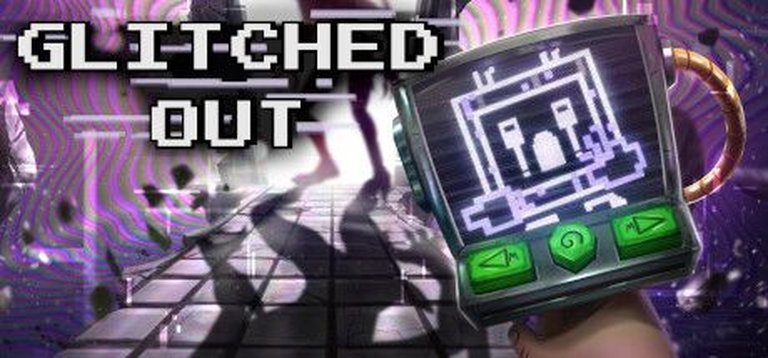
Glitched Out: Chapter 1 is a first-person action-horror game set in a futuristic, government-run alien research facility. Players control Lex, an IT engineer who awakens to find the facility overrun by a rogue malware that has released contained alien entities. With the help of her AI companion Chip, Lex must hack through the complex, solve puzzles, survive encounters with hostile and friendly creatures, and uncover sinister secrets to escape.
Gameplay Videos
Where to Buy Glitched Out
Glitched Out Guides & Walkthroughs
Glitched Out: A Disorienting Descent into the Unknown
Introduction: A Whisper in the Noise of 2024
Amidst a 2024 video game landscape dominated by blockbuster launches, industry-wide layoffs, and the relentless churn of live-service titles, Glitched Out: Chapter 1 emerged as a quiet, spectral presence. Released for free on Steam in December 2024 by the virtually singular entity SHB Games, Ltd., this first-person episodic horror title represents a potent, if understated, counter-narrative to the year’s turmoil. It is a game built not on immense budgets or sprawling marketing campaigns, but on a clear, focused vision from a small team fighting against the very “glitches” its story depicts—systemic corruption and unseen threats. My thesis is this: Glitched Out is a fascinating case study in minimalist horror design, leveraging its technological and budgetary constraints into a core mechanic that directly serves its narrative of systemic failure and digital-physical terror. Its legacy will be defined not by sales, but by its audacity in making a “hacking” mini-game the central pillar of both its gameplay and its profound thematic unease.
Development History & Context: The One-(Wo)Man Stand Against the Glitch
To understand Glitched Out, one must understand its creator, Mike Bambridge. The MobyGames credits paint a picture of an almost herculean effort: Bambridge is credited as Director, Creator, Writer, Game Designer, Texture Artist/Set Dresser, and Sound Effects contributor. The development team is rounded out by programmer Jordan Atherage, environmental modeler and lighting/effects lead (also Atherage), character modeler Spencer Singer, musician Jarren Crist, and a handful of voice actors and playtesters. This is SHB Games, Ltd. in its most literal sense—a studio that is, for all intents and purposes, one or two people wearing every hat.
This context is crucial. The game was built in Unity, the engine of choice for indies due to its accessibility and asset store, but also a platform often associated with technical roughness in the wrong hands. The “technological constraints of the era” for this project were not about pushing hardware limits but about achieving coherence and atmosphere with limited resources. In a year where giants like Sony, Microsoft, and EA were shedding thousands of jobs (a stark backdrop detailed in the Wikipedia overview of 2024’s layoffs), Glitched Out stands as a testament to what a dedicated individual can still accomplish. The game’s very existence is a rebuttal to the industry’s consolidation, a glitch in the system that, against the odds, booted up.
Narrative & Thematic Deep Dive: The Malware is the Monster
The narrative provided is succinct but potent: IT Engineer Lex awakens in the Federal Bureau of Containment (FBC), a top-secret facility housing alien entities. A malicious malware has breached the system, causing catastrophic containment failure. Lex’s only ally is Chip, an AI companion. Her goal is to hack her way to freedom using the “Portable Glitch Fixer,” uncovering the sinister origins of the outbreak.
On the surface, this is a familiar sci-fi/horror setup—Aliens meets System Shock. However, the genius is in the thematic fusion. The horror is not just the monstrous entities (though they are described as “terrifying horrors of the cosmos”). The primary antagonist is the malware itself—an abstract, corruptive force. This immediately elevates the threat from physical to systemic. The FBC, a symbol of human (or governmental) control over the unknown, is compromised from within by a digital plague. Lex, an IT professional, is not a soldier but a technician. Her weapon is not a gun but a troubleshooting tool. This brilliantly inverts the survival horror power fantasy; she is perpetually vulnerable, her expertise her only shield.
The partnership with Chip introduces a core theme of dependence and distrust in artificial intelligence. Is Chip a genuine help, or is its assistance another layer of the malware’s manipulation? The Steam description’s parenthetical “No actual A.I used in the creation of this game!” is a winking meta-commentary that invites players to question the nature of the intelligence guiding them. The lore, delivered via “cutscenes, environmental storytelling, audio recordings and secret notes,” suggests a deep, unsettling history of the FBC’s experiments, now turned against its creators. The true horror may be realizing the facility’s “sinister goings-on” were a direct cause of the current outbreak—we are not exploring a forgotten tomb, but cleaning up the mess of a catastrophic, secret experiment.
Gameplay Mechanics & Systems: Hacking as Heartbeat
Where Glitched Out theoretically diverges from its peers is in its core loop. The Portable Glitch Fixer is not a gimmick; it is the game’s mechanical and thematic heart. The description mentions “a selection of hacking mini-games” used to “fix corrupted power units on the fly and restore power to the facility.” This implies a gameplay cycle of:
1. Exploration & Threat Assessment: Navigate the facility in first-person, avoiding or observing escaped entities.
2. Problem Identification: Locate a “corrupted power unit,” likely a terminal or junction box within the environment.
3. The Hacking Mini-Game: Engage with a puzzle mini-game. The nature of these puzzles is unknown—are they Pipeline-style routing, Myst-style logic puzzles, rhythm-based code-breaking, or something more abstract? Whatever the form, they represent the act of “fixing” the broken system.
4. Systemic Reward: Restoring power likely opens doors, turns on lights, disables security turrets, or powers up environmental defenses against entities. Progress is tied directly to acts of digital repair.
This system creates a profound sense of agency through technical skill, not violence. The “ever growing arsenal of tech upgrades” suggests a meta-progression where hacking the facility’s own systems against itself becomes a satisfying power curve. The tension likely arises from performing these delicate, focused mini-games under pressure, with the lurking entities a constant auditory and visual threat. The UI would be minimal, diegetic (part of Lex’s tool), and cluttered with error messages or corrupted data—reinforcing the “glitched” aesthetic. It’s a bold design choice that prioritizes cerebral tension over combat, aligning perfectly with Lex’s character as an engineer, not a warrior. Potential flaws could include repetitive puzzle design or frustrating difficulty spikes that break the immersive horror, but the concept is sound and deeply integrated.
World-Building, Art & Sound: The Aesthetic of Systemic Decay
The setting is the Federal Bureau of Containment, a “top secret alien research facility.” This is a classic “Department of Redundancy Department” horror trope, evoking Half-Life‘s Black Mesa or S.T.A.L.K.E.R.‘s Zone. The atmosphere must walk a line between sterile, bureaucratic government architecture and the organic, brutalist, or bio-mechanical horror of contained aliens. The Steam tags list “Hand-drawn” and “Sci-fi / futuristic”. This is an intriguing contradiction. A hand-drawn aesthetic in a first-person 3D space suggests a unique visual style—perhaps a cel-shaded or comic-book-like filter applied to the 3D environments, or 2D sprites and textures that give the world a slightly unreal, glitched quality. This would perfectly complement the malware’s effects, making the world itself feel like corrupted data.
Sound design is paramount in horror. With Chip as an AI companion, the audio landscape is likely a mix of:
* Diegetic Sounds: The hum of failing machinery, distant alien screeches, the crunch of boots on grated floors, the static of corrupted comms.
* Chip’s Voice: A calm, possibly emotionless or glitching voice providing instructions, warnings, or cryptic commentary. Its reliability is a central audio question.
* Environmental Audio: The “audio recordings” and “secret notes” mentioned in the blurb will be key to lore delivery, likely found in safe rooms or after solving puzzles, creating a tense risk-reward for exploring.
The “glitch” motif should permeate the audio—distorted sound effects, sudden dropouts, and eerie reverb that makes the facility feel both immense and digitally fractured. The goal is to make the player feel the malware’s presence not just visually, but sonically in their own headphones.
Reception & Legacy: A Silent Signal in the Storm
Glitched Out launched to “Mostly Positive” user reviews on Steam (73% of 269 reviews), a solid start for a free indie title. The absence of critic reviews on MobyGames and the lack of major press coverage suggest it flew under the mainstream radar, a common fate for small-scale horror releases. However, the Steam tags reveal its audience: Horror, Survival Horror, Psychological Horror, Story Rich, Lore-Rich, Puzzle, Episodic. It has found its niche.
Its reception will be a slow burn. As an episodic title (“Chapter 1”), its legacy is inherently unstable. The quality and release cadence of subsequent chapters will determine if it becomes a Cult Classic or a forgotten fragment. Its potential influence is two-fold:
1. On Indie Horror: It reinforces the viability of “concept-first” horror, where a single strong mechanic (hacking as survival) drives the entire experience. It joins the ranks of narrative-driven, puzzle-focused horror like The House Abandoned (from The Stanley Parable) or SiN: Wages of Sin‘s hacking, but with a more integrated, systemic approach.
2. On the “Glitch” Aesthetic: In an era of pristine AAA visuals, its “hand-drawn” + “glitch” presentation offers a distinct, low-fi alternative that can feel more authentically corrupted and unsettling than high-polygon distortion effects.
The year 2024 was a brutal one for the industry, making SHB Games’ achievement more poignant. Glitched Out didn’t get a slot at The Game Awards, but it represents the kind of grassroots, auteur-driven creation that persists despite the layoffs and closures. Its legacy may be as a benchmark for what a single dedicated developer can achieve in the horror space, a ghost in the machine of a corporatized industry.
Conclusion: A Glimmer of Unrefined Potential
Glitched Out: Chapter 1 is not a polished masterpiece. It is an unrefined, intriguing, and conceptually rigorous proof-of-concept. Its narrative, while derivative in setup, is elevated by its central metaphor of malware as the ultimate horror—a pervasive, unseen, corruptive force. Its gameplay, revolves around a hacking mini-game that feels essential rather than ancillary, a rare integration of theme and mechanics. Visually, its “hand-drawn” style in a 3D space is a bold, unproven choice that could either grant it a timeless, unique aesthetic or betray its limited budget.
As a historian, I see it as a fascinating artifact of 2024: a tiny, free, solo-developed game that dared to make “fixing systems” the core of its horror, released in a year where the systems of the gaming industry itself felt so profoundly broken. Its place in history is not yet secure; it rests entirely on the strength of future chapters and whether it can build a community around its clever core idea. For now, it stands as a compelling, flawed, and defiantly independent signal—a glitch, perhaps, but one that proves the system can still produce something truly strange and personal. It is a brave, if deeply imperfect, experiment in systemic horror that deserves to be seen, played, and judged on its own idiosyncratic terms.