
- Release Year: 2014
- Platforms: Macintosh, PlayStation 3, PlayStation 4, Wii U, Windows, Xbox 360, Xbox One
- Publisher: Feral Interactive Ltd., Warner Bros. Interactive Entertainment Inc.
- Developer: Traveller’s Tales (UK) Ltd.
- Genre: Action
- Perspective: 3rd-person
- Game Mode: Co-op, Online Co-op, Single-player
- Gameplay: Building, Collecting, Combat, Platform, Puzzle elements
- Setting: Fantasy
- Average Score: 71/100
Description
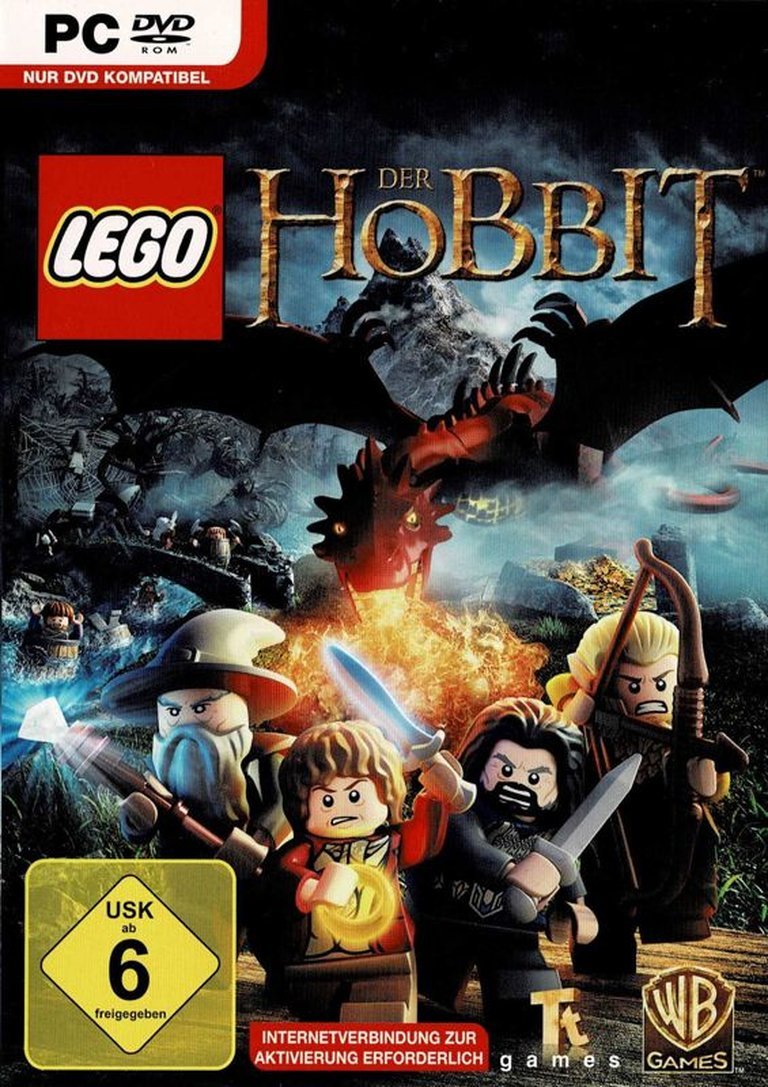
LEGO The Hobbit is a humorous LEGO-themed action-adventure game that adapts the first two films of The Hobbit trilogy. Players control Bilbo Baggins as he leaves the Shire to join Gandalf and Thorin Oakenshield’s Company of Dwarves on a journey to reclaim their lost kingdom, the Lonely Mountain of Erebor, from the dragon Smaug. Set in a playful, block-based version of J.R.R. Tolkien’s Middle-earth, the game features open-world exploration, cooperative gameplay, puzzle-solving, and signature LEGO charm as players encounter familiar characters, creatures, and environments from the films.
Gameplay Videos
Where to Buy LEGO The Hobbit
LEGO The Hobbit Guides & Walkthroughs
LEGO The Hobbit Reviews & Reception
ign.com : It’s a fun journey to be sure, but confusing at times, and not entirely satisfying.
metacritic.com (72/100): Lego The Hobbit is charming, funny, faithful to the films, and incredibly tedious to play.
opencritic.com (71/100): A fun and charming extension of the film that nevertheless suffers from some disjointed story problems and some sameness of characters.
imdb.com : Best lego game since lord of the rings.
LEGO The Hobbit Cheats & Codes
PC
Pause the game, select the “Extras” option, and choose the “Enter Code” selection.
| Code | Effect |
|---|---|
| FAVZTR | Alfrid |
| 84ZZSI | Azog |
| W5Z6AC | Bain |
| UER3JG | Bard |
| XTVM8C | Barliman Butterbur |
| 555R9C | Barrow Wight |
| KEID2V | Beorn |
| ZIBYHO | Bolg |
| MXUXKO | Braga |
| H2CAID | Elros |
| THAVRM | Fimbul |
| 00TE7J | Galadriel |
| 3CE37P | Gollum |
| TPD7YW | Grinnah |
| V4Y5HZ | Lindir |
| 9NOK35 | Master of Laketown |
| 4FYKKB | Narzug |
| NM3I2O | Necromancer |
| 74KN31 | Percy |
| 5OJEUC | Peter Jackson |
| TB4S6J | Rosie Cotton |
| OARA3D | Sauron |
| SYKSXF | Thror |
| 4Y95TJ | Tom Bombadil |
| V8AHMJ | Witchking |
| S6VV33 | Yazneg |
| rldaaa | CHEAT_EXTRATOGGLE |
| rldaab | CHEAT_POO |
| rldaac | CHEAT_DISGUISES |
| rldaad | CHEAT_DAISYCHAINS |
| rldaae | CHEAT_C3POBITS |
| rldaaf | CHEAT_TOWDEATHSTAR |
| rldaag | CHEAT_SILHOUETTES |
| rldaah | CHEAT_BEEPBEEP |
| rldaai | CHEAT_HITBUBBLES |
| rldaaj | CHEAT_ICERINK |
| rldaak | CHEAT_SUPERGONK |
| rldaal | CHEAT_POOMONEY |
| rldaam | CHEAT_WALKIETALKIEDISABLE |
| rldaan | CHEAT_POWERBRICK_DETECTOR |
| rldaao | CHEAT_HAPPYTOKEN_DETECTOR |
| rldaap | CHEAT_GOLDBRICK_DETECTOR |
| rldaaq | CHEAT_PERIL_DETECTOR |
| rldaar | CHEAT_CHARTOKEN_DETECTOR |
| rldaas | CHEAT_SUPERSLAP |
| rldaat | CHEAT_MAGICZIPUP |
| rldaau | CHEAT_STUD_MAGNET |
| rldaav | CHEAT_DISARM_GOONS |
| rldaaw | CHEAT_CHARACTER_STUDS |
| rldaax | CHEAT_PERFECTDEFLECT |
| rldaay | CHEAT_EXPLODINGBLASTERBOLTS |
| rldaaz | CHEAT_MAGICPULL |
| rldaba | CHEAT_VEHICLESMARTBOMB |
| rldabb | CHEAT_SUPERASTROMECH |
| rldabc | CHEAT_SUPERJEDISLAM |
| rldabd | CHEAT_SUPERTHERMALDETONATOR |
| rldabe | CHEAT_DEFLECTBOLTS |
| rldabf | CHEAT_DARKSIDE |
| rldabg | CHEAT_SUPERBLASTERS |
| rldabh | CHEAT_FASTMAGIC |
| rldabi | CHEAT_SUPERSABRES |
| rldabj | CHEAT_TRACTORBEAM |
| rldabk | CHEAT_INVINCIBILITY |
| rldabl | CHEAT_SCOREX2 |
| rldabm | CHEAT_SCOREX3 |
| rldabn | CHEAT_SELFDESTRUCT |
| rldabo | CHEAT_FASTBUILD |
| rldabp | CHEAT_SCOREX4 |
| rldabq | CHEAT_REGENERATE_HEARTS |
| rldabr | CHEAT_MINIKIT_DETECTOR |
| rldabs | CHEAT_SCOREX6 |
| rldabt | CHEAT_SUPERZAPPER |
| rldabu | CHEAT_ROCKETS |
| rldabv | CHEAT_SCOREX8 |
| rldabw | CHEAT_SUPEREWOKCATAPULT |
| rldabx | CHEAT_INFINITE_TORPEDOS |
| rldaby | CHEAT_SCOREX10 |
| rldabz | CHEAT_FASTDIG |
| rldaca | CHEAT_FASTFIX |
| rldacb | CHEAT_INSTANT_CABLEZAP |
| rldacc | CHEAT_SUPERFREEZE |
| rldacd | CHEAT_IMMUNETOFREEZE |
| rldace | CHEAT_IMMUNETOPHOBIA |
| rldacf | CHEAT_EXTRAHEARTS |
| rldacg | CHEAT_ALWAYS_SCORE_MULTIPLY |
| rldach | CHEAT_SNAKEWHIP |
| rldaci | CHEAT_DOOMEDRECOVERY |
| rldacj | CHEAT_COLLECTGHOSTSTUDS |
| rldack | CHEAT_CARROTWANDS |
| rldacl | CHEAT_MANDRAKESONG |
| rldacm | CHEAT_CHRISTMAS |
| rldacn | CHEAT_BREATHEUNDERWATER |
| rldaco | CHEAT_NICKNAMES |
| rldacp | CHEAT_SUPERSTRENGTH |
| rldacq | CHEAT_NICKGUIDE |
| rldacr | CHEAT_EYEBALL |
| rldacs | CHEAT_ADAPTIVE_DIFFICULTY |
| rldact | CHEAT_VINEGRAPPLES |
| rldacu | CHEAT_BOOMERANGS_FAST |
| rldacv | CHEAT_SABREWALLCUT |
| rldacw | CHEAT_DUAL_SABRES |
| rldacx | CHEAT_GLOWINTHEDARK |
| rldacy | CHEAT_SUPERSPEEDERS |
| rldacz | CHEAT_ALLBUILDINGS |
| rldada | CHEAT_FRIENDGRAB |
| rldadb | CHEAT_QUICK_BUTTON_BASH |
| rldadc | CHEAT_MITHRIL_HEARTS |
| rldadd | CHEAT_BOSS_DISGUISE |
| rldade | CHEAT_QUEST_FINDER |
| rldadf | CHEAT_8_BIT_MUSIC |
| rldadg | CHEAT_FALL_RESCUE |
| rldadh | CHEAT_BRICK_MAGNET |
| rldadi | CHEAT_FAST_BREAKENTER |
| rldadj | CHEAT_FAST_AXESMASH |
| rldadk | CHEAT_FAST_ASTROCRATE |
| rldadl | CHEAT_FAST_DRILL |
| rldadm | CHEAT_FAST_SAFECRACK |
| rldadn | CHEAT_UNLIMITED_DYNAMITE |
| rldado | CHEAT_SCAN_TOKENS |
| rldadp | CHEAT_SCAN_REDBRICKS |
| rldadq | CHEAT_SCAN_CITY_CHALLENGE |
| rldadr | CHEAT_SCAN_CHAR_CHALLENGE |
| rldads | CHEAT_SCAN_POINT_OF_INTEREST |
| rldadt | CHEAT_FASTFAST_TRAVEL |
| rldadu | CHEAT_SIREN_HAT |
| rldadv | CHEAT_ZOMBIES |
| rldadw | CHEAT_SUPER_THROW |
| rldadx | CHEAT_FANCYDRESS |
| rldady | CHEAT_RINGTONE_MARIO |
| rldadz | CHEAT_RINGTONE_FART |
| rldaea | CHEAT_RINGTONE_BURP |
| rldaeb | CHEAT_RINGTONE_HONK |
| rldaec | CHEAT_RINGTONE_DONKEY |
| rldaed | CHEAT_VEHICLE_NITROS |
| rldaee | CHEAT_WONDER_WHISTLE |
| rldaef | CHEAT_VEHICLE_RAM |
| rldaeg | CHEAT_SPAWN_VEHICLES |
PlayStation 4
Pause the game, select the “Extras” option, and choose the “Enter Code” selection.
| Code | Effect |
|---|---|
| FAVZTR | Alfrid |
| 84ZZSI | Azog |
| W5Z6AC | Bain |
| UER3JG | Bard |
| XTVM8C | Barliman Butterbur |
| 555R9C | Barrow Wight |
| KEID2V | Beorn |
| ZIBYHO | Bolg |
| MXUXKO | Braga |
| H2CAID | Elros |
| THAVRM | Fimbul |
| 00TE7J | Galadriel |
| 3CE37P | Gollum |
| TPD7YW | Grinnah |
| V4Y5HZ | Lindir |
| 9NOK35 | Master of Laketown |
| 4FYKKB | Narzug |
| NM3I2O | Necromancer |
| 74KN31 | Percy |
| 5OJEUC | Peter Jackson |
| TB4S6J | Rosie Cotton |
| OARA3D | Sauron |
| SYKSXF | Thror |
| 4Y95TJ | Tom Bombadil |
| V8AHMJ | Witchking |
| S6VV33 | Yazneg |
LEGO The Hobbit: Review
Introduction: A Brick in the Wall of Familiarity
In the early 2010s, the LEGO video game franchise, masterminded by Traveller’s Tales, had cemented itself as a pillar of family-friendly gaming. Following the critical and commercial high-water mark of LEGO Marvel Super Heroes (2013), the studio turned its plastic-fuelled gaze to Peter Jackson’s sprawling, controversial Hobbit film trilogy. LEGO The Hobbit (2014) promised to distill the first two films—An Unexpected Journey and Desolation of Smaug—into the series’ signature blend of slapstick humor, cooperative chaos, and meticulous collect-a-thons. Its release, however, was immediately dogged by a profoundly awkward structural decision: it told only two-thirds of the intended story, abruptly concluding where the second film ended, with the promise of a Battle of the Five Armies DLC that would ultimately never materialize. This review argues that LEGO The Hobbit stands as a tragically squandered opportunity—a game that refined certain technical and systemic aspects of the LEGO formula while being fundamentally undermined by its incomplete narrative, a creeping sense of creative fatigue, and a development cycle seemingly sacrificed to a merciless film licensing timetable. It is a competent, often charming, but ultimately flawed entry that exposes the strain on a once-vibrant franchise.
Development History & Context: The Assembly Line of Bricks
LEGO The Hobbit was developed by Traveller’s Tales (TT Games), the Brighton-based studio that had become the definitive custodian of the LEGO game brand since LEGO Star Wars: The Video Game (2005). By 2014, TT Games had perfected a highly scalable, iterative development pipeline. The core engine, physics systems, character models, and UI were largely recycled and tweaked with each new license, allowing for annual (or more frequent) releases. This efficiency was a double-edged sword: it ensured consistent quality and accessibility but bred a palpable sense of deja vu.
The game’s context is defined by three converging forces:
1. The Film Schedule: Warner Bros. Interactive Entertainment, handling the publishing, imposed a brutal deadline. The game launched in April 2014 to coincide with the home video release of The Desolation of Smaug. The final film, The Battle of the Five Armies, would not release until December 2014. This dictated a “Part 1 & 2” release strategy, with a promised DLC for Part 3. This business decision, not a creative one, would haunt the game’s legacy.
2. Technological Shift: The game was a cross-generation title, launching on legacy consoles (PS3, Xbox 360, Wii U) and the new PlayStation 4 and Xbox One. The newer hardware allowed for a more detailed open world and improved lighting, but the core assets and systems were still fundamentally tied to the older-gen foundations, leading to occasional texture pop-in and frame rate inconsistencies noted in reviews.
3. Franchise Saturation: 2014 was a landmark year for TT Games. LEGO The Hobbit arrived just two months after The LEGO Movie Videogame and would be followed by LEGO Batman 3: Beyond Gotham later in the year. Critics and players began to voice fatigue. The “if it’s not broken, don’t fix it” philosophy was starting to look like a lack of ambition. As GameStar (Germany) bluntly stated, “Kennt man ein Legospiel, kennt man alle” (“If you know one LEGO game, you know them all”).
Narrative & Thematic Deep Dive: An Unfinished Epic
The game’s narrative is its most glaring and ultimately fatal flaw. It adapts the plot beats of the first two Jackson films, preserving their structure and key set-pieces. The story follows Bilbo Baggins (voiced by Martin Freeman’s archival audio) as he is swept from his comfortable Shire life into Thorin Oakenshield’s quest to reclaim Erebor. The journey takes them through Rivendell, Goblin-town, Mirkwood, and Lake-town, culminating in Bilbo’s encounter with Smaug inside the Lonely Mountain.
Strengths in Adaptation:
* Faithful Set-Pieces: Key moments like the Riddles in the Dark sequence (with a dazed Gollum), the barrel escape from Esgaroth, and the confrontation with Smaug are recreated with a clear eye for cinematic spectacle. The game excels at translating the films’ grand, chaotic action into playable, brick-smashing scenarios.
* Leveraging the Tone: The inherent whimsy and slapstick of the Hobbit films (compared to the more portentous Lord of the Rings) is a near-perfect match for the LEGO sensibilities. The dwarves’ tendency to smash everything in sight feels justified, not forced. Humorous touches abound, from the “fingerless” LEGO minifigures struggling with the One Ring to the golden toilet in Smaug’s hoard.
* Voice & Music: The game’s audio is a major asset. It uses direct dialogue lifts from the films, maintaining authenticity. Howard Shore’s iconic score is fully intact, providing immense gravitas that contrasts beautifully with the visual silliness. Christopher Lee’s uncredited narration as Saruman adds a layer of mock-seriousness that is quintessentially LEGO.
Critical Failures:
* The Incomplete Saga: The narrative simply stops. After waking Smaug, the screen fades to the Warner Bros. logo. There is no resolution, no aftermath, no setup for the Battle of the Five Armies. This wasn’t a cliffhanger; it was a deletion. For players unfamiliar with the films (or the book), the story is a disjointed mess. As Game Informer noted, the game “presumes you already know the source material by heart,” leaving gaps that the slapstick filler cannot bridge.
* Narrative Cohesion: The transition between the spider-infested Mirkwood and the arrival at Lake-town is particularly jarring in-game, a symptom of compressing two lengthy films into a series of short, self-contained levels. The connective tissue is thin.
* Character Homogenization: With 13 dwarves plus Bilbo and Gandalf, the roster is huge. However, as many critics (including IGN) pointed out, the dwarves are visually too similar, making co-op character-switching confusing. While each has a unique ability (Bofur mines, Bombur is a trampoline, etc.), their personality differentiation is minimal compared to the distinct archetypes in LEGO Marvel.
Gameplay Mechanics & Systems: Building on a Solid Foundation, But with Cracks
LEGO The Hobbit builds directly upon the open-world framework established by LEGO The Lord of the Rings (2012), moving away from the linear hub-based structure of earlier titles. The entire map of Middle-earth is accessible from the start, with story missions, side quests, and collectibles scattered across familiar locations like Hobbiton, Bree, Rivendell, and the Lonely Mountain.
Innovative Additions:
1. Loot & Crafting (Mithril): This is the most significant new system. Players collect “loot” (specific LEGO pieces) by breaking environments. These pieces are used in a blacksmith minigame to forge Mithril items—special tools and weapons required to access certain areas or solve puzzles in Free Play. While conceptually sound, the execution was widely criticized as tedious and grindy. The building minigame itself, imported from The LEGO Movie Videogame, was seen as a repetitive, unskilled “busywork” chore that broke pacing rather than enhancing it (GameSpot, PC Games Germany).
2. Buddy Attacks: A refinement from LEGO Lord of the Rings, this system allows two characters to combine their abilities for a powerful, screen-clearing attack. It encouraged strategic pairing and added a small layer of tactical depth to combat.
3. Bilbo’s Progression: Bilbo’s abilities change with plot progression. Acquiring Sting makes him a more capable fighter. Obtaining the One Ring grants temporary invisibility and the ability to see/build invisible LEGO structures, a neat mechanic used in specific puzzles.
4. Quest Log & Navigation: The game introduced a more robust quest journal, a needed improvement over the often vague hints of previous titles.
Persistent Flaws:
* Formulaic Repetition: The core loop—smash environment, collect studs, fight enemies, solve simple environmental puzzles using specific character abilities—remained untouched. For series veterans, the sense of “been there, done that” was overwhelming. As Destructoid put it, the LEGO formula may be “finally getting a bit stagnant.”
* Character Swapping & Camera: Managing a large party, especially in co-op, could be frustrating. The dynamic split-screen, intended to keep players together, often made levels harder to navigate. Identifying which dwarf had which ability amidst a sea of similar minifigures was a common pain point.
* Puzzle Design: Many puzzles were criticized as overly simplistic or poorly telegraphed, relying on trial-and-error rather than genuine problem-solving.
* Combat: Remained largely a mindless button-mash affair, with the “buddy attack” being the only meaningful variation. The sheer number of enemies on screen could lead to confusing, chaotic scuffles where the player lost track of their character.
World-Building, Art & Sound: Middle-earth, But Plastic
The game’s greatest triumph is its presentation of Middle-earth. Traveller’s Tales crafted arguably the most beautiful and detailed LEGO world to date.
- Visual Direction: The art team made a pivotal decision to use mostly non-LEGO textures for environments (grass, stone, water), while keeping characters and interactive objects in the classic plastic style. This “hybrid” approach gave the world a surprising warmth and realism. Hobbiton felt verdant and lived-in; Rivendell was gracefully lit; Mirkwood was suitably gloomy; and the Lonely Mountain’s halls were epic in scale. The color palette was richer and more varied than in LEGO Lord of the Rings, better matching the more vibrant cinematography of Jackson’s Hobbit films. However, this realism sometimes worked against gameplay; as Codec Moments noted, the detailed environments could make it hard to discern interactive elements.
- Character Models: The minifigures are excellent, capturing the film actors’ likenesses with a charming, simplified LEGO aesthetic. The dwarves, while similar, have distinct beard and helmet designs. The larger creatures—the Great Eagles, the Stone Giants, Smaug—are impressive, blocky interpretations that move with surprising weight and personality.
- Sound Design: This is the game’s ace in the hole. The use of original film dialogue, combined with Howard Shore’s sweeping, emotionally resonant score, creates a dissonance that is uniquely LEGO. hearing the epic, tragic themes of The Lord of the Rings suite over a scene of dwarves smashing plates is a specific, delightful magic. Christopher Lee’s narrations, delivered with his characteristic gravitas, are a masterstroke of contrast.
Reception & Legacy: A Cliffhanger in More Ways Than One
LEGO The Hobbit received a Mixed or Average critical reception, with Metacritic scores ranging from 68 (PC) to 72 (PS4). The overall MobyGames average is 71% based on 111 critic reviews. This places it solidly in the middle of the pack for the series—better than the later LEGO Jurassic World or LEGO The Incredibles, but well below the peaks of LEGO Marvel Super Heroes or LEGO Batman 2.
Critical Consensus:
The praise consistently highlighted the game’s charm, faithfulness to the films, vast amount of content, and improved presentation. The criticisms were equally consistent: the feeling of creative stagnation, the frustrating and underdeveloped Mithril crafting system, the confusingly similar dwarves, and the crippling, narrative-breaking incompleteness.
- The Incomplete Shadow: The absence of the third film’s story was the single most damaging factor. Reviewers felt cheated. Gamers’ Temple explicitly advised waiting until a “complete edition” was released. GameSpot called it a game that “captures the look of an epic quest isn’t the same as capturing the feel of one,” partly due to the missing conclusion.
- Formula Fatigue: Many critics noted that the LEGO formula, while still fun, was showing its age. Eurogamer‘s “6/10” review captured the sentiment: “criticising a Lego game for being much like the other Lego games feels somewhat pointless… it’s a series that’s long been more comfortable changing the wallpaper than rebuilding the entire house.”
- Cancelled DLC & Digital Delisting: The promised Battle of the Five Armies DLC was officially cancelled in March 2015. This cemented the game’s reputation as an unfinished product. The subsequent digital delisting of the PS3/Xbox 360 versions in 2019 (later reinstated in 2020) further complicated its availability and legacy, making the “complete” experience even more elusive.
Legacy:
LEGO The Hobbit is often cited as the beginning of the series’ noticeable creative decline. It demonstrated that the engine, while robust, needed a significant injection of new ideas, not just new skins. The failure to deliver a complete story was a breach of trust with the fanbase. In the years since, TT Games has released titles that have arguably improved upon certain aspects (LEGO Star Wars: The Skywalker Saga‘s level design, LEGO Bricktales‘s focus on pure building), but the “open-world hub with collectibles” template perfected in The Hobbit and Lord of the Rings has largely remained the standard. Its legacy is that of a competent but compromised game, a victim of corporate scheduling that highlighted the risks of tying a serialized game development model too tightly to an external, unpredictable film production schedule.
Conclusion: A Journey That Ends Too Soon
LEGO The Hobbit is a game of two halves, both literally and figuratively. Its first half is a vibrant, frequently hilarious, and visually sumptuous tour through the early chapters of Bilbo’s journey. Its second half, however, is marred by a grinding, repetitive side-content loop that fails to mask the gaping hole where the story’s climax should be. Technically, it represents the peak of the “classic” TT Games LEGO formula—a huge, beautiful world packed with secrets. Mechanically, it dabbles with interesting ideas (loot, crafting, buddy attacks) but buries them under layers of repetitive, poorly explained busywork.
Its place in video game history is that of a cautionary tale. It proves that even a beloved, successful formula can be undermined by a fundamental structural flaw imposed from outside development. For fans of the films or the LEGO series, it offers dozens of hours of familiar, often enjoyable play. But as a standalone narrative experience and as a representation of the series’ creative health, it is a frustrating, incomplete artifact. It is not the worst LEGO game, but its abrupt, unceremonious ending—and the knowledge that it was never meant to be whole—ensures it will be remembered more for what it lacks than for what it achieves. It is the Hobbit of the LEGO series: a story with immense promise and potential that was ultimately split apart, leaving players stranded on a cliffhanger, studs in hand, wondering what might have been.