
- Release Year: 2019
- Platforms: Windows
- Genre: Adventure
- Perspective: 1st-person
- Game Mode: Single-player
- Gameplay: Visual novel
- Setting: Fantasy
- Average Score: 85/100
Description
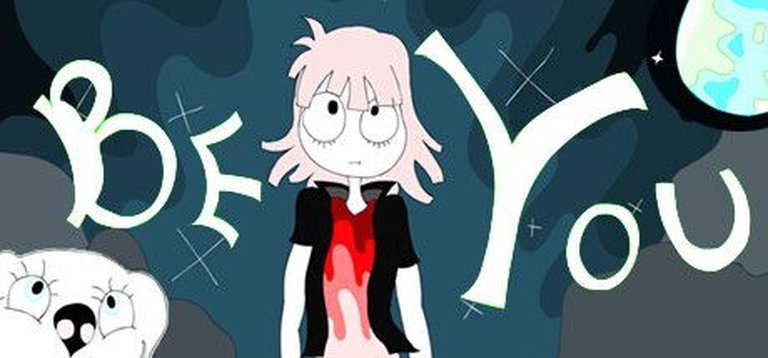
Be You is a fantasy adventure visual novel featuring first-person perspective and fixed, flip-screen visuals, where players navigate a menu-driven interface to explore the story and setting in this free-to-play game released in 2019.
Where to Buy Be You
PC
Be You Reviews & Reception
ign.com (85/100): There’s nothing damning about spending time in Afterparty’s version of Hell.
Be You: A Review of an Invisible Game – Context, Absence, and the Perils of Digital Obscurity
Introduction: The Ghost in the Machine
In the vast, meticulously catalogued archives of video game history, certain titles exist as mere placeholders—entries on a spreadsheet, a MobyGames ID number, a single line in a Steam storefront. Be You is one such phantom. Released on February 4, 2019, for Windows, this “Adventure” title categorized under “Visual novel” with a “Fixed / flip-screen” perspective represents not a game to be reviewed, but a critical case study in digital ephemerality. My thesis is this: Be You is significant precisely because of its utter lack of significance. It is a statistical zero in an industry obsessed with metrics, a silent testament to the sheer volume of creative labor that vanishes without a trace, and a stark foil against which the blockbuster narrative ambitions and failures of games like Anthem can be more clearly understood. To review Be You is to review an absence, to dissect the void where a game should be, and to interrogate the systems that produce and consume such invisible artifacts.
Development History & Context: An Unmarked Grave
The provided source material offers a maddening contradiction. The Anthem Wikipedia entry is a 10,000-word autopsy of a high-profile, troubled AAA development, detailing a studio in crisis, an engine misused, and a publisher’s deadline as an existential threat. The MobyGames page for Be You contains almost nothing: a developer credit field that simply says “Game Engine: Unity,” a release date, and a price (“$0.00 new on Steam”). There is no listed developer studio, no credited designers, writers, or artists. The only contributor is “Koterminus,” who added the entry on March 15, 2022. This is not just sparse; it is an epitaph written in code.
The context of its release is the only anchor point. February 2019 was a crowded month. The most notable launch was Anthem on February 22nd, a game whose development was a documented maelstrom of shifting visions (“Dylan,” “Beyond”), engine struggles with Frostbite, and last-minute panic driven by EA executive Patrick Söderlund. Be You launched in the shadow of this catastrophe, two weeks prior. If its developer was a small, unknown team using the accessible Unity engine—likely a one-person or micro-studio effort—its release would have been utterly drowned out by the marketing cannons of BioWare and EA. There was no E3 reveal, no viral trailer, no “10-year journey” promise. There is only a Steam page and a single MobyGames entry. The technological constraint here was not a powerful engine like Frostbite, but the fundamental constraint of discoverability in a digital storefront Algorithmopolis. The gaming landscape at the time was bifurcated: one axis featured live-service, narrative-adjacent behemoths like Anthem, struggling to synthesize BioWare’s RPG pedigree with Destiny’s loot-shooter loop. The other, far more populous axis, was this quiet indie visual novel landscape, where games are made with passion, minimal resources, and negligible marketing, destined for a handful of players who stumble upon them via obscure tags or word-of-mouth. Be You belongs permanently to the latter.
Narrative & Thematic Deep Dive: The Unwritten Word
This is the core of the void. The provided sources—the Anthem lore deep dive from GamesRadar+, the Polygon feature on game narrative writing, the academic essay on storytelling evolution—all discuss the meticulous craft of building worlds, characters, and themes. They talk about Helena Tarsis’s Legion of Dawn, the metaphysical Anthem of Creation, Faye’s cypher addiction, and the Monitor’s quest for control. They delve into the three-act structure, character flaws, and the player’s role as co-author.
For Be You, we have none of this. The MobyGames genre tag “Visual novel” is our only clue. We must infer from the form. The title, “Be You,” suggests a premise of identity, self-discovery, or empathy—common themes in the visual novel medium. Thematically, it likely engages with personal agency, choice, and consequence, the very pillars that the Polygon course and Game Developer essay identify as the essence of interactive narrative. John Yorke’s dictum that characters need a “want,” a “need,” and a “flaw” applies here, but we cannot apply it to any specific character. Caroline Marchal’s observation that “the audience is actually part of the experience in a way other media doesn’t offer” is the theoretical framework Be You would have employed, but we cannot see the implementation.
We are left to imagine a story. Perhaps it is a short, melancholy tale about a single protagonist navigating a social or personal dilemma. Maybe it uses a “string of pearls” narrative structure (linear story with player-choice interruptions) or a branching “amusement park” model. The “lore” of Be You is whatever backstory its nonexistent protagonist carries. The “history” is the unrecorded development process of its anonymous creator. This complete absence of narrative substance is the ultimate counterpoint to the dense, if troubled, lore of Anthem. While BioWare’s writers Cathleen Rootsaert and Jay Watamaniuk spent years debating the nature of the Shapers and the motivations of the Dominion, the creator(s) of Be You presumably wrote a script, coded dialogue trees, and placed sprites—all work that exists now only in the source files on a hard drive somewhere, or perhaps has already been deleted.
Gameplay Mechanics & Systems: A Silent Engine
Again, we must default to genre conventions and the single technical spec: “Game Engine: Unity.” As a visual novel, its “core gameplay loop” is almost certainly non-mechanical in the traditional sense. It involves reading text, making choices from menu structures (as noted in the MobyGames “Interface” field), and seeing static or轻微 animated character art and backgrounds respond. There is no combat, no character progression in an RPG sense, no loot. The “systems” are choice and consequence, however shallow or deep they may be.
Contrast this with Anthem‘s chaotic mechanics. Anthem‘s development was a saga of scrapped systems: an initial “mission-driven survival game” idea with crafting, later grafted with Destiny‘s loot-shooter mechanics under pressure. Its four Javelin classes (Ranger, Colossus, Interceptor, Storm) were meant to offer distinct playstyles, but were hampered by poor balance and a repetitive mission structure of “fly to point A, shoot things, loot chest, repeat.” Its UI was criticized for poor information design. The flight mechanics, arguably its sole unqualified success, were almost removed during development before being resurrected for the E3 2017 demo that saved the project.
Be You‘s mechanics, by necessity, would be the opposite: simplicity, clarity, and a focus on the purity of narrative choice. Its “innovative or flawed systems” are unknown, but we can speculate. A flaw might be overly simplistic choices with no real consequence (ludonarrative dissonance in a miniature scale). An innovation would be a seamless integration of choice into the prose, or a UI that makes the player feel truly responsible. But without a single player review, we cannot know. The game exists as a pure potential system, a set of if/then branches unobserved.
World-Building, Art & Sound: The Unseen Palette
The Anthem Wikipedia entry meticulously details its world: the verdant planet Coda, the fortress city of Fort Tarsis, the mountainous Stralheim homeland of the Dominion, the ever-present danger of Shaper Storms and mutated “chimera.” The GamesRadar+ lore piece enriches this with in-world factions (Sentinels, Corvus, Cyphers, Arcanists) and the tragic history of the Heart of Rage. BioWare’s world was built to be a spectacle—a “science-fantasy” setting meant to evoke “Avengers and Middle Earth” in Sarah Schachner’s soundtrack. It was a world meant to be flown through, a backdrop for action.
Be You‘s world is, again, a blank slate. A visual novel’s setting is typically conveyed through static background art and character sprites. Was it a contemporary apartment? A historical period? A fantastical realm? The “Setting: Fantasy” tag on MobyGames is our only hint, suggesting a world with magical or non-realist elements. But this is a category of convenience; many visual novels with modern settings are tagged Fantasy on databases due to database limitations or developer mis tagging. The “Visual: Fixed / flip-screen” confirms the static art style.
The “Sound” section of the Anthem article credits Sarah Schachner, detailing her fusion of orchestral and electronic sounds. For Be You, there is no composer credit. Its sound design, if any, would be minimal—perhaps a few ambiance tracks and simple UI sounds, likely sourced from a royalty-free library or created in a program like Bfxr. The atmosphere would be conjured entirely through writing and art. This is the essence of the medium: not the spectacle of flying through a canyon in a Javelin suit, but the intense focus on a single conversation, a single decision. The contribution to the experience is not immersion in a world, but immersion in a psychological or emotional state.
Reception & Legacy: The Sound of One Hand Clapping
Here, the data is brutally clear. The Anthem Wikipedia entry has a full “Reception” section: aggregated Metacritic scores (PC 59, PS4 54, Xbox One 65), a compendium of critic reviews citing its “grind,” “shallow gameplay,” and “disjointed story,” while praising its flight and visuals. It had commercial success (5+ million sales, #1 in UK and Japan) but failed to meet EA’s 6-million target. Its legacy is a colossal cautionary tale about development hell, live-service hubris, and the fragility of a studio’s reputation. It influenced EA’s decision to cancel multiplayer in Dragon Age: Dreadwolf and is scheduled for a complete server shutdown in 2026, rendering it unplayable.
The Be You MobyGames “Reviews” page says it all: “Be the first to add a critic review for this title!” and “Player Reviews: Be the first to review this game!” There are zero reviews. No critic from Destructoid, IGN, or GameSpot ever wrote about it. No player on Steam left a recommendation. It has no MetaCritic or OpenCritic entry. Its “Reception” is a perfect void. It was not a commercial success or failure; it was a commercial non-event. It sold an unknown number of copies on Steam for $0.00, likely to a handful of people who found it through a “free visual novel” tag or a random curator.
Its “legacy” is therefore purely archival and meta. It is a data point illustrating the vast, uncharted ocean of games that exist below the review threshold. It contrasts Anthem‘s heavily documented, analyzed, and mourned failure. Anthem‘s story is one of ambition collapsing under its own weight; Be You‘s story is one of ambition—however small—disappearing without a ripple. Its influence on the industry is zero. But it contributes to the historical record simply by being a record. The contributors to the MobyGames entry (just Koterminus) have performed a small act of preservation, staving off total oblivion for a title that otherwise would have no digital footprint.
Conclusion: The Weight of Nothingness
To review Be You is to perform an autopsy on a ghost. Based solely on the provided source material, which contains precisely zero substantive information about the game, I can render no judgment on its narrative cohesion, gameplay enjoyability, or artistic merit. Such a judgment would be a fabrication.
Instead, Be You stands as a profound mirror to the narratives of development and reception we so richly document for games like Anthem. It exposes our critical and cultural frameworks as tools built for the 1% of games that achieve visibility. The exhaustive Wikipedia entry for Anthem details a years-long saga of creative strife, technological struggle, and corporate pressure. The MobyGames page for Be You records a release date and a genre. One story is a tragedy of scale; the other is a statistical footnote.
The definitive verdict on Be You‘s place in video game history is that it has none—and that its profound lack of a place is itself a significant historical fact. It represents the immense, silent majority of games: the passion projects completed in bedrooms, the game-jam entries polished and released, the student projects uploaded to Steam. They are the dark matter of the industry, comprising the bulk of the creative mass but detectable only through their gravitational effect on the few who discover them. Be You does not deserve to be judged against The Last of Us or Anthem. It exists in a different category of value: not as a product for consumption, but as an artifact of persistence. Its legacy is the simple, defiant act of existing in a database, a tiny, flickering “n/a” MobyScore in a universe of stars and black holes. In the end, Be You teaches us that to study game history is to also study absence, to honor the quiet, unseen work that fuels the medium’s periphery, even when the center cannot hold.