
- Release Year: 2018
- Platforms: Windows
- Publisher: Degica Co., Ltd., Taito Corporation
- Developer: Taito Corporation
- Genre: Puzzle
- Perspective: Side view
- Game Mode: Single-player
- Gameplay: Music, rhythm
- Average Score: 78/100
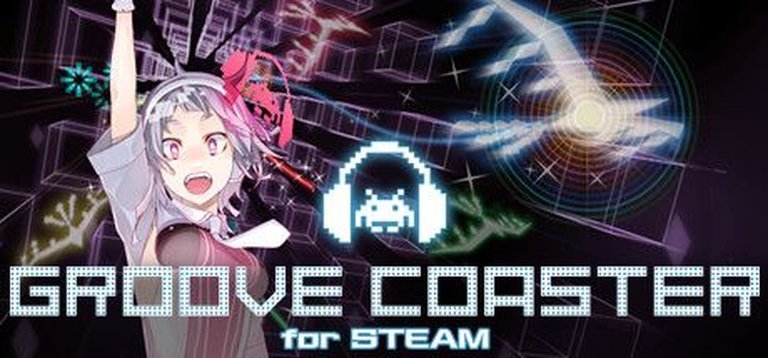
Description
Groove Coaster is a rhythm-based puzzle game where players navigate a 2D side-scrolling track by timing inputs to musical beats, with gameplay centered on hitting notes in sync with dynamic soundtracks. The game features a expansive library of downloadable songs, including tracks from franchises like Touhou and Undertale, all presented in vibrant, scrolling visuals that enhance the rhythmic experience.
Gameplay Videos
Where to Buy Groove Coaster
PC
Groove Coaster Free Download
Groove Coaster Mods
Groove Coaster Guides & Walkthroughs
Groove Coaster Reviews & Reception
metacritic.com (78/100): Groove Coaster is a game about losing yourself in the music, and that’s something it achieves perfectly.
steamcommunity.com : In short… yes and no.
confreaksandgeeks.com : Groove Coaster for Steam is an excellent way to experience Groove Coaster’s unique take on the rhythm gaming genre.
Groove Coaster: A Sensory Symphony Forged in Roller Coaster Tracks
Introduction: The Sensory Overload That Redefined Rhythm
In the pantheon of rhythm games, where precision and perfection are often the ultimate deities, Groove Coaster emerges as a hedonistic rebel. It is not a game about achieving flawless execution in a sterile, lane-based void; it is a game about surrendering to a meticulously crafted sensory deluge. From its inception as an iOS curiosity in 2011 to its evolution into a multi-platform, crossover-heavy franchise, Groove Coaster has persistently asked a radical question: what if a rhythm game was less about “hitting the notes” and more about feeling the music through your entire visual and tactile field? This review argues that Groove Coaster‘s genius lies not in its mechanical complexity—though it has that in spades—but in its unwavering commitment to translating the visceral, physical experience of music into a playable form. It is a roller coaster ride for the senses, and its legacy is cemented by its profound influence on how rhythm games can embrace eclecticism, collaboration, and pure, unadulterated spectacle.
Development History & Context: From Mobile Spark to Arcade Colossus
Groove Coaster was born from the unlikely ashes of Space Invaders Infinity Gene. Developed by Matrix Software and published by Taito—a company whose legacy is irrevocably tied to Tomohiro Nishikado’s 1978 shooter—the first iOS title in 2011 was visually and spiritually a spinoff of that experimental game, exploding pixels and enemy forms into rhythmic patterns. This initial version was a paid app, a premium experience on the burgeoning App Store, with a modest tracklist and a pristine, minimalist aesthetic powered by the Infinity Gene engine.
The tectonic shift came in 2013. Sensing the potential for a more immersive, communal experience, Taito ported and fundamentally reimagined the game for arcades under the cabinet codename, and in some regions, the title Rhythmvaders. This was not a simple touchscreen移植. It required the creation of the iconic “BOOSTER” controllers—two large, tactile button units flanking a central screen, designed to be gripped and manipulated like roller coaster handrails. This hardware innovation was a direct response to the social, physicality of the Japanese arcade. The 2014 update, Groove Coaster EX, solidified this arcade identity, adding new difficulties and song packs distributed via Taito’s NESiCAxLIVE network. The development trajectory from 2013 onward shows a rapid, annual cadence of updates (2: Heavenly Festival in 2015, 3: Link Fever in 2016, 4: Starlight Road in 2018, and the final 4MAX: Diamond Galaxy in 2020), each refining scoring, adding “Navigator” characters, and incorporating a staggering volume of cross-licensed and doujin music. This arcade golden age coincided with a global rhythm game resurgence, but Groove Coaster carved its niche with its unique controller and psychedelic presentation, standing apart from Konami’s beatmania lineage and Bandai Namco’s Taiko no Tatsujin.
The transition to PC via Steam in 2018 (based on 3: Link Fever) and to Nintendo Switch (Wai Wai Party!!!! in 2019, Future Performers in 2025) represents the franchise’s final major evolution. These ports grappled with the inherent tension of adapting a cabinet-centric, social experience for the home. The Steam version notably suffered from lag issues at launch, a fatal flaw for a rhythm game, while the Switch titles doubled down on local multiplayer and vast, eclectic libraries. The arcade service’s conclusion in April 2024 and the mobile service’s end in March 2025 mark the closing of an era, but the console versions, particularly the ambitious Future Performers with its story mode, ensure the franchise’s DNA persists.
Narrative & Thematic Deep Dive: The Journey is the Destination
Traditional narrative is anathema to the rhythm game genre. Groove Coaster does not have a plot in the conventional sense. Instead, it constructs its “narrative” through three interconnected, evolving layers: the abstract journey of the Groove Avatar, the thematic presence of the Navigator characters, and the meta-narrative of its insane curation.
1. The Avatar’s Abstract Pilgrimage: The core “story” is the player’s own progression. The pixelated avatar, often a simple dot or a customizable “Groover,” travels a predetermined, winding track. The track itself—a glowing, thin line that contorts into stars, zig-zags, and spirals—is the antagonist and guide. The rhythm is the narrative engine; a slow, ambient track creates a languid, contemplative journey through soft pastel landscapes, while a 200 BPM electronic assault warps the track into a nerve-shattering, high-speed maelstrom. The player’s goal is not to “defeat” a boss but to achieve harmony with this volatile path, to let the music dictate the motion. This is a pure, ludonarrative harmony: the gameplay is the experience of the music.
2. The Rise of the Navigator: This abstract journey gained a human (or anthropomorphic) face starting with Groove Coaster 3: Link Fever (2016). Linka, a cheerful, pink-haired mascot voiced by Moe Toyota (Japanese) and Jennifer Skidmore (English), became the player’s hype-woman and guide. Her function is purely diegetic and pedagogical. She shouts encouragement (“LET’S GROOOOOOVE!”), announces results (“Perfect?! That was incredible!”), and provides a constant, friendly presence. Her introduction marked a significant thematic shift: the game was no longer a cold, mechanical test but a shared party. Dream Party (2017) introduced Yume, a more sleepy, whimsical counterpoint, and Starlight Road (2018) added Seine, a cooler, more collected figure. Their presence transforms the solo experience into a concert with a host. In Wai Wai Party!!!! and Future Performers, they become selectable companions, their voices (and sometimes entire character arcs, as in the story mode of Future Performers) adding a layer of personality and fan service. This evolution frames the rhythm game as a social, almost festivals-like event, aligning with the arcade’s communal spirit.
3. The Meta-Narrative of Curation as World-Building: Groove Coaster’s most profound thematic statement is its bewildering, encyclopedic song list. This is not a curated playlist but a chaotic, glorious museum of internet and game music culture. The inclusion of Vocaloid tracks (DECO27, *nomico), Touhou Project arrangements (a staple of the doujin scene), licensed J-pop, and deep-cut arrangements from Taito’s own history (Bubble Bobble Medley, Darius tracks) creates a specific cultural milieu. The game’s world is one where a track by the legendary Zuntata sound team can seamlessly flow into a Crypt of the NecroDancer remix, which is followed by Undertale‘s “MEGALOVANIA.” This eclecticism is the game’s true “setting.” It posits a universe where all music is equal, where a nostalgic video game theme and an internet meme song are valid coasters on the same track. The 2018 Undertale crossover is a masterstroke of thematic synergy: the game’s “determination” to keep going mirrors the player’s need to maintain a GROOVE gauge and chain; the hidden “Ad-Lib” notes echo the game’s hidden genocide route mechanics. The game doesn’t just feature music; it participates in the dialogue of gaming subcultures.
Gameplay Mechanics & Systems: Deconstructing the Coaster
The genius of Groove Coaster is its deceptive simplicity masking a deep, systemic architecture. The core loop is universal: a cursor (the avatar) moves along a fixed path at a constant speed. Notes (“targets”) appear along this path. When the cursor overlaps a target, the player must input a command with precise timing.
The Lexicon of Inputs:
* Tap (White): Single press of a button/touch. The bread and butter.
* Hold (Yellow-White): Press at start, hold until end, release after.
* Dual Tap (Blue): Press both inputs simultaneously.
* Slide (Colored Arrow): Flick/swipe or push the controller in the direction of the arrow.
* Beat (Green Wave): Rapidly tap or shake the controller for the duration.
* Critical (Orange Square): Mash both inputs rapidly in any fashion.
* Ad-Lib (Invisible): The game’s secret weapon. These have no visual cue. Success is judged by hitting an input on the beat in specific, often musically significant, silent gaps. Missing them does not break combo but is required for a “Full Chain” and top ranks.
The Scoring & State Engine:
Performance is judged on a tiered scale: GREAT (perfect), COOL (excellent), GOOD (acceptable), MISS (failure). These feed three core systems:
1. The GROOVE Gauge: A life bar. Hitting GREAT/COOL/GOOD fills it; MISS depletes it. Clearing a song requires ≥70% gauge at the end.
2. The CHAIN Counter: Consecutive non-MISS hits. This is the game’s emotional heart.
* CHAIN 10+ → FEVER: Each subsequent hit adds +2 to the chain counter (instead of +1). Visuals intensify.
* CHAIN 100+ → TRANCE (Arcade/PC only): Each subsequent hit adds +4. The screen erupts in a hyper-sensory overload.
* A MISS resets CHAIN to 0, ending FEVER/TRANCE. The scoring in arcade-style modes directly ties chain count to points, making long chains the key to high scores.
3. The Rating System: Ranks from E (fail) to S++ (near-perfect). Achieving S-rank on Simple/Normal/Hard unlocks a song’s EXTRA (or Master) difficulty—a notorious step up in complexity. The ultimate goal is a Full Chain (no MISS + all Ad-Libs hit) or Perfect (all GREATs).
Platform-Specific Nuances & Innovations:
* Mobile (iOS/Android): Born from touch. Controls are intuitive single-finger taps, holds, and swipes. Early versions (original/Zero) could not handle dual inputs (a second finger would be ignored), limiting chart design. 2: Original Style added two-finger play and a bizarre “mic mode” where you play by making sounds.
* Arcade (Booster Controllers): The definitive experience. The two large, button-faced controllers allow for a physical, full-body engagement. Dual slides (pushing both controllers in angled directions) are a signature challenge. The “impossible” item that hides all notes tests pure memory and rhythm intuition. The hardware’s subwoofer creates haptic feedback, making the coaster’s “bumps” tangible.
* PC (Steam): A direct port of 3: Link Fever. It supports keyboard, mouse, and Steam controllers. The key flaw was notorious input lag on some systems at launch, a death knell for rhythm precision. The songlist, while expandable via DLC, is a fraction of the arcade’s library, leading to critiques of value. It offers “Simple” (mobile-style) and “Arcade” (full dual-note) difficulties.
* Switch (Wai Wai Party!!!!, Future Performers): Embraces the home console. WWP uses Joy-Cons (mapped to face buttons or motion “Active” style) and focuses on local/online party play with 100+ base songs and rampant DLC. Future Performers (2025) is a ground-up rebuild with a horizontal 16:9 “music video” layout, a Basic/Advanced mode split (simplifying vs. full 9-note types), and a fully voiced story mode—a first for the series.
Systemic Critiques:
* Fake Difficulty & Unlock Grind: The Ad-Lib system, while brilliant, can lead to trial-and-error on sight-reads. Unlocking difficulties (S-rank on lower modes) can feel like arbitrary busywork.
* Scoring Inconsistency: Mobile charts used a chain-multiplier system with no score cap; arcade/PC charts use a normalized 1,000,000-point system (85% accuracy, 10% chain, 5% clear). This creates cognitive dissonance for players moving between platforms.
* The “Diagonal Slide” Problem: On platforms without precise directional inputs (like a keyboard’s arrow keys or a single Joy-Con), rapid diagonal slides become disproportionately difficult compared to their arcade cabinet execution, a consistent porting flaw.
World-Building, Art & Sound: The Psychedelic Roller Coaster
If the gameplay is the mathematics of the coaster, the art and sound are its soul and its scream.
Visual Direction & World-Building:
The series’ aesthetic is a masterclass in cohesive psychedelia. The “world” is the track itself—a thin, glowing line against a shifting, 2.5D/3D backdrop. These backgrounds are not static; they pulse, warp, and fragment in sync with the music’s bass and melody. Low-tier tracks might feature simple, soothing gradients or abstract polygons. Higher-difficulty charts, especially those from composers like t+pazolite or xi, assault the senses with kaleidoscopic patterns, rapid camera spins, and screen-filling effects that make the “roller coaster” metaphor terrifyingly literal. The visual style evolved significantly: the earliest mobile titles were heavily indebted to the pixel-art, glitch-aesthetic of Space Invaders Infinity Gene. From Heavenly Festival onward, the look became smoother, more vector-based, and integrated the Navigator characters more prominently. The Switch’s horizontal layout in Future Performers allows for even more ambitious “music video” compositions.
Character Design & The Navigator Phenomenon:
Linka, Yume, Seine, and later avatars are not just mascots; they are the player’s avatar’s shadow. Their simple, anime-styled designs (courtesy of artists like NPA,Mahiro) are rendered in the same vibrant, clean style as the UI. They react to your performance with exaggerated expressions of shock or delight, grounding the abstract experience in a relatable, friendly presence. Their theme songs (“LINK LINK FEVER!!!”, “Tobitate! Dream Party”) are stellar J-pop/electro-pop tracks in their own right, reinforcing their identity. This character-driven approach is a stark contrast to the faceless, generic “player 1” dots of beatmania or Osu!, and it directly contributed to the series’ strong fan art and community identity.
Sound Design & The Soundtrack as Archive:
This is where Groove Coaster transcends into a cultural artifact.
* Zuntata: Taito’s in-house band provides the foundational sound—polished, energetic, often techo/electronic tracks like “Period of Revolution” or “Scarlet Lance” that feel like they could be from a lost Darius sequel.
* The Crossover Tsunami: The game’s song list is its claim to immortality. It is a time capsule of 2010s rhythm game and internet culture. Touhou arrangements dominate the library, catering to the massive doujin community. The Undertale pack is a landmark, inserting one of the most beloved indie game soundtracks into a rhythm game context with chart designs that mirror the source material’s narrative beats (e.g., “Your Best Nightmare” has multiple endings based on your grade). Collaborations with Crypt of the NecroDancer (and its Danganronpa mashups), Puzzle & Dragons, maimai, Taiko no Tatsujin, and DJMAX Respect are not just licensing deals; they are symposia of the rhythm game genre itself.
* Doujin & Indie Spotlight: The inclusion of tracks by famous doujin circles like IOSYS, REDALiCE, and ALR provides a direct pipeline from the fan scene into an official Taito product. This respect for the grassroots community is unparalleled.
* Audio-Visual Synesthesia: The masterstroke is how the visuals react to the specifics of the audio. A vocal track will have Ad-Libs placed on the singer’s phrases. A complex rhythm with off-beat kicks will have notes placed in the confounding gaps. The background effects often follow the song’s structure, building during a chorus and receding for a bridge. You are not just hitting notes to the music; you are actively composing the visual spectacle with your performance.
Reception & Legacy: A Cult Classic with Mainstream Ambitions
Critical Reception:
The series enjoys a “generally favorable” reputation, but with a notable platform divide.
* Mobile Debut (2011): A critical darling. Metacritic 87. IGN’s 9.5/10 praised its “addictive” fusion of touch and music. The A.V. Club lauded its elegance over predecessors like Osu! Tatakae! Ouendan. Common praise: perfect for iPhone, stunning visuals, great soundtrack.
* Arcade Iterations: Less formally reviewed in Western press but revered in the rhythm game community. The Booster controller was widely praised for its tangible feedback and the sheer spectacle of the cabinet (lights, sound, social play). Criticisms were minor—cabinet cost, song unlock grinds.
* PC Port (Steam, 2018): A more mixed bag. Metascore 78. Reviewers loved the core gameplay and soundtrack but universally criticized the high DLC cost (the base game’s 36 songs feel sparse next to the arcade’s hundreds) and the launch-day input lag that marred precision play. Digitally Downloaded‘s perfect score stands as a passionate defense of its experiential goals over competitive purity.
* Switch Ports: Wai Wai Party!!!! (Metacritic ~80) was praised for its massive library, local multiplayer, and party accessibility, though some noted loading times. Future Performers (2025) has received positive early impressions for its refinements and story mode, though some find the narrative simplistic.
Commercial Performance & Lifecycle:
* Mobile Success: Groove Coaster Zero hit 1 million downloads by 2013, a significant achievement.
* Arcade Heyday: Versions 2-4 (2015-2020) were staples in Japanese arcades, particularly in Taito and Round1 locations. The frequent song updates (monthly DLC packs) and event systems ( Navigator collaborations, ranking events) cultivated a dedicated player base.
* The End of an Era: The arcade’s decline was precipitated by hardware constraints. In October 2022, Taito announced no new songs for 4MAX due to hard drive space exhaustion. The final online service shutdown on April 1, 2024, was a quiet, poignant end to a 10-year arcade run. The mobile service’s end in March 2025 followed a similar path of maintenance cessation.
* Switch Resilience: The console ports, free from arcade hardware limits, continue to thrive. Wai Wai Party!!!! sold 24k units in Japan its first month (2019), and post-launch DLC has been steady. Future Performers suggests Taito is committed to the franchise on home consoles.
Legacy & Influence:
1. The “Roller Coaster” Paradigm: It proved that a rhythm game’s lane need not be straight or grid-based. The winding, 3D path became its own puzzle layer, influencing later titles that experiment with spatial note placement.
2. Crossover Supremacy: Groove Coaster normalized the idea of a rhythm game as a cross-media anthology. Its staggering list of collaborations—from Touhou to Undertale to Muse Dash—set a new standard for content breadth and fan service, making it a hub for niche music communities.
3. Ad-Lib as Philosophy: The hidden note system is more than a gimmick; it’s a design philosophy that rewards deep listening, intuition, and repeated play. It creates a “second track” of discovery within a song, a concept later echoed in games like Hi-Fi Rush‘s hidden rhythm paths.
4. Navigator & Social Play: The personable, voiced Navigators and the arcade’s local multiplayer (up to 4 cabinets) emphasized rhythm gaming as a social activity, a counterpoint to the solitary “puzzle” approach of some Western rhythm games.
5. Preservation & Community: With the official services dead, the fan community has become the primary archivist. Wikis detail every chart, every Ad-Lib location, every unlock condition. Homebrew efforts to emulate the arcade hardware keep the experience alive, a testament to its cult status.
Conclusion: The Last Ride of the Sensory Overload
Groove Coaster is a series of contradictions. It is mechanically deep yet aesthetically simplistic. It is fiercely competitive yet profoundly experiential. It is a Japanese arcade staple that found its largest modern audience on a family-friendly home console. Its most defining feature—the roller coaster track—is both its greatest innovation and a limitation, as the fixed path can never offer the free-form expression of a Guitar Hero or the Notechart complexity of a beatmania IIDX.
Yet, these contradictions are its strength. It never sought to be the hardest or the purest rhythm game. Its thesis, stated perfectly in Digitally Downloaded‘s review, is that it is “a game about letting your senses get overwhelmed.” In an era increasingly obsessed with optimization, skill expression, and esports viability, Groove Coaster remains a glorious anachronism: a game about feeling.
Its place in history is secure. It is the joyous, chaotic, crossover-obsessed cousin to more serious rhythm franchises. It democratized the “arcade perfect” experience for home players through its console ports. It built bridges between doujin circles, indie developers, and major publishers, creating a unique cultural mosaic in its soundtrack. While its arcade cabinets are now silent, and its mobile versions are ghosts, the core experience survives. The Future Performers revival proves there is still demand for its brand of sensory symphony.
For the historian, Groove Coaster is a fascinating case study in platform adaptation, community cultivation, and the lifecycle of a niche genre. For the player, it is a reminder that rhythm games can be about more than accuracy—they can be about the dizzying, euphoric rush of the drop, the beauty of a winding path, and the simple joy of hitting a note in time with a song you love. It is not the pinnacle of rhythm game design, but it is, undeniably, one of its most exuberant and unforgettable rides.