
- Release Year: 2021
- Platforms: Windows
- Publisher: DK Productions
- Developer: DK Productions
- Genre: Action
- Perspective: First-person
- Gameplay: Shooter
- Setting: Post-apocalyptic
Description
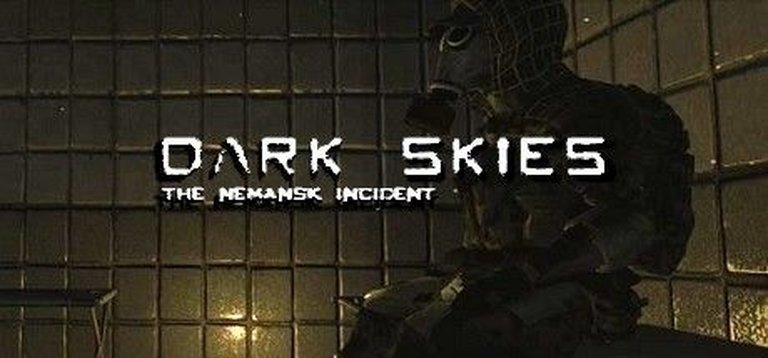
Dark Skies: The Nemansk Incident is a post-apocalyptic first-person shooter set in the surreal Nemansk Region, where a mysterious explosion in October 2003 devastates the area and leads to a failed secret military operation. As Prochor Visinov, a hired soldier, you must explore open, hazardous environments, face challenging enemies, and uncover the truth to rescue missing troops amidst radiation and other dangers, all within a handcrafted, atmospheric world.
Gameplay Videos
Dark Skies: The Nemansk Incident Free Download
Dark Skies: The Nemansk Incident Guides & Walkthroughs
Dark Skies: The Nemansk Incident: A Study in Atmospheric Ambition and Indie Constraint
Introduction: A Whisper in the Wasteland
In the vast, overcrowded digital library of video games, some titles exist not as landmarks but as carefully preserved artifacts—testaments to a singular vision forged in isolation. Dark Skies: The Nemansk Incident is one such artifact. Released into Early Access in January 2021 by the virtually monolithic DK Productions, this first-person exploration shooter represents a deliberate, if deeply flawed, attempt to channel the oppressive, mysterious dread of the post-apocalyptic genre into a compact, handcrafted experience. Its legacy is not one of commercial triumph or critical canonization, but of stark illustration: the profound creative aspirations of an indie developer wrestling with the fundamental constraints of technology, budget, and scope. This review will argue that Nemansk Incident is a game of fascinating dichotomy—a world rich in implied narrative and environmental storytelling that is ultimately hamstrung by the very systems meant to convey it, offering a poignant case study in the economics of atmosphere.
Development History & Context: The Solo Dev’s crucible
The story of Dark Skies: The Nemansk Incident is, first and foremost, the story of Felix Kolbeck and DK Productions. The available credits list only two individuals under the developer banner: Felix ‘Duchenkuke’ Kolbeck (credited for the game itself, music/sounds, and story), and an 11-person “Special Thanks” list. This is the quintessential indie studio: a solo developer, or at most a micro-team, operating with absolute creative control.
The game’s development timeline, as pieced together from the provided sources, reveals a project born of iterative learning. Conceived in 2016, immediately following the release of Hunted: One Step Too Far, it spent approximately four years in development before its Early Access launch. Kolbeck’s own post-mortem, embedded in the official Steam/ModDB description, is remarkably candid. He states the predecessor was “praised for its great and creepy atmosphere, it was also criticized for it’s technical flaws and lack of in-depth gameplay.” Consequently, Nemansk Incident was a conscious effort to “improve on every aspect.”
This context is crucial. The game was built not in a vacuum, but as a direct response to critique, using the lessons from a prior project. The chosen tool, the GameGuru engine (as noted on ModDB), is a telling detail. GameGuru is a popular, accessible engine for hobbyists and small indie developers, prized for its rapid prototyping but historically criticized for performance issues, limited graphical fidelity, and dated rendering techniques. The ambition to create “a lovingly handcrafted and detailed world” and “great environmental coherence” directly confronts the engine’s notorious struggles with optimization and visual polish. The development thus occurred at the intersection of a developer’s soaring atmospheric goals and the very real, gritty floor of accessible tooling.
Narrative & Thematic Deep Dive: The Unseen Cataclysm
The narrative premise is delivered in a tight, almost pulp-fiction blurb: In October 2003, an “explosion of unknown origin” rocks the remote Nemansk Region. The Kremlin initiates a secret military operation to investigate, but all contact is lost. The player assumes the role of Prochor Visinov, a “hired soldier” and the “last hope for the missing troops.” The mandate is simple: enter the zone, discover what happened, and “shine light into the darkness.”
This framework is deliberately skeletal, serving primarily as a justification for the gameplay loop—exploration and survival in a corrupted environment. The thematics are classic post-apocalyptic: the hubris of scientific/military intrusion into the unknown, the transformation of nature into a hostile entity, and the lone individual versus an incomprehensible catastrophe. The title, Dark Skies, and the region’s name, Nemansk, evoke a Slavic, almost folk-horror sensibility, suggesting a disaster with roots in something older and more primal than mere technology.
However, the narrative execution is where the source material reveals its extreme limitations. There is no evidence of a delivered story beyond this setup. The credits list “Story Written by DK Productions,” but no specific writers or designers are named beyond Kolbeck. There are no character arcs for Visinov, no log entries from scientists, no recovered audio diaries, and no branching dialogue or choices. The “what happened here?” question is not a narrative puzzle to be solved through investigation, but a static backdrop. The theme of “shining light into darkness” is ironically undercut by a game that, based on its own promotional language, is more about enduring the darkness than illuminating it. The story exists as environmental mood and a mission prompt, a ghost of a plot that players must flesh out themselves through exploration, if the systems allow.
Gameplay Mechanics & Systems: The Grind of Survival
The core gameplay is described as an “exploration based shooter” with survival elements. The player’s objectives are to traverse the “Open Area Levels,” combat “Challenging Enemies,” manage Radiation and more Dangers, and utilize a range of “Detailed weapons” including “unique hidden guns.”
Core Loop: The loop appears to be a tense, resource-scarce trek across a hostile landscape. The emphasis on “challenging enemies” and the developer’s statement that “surviving in this surreal world should not be an easy task” suggest a punishing difficulty curve. The inclusion of radiation as a hazard implies a resource-management layer—likely finding protective gear or medicine—adding a Stalker– or Metro–esque survivalist tension.
Combat & Progression: As a first-person shooter, combat is direct. The mention of “detailed weapons” and “unique hidden guns” hints at a collectible or discovery-based arsenal, a common indie trope to encourage exploration. However, there is zero information on progression systems. There is no mention of skill trees, RPG mechanics, perk systems, or meaningful upgrades beyond perhaps finding a better weapon. This aligns with the developer’s admission that his previous game suffered from a “lack of in-depth gameplay.” The attempted fix appears to have been environmental richness and enemy challenge, not necessarily deeper character progression.
Systems & Innovation: The most significant promised system is the “Open Area Levels.” This suggests a departure from linear corridors toward a more systemic, player-directed exploration. The potential here is for emergent storytelling—choosing your path, stumbling upon locations out of order, creating your own narrative of survival. This is a promising design goal that contrasts with the likely linearity imposed by the GameGuru engine and a small team’s content creation limits.
Flaws & Interface: The developer’s self-critique is the most telling analysis available. The game was designed to correct prior “technical flaws,” yet the very choice of the GameGuru engine—known for clunky physics, AI pathfinding issues, and Frame rate instability—suggests these problems may persist. The “Direct control” interface mentioned on MobyGames implies a standard FPS scheme, but no details on UI clarity, map functionality, or inventory management are provided. One can infer from the “hard and challenging” design philosophy that the UI might be minimalist or unintuitive, prioritizing immersion over convenience—a common indie design choice that can easily tip into frustration.
World-Building, Art & Sound: The Triumph of Coherence
This is where Dark Skies unequivocally claims its intended identity. The developer repeatedly emphasizes “unique atmosphere,” “great environmental coherence,” and a “lovingly handcrafted and detailed world.” This is the game’s primary, almost exclusive, selling point. The setting—a Russian forest region transformed by an unknown event—demands a specific mood: eerie, decaying, quietly monstrous.
The visual direction is framed not by cutting-edge graphics, but by meticulous environmental design. The term “environmental coherence” suggests a world where every clutter, every broken wall, every overgrown path feels intentionally placed to sell the story of a sudden, violent transformation. It posits a less is more aesthetic, where mood is built through composition, lighting, and sound rather than texture resolution. The GameGuru engine’s limitations would force this approach, potentially resulting in a world that feels dense and intentional despite technical simplicity.
The sound design is explicitly called out as a strength: an “Exclusive Soundtrack & Ambiance created by the Developer himself.” This is a critical point. In a game where visual fidelity may be lacking, audio becomes the primary tool for immersion. A dynamic, unsettling ambient score—likely using layered environmental noises, distant monstrous cries, and a minimalist, droning soundtrack—could do more to build dread than any polygon count. The developer’s personal involvement here suggests a unified, auteur-driven aural vision.
Together, these elements aim for what the source calls a “surreal world.” The goal is not photorealism but a heightened, dreamlike (or nightmarish) version of a familiar forest, where the familiar is subtly wrong. The “radiation” hazard would be visually represented not just by a HUD icon, but by distorted visuals, audio filters, or sickly environmental colors. This holistic design philosophy is the game’s clearest strength on paper.
Reception & Legacy: The Echo of a Small Storm
Critical & Commercial Reception at Launch: The data is stark. On Metacritic, the game has a “tbd” Metascore with no critic reviews and an “tbd” User Score with no user ratings (as of the source snapshot). On MobyGames, the “Moby Score” is “n/a,” and it is “Collected By” only 1 player. This indicates a release so niche it existed almost entirely under the radar of established gaming press and even many core enthusiasts.
However, Steam user data from Steambase tells a more nuanced story. With 93 total reviews, the game holds a Player Score of 70/100, classified as “Mixed.” This breaks down into 65 positive and 28 negative reviews. This is the game’s true reception: a small but vocal audience divided. The positives almost certainly praise the atmosphere, the compelling sense of place, and the successful evocation of a specific mood. The negatives likely cite the “technical flaws” (crashes, bugs, poor optimization) and the “lack of in-depth gameplay”—repeating the criticisms from the developer’s prior game, suggesting the fixes were insufficient.
Evolution of Reputation & Influence: Four years after its Early Access launch, with an update noted as being “4 years ago” on ModDB, the game appears to have stagnated. There is no evidence of a major 1.0 release, significant patch notes, or a growing community. Its influence on the industry is, by all measurable metrics, null. It has not inspired clones, been cited by developers, or entered any “best of” lists for its genre. Its legacy is purely documentative: it exists as a data point in the history of GameGuru projects, a example of a solo dev’s journey from one project to the next.
The most significant piece of legacy is the announced sequel: “Dark Skies 2: Keepers of Nemansk (2024)” listed in the MobyGames series info. This confirms that The Nemansk Incident was not a dead end but a foundational chapter for DK Productions. The sequel’s existence implies the original achieved enough of a cult following or personal satisfaction to warrant continuation. The lessons learned—about atmosphere, environmental design, and the perils of technical debt—were undoubtedly carried forward.
Conclusion: A Flawed Vessel for a Singular Vision
Dark Skies: The Nemansk Incident cannot be judged by the standards of AAA shooters or even most well-funded indie titles. To do so is to misunderstand its fundamental nature. It is a personal, idiosyncratic project—a love letter to a specific feeling, constructed within tight, self-imposed limitations.
Its greatest success is its atmosphere. Through deliberate environmental design and a dedicated, developer-crafted soundscape, it likely achieves its primary goal: making the player feel isolated, uneasy, and dwarfed by a mysterious, corrupted wilderness. The “open area” design, if executed with coherence, offers a refreshing alternative to linear horror-shooter paths.
Its greatest failure is its mechanics. The persistence of “technical flaws” and a perceived lack of gameplay depth, despite being the developer’s stated focus for improvement, points to the brutal reality of solo development with a constrained engine. The game is probably a janky, unstable, and shallow experience beneath its atmospheric veneer. The survival elements feel tacked on, the combat repetitive, and the progression negligible.
In the grand canon of video game history, Dark Skies: The Nemansk Incident is a footnote. It will not be taught in game design courses as a paradigm of excellence. However, in the micro-history of indie game development, it is a vital story. It is the story of a creator who, after receiving feedback, tried again. It is the story of prioritizing mood and world over mechanics and polish. It is the story of building a sequel because the first one, flaws and all, contained a seed of something worth continuing.
For the historian, it is a pure artifact: a game whose entire raison d’être is contained in its own description, with no external critical discourse to complicate or enrich its narrative. Its 70/100 Steam score is not a mark of quality, but of polarized niche appeal. You will either succumb to its eerie, handcrafted woods and forgive its粗糙ness, or you will be utterly alienated by it. There is no middle ground. In this, it perfectly embodies the high-wire act of the solo indie developer: aiming for a singular, emotional experience, and living or dying by the technical execution of that dream. Dark Skies: The Nemansk Incident lives, imperfectly, in that tense space between vision and viability.