
- Release Year: 2022
- Platforms: Windows
- Publisher: Movie Games S.A.
- Developer: Atomic Wolf Sp. z o.o., Pixel Crow Games S.A.
- Genre: Simulation, Strategy, Tactics
- Perspective: Diagonal-down
- Game Mode: Single-player
- Gameplay: Real-time strategy
- Setting: Contemporary
- Average Score: 70/100
Description
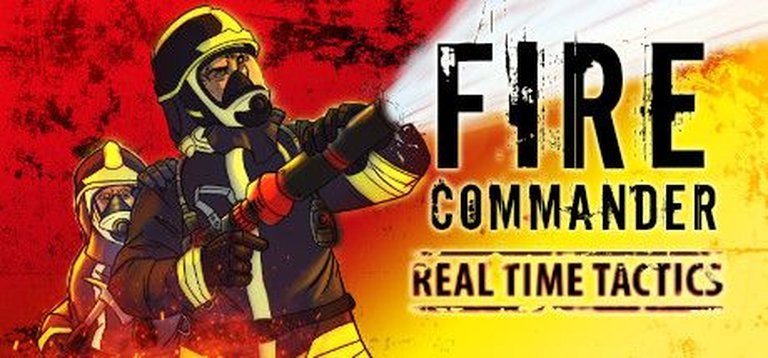
Fire Commander is a contemporary real-time strategy game where players take command of a firefighting unit. Tasked with tactical decision-making across over 30 missions, players must save lives, manage critical resources like water supplies, and care for their team in realistic, atmospheric fire emergencies, emphasizing simulation and strategy.
Gameplay Videos
Where to Buy Fire Commander
Fire Commander Free Download
Fire Commander Reviews & Reception
opencritic.com (70/100): All in all, Fire Commander is fun arcade style video game based on real firefighter missions.
kotaku.com : Fire Commander is the latest game to try and break this duck, and while it doesn’t make it, I at least admire the way it tries.
Fire Commander: A Tactical Inferno of Ambition and Omission
Introduction: The Smoldering Promise
In the crowded landscape of real-time strategy and tactics, few settings are as universally resonant yet mechanically daunting as firefighting. The visceral drama of a towering inferno, the life-or-death stakes of rescue, and the relentless advance of a force of nature offer a potent narrative cocktail. Fire Commander, released in July 2022 by Polish studios Atomic Wolf and Pixel Crow Games (the team behind the acclaimed Beat Cop), stepped into this smoldering arena with a clear proposition: translate the chaos and heroism of firefighting into a tactical RTS. Its official tagline, “Face the Fire,” is both a challenge and a thesis statement. This review argues that Fire Commander is a game of profound and fascinating contradictions—a title that simulates the consequences of fire with impressive systemic depth, yet abandons the iconography and fundamental mechanics of firefighting in the name of game-y convenience. It is a competent, often engaging, tactical puzzle-box that simultaneously feels like a missed opportunity to truly honor its real-world subject. To understand its place, we must dissect the fire between its ears: the brilliant design intentions that repeatedly collide with baffling, immersion-breaking omissions.
Development History & Context: The European Disaster Sim Legacy
Fire Commander emerged from a specific and vibrant niche of European game development: the “management and disaster response” sim. This lineage includes titles like Emergency (German), Firefighting 2014 (Czech), and Pixel Crow’s own Beat Cop (a brilliant blend of management and action). These games share a common DNA: a gritty, often satirical or earnest focus on blue-collar public service jobs, rendered with a pragmatic, sometimes janky, charm. They are made on modest budgets for a dedicated audience that relishes procedural authenticity over blockbuster spectacle.
Atomic Wolf and Pixel Crow, publishing under the Movie Games S.A. umbrella (a Polish publisher known for diverse, often quirky Indies), aimed to modernize this formula. They leveraged the Unity engine to create a visibly more polished 3D isometric experience than many of its 2D predecessors. The development context was post-Beat Cop (2017), which had earned critical goodwill for its nuanced take on police work. Fire Commander was thus positioned as a more ambitious, systemic successor—trading the street-level grit of a patrol officer for the high-stakes, team-based coordination of a fire crew. The technological constraint was not raw power but imagination: how do you model fire, a non-intelligent but physically pervasive threat, as a compelling adversary in a real-time tactics framework? Their answer would define the game’s core identity and its most glaring flaw.
Narrative & Thematic Deep Dive: The “Family” of the Firehouse
The narrative in Fire Commander is minimalistic, delivered primarily through brief mission briefings and a prologue campaign (“First Response”). It eschews a grand, cinematic plot for a episodic structure focused on a specific fire station and its crew. The thematic core is explicitly stated in the official description: “Putting your life on the line together can form strong bonds between you and your firefighting crew. The team becomes your family.” This is the game’s emotional anchor.
Character & Setting: The player is the nameless “Commander.” The firefighters are procedurally generated or recruited, with classes defining their roles (Engineer, Paramedic, Firefighter, etc.). They gain experience, develop skills, and can be permanently lost to injury or death. This system directly mirrors the “permadeath” and attachment mechanics of XCOM, framing the station not just as a base but as a collection of individuals whose competence and survival matter. The setting is a contemporary, vaguely Eastern European metropolis (reflecting the Polish development), dealing with industrial accidents, toxic spills, highway pile-ups, and high-rise fires. There’s a subtle, uncommented-on thread of industrial negligence—many missions involve chemical plants or warehouses—hinting at a world where disaster is a byproduct of commerce.
Thematic Tensions: The game’s theme is “earnest heroism.” It celebrates the professionalism and sacrifice of firefighters. However, the gameplay mechanics sometimes undermine this. The need to “grind” XP by replaying missions to upgrade gear and stats (as noted in the Tally-Ho Corner critique) injects a video gamey grind that feels at odds with the solemnity of the job. The narrative treats each fire as a unique, tragic event, but the player’s repeated failure and retry cycles treat it as a puzzle to be solved. This dissonance is the central narrative experience: you are meant to feel like a hero commanding a family unit, but you operate like a tactical director optimizing a chessboard. The game never fully reconciles these two perspectives.
Gameplay Mechanics & Systems: The Tactical Puzzle-Box
If Fire Commander has a soul, it is here, in its meticulous and often cunning mission design.
Core Loop & Perspective: Missions are real-time tactics with pause (the “with pause” tag is accurate). The top-down diagonal perspective provides a clear tactical view of燃烧的结构。 The core loop is: receive briefing → deploy appropriate team → manage water/oxygen/fatigue → rescue civilians/secures objectives → withdraw before collapse/explosion → return to base to manage/upgrade.
The Hose That Wasn’t: Central Design Choice & Flaw: This is the game’s most defining and controversial element. As the Tally-Ho Corner review excoriatingly points out, there are no visible hoses. Firefighters do not connect to hydrants or deploy line from engines. Instead, each carries a personal, finite “extinguisher tank.” When empty, they must physically run back to a fire engine or water tank to refill. This is not a simulation oversight; it is a deliberate design decision to create a resource management and positioning puzzle. Water becomes a finite, unit-bound currency. It forces constant micro-management of unit cycling and creates the “race against the recharge timer” tension that the developers likely intended.
The problem is twofold:
1. Immersion Shattering: For anyone with even a passing knowledge of firefighting, it is ludicrous. It turns coordinated hose teams into a relay race of individuals with squirt guns. The Kotaku review correctly notes this abandons simulation for “concessions towards fun,” but argues the resulting gameplay is fresh. The Tally-Ho Corner counter-argument is devastating: this core fiction demands a simulation of the reality (hoses) to make its own rules (water limits) feel earned. Without the hose, the water limit feels arbitrary, a game mechanic in search of a justification.
2. Grind Catalyst: This system directly feeds the game’s most criticized progression hurdle. Early-game extinguishers are slow and small. Succeeding in later missions often requires upgraded water capacity and efficiency, which requires XP from earlier missions. The critique that you must “grind” to make missions winnable is valid and stems directly from this hose-less model, which inflates the importance of individual unit stats over tactical positioning and equipment use.
Classes & Skills: The class system (Engineer for cutting/driving, Paramedic for healing/stabilizing, Firefighter for primary extinguishing) is functional and creates the required puzzle elements: a locked door needs an Engineer, a downed civilian needs a Paramedic. The skill tree, unlocked via XP, allows for specialization—turning a basic Firefighter into a “Hazmat” specialist or a Paramedic into a faster stretcher-bearer. This XCOM-lite progression is the “gym for firefighters” Kotaku references. It works to create attachment and long-term investment in your roster.
Fire Physics & Environment: This is where the game shines. Fire spreads logically based on material (wood burns fast, metal slowly), wind direction (a dynamic element), and proximity. Smoke creates vision-obscuring zones. “Backdraft” (a sudden explosion when oxygen meets superheated gases) and toxic chemical fires requiring specific countermeasures ( foam, not water) are implemented. The environment is a active character. A mission in a factory isn’t just “put out fire A”; it’s “prevent the fire from reaching the propane tank, contain the chemical spill from leaking into the drainage system, and rescue workers from the mezzanine before the steel beams fail.” The fire feels like a genuine, unpredictable pressure.
UI &Control: The UI is generally clear, showing unit health, water levels, fatigue, and active objectives. However, as noted in reviews, pathfinding can be “bizarre,” and issuing orders sometimes requires multiple clicks. The interface feels functional but not polished, a common trait in the Euro-sim genre. Queueing actions is possible and essential for efficiency.
Mission Design: The 30+ missions are the game’s strength. They escalate from simple tutorial blazes to multi-objective, compound disasters. Side missions and bonus objectives (save a valuable artifact, prevent a specific explosion) add replayability. The puzzle-like nature—discover the critical path, optimize unit rotation—is compelling, even if the “aha!” moment sometimes comes from learning the game’s specific, arbitrary rules (like not being able to break certain large windows).
World-Building, Art & Sound: A Serviceable, Functional Aesthetic
The game’s aesthetic is one of competent, clean utility. It does not aim for the hyper-realism of a Firefighting Simulator or the stylized drama of a Brütal Legend. Instead, it presents a functional, almost diagrammatic view of disaster.
Visuals: Using Unity, AtomicWolf creates a sharp, low-poly isometric world. Buildings, vehicles, and character models are clear and readable—a tactical must. Fire effects are the visual highlight: vivid, spreading, and menacing. Smoke is dense and obscuring. The destruction of objects (walls, furniture, cars) is physics-based and satisfying. The color palette is muted in non-burning areas, allowing the oranges and reds of the blaze to dominate. It lacks “wow” factor but serves its purpose perfectly. The “atmospheric” tag is earned through the effective use of lighting and particle effects.
Sound Design: Sound is functional. The roar of fire, the hiss of extinguishers, the crackle of burning debris, and the urgent radio chatter form the soundscape. It’s effective at building tension but not particularly memorable or nuanced. The voice acting (in supported languages) during briefings is adequate but unspectacular.
Contribution to Experience: The art and sound prioritize clarity over immersion. You must see what is burning, what is toxic, where your units are. This serviceability reinforces the game’s identity as a tactical puzzle first and a narrative simulator second. The world feels like a game board, not a lived-in city. This is a double-edged sword: it aids play but distances the player from the human tragedy the theme suggests.
Reception & Legacy: A Modest Flame in a Niche Genre
Launch Reception: Upon release in July 2022, Fire Commander landed with a “Mixed” verdict on Steam (66% positive from ~314 reviews at the time of this synthesis). Critics were sparse. Kotaku’s Luke Plunkett provided the most prominent mainstream coverage, concluding it was “fun” and “fresh” but acknowledging its “bizarre decisions” and “janky” execution. The Tally-Ho Corner critique exemplified the polarized response from those familiar with real firefighting, for whom the hose omission was a fatal flaw in premise.
Common praises in user reviews highlight the satisfying puzzle-solving, the engaging mission variety, and the rewarding progression. Common criticisms focus on the awkward water mechanic, finicky pathfinding and controls, repetitive mission structures, and the aforementioned grind.
Commercial Performance & Evolution: The game was quietly successful within its niche. It sold via Steam and the Movie Games bundles, with a prologue (“First Response”) used for marketing. Post-launch, developers issued patches addressing bugs and AI issues, indicating commitment. Its inclusion in numerous “bundle” packages on Steam suggests it was used as a value-add by the publisher, moving units to a wider, if less invested, audience.
Influence & Legacy: Fire Commander is unlikely to be a watershed moment, but it solidifies a subgenre: “European Disaster Management Sim.” It shares DNA with Emergency, Beat Cop, and even the more absurd Drug Dealer Simulator (also by Movie Games). Its specific contribution is the attempt to blend XCOM-style character attachment with a real-time fire physics model. Its legacy will be as a curated recommendation for fans of this niche—a game that does some things spectacularly well (dynamic fire, mission variety) while making one colossal, model-breaking concession (no hoses). It demonstrates the difficulty of translating a profession built on team coordination with equipment into a game about individual resource management. Future developers in this space will have to directly engage with its central, missed metaphor: the hose. Was it an unavoidable simplification, or a fundamental betrayal of the subject? Fire Commander argues the former in its design, but its reception suggests many believe the latter.
Conclusion: The Unquenched Thirst
Fire Commander is a game that constantly asks you to admire the fire while ignoring the firehose. It presents a sophisticated, reactive model of combustion and structural collapse, then asks you to manage a squad of firefighters who fight it with what are essentially high-capacity Super Soakers. This contradiction is its defining feature.
Its strengths are undeniable: mission design that is clever and escalating, a class/skill system that fosters attachment, and a core tactical loop that is satisfying once you accept its internal logic. It is a good puzzle game with a firefighting skin. Its weaknesses are equally stark: an immersion-breaking core mechanic, janky controls, and a progression curve that can encourage grinding in a genre that thrives on organic, emergent storytelling.
As a professional historian of this medium, I place Fire Commander in the “B-tier” of its genre. It is not the “great firefighting game” that has long been elusive, because it consciously avoids being a simulation. It is instead a tactical action game about resource management in the context of a fire. Judge it on those terms. If you can stomach the hose-less absurdity, you’ll find a clever, challenging, and often exciting set of puzzles. If you seek the visceral, coordinated teamwork of a real fire crew, the game’s foundational lie will leave you cold.
Its final verdict is one of missed potential, but not of failure. It builds a fascinating, functional engine for disaster response but forgets to install the most iconic piece of equipment. In doing so, it illuminates the very challenge it tried to solve: making fire, an enemy without agency, feel like a worthy opponent requires not just simulating its spread, but faithfully simulating how we fight it. By dropping the hose, Fire Commander dropped the soul of its own premise. It remains a smoldering, rather than a roaring, success—a testament to ambition that chose cleverness over authenticity, and in doing so, may have guaranteed its own niche, rather than classic, status.