
- Release Year: 2021
- Platforms: Nintendo Switch, PlayStation 4, PlayStation 5, Windows, Xbox One, Xbox Series
- Publisher: Ratalaika Games S.L.
- Developer: Headware Games
- Genre: Adventure
- Perspective: First-person
- Game Mode: Single-player
- Gameplay: Horror, Puzzle
- Setting: Europe
- Average Score: 70/100
Description
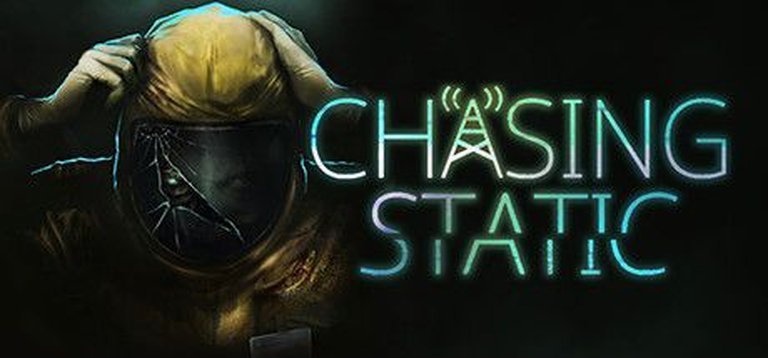
Chasing Static is a first-person horror adventure game set in Europe, drawing inspiration from late 1990s-era horror classics. It delivers a short, narrative-driven experience focused on exploration and puzzle-solving, with straightforward controls and no fail state, aiming to evoke nostalgia for fans of PlayStation 1-style horror games.
Gameplay Videos
Where to Buy Chasing Static
PC
Chasing Static Free Download
Chasing Static Guides & Walkthroughs
Chasing Static Reviews & Reception
store.steampowered.com (86/100): Chasing Static is a triumph. If you want something spooky for Halloween, you should definitely look into Chasing Static.
opencritic.com (65/100): Chasing Static is let down some by overused narrative tropes and a short length, but strong world design and enjoyable pacing help make it worth a playthrough.
monstercritic.com (66/100): All in all, we enjoyed our time with Chasing Static. The retro-stylings hooked us in and gave the creepy atmosphere a more unique flavour, while the gameplay and story were good enough to keep us coming back for more. A little more action wouldn’t have gone amiss, but as it is, Chasing Static comes out as something we’d recommend to those looking for something a little different.
metacritic.com (65/100): Chasing Static is let down some by overused narrative tropes and a short length, but strong world design and enjoyable pacing help make it worth a playthrough.
reddit.com : Chasing Static is a first person psychological horror game released in 2021 by English based developer Headware Games, a nearly one-man team led by Nathan Hamley. This isn’t your average walking sim horror experience though: it doesn’t rely on jumpscares or gore and feels more like a harrowing episode of the X-Files if David Lynch directed it.
Chasing Static: A Retro-Horror Artifact of Unfulfilled Potential
In the crowded landscape of indie horror, where “walking simulator” can be a pejorative and retro aesthetics often mask shallow design, Chasing Static emerges as a game of profound contradictions. It is a title that whispers promises of a psychological deep dive into familial trauma and cosmic dread, only to stumble over its own meticulous construction. Released in 2021 by the singular vision of Nathan Hamley’s Bristol-based Headware Games, this first-person adventure is less a complete narrative and more a beautifully framed, incomplete photograph—striking in composition but leaving the viewer straining to discern the crucial details hidden in the grain. It is a game that earns its place in history not as a masterpiece, but as a compelling, terribly flawed case study in ambition constrained by scope, and a pivotal piece in the “Haunted PS1” retro-horror movement it sought to honor.
Development History & Context: A Solo Dev’s Homage in the Haunted PS1 Era
Chasing Static was born from a very specific, community-driven moment in indie gaming. Developer Nathan Hamley worked essentially solo—credited for design, writing, programming, art, and sound—over approximately one year, from January 2020 to its debut as a demo in the Haunted PS1 Demo Disc 2021. This compilation, curated by Breogán Hackett, was a love letter to the low-poly, fog-shrouded horror of the original PlayStation, creating a curated showcase for games that emulated that distinct aesthetic. Hamley’s stated goal was explicit: to create “an attempt to pay homage to those classics and that visual style,” citing the era of PS1 horror as his primary influence. This context is non-negotiable for understanding the game’s identity; it was conceived and evaluated first and foremost as a piece of the Haunted PS1 scene, a label that carries both aesthetic expectations and a certain leniency regarding polish and scope.
The technological constraints were self-imposed, a creative choice rather than a limitation. Using the Unity engine and the Adventure Creator middleware (a tool for narrative adventure games), Hamley embraced a “lo-fi” visual language that deliberately mimicked the chunky models, limited draw distance, and dithering shadows of 32-bit hardware. Yet, he filtered this through a modern sensibility, leveraging full voice acting (featuring a notably excellent cast, including Andrew Wheildon-Dennis in multiple roles) and high-quality, atmospheric sound design. The setting, the fictional Welsh village of Hearth and the surrounding wilderness, was inspired by Hamley’s own real-life experience of being lost in a storm while camping in Snowdonia. This personal touch infuses the environment with a palpable sense of isolation and environmental hostility that transcends mere aesthetic.
The game’s path to release was textbook indie: a celebrated demo that generated significant buzz, followed by a full Steam release in October 2021, and a later console port in January 2023 by publisher Ratalaika Games. This trajectory cemented its status as a “successful” Haunted PS1 demo graduate, giving it wider visibility but also subjecting it to the scrutiny of a broader audience less predisposed to forgive its rough edges.
Narrative & Thematic Deep Dive: Trauma, Static, and the Unseen Event
Chasing Static presents itself as a “psychological horror short story,” and its narrative is its most praised and most criticized element. The plot follows Chris Selwood, a withdrawn man returning to North Wales for his estranged father’s funeral. His father, it transpires, was involved with the mysterious “Echo Garden Facility” (or “the Institute”), studying a “reality-distorting event.” After a surreal and violent episode at the Last Stop Café—where the waitress, Aneira, is Crucified by something with “fierce glowing eyes”—Chris awakens in a desolate, altered version of the countryside.
He is guided by radio contact with Helen, a surviving researcher from the facility, who explains that a “psychic fallout” or “energy field” from the failed experiment has caused a localized temporal and perceptual distortion. The core gameplay objective becomes clear: Chris must travel to three “containment array” sites to reboot the system and restore order, using a device called the Frequency Displacement Monitoring Device (FDMD) to locate “echoes”—auditory and psychic imprints of past events that reveal clues and necessary items.
Thematically, the game grapples with several heavy concepts:
1. Unresolved Familial Trauma: Chris’s journey is explicitly linked to his fraught relationship with his father. The journal left behind is not just a plot device but a symbol of paternal legacy—cryptic, burdensome, and demanding interpretation. The ultimate reveal that Chris’s presence is tied to his own buried memories and guilt positions the supernatural event as a manifestation of internal psychological collapse, a la Silent Hill 2.
2. The Horror of the Unseen & Unknowable: The entity or phenomenon behind the “static” is never fully explained. We see its effects—crucified bodies, time loops, environmental corruption manifested as glowing fungi—but not the thing itself. This aligns with the game’s “X-Files” quality, favoring conspiracy and unease over explicit monster design.
3. Sonic Reality & Perception: The core mechanic of “chasing static” via the FDMD makes sound the primary way to perceive truth. The narrative suggests the event has altered reality on a frequency humans cannot normally detect, forcing Chris (and the player) to tune into a horrific, hidden layer of existence.
The critical schism lies almost entirely in the execution of this plot. Reviews from Dread XP, Horror Obsessive, and Finger Guns praise the “great writing,” “multi-layered story,” and “excellent voice cast,” highlighting the somber, deliberate pacing that allows themes to breathe. Conversely, critics from Adventure Gamers, SUPERJUMP, and Save or Quit lambaste the story as “skeletal,” “vague and directionless,” and suffering from an ending that feels “thrown together at the last minute.” The central complaint is that the buildup—the eerie atmosphere, the collected echoes (which are mostly just scientists panicking), the notes—does not coalesce into a satisfying payoff. The final act reportedly shifts abruptly from cosmic horror and environmental mystery to a personal, almost melodramatic family revelation that many felt was insufficiently foreshadowed by the preceding gameplay. As PixelDie noted, the ending “comes out of nowhere.” This narrative dissonance is the game’s fatal flaw: it constructs a magnificent, dread-filled atmosphere but fails to channel it into a coherent or emotionally resonant narrative conclusion.
Gameplay Mechanics & Systems: The Blessing and Curse of Sonic Exploration
Gameplay is where Chasing Static‘s innovations and flaws are most tightly intertwined. It is a first-person adventure with no combat, no death states (the entity merely resets Chris’s position), and a focus on exploration and inventory-based puzzles. The cornerstone is the Frequency Displacement Monitoring Device (FDMD).
- Sonic Exploration: This is the game’s signature mechanic. By tuning the FDMD’s frequency, the player hears “static” pings that grow louder as they face an “echo” location. Entering this zone triggers a short, non-interactive flashback—a holographic replay of a past event. These echoes serve two purposes: they provide narrative snippets (scientists discussing the event) and, crucially, they often physically spawn a necessary item in the present (e.g., a key, a hammer). This creates a direct gameplay loop: Find Echo -> Watch Flashback -> Receive Item -> Solve Puzzle.
- Inventory & Puzzles: Puzzles are traditional “use item A on object B” challenges, but they are spread across a semi-open map (the forest, the bunker, the village, an island). Progression is Metroidvania-lite: getting bolt cutters opens a new area, finding a cassette tape allows you to operate a machine, etc. The non-linear sense comes from being able to explore unlocked areas in any order, though echo triggers are sometimes sequenced.
- The FDMD’s Fundamental Flaw: As brilliantly articulated by PixelDie‘s Kyle Caldwell and Save or Quit, the FDMD is a narratives and atmospheric catastrophe. Activating the device muzzles all environmental sound, replacing the haunting ambient noise of the Welsh wilderness, the creak of floorboards, and the unsettling quiet with a loud, repetitive radio-tuning static. To progress, the player must have this device out constantly. This actively works against the superb sound design, forcing the player to choose between immersion in the horror and progress. It transforms psychological horror into a repetitive “search for the next ping” task, draining the tension. A better design would have layered the static over the ambient noise or made the device a toggle for a subtle overlay, preserving the soundscape.
- Other Mechanics: A camera serves as a quicksave system (a clever diegetic touch). The fast travel system is universally praised: picking up a landline phone transports Chris to a black-and-white static void (the “limbo” switchboard) where he selects a destination by pressing buttons on a monitor. This is cited as one of the game’s most creatively unsettling and memorable features. The monster encounters are few and anticlimactic. The entity is slow, and encountering it simply results in a screen fade and a brief reset, removing any sense of threat or peril, which further neuters the horror.
The gameplay loop, therefore, is a MacGuffin relay race (a term used by Sidequest and PixelDie). You find tool A to get tool B to get tape C. The 2-3 hour runtime is cited as both a pro (it doesn’t overstay its welcome) and a con (it feels paddingly thin). The puzzle design is competent but simple, and the lack of any meaningful failure state or danger makes it a purely experiential journey, for better or worse.
World-Building, Art & Sound: Where the Game Truly Shines
This is Chasing Static’s undeniable strength and primary saving grace. The presentation is where its homage becomes artistry.
- Visual Direction & Art: The “lo-fi, hi-fi” mantra is perfect. The low-poly models, limited color palettes, and deliberate use of dithering and fog perfectly capture the PS1 aesthetic, but with a modern, crisp clarity that feels intentional, not budget-constrained. The Welsh countryside is rendered with beautiful, desolate moodiness. Key locations—the grimy Last Stop Café, the sterile, abandoned government bunker, the overgrown, fungus-ridden village of Hearth—are distinct and dripping with atmosphere. The use of lighting is exceptional: the stark red emergency lights of the facility, the sickly green bioluminescent glow of the corruption, the warm flicker of Chris’s lighter, and the cold blue pulse of the FDMD create a dynamic and terrifying visual palette. The CRT monitor effects, especially in the limbo fast-travel hub, are masterfully done.
- Sound Design & Music: Universally lauded as the game’s best element. The soundscape is a character in itself. The ambient drones, the rustle of wind through bare trees, the distant, unplaceable noises—all build an inescapable atmosphere of dread. The voice acting is a cut above, with naturalistic Welsh accents and a delivery that favors slow, tense pauses, mirroring the awkward, stilted dialogue of Silent Hill 2 to great effect. The soundtrack, credited to Brendan Hamley (SOTOYOTO) and mastered at Earthworm Studios, is frequently described as “haunting,” “plaintive,” and “emotionally suspended,” with a main theme that many critics admitted to listening to outside the game. It is the primary conveyor of the game’s intended melancholy and cosmic horror.
- The Accessibility Blight: A significant and recurring criticism, most forcefully from Sidequest, concerns the UI and text legibility. The font is described as blurry, semi-transparent, white-on-grey, and constantly washed out by the game’s harsh lighting. Subtitles are often desynchronized. This is not a minor issue; it actively impedes comprehension of the already-thin plot and is a major point of frustration, especially on smaller screens like the Nintendo Switch. It represents a critical failure in the otherwise meticulous presentation.
Reception & Legacy: The Cult of the Almost-There
Critical Reception was mixed (averaging ~63-65% on aggregators). The divide was almost perfectly polarized between those who forgave the weak plot for the overwhelming atmosphere (e.g., Dread XP‘s 9/10, PC Invasion‘s 8/10), and those who could not accept the narrative shortcomings (Adventure Gamers 3/5, Save or Quit‘s scathing takedown). Common praise: atmosphere, sound, visual style, the FDMD concept. Common criticism: short length, underdeveloped story, anticlimactic ending, the FDMD’s audio muting, and the weak monster.
Player Reception, however, tells a different story. On Steam, the game boasts a “Very Positive” rating with 86% of 460 reviews being positive. This significant gap between critic and user scores is telling. Players seem more willing to embrace the game as a vibe piece—a short, atmospheric stroll through a creepy Welsh wood with fantastic audio—than as a tightly plotted narrative horror. For many, the journey’s mood outweighs the destination’s failings.
Its legacy is twofold:
1. As a Haunted PS1 Flagship: It is remembered as one of the most polished and prominent titles to emerge from the Haunted PS1 Demo Disc, validating the scene’s potential for full releases. It proved that the retro-horror aesthetic could be combined with modern voice acting and sound design for a compelling package.
2. As a “What Could Have Been” Artifact: It serves as a cautionary tale about scope and narrative cohesion. Its strongest ideas—sonic exploration, the psychic fallout premise, the Welsh setting—are so compelling that the critical lament is consistent: “If only it were longer, with a more fleshed-out story…” This places it in a category with other ambitious but brief indie games (e.g., Dread Delusion in its demo form).
3. A Stepping Stone: For Headware Games and Nathan Hamley, it was a successful proving ground. The studio’s subsequent announced project, Hollowbody (described as an homage to Silent Hill 3), is viewed through the lens of Chasing Static‘s failures. The hope is that Hollowbody will retain the impeccable atmosphere and sound while delivering a more substantial and satisfying narrative and gameplay experience.
Conclusion: A Flawed Masterclass in Atmosphere
Chasing Static is not a great game by conventional metrics. Its narrative is underdeveloped, its central gameplay mechanic sabotages its own soundscape, its monster is a joke, and its ending fails to synthesize its themes. Yet, to dismiss it outright is to ignore its tremendous, rare achievement: it is a singularly effective tone poem. For the 2-3 hours it takes to wander its misty paths, it generates a sense of place, mood, and melancholy that most horror games strive for but few achieve. The fusion of PS1-style graphics with modern audio fidelity creates a unique sensory experience that is both nostalgic and fresh.
Its place in video game history is secure as a cult classic of the retro-horror renaissance and a poignant example of an indie project where the sum of its parts—the visionary art direction, the phenomenal soundscape, the clever fast travel, the core concept of “sonic exploration”—does not quite equal a coherent whole. It is a game that is perpetually “chasing” a more static-free, more complete version of itself. For horror aficionados, particularly those with affection for the Silent Hill and PS1 eras, it remains a worthwhile and affecting journey, best enjoyed with the understanding that you are visiting a beautifully constructed, hauntingly atmospheric, but ultimately half-finished dream. It is a game you experience more with your skin and your ears than with your mind, leaving a lingering feeling of unease and sadness that is superficially satisfying but deeply frustrating upon reflection. It is, in the end, a compelling ghost in the machine of indie horror—present, palpable, and tragically incomplete.