
- Release Year: 2017
- Platforms: Nintendo Switch, PlayStation 4, PS Vita, Windows, Xbox One
- Publisher: BURP! Games, Sometimes You
- Developer: BURP! Games
- Genre: Action
- Perspective: Side view
- Game Mode: Single-player
- Gameplay: Platform
- Average Score: 39/100
Description
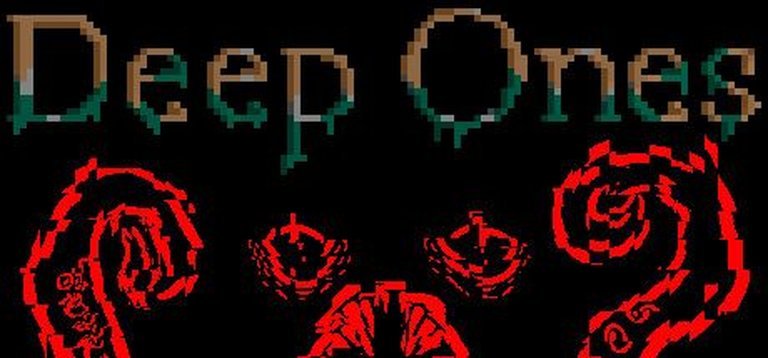
Deep Ones is a minimalist action platformer developed by BURP! Games, featuring a retro 2D side-scrolling visual style inspired by the ZX Spectrum. Set in an eerie atmosphere, players explore levels and battle bosses, but the game is criticized for stiff controls, uninspired exploration, and shifting gameplay modes that undermine its potential.
Gameplay Videos
Deep Ones Guides & Walkthroughs
Deep Ones Reviews & Reception
metacritic.com (50/100): the game drowns in amongst its competition
metacritic.com (50/100): the repetition of levels and some problems of gameplay can take away the player of the adventure
metacritic.com (20/100): it was an absolute disaster
monstercritic.com (60/100): be ready for an experience that could end up feeling boring and frustrating.
monstercritic.com (20/100): A puddle cannot substitute for an ocean
opencritic.com (20/100): A puddle cannot substitute for an ocean
opencritic.com (60/100): be ready for an experience that could end up feeling boring and frustrating.
opencritic.com (70/100): It’s a tidy little game overall.
opencritic.com (20/100): Deep Ones is one of the most unintuitive games I’ve ever played that’s constantly undermining itself whenever it starts to become enjoyable.
opencritic.com (20/100): it is simply an exercise in aggravation to play
opencritic.com (10/100): THE STYLE OF THIS GAME IS A SELLING POINT BUT WHAT YOU ACTUALLY HAVE IS A SEXUALLY-CONFLICTED BULLDOG WITH A FACELIFT
opencritic.com (45/100): Deep Ones is not a very deep game
Deep Ones: Review
Introduction: A Sunken Promise
In the expansive archives of video game history, certain titles stand as poignant monuments to ambition exceeding execution—games whose conceptual allure casts a long shadow over their final, flawed form. Deep Ones (2017) is one such relic. Conceived by the Ukrainian indie studio BURP! Games and published by Sometimes You, this Windows-to-consoles port arrived with a seductive promise: a retro arcade-platformer marrying the stark, charming aesthetic of the ZX Spectrum with the brooding, existential horror of H.P. Lovecraft’s Cthulhu Mythos. Its official description spoke of a “compelling and philosophical storyline” and “classic arcade gameplay.” However, a critical analysis of its reception and mechanics reveals a catastrophic dissonance between vision and reality. Deep Ones is not merely a mediocre game; it is a profound case study in how a compelling artistic foundation can be utterly eroded by fundamental flaws in design, control, and tonal coherence. This review will argue that Deep Ones is a textbook example of style utterly failing to compensate for substance, a beautiful corpse of a game whose promising ideas drown in a sea of sloppy implementation.
Development History & Context: A Low-Budget Dive into Nostalgia
Deep Ones emerged from the bustling but saturated landscape of the late 2010s indie scene, a period where “retro-inspired” aesthetics had become a commonplace, often low-cost, design choice. Developed by BURP! Games, a small Ukrainian team, the project was built in Unity—a engine empowering small studios but also notorious for enabling unpolished, “programmer art” aesthetic without the technical discipline of older hardware constraints. The stated inspirations—the ZX Spectrum, BioShock, and Lovecraft—represent a wildly eclectic mix, hinting at an unfocused creative vision. The ZX Spectrum reference suggests a desire for the challenging, often obtuse, design of 8-bit era, while BioShock implies a narrative-driven, atmospheric experience. The game’s development likely operated under severe budgetary and resource constraints common to first-time indie developers, leading to a “jack of all trades, master of none” outcome. Its 2017 Windows release, followed by console ports in 2018 (PS4, Vita, Xbox One, Switch) via publisher Sometimes You, targeted the budget-conscious consumer, a demographic more forgiving of roughness but not of core gameplay dysfunction. The gaming landscape of 2017-2018 was also fiercely competitive on platforms like the Nintendo Switch eShop, where quality indie platformers (Celeste, Shovel Knight) had raised audience expectations exponentially, making Deep Ones’ shortcomings glaringly obvious.
Narrative & Thematic Deep Dive: A Tale of Two Tones
The narrative premise, lifted directly from Lovecraftian lore, is disarmingly simple: a nameless scuba diver’s submarine is destroyed by a “great red octopus” (a clear, if generic, nod to Cthulhu or Dagon). Stranded on the ocean floor, the diver must traverse hazardous underwater environments, fighting bizarre creatures to reclaim his vessel and escape. This setup possesses potent atmospheric potential—the lonely, crushing pressure of the deep, the insignificance of man against ancient leviathans.
However, the game’s execution of this premise is a masterclass in tonal whiplash and narrative failure. As comprehensively detailed by The Game Hoard’s scathing review, the experience bifurcates catastrophically. The opening moments foster a tense, eerie atmosphere: dark coral caves, natural hazards, and the looming threat of the giant red octopus. This initial segment aligns perfectly with the promised Lovecraftian horror. Yet, this mood is almost immediately and irrevocably shattered. The game swiftly abandons its submerged horror for a protracted section featuring “silly skeletons”—comical, undead pirates who hurl dynamite like “an undead hillbilly.” This isn’t a gradual shift but a jarring cut, with no narrative justification. The “Innsmouth look” of gradual corruption, a cornerstone of Lovecraft’s The Shadow Over Innsmouth, is completely absent. The diver remains a mute, personality-free protagonist, and the plot provides no philosophical depth or character agency. The promised “compelling and philosophical storyline” is, in reality, a non-existent one, replaced by a series of disconnected, aesthetically confused vignettes that never commit to either horror or comedy, landing in a barren middle ground of inconsequence. The final boss, a skeleton captain on a ship, resolves not through skillful combat but by “waiting out an unknown timer,” a narrative and mechanical abdication.
Gameplay Mechanics & Systems: A Chorus of Failure
If the narrative is confused, the gameplay is a symphony of frustration. Deep Ones attempts to blend exploration, platforming, and rudimentary shooting, but every system is compromised by poor design and unresponsive controls.
Core Movement & Platforming: The diver’s jump is described by multiple critics as “slow and floaty,” intended to mimic aquatic movement but ill-suited for the precise platforming demanded. The Game Hoard notes that this slowness sabotages the game’s sole interesting platforming mechanic: rising bubbles that pop after being jumped on. The input delay means the player cannot quickly hop between them, leading to inevitable, unfair falls. Platforming challenges are not “interesting” but “deliberately troublesome,” often serving as “needless punishment” with backtracking. The most damning technical flaw, highlighted by The Game Hoard and Games Asylum, is the glitch where necessary platforms “just disappear for no reason,” a critical failure in a platformer’s foundational language.
Combat & Weaponry: The primary weapon, a gun (likely a harpoon), is a constant source of agony. It fires in a single direction, at a “frustratingly slow rate,” and cannot be used while jumping. More critically, it is plagued by inconsistency: it “sometimes won’t fire, or it might be delayed and only activate after you’ve turned around.” It may “rapid fire inexplicably” or refuse to function again. This isn’t a deliberate design choice for difficulty but a clear input registration failure. The later-introduced sword is “even worse,” with unpredictable attack animations (a quick stab vs. a slow diagonal slash) and a dash attack that is useless for closing distance. Combat encounters are universally panned as “disappointing,” “tedious,” and “sloppy.”
Boss Fights & Pacing: Bosses exemplify the game’s worst traits. They possess massive health bars, forcing the player to endure sluggish mechanics for extended periods. One boss requires perfect timing against a “fast ram” with the floaty jump. Another involves fighting while “bullet hell” formations fire, but the mechanic feels tacked-on. A particularly egregious example, described by The Game Hoard, is a boss fight where the enemy is “completely invincible” until a specific, poorly-telegraphed moment, turning a test of skill into a test of patience. The game’s pacing is also erratic, with “long and uninspired” exploration segments broken up by these grueling fights.
Genre Shifts: The game’s “multigenre parts” are its death knell. The brief shoot-’em-up section is called “the only moment” of quick, precise movement but feels isolated and cheap. Non-linear key-hunting segments are unclear. These shifts are not organic integrations but disparate, poorly-executed ideas thrown against a wall, contributing to an “unfocused” whole, as Switch Player critic observed.
World-Building, Art & Sound: The Gilded Cage
Here, Deep Ones achieves its only unambiguous success. Its visual design is a loving, skillful imitation of the ZX Spectrum’s aesthetic: bright, single-color outlines against black space, creating a stark, graphically bold look. The Game Hoard praises its ability to create “vibrant coral reefs” and use the black space to enhance spooky moments. Spritework becomes increasingly intricate, with detailed shipwrecks and sea creatures. This visual style is not merely nostalgic but artistically coherent and often beautiful.
However, this beauty is a gilded cage. The art exists in a vacuum, disconnected from the gameplay it frames. As The Game Hoard venomously articulates, the game is “like an art gallery on Mount Everest”—the player must suffer a torturous climb (a frustrating, broken game) to see the paintings (the lovely art). The atmosphere the art creates is consistently undermined by the gameplay’s lack of tension or horror. The sound design receives mixed reviews: sound effects are appropriately 8-bit, but the music is described as a “peculiar mixture of tranquil beats and grimy electro” that often feels mismatched, even “bother[ing]” players during boss fights (MonsterCritic aggregation). The one universally praised element is the soundtrack, which Big Boss Battle notes is “excellent” even if the game surrounding it is poor.
Reception & Legacy: A Critical Submersion
Deep Ones was met with near-universal derision upon its console releases in 2018. Its MobyGames critic score is a dismal 39% based on 6 reviews, with individual scores ranging from 70% (PS3Blog.net) to a crushing 14% (The Game Hoard). The user score is an equally abysmal 2.0/5. The Nintendo Switch version, reviewed most extensively, fared worst, with Metacritic listing scores of 20% (NintendoWorldReport, Nindie Spotlight), 50% (Switch Player), and 60% (PS4Blog.net). The consensus is brutally consistent: a beautiful facade cannot save a broken game.
The critical lexicon is remarkably aligned. NintendoWorldReport calls it “an absolute disaster, marred by bad movement, bad platforming, and a jumble of ideas.” Nindie Spotlight declares it would have been “awful” even in the 8-bit era it mimics. The Game Hoard awards it its lowest possible rating (“ATROCIOUS”), summarizing it as “sluggish, unfocused, and dabbles in ideas it doesn’t know how to pull off effectively.” The few semi-positive reviews, like PS3Blog.net‘s 70%, call it a “fun minimalist action platformer” that pays homage to the ZX Spectrum, but even they are in the stark minority.
Commercially, the game’s low price point ($1.49-$4.99) reflects its niche, budget status. Its legacy is that of a cautionary tale. It represents the worst excesses of “style over substance” indie development. It has not influenced any notable games; instead, it serves as an example in criticism of how not to design a platformer, manage tone, or implement basic player control. Its place in history is as a forgotten footnote, a game more discussed for its catastrophic failure than for any achievement. It is the antithesis of the carefully crafted retro experiences it apes.
Conclusion: A Shipwreck of Potential
Deep Ones is a tragedy of unrealized potential. From its strikingly beautiful ZX Spectrum-inspired visuals to its intriguing, if derivative, Lovecraftian premise, every element possesses a glimmer of promise. Yet, this promise is systematically, comprehensively dismantled by a cascade of fundamental design errors: unreliable combat, floaty and unresponsive controls, glitchy platforming, and a narrative that collapses under the weight of its own tonal inconsistency. The game’s brief forays into different genres feel like unfinished prototypes rather than integrated mechanics.
In the grand taxonomy of video games, Deep Ones occupies a uniquely infamous niche. It is not so-bad-it’s-good; it is simply, profoundly bad. It fails at the basic covenant between game and player: providing a fair, responsive, and engaging interactive experience. Its art, while worthy of individual appreciation, cannot redeem a gameplay loop that is primarily defined by frustration, confusion, and boredom. It is a testament to the fact that a compelling aesthetic vision is not a substitute for competent game design. For historians, Deep Ones is a valuable artifact—a stark reminder that the indie boom of the 2010s, for all its democratizing power, also produced works where ambition wildly outstripped craft. For players, it is a warning: do not be lured by the siren song of a pretty pixel-art style, for the depths it leads to are barren, frustrating, and ultimately empty. The great red octopus of Deep Ones is not a monster in the game, but the game itself: a garish, tentacled failure that sinks any hope it initially inspires.
Final Verdict: FAILED EXPERIMENT — A visually distinctive but fundamentally broken platformer whose catastrophic flaws in control, design, and tone completely overwhelm its artistic merits. A historical footnote for the wrong reasons.