
- Release Year: 2017
- Platforms: Nintendo Switch, Windows
- Publisher: BySamb
- Developer: BySamb
- Genre: Puzzle
- Perspective: Diagonal-down
- Game Mode: Online PVP, Single-player
- Gameplay: Platform
- Average Score: 74/100
Description
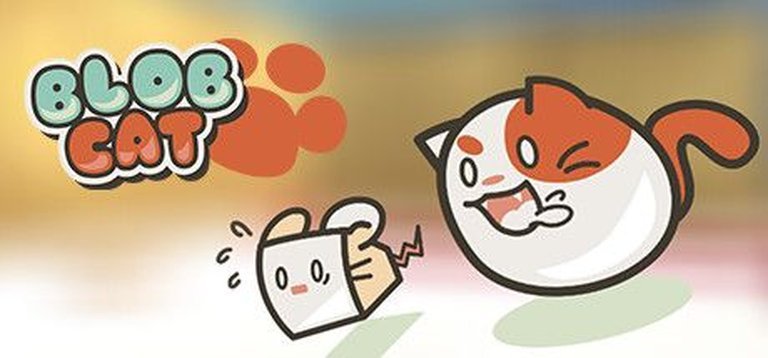
BlobCat is a comedic puzzle game developed by BySamb where players guide cats and mice through 2D scrolling levels, inspired by classics like ChuChu Rocket!. With simple point-and-select controls, it offers accessible yet challenging puzzles suitable for all ages, featuring both single-player and multiplayer modes for up to four players on Windows and Nintendo Switch.
Where to Buy BlobCat
PC
BlobCat Guides & Walkthroughs
BlobCat Reviews & Reception
metacritic.com (70/100): While BlobCat on Switch does capture the essence of Chu Chu Rocket’s cat-and-mouse gameplay, it doesn’t do quite enough to replace the original in my heart.
metacritic.com (60/100): BlobCat is here for you if you need it, but doesn’t quite reach the level of the genuine article.
metacritic.com (90/100): Das Spiel macht mega viel Spaß und regt den Spieler zum Nachdenken an. Für den Preis eine absolute Kaufempfehlung.
metacritic.com (90/100): An extremely good chu chu rocket inspired game, but the multiplayer is almost dead.
metacritic.com (80/100): BlobCat is a casual and entertaining game with a very cute style, great for small sessions in the portable mode on Nintendo Switch.
opencritic.com (60/100): BlobCat is here for you if you need it, but doesn’t quite reach the level of the genuine article.
opencritic.com (70/100): While BlobCat on Switch does capture the essence of Chu Chu Rocket’s cat-and-mouse gameplay, it doesn’t do quite enough to replace the original in my heart.
BlobCat: A Love Letter, A Legal Safehope, and a Puzzle Game Worthy of the Dreamcast’s Legacy
Introduction: The Ghost in the Machine
In the hallowed halls of gaming history, some titles achieve a peculiar immortality, not through sales figures or awards, but through the sheer, unyielding love of their community. Sega’s ChuChu Rocket! for the Dreamcast and Game Boy Advance is one such game—a chaotic, joyful, peerlessly clever puzzle-racing hybrid that defined a generation of local multiplayer mayhem. For nearly two decades, its fans have been left with a perfect memory and an empty space on their virtual shelves. Into this void steps BlobCat, a game that does not merely ap its inspiration but wears its heart on its sleeve. Developed by German enthusiast Christian Wasser (under the moniker BySamb) with two friends, BlobCat is less a sequel and more a meticulously crafted love letter, a fan-made spiritual successor that understands the soul of its predecessor while adding its own distinct flourishes. This review will argue that BlobCat stands as one of the most successful and heartfelt homage projects in gaming—a title that captures the frantic magic of ChuChu Rocket!, expands its puzzle DNA in clever ways, and stumbles only where its ambition and modest resources collide with the high bar set by its legend. It is not the official sequel we never got, but for many, it is the next best thing.
Development History & Context: From Mobile Sketch to Console Contender
The story of BlobCat is a testament to the modern indie dream: a passionate creator, a narrow scope, and iterative development fueled by community and personal conviction. Christian Wasser, a game critic by trade, embarked on this “passion project” in January 2016. The catalyst was simple and profound: he and his friends replayed ChuChu Rocket! and wondered, with frustration, why Sega had neverollowed up on such brilliant, fertile gameplay. As Wasser stated in a Reddit AMA, “We loved ChuChu Rocket! as teens… we played it again on the Dreamcast and wondered why there never was a sequel, since the gameplay has got so much potential left. That’s why we made one!” The team name, BySamb, began as a placeholder for Wasser himself, reflecting the project’s scrappy, DIY origins.
Development followed a pragmatic, stage-based path. The initial goal was a small mobile game for iOS and Android, released in July 2016. This version was free and built with the touch interface in mind. Its success and positive reception provided the momentum and, crucially, the financial support (via YouTube streaming donations) to pursue an expanded vision. This led to the “revamped” Windows version, released August 31, 2017, which transitioned the game to a paid commercial product. This iteration was a significant leap: it featured entirely new 3D models for the characters (replacing the mobile’s simpler graphics), added the cornerstone local and online multiplayer modes, and began the structured world-based level progression.
The technological constraint here was not high-fidelity graphics but the fundamental architecture of ChuChu Rocket!‘s gameplay. The puzzle is in the pathfinding system: characters (DiceMice and BlobCats) move automatically, turning 90 degrees upon hitting a wall, with player-placed arrows dictating their route. Recreating this in the Unity engine with precision, especially for multiplayer synchronization, was the core technical hurdle. The final piece was the Nintendo Switch port, released August 8, 2018. This was not a mere re-release but a “final” version, including all prior free DLC (like a Halloween theme), running at a crisp 1080p/60fps, and crucially, supporting cross-platform play with the Windows version—a forward-thinking feature for an indie title.
The development timeline—mobile free-to-play -> PC premium with multiplayer -> Switch definitive edition—mirrors a classic indie success story: prove the concept on the most accessible platform, reinvest into a fuller experience for core audiences, and finally target a modern console with a built-in multiplayer community. Wasser’s dual role as game critic and developer is also notable; it infused BlobCat with a keen awareness of what made its inspiration tick, but perhaps also a critic’s sensitivity to perceived flaws in the final package.
Narrative & Thematic Deep Dive: Comedy of Errors and Survival
To call BlobCat‘s narrative “thin” is an understatement; it is more of a thematic premise, a stated conflict that justifies the gameplay. The official blurb—”The BlobCats are after the DiceMice! In BlobCat it’s your job to protect the DiceMice!”—is the entire plot. There is no lore, no dialogue, no character arcs. The DiceMice are hapless, cube-like creatures (their name implying a chance-based, rolling motion), and the BlobCats are their naive, rolling pursuers. The comedy is visual and situational: the juxtaposition of the frantic, screaming (in the player’s mind) mice against the blissfully unaware, plodding cats.
The depth lies in the implied themes. At its core, BlobCat is about predator-prey dynamics and systems-based survival. The player is not a character within the world but an unseen god, a guiding force for the prey. This creates a unique narrative distance; we are protectors, but not part of the ecosystem. The theme extends into the multiplayer mode, where roles subtly invert or multiply. Here, the narrative becomes one of betrayal and sabotage. As one player’s mice are herded to safety, another’s can be deliberately lured into a cat’s path by a strategically placed arrow. The “story” of a multiplayer match is written in real-time through these acts of digital misdirection, a comedy of errors where the error is your opponent’s delightful downfall.
The lack of a traditional narrative allows the gameplay’s inherent tension—the slow-burn dread of a cat rolling toward a mouse hole, the frantic last-second arrow placement—to become the sole emotional driver. It’s a pure, mechanics-first design philosophy where the “story” is whatever dramatic irony unfolds on the grid. The game’s title, BlobCat, promotes the antagonist to the marquee, a sly joke that correctly identifies the feline threat as the source of the gameplay’s friction and fun.
Gameplay Mechanics & Systems: The Elegant Heart of the Matter
BlobCat’s genius is its deceptively simple, brutally deep core loop, a direct inheritance from ChuChu Rocket! but with significant iteration.
The Core Loop & Puzzle Design:
Each stage is a single-screen, grid-based arena (described as “diagonal-down perspective” and “2D scrolling/fixed flip-screen”). The player has a cursor and a limited pool of directional arrows. In a planning phase, arrows are placed on empty tiles. Then, all characters—a set number of DiceMice (with a goal hole) and BlobCats (wandering randomly)—begin moving autonomously. Movement is deterministic: characters travel in a straight line until they hit a wall, at which point they turn 90 degrees clockwise (a critical rule). Arrows override this, forcing a turn in the arrow’s direction. The puzzle is to route mice safely to the hole while cats either wander harmlessly or are directed toward mice to fail the stage.
The brilliance is in the emergent complexity from this simple system. As noted in the Dreamcast Junkyard review, later stages introduce “worlds” with unique “gameplay twists”:
* Kitchen: The basic tutorial world, featuring classic tiles reminiscent of the original ChuChu Rocket!.
* Wild West: Introduces mine carts on fixed tracks that can be moved to block cats or aid mice.
* Space: Adds sci-fi doors operated by pressure pads, requiring sequence puzzles.
* Forest: Features wooden directional signs that mice can follow, allowing left-turns and more complex routing.
* Snow: Obstacles that only cats can break, shifting the goal to directing cats into hazards to clear a path.
This progression is masterful. The base mechanic is taught in Kitchen. Wild West adds movable environmental objects. Space introduces multi-step state changes (press pad, open door). Forest adds new player tools (signs). Snow inverts the objective (sacrifice cats). Each world reframes the core puzzle without altering the fundamental rule set. The game boasts “over 90 different levels” (Steam description says “100 Puzzle”), and developer Christian Wasser noted that the “vast majority of mazes can be completed with just a single arrow needing to be placed,” highlighting the elegant minimalism at the heart of the design. The star-ranking system (1-3 stars based on arrows left) rewards efficiency and replayability, augmented by a collectible sticker system for perfect runs.
Multiplayer & Flaws:
The multiplayer mode is the clear descendant of ChuChu Rocket!‘s legendary battles. Up to four players (local split-screen or online) compete to save the most mice from a shared pool, with the key interaction being that arrows placed by one player affect all characters. This allows for brilliant sabotage: redirect cats into opponents’ mouse herds, or “sheep-dog” mice away from rivals toward your own hole.
However, this is where BlobCat‘s rough edges are most exposed. Critically, as both Nintendo Life and the Dreamcast Junkyard reviewer noted, there is no CPU opponent or AI bots. This is a catastrophic omission for a game so reliant on multiplayer. As the Dreamcast Junkyard states, “unlike the DC original there are no bots or AI opponents you can practise or play against.” It means the multiplayer is strictly social; if you have no friends handy (or online lobbies are empty, as the reviewer experienced), the mode is dead. This severely limits the game’s longevity and accessibility. The Nintendo Life review also cited “bizarre inconsistencies with how menus work” and a general “rough package” feel, pointing to a development focus on the core puzzle design at the expense of polish in UI/UX and auxiliary features.
The user score on Steam (96% positive from 30 reviews) suggests players who engage with what the game does well are forgiving of these flaws, but from a critical and historical perspective, the lack of AI is a major misstep that hinders BlobCat from becoming the definitive successor it could be.
World-Building, Art & Sound: Charm Over Spectacle
BlobCat’s aesthetic is a study in effective, budget-conscious style. The characters are simple 3D models—cube-like DiceMice and blob-like BlobCats—with exaggerated, friendly designs by artist Hanyuu. They are expressive enough to be cute and identifiable in the heat of gameplay. The environments are presented as distinct, themed “worlds” (Kitchen, Wild West, etc.), each with a coherent color palette and tile set. The visuals are “functional-if-unremarkable,” as Nintendo Life put it. They serve the gameplay clarity perfectly: hazards, arrows, and characters are always readable against the backgrounds. There is no visual noise, which is paramount for a puzzle game requiring precise spatial reasoning.
The sound design, composed by Ben Zimmermann, is arguably the game’s most universally praised asset. The soundtrack is described as “catchy” (NintendoWorldReport), “fantastic” (Dreamcast Junkyard), and perfectly balanced—engaging enough to motivate but not distracting from the puzzles. It provides a buoyant, energetic backdrop that suits the frantic yet thoughtful gameplay. The sound effects for arrow placement, mouse squeaks (implied), and cat rolling are clear and satisfying, offering necessary audio feedback for player actions.
Atmosphere is created through this combination: the bright, cartoonish worlds, the jaunty music, and the simple joy of outsmarting a cat. It captures the lighthearted, family-friendly comedy narrative promised in the MobyGames entry. It lacks the surreal, Sega-tinged weirdness of ChuChu Rocket! but replaces it with a warm, accessible European indie vibe. The transition from the mobile version’s 2D to the Switch/PC version’s full 3D models is a nice upgrade, adding a layer of tactile charm without complicating the top-down view.
Reception & Legacy: A Cult Success with a Caveated Crown
BlobCat’s reception has been a tale of two metrics: critics and users. On Metacritic for the Switch (the primary platform for review), it holds a ~70% average from critics (6-7/10), while user scores hover around 7.2/10 with 75% positive ratings. Steam users are even more enthusiastic, with a “Overwhelmingly Positive” (96%) rating from 30 reviews.
Critics universally acknowledged its success as a homage. NintendoWorldReport (7/10) stated it “captures the essence of Chu Chu Rocket’s cat-and-mouse gameplay,” while praising the soundtrack. The Dreamcast Junkyard’s glowing “love letter” review highlighted the expanded worlds and excellent music, feeling it was “an upgrade over its inspiration” in single-player. However, the criticisms were consistent and pointed:
1. The Missing AI: The absence of single-player bots for multiplayer was the single biggest drawback, rendering the suite almost pointless for solo players.
2. Rough Presentation: “Functional-if-unremarkable visuals” (Nintendo Life), menu inconsistencies, and a general lack of polish compared to a first-party Sega title.
3. It Exists in a Shadow: As Nintendo Life bluntly put it, it “doesn’t quite reach the level of the genuine article.” It is a fantastic substitute when the original is unavailable, but it cannot eclipse the source material’s legacy.
Its legacy, therefore, is specific and noble. BlobCat did not revolutionize the puzzle genre. Instead, it performed a vital act of preservation and adaptation. It proved that the ChuChu Rocket! formula had legs beyond the Dreamcast, successfully translating it to touchscreens and then to the hybrid console era with the Switch. Its cross-platform play was a forward-thinking touch. It has influenced no major studios, but within the niche of “cult classic puzzle games,” it is now cited as a prime example of a fan project done right—respectful, expanding, and ultimately loving.
Its commercial life is modest but sustainable on Steam and the eShop. The mobile versions were ultimately removed from storefronts, suggesting the developer wanted to focus on the cohesive, premium experience of the PC/Switch versions. It has found its audience: puzzle enthusiasts, Dreamcast nostalgic, and local multiplayer aficionados willing to overlook its technical and polish shortcomings for the purity of its gameplay.
Conclusion: An Imperfect, Essential Homage
BlobCat is a game defined by what it is and what it is not. It is not the official ChuChu Rocket! sequel fans crave. It is not a universally polished, feature-complete modern title. It is, however, an astonishingly faithful and clever expansion of a beloved formula. Its puzzle design is superb, introducing world-specific mechanics that deepen the base gameplay without overcomplicating it. Its soundtrack is a standout. Its core loop—that beautiful tension between planning and execution, between guiding and being overwhelmed—is perfectly captured.
The flaws are significant and cannot be ignored. The lack of AI opponents is a baffling oversight that cripples the multiplayer’s utility. The UI and presentation have a rough, work-in-progress feel. It does not have the magical, offbeat Sega sheen of its muse.
But to judge BlobCat solely against the impossible standard of ChuChu Rocket! is to miss the point. Christian Wasser and BySamb set out not to surpass Sega, but to fill a void, to prove the concept lived. In that, they have succeeded triumphantly. For anyone who owns a Switch or a PC and feels the pang of curiosity about what made Dreamcesters obsess over a game about rolling cats and mice, BlobCat is an essential, affordable purchase. It is the closest we have come to a new ChuChu Rocket! in twenty years, and in its best moments—solving a elegant single-player maze or delivering a cat into a friend’s desperate mouse herd—it generates the same pure, unadulterated joy.
Final Verdict: BlobCat is a flawed gem, a must-play for puzzle fans and Dreamcast devotees that stands as a monument to fan-driven development. It earns its place in history not as a groundbreaking innovator, but as a devoted archivist—a game that faithfully preserved and gently expanded one of gaming’s great lost designs, ensuring its unique magic is not lost to time. It is a 7.5/10, but for the right player, it is a 10/10 experience.