
- Release Year: 2005
- Platforms: Windows
- Publisher: Activision Publishing, Inc.
- Developer: id Software, Raven Software
- Genre: Compilation, Special edition
- Perspective: First-person
- Game Mode: LAN, Online PVP, Single-player
Description
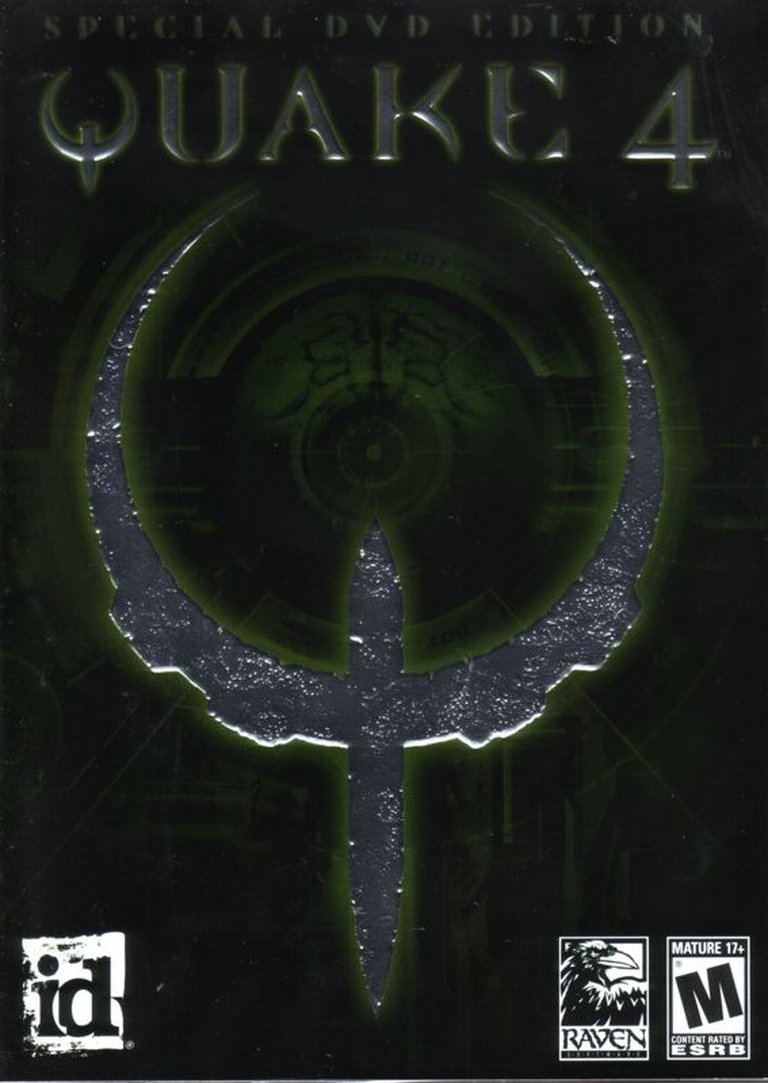
Quake 4: Special DVD Edition is a compilation that includes the 2005 first-person shooter Quake 4, which continues the Quake series’ sci-fi narrative with a single-player campaign battling the alien Strogg threat, alongside Quake II, its expansion packs, and bonus content such as concept art galleries and behind-the-scenes documentaries.
Quake 4: Special DVD Edition Reviews & Reception
cnet.com : Quake 4 is fun, frantic and a definite step-up from the dour Doom 3.
pc.gamespy.com : Quake 4: Special DVD Edition delivers a relentless, fast-paced combat experience that harks back to the golden age of arena shooters.
Quake 4: Special DVD Edition Cheats & Codes
PC
Open the console by pressing Ctrl+Alt+~ (tilde) and enter the code. Some codes require a parameter (indicated by #). For level skip codes, use ‘map game/[map name]’. For button sequences, use the specified button presses on an Xbox controller.
| Code | Effect |
|---|---|
| +disconnect | Skip the intermission sequences. |
| com_allowconsole 1 | Allows console opening and closing with just ~ |
| map game/airdefense1 | Skips to Air Defense Base |
| map game/airdefense2 | Skips to Air Defense Trenches |
| map game/convoy2 | Skips to Aqueducts |
| map game/convoy2b | Skips to Aqueducts Annex |
| map game/convoy1 | Skips to Canyon |
| map game/walker | Skips to Construction Zone |
| map game/network2 | Skips to Data Networking Security |
| map game/network1 | Skips to Data Networking Terminal |
| map game/process2 | Skips to Data Processing Security |
| map game/storage2 | Skips to Data Storage Security |
| map game/dispersal | Skips to Dispersal Facility |
| map game/process1 | Skips to game/process1 |
| map game/storage1 | Skips to game/storage1 |
| map game/hangar1 | Skips to Hangar Perimeter |
| map game/hangar2 | Skips to Interior Hangar |
| map game/mcc_landing | Skips to MCC Landing Site |
| map game/core1 | Skips to Nexus Core |
| map game/hub2 | Skips to Nexus Hub |
| map game/hub1 | Skips to Nexus Hub Tunnels |
| map game/mcc_1 | Skips to Operation: Advantage |
| map game/mcc_2 | Skips to Operation: Last Hope |
| map game/building_b | Skips to Perimeter Defense Station |
| map game/putra | Skips to Putrification Center |
| map game/recomp | Skips to Recomposition Center |
| map game/medlabs | Skips to Strogg Medical Facilities |
| map game/core2 | Skips to The Nexus |
| map game/tram1 | Skips to Tram Hub Station |
| map game/tram1b | Skips to Tram Rail |
| map game/waste | Skips to Waste Processing Facility |
| ^iw00 | Gauntlet symbol in multiplayer name |
| ^iw01 | Machine Gun symbol in multiplayer name |
| ^iw02 | Shotgun symbol in multiplayer name |
| ^iw03 | Hyper Blaster symbol in multiplayer name |
| ^iw04 | Grenade Launcher symbol in multiplayer name |
| ^iw05 | Nail Gun symbol in multiplayer name |
| ^iw06 | Rocket Launcher symbol in multiplayer name |
| ^iw07 | Rail Gun symbol in multiplayer name |
| ^iw08 | Lightning Gun symbol in multiplayer name |
| ^iw09 | Dark Matter Gun symbol in multiplayer name |
| God | God Mode |
| give all | All Weapons, Full Ammo, Armor |
| killmonsters | Kill All Monsters |
| noclip | No Clipping Mode |
| notarget | Invisibility to Most Enemies |
| kill | Suicide |
| give ammo | Max Ammo |
| give health | Max Health |
| give armor | Extra armor |
| god | the player becomes invincible, lasting for one level |
| undying | the player stops taking damage at one health and zero armor. |
| give ammoregen | the player’s ammo regenerates over time |
| give doubler | the player will do twice as much damage as normal, the friendlies do the same damage. it lasts for one level. |
| give haste | the player’s speed is increased for thirty seconds |
| give quad | the player will do quadruple damage for thirty seconds |
| give weapon # | Spawns the specified weapon |
| give guard | the player receives an additional 100 armor depending on level and situation |
| Pm_speed # | the player’s speed is increased; based upon what number is entered, lasts for one level. |
| Pm_jumpheight # | the player’s jump is increased; based upon what number is entered |
| Pm_thirdperson 0 or 1 | the player can toggle between first-person perspective (“0”) and third-person perspective (“1”). The third-person may be unplayable due to the lack of the front view and HUD to tell your status. |
| spawn char_marine | spawns a marine ally |
| spawn char_marine_tech | spawns a marine technician; unarmed |
| spawn char_marine_tech_armed | spawns a marine technician; armed |
| spawn char_marine_medic | spawns a marine medic; unarmed |
| spawn char_marine_medic_armed | spawns a marine medic; armed |
| spawn char_marine_hyperblaster | spawns a marine with a hyperblaster |
| spawn char_marine_shotgun | spawns a marine with a shotgun |
| spawn vehicle_walker | spawns a driveable mech |
| spawn vehicle_gev | spawns a driveable tank |
| spawn monster_strogg_marine | spawns a Strogg marine |
| spawn monster_strogg_marine_mgun | spawns a Strogg marine c |
| listcmd | List all documented commands |
| listcvar | Dsiplay all cvars |
| listentities | Display all Q4 entities |
| listmonsters | Display all Q4 monsters/enemies |
| avidemo | Save a demo of your playing to AVI |
| benchmark | Game benchmark |
| clear | Clears the Console |
| editor | Close game and open the map editor |
| g_fov # | Makes your field of vision wider. |
| g_showplayershadow # | 1 shows shadow, 0 removes it |
| gfxinfo | Graphics card information |
| give item_health_mega | +100 health up to 200 |
| give weapon_dmg | Get a dark matter gun plus some ammo |
| give weapon_grenadelauncher | Get a grenade launcher plus some ammo |
| give weapon_hyperblaster | Get a hyperblaster plus some ammo |
| give weapon_lightninggun | Get a lightning gun plus some ammo |
| give weapon_machinegun | Get a machinegun plus some ammo |
| give weapon_nailgun | Get a nailgun plus some ammo |
| give weapon_railgun | Get a railgun plus some ammo |
| give weapon_rocketlauncher | Get a rocket launcher plus some ammo |
| give weapon_shotgun | Get a shotgun plus some ammo |
| give weapons | Get all weapons without any ammo |
| GOD | Toggle GOD Mode |
| modview | Launches the model viewer |
| pm_crouchspeed # | How fast you move when crouched |
| pm_jumpheight # | How high you can jump |
| pm_noclipspeed # | How fast you move in noclip mode |
| pm_speed # | How fast you move when running |
| pm_thirdperson # | Third-person mode on 1, 0 off |
| quit | Immediately exit from game |
| saveGame | Saves the game |
| screenshotJpeg | Takes a jpeg screenshot |
| timescale 1 | Returns the game speed to normal |
| timescale 15 | Speeds up the game |
| give all weapons | All Weapons |
| Back, B, A, X, Y, Left, Right, Left | Ammo Refill for All Weapons |
| Back, B, A, B, A, Up, Up, Down, X | Full Health Refill |
| com_showfps # | 1 to show frame rate on screen constantly, 0 to turn it off |
| testlight | Creates a new light source where you’re pointing |
Quake 4: Special DVD Edition: A Study in Refinement and Legacy
Introduction: The Last of the Classic Quake
To understand Quake 4: Special DVD Edition is to understand a franchise at a crossroads. Released in October 2005, this collection arrived not as a revolutionary leap, but as a meticulously polished capstone to an era. It bundled the then-contemporary Quake 4—the first mainline single-player focused sequel in the series since Quake II—with the seminal Quake II and its two official mission packs, Ground Zero and The Reckoning, alongside a trove of production art and documentaries. This was id Software and Raven Software’s attempt to bridge the narrative gap left by Quake III Arena’s pure multiplayer focus, returning to the Strogg storyline with a game that sought to marrying the technical prowess of the id Tech 4 engine (famously seen in Doom 3) with the fast, arcade-like action that defined the series’s identity. My thesis is that Quake 4, and by extension this Special Edition, represents the apex of the classic Quake design philosophy—a supremely competent, visually striking, and mechanically satisfying shooter that, for all its polish, could not escape the shadow of its own lineage or the rapidly evolving FPS landscape. It is a game defined more by what it reaffirmed than what it innovated, making its bundled retrospective nature not just a collector’s bonus, but a necessary contextual frame.
Development History & Context: A Partnership Forged in Code
Quake 4 was developed by Raven Software, a studio with a deep history in the FPS genre (Heretic, Hexen, Soldier of Fortune), under the direct supervision of id Software. This was a critical partnership: id provided the id Tech 4 engine and creative oversight, while Raven handled the bulk of design and implementation. The development context is key. The mid-2000s was a period of transition. Doom 3 (2004) had showcased id Tech 4’s revolutionary real-time per-pixel lighting and shadows, but was criticized for its slower, more horror-focused pacing. Quake 4’s mandate was clear: apply that stunning visual technology to the faster, more open-ended Quake formula. The budget was a substantial $15 million, reflecting Activision’s confidence in the franchise.
Technologically, the engine was both a blessing and a chain. It allowed for an unprecedented level of atmospheric detail and character model fidelity, particularly in the grotesque, biomechanical Strogg designs. However, it also came with requirements that pushed high-end PCs to their limits and, as seen in the Xbox 360 port, caused significant performance issues. The game’s very identity was tied to this engine, leading to the frequent (and often accurate) critique that Quake 4 looked and felt too much like Doom 3 with a different skin. The Special DVD Edition itself was a product of the era’s premium “collector’s” market, bundling rich extras—the Quake II series, art galleries, documentaries—to justify a higher price point and serve as a definitive archive for fans. This edition also notably became one of the titles indexed (banned) in Germany on November 5, 2005, by the BPjM for its violent content, a stark reminder of the cultural and regulatory landscapes the game navigated.
Narrative & Thematic Deep Dive: The Horror of Assimilation
If Quake II was about the human assault on the Strogg homeworld, Quake 4 is about the cost of that war and the erosion of the self. The narrative, delivered through in-engine scripted sequences and character dialogue, follows Corporal Matthew Kane, a member of the elite Rhino Squad. Unlike the silent protagonists of earlier Quake games or the named hero of Quake II, Kane is given a subtle but crucial arc through his forced Stroggification.
The plot is structured in clear, cinematic acts: securing a beachhead (Gaining a Foothold), sabotaging the Tetranode communication hub (Operation Advantage), the horrific transformation (Kane of the Strogg), and the final all-out assault on the Nexus (Operation Last Hope and Confrontation). The genius of the narrative lies in its central, visceral setpiece: Kane’s stroggification. This is not a mere fade-to-black; it’s a first-person, prolonged cutscene of surgical butchery as Kane is strapped to a conveyor belt, his body sliced, replaced, and augmented with cybernetics. This moment transcends shock value; it thematically crystallizes the game’s core idea: to defeat an enemy that assimilates, you must become the enemy. Kane’s new Strogg physiology—allowing him to access areas toxic to pure humans—becomes the key to victory, creating a profound moral and existential ambiguity absent from the jingoistic military shooter tropes elsewhere.
The characters, while broadly drawn, serve this theme. Lieutenant Voss, Kane’s commander, provides the counterpoint: fully stroggified, his human consciousness trapped in a monstrous shell, he warns Kane before his destruction. This underscores the tragedy of the process. Supporting squadmates like the pragmatic Private Johann Strauss (voiced by Peter Stormare) and the gentle giant “Sledge” Slidjonovitch (Dimitri Diatchenko) provide human connection, making their occasional vulnerability—and the game’s moments where their survival is mission-critical—meaningful. The dialogue is functional military jargon, but the voice acting is praised for its Hollywood quality, lending weight to the sci-fi horror. The ultimate antagonist, the Makron, is less a character and more a symbol of Strogg hierarchy—a recurring, regenerating boss that must be overcome twice, first through failure (Kane’s capture) and finally in triumph.
Thematically, Quake 4 explores bio-mechanical horror, the cost of victory, and the blurring line between human and machine. It asks whether victory achieved through assimilation is a victory at all. Kane returns to the USS Hannibal not as the man who left, but as a cyborg weapon. The final cutscene, with his vague, ominous new orders, suggests the war’s end may only be the beginning of a more personal conflict. This depth, buried under the expected shooter spectacle, is a significant part of the game’s enduring narrative interest.
Gameplay Mechanics & Systems: Arcade Precision Meets Squad Commands
Quake 4’s gameplay is a masterclass in accessible, responsive FPS design, built on a foundation inherited from Quake III Arena but with significant single-player tailoring. The core movement system is pure series heritage: strafe-jumping and rocket-jumping return, complemented by new mechanics like crouch-sliding (maintaining momentum around corners) and ramp-jumping (gaining extra height from inclined surfaces). These mechanics reward map knowledge and movement mastery, preserving the skill ceiling of arena shooters within a linear campaign.
The weapon arsenal is a greatest hits collection with new twists: the Machine Gun is noted for its visceral, meaty sound and physical kick; the Railgun and Lightning Gun return as classic skill weapons; the Nailgun fires shrapnel projectiles; and the Dark Matter Gun replaces the iconic BFG, firing slow-moving black holes that suck in and disintegrate enemies. A key innovation is weapon upgrading. Found in secret areas or through specific actions, upgrades (like larger magazines, faster fire rates, or improved scopes) make favorite weapons significantly more powerful, providing a light RPG-lite progression that encourages exploration.
Where the game diverges significantly from Quake III is in its squad mechanics. For much of the campaign, Kane is accompanied by 2-3 Rhino Squad members. These allies are not dumb set-dressing; they are competent combatants who accurately engage Strogg, provide covering fire, and can be crucial in tougher fights. Most importantly, two squad roles directly impact Kane: Medics who heal him and Technicians who repair his armor. Keeping these specialists alive becomes a subtle but constant tactical layer. The system’s flaw, however, is its inflexibility. The squad follows scripted paths, cannot be given orders, and their death often results in an instant mission failure, creating frustrating trial-and-error scenarios. This tension between empowering allies and punishing their loss is the campaign’s primary mechanical contradiction.
The multiplayer is where the classic Quake DNA is most pure. It features standard Deathmatch, Team Deathmatch, Tournament (1v1), Capture the Flag, and Arena CTF (with power-up runes) modes. The network code was altered from Doom 3 to support 16-player games, a significant improvement. Maps are a mix of new designs and callbacks to Quake II (like The Rose). The feel is intentionally close to Quake III Arena, with similar movement, weapon balance, and item control. However, as noted in reviews, this is its greatest weakness: for a 2005 audience, it felt derivative and uninspired compared to the novelty of Quake III or the emerging complexities of Battlefield 2 and Halo 2. The lack of built-in bots (addressed only by community mods like SABot) was also a notable omission for a franchise with such a history of bot support. The most successful multiplayer mod was Q4Max, which became the standard for professional tournaments (CPL, ESWC, QuakeCon), fine-tuning balance and physics for competition, while the community was split between it and X-Battle.
World-Building, Art & Sound: Biopunk Dread and Industrial Might
The Strogg homeworld of Stroggos is a masterpiece of biopunk industrial design. Unlike the hellish Doom or the sterile sci-fi of Unreal, Quake 4 presents a planet that is a fusion of organic horror and brutalist machinery. Architecture is a grim amalgam of concrete, rusted metal, pulsating bio-flesh, glowing conduits, and exposed wiring. Strogg structures feel less built and more grown and welded together, a planet-scale body for the collective. This design philosophy extends to the enemy roster: Grunt and Light Guard are basic cyborgs; Berserkers are hulking, flesh-grafted brutes; Tactical Strogg are agile, intelligent hunters; Iron Maidens are horrific, spiked torture devices. The variety and level integration are superb, with enemies using pack tactics, flanking, and the environment (teleporters, jump pads) to create dynamic combat.
The id Tech 4 engine’s dynamic lighting and real-time shadows are used not just for horror (dark corridors with lurking enemies) but for spectacle and clarity. Explosions cast shifting light, muzzle flashes illuminate rooms, and the Strogg’s own glowing eyes and weapon fire cut through darkness. The character models, especially the fully stroggified enemies like the Voss boss, are grotesquely detailed, a direct lineage from Doom 3’s monster design but applied with more kinetic animation. The human Marines, in contrast, are outfitted in bulky, believable power armor, grounding the sci-fi in a sort of military realism.
The sound design is equally impactful. The weapon sounds are punchy and physical, from the crack of the Machine Gun to the crack-hiss of the Railgun. The Strogg audio is a cacophony of grinding metal, guttural clicks, and distorted radio chatter, creating an utterly alien soundscape. The musical score by Zachary Quarles and Kevin Schilder dynamically shifts between military drum beats and heroic brass during human-led assaults and droning, atmospheric, tribal soundscapes within Strogg territory, perfectly underscoring the narrative’s duality. The voice acting, featuring the likes of Peter Stormare, is a cut above, delivering military terseness with genuine character.
Reception & Legacy: A Tale of Two Ports and an Undying Mod Scene
Quake 4’s reception is a study in platform disparity and divided expectations.
Critical Reception (PC): The PC version was generally favorable, with Metacritic at 81/100. Critics like IGN (8.2/10) and GameSpot (8.0/10) praised the single-player campaign’s polish, graphics, and squad mechanics. The common refrain was that it was perhaps the least innovative but most flawlessly executed Quake game to date, as noted in the Game Informer review excerpt. Complaints centered on a derivative multiplayer that felt like a step back from Quake III and a visual style too close to Doom 3.
Critical Reception (Xbox 360): The console launch port was significantly worse. Suffering from severe framerate issues, long load times, and online glitches, it scored 75/100 on Metacritic. GameSpot’s 6.6/10 review explicitly stated the good game was “buried under disappointing graphical performance issues.” It earned the ignominious “Most Aggravating Frame Rate/Best Slideshow” award from GameSpot. It was never patched to fix these core issues, leaving a sour taste for console adopters.
Commercial Performance: The PC version earned an ELSPA “Silver” award (100,000+ sales in the UK), indicating solid, if not spectacular, success. The Special DVD Edition was a premium product, bundling historical value.
Competitive Legacy: Quake 4’s multiplayer, for all its perceived staleness, became the king of the professional FPS scene for 2006-2007. Its similarity to Quake III made it a natural successor for veterans. Tournaments like CPL, ESWC, WCG, and QuakeCon all sanctioned it, using community mod Q4Max to standardize rules and physics. The game’s moddability was crucial: SABot added the missing bot support; Delta CTF revived Quake II style Capture the Flag; Rocket Arena 4 and Quake 4 Fortress (an abandoned but influential Team Fortress attempt) kept the creative spirit alive. The community’s split between Q4Max and X-Battle was a defining internal conflict, but the pro scene’s cohesion around Q4Max gave it a competitive backbone.
Long-Term Reputation: Over time, Quake 4 has been reassessed as a bridge, not a peak. It is recognized as the last hurrah of the classic id-era arena FPS in a mainstream package before the genre’s decline and id’s shift to RAGE. Its narrative, particularly the stroggification plotline, is cited as one of the more memorable in the series. The Special DVD Edition is now a valuable historical artifact, preserving Quake II in a modern install and providing rare developer commentary. Its 2012 re-release by Bethesda, however, omitted the Quake II port, diminishing the collection’s completeness.
Conclusion: The Definitive Package of a Transitional Masterpiece
Quake 4: Special DVD Edition is not the most innovative shooter of its generation, nor does it have the cultural footprint of Half-Life 2 or the multiplayer revolution of Counter-Strike. To judge it by those standards is to miss its point. It is, instead, a monument to refinement. It took the deep, skill-based movement and combat of the Quake lineage, applied a stunning new visual engine, and wrapped it in a surprisingly nuanced single-player narrative about sacrifice and assimilation. The squad mechanics, while flawed in execution, were a bold attempt to add tactical density to a solitary experience. The Stroggification sequence remains one of the most potent and memorable moments in FPS history.
The Special DVD Edition’s genius is in its curatorial vision. By packaging Quake 4 with the entire Quake II saga and extensive behind-the-scenes material, it frames the 2005 game not as an isolated product, but as the culmination of a design lineage. You can play the campaign that directly precedes it (Quake II), experience its expansions, see the conceptual art that led to its biomechanical enemies, and hear the developers discuss the engine. This transforms it from a simple re-release into a comprehensive historical document.
Its verdict in the annals of game history is secure: Quake 4 is the last great classic Quake. It is the final, polished expression of the arena shooter ethos before the genre fragmented and evolved. The Special DVD Edition is the definitive way to experience it, offering both the game and the context that gives it weight. It is a game that understood its own strengths—speed, precision, spectacle, and legacy—and celebrated them with a completeness that remains impressive nearly two decades later. For historians, it is essential. For players, it is a masterclass in guaranteed, if familiar, satisfaction.