
- Release Year: 2024
- Platforms: Windows
- Publisher: Gearbox Publishing, LLC, Wabisabi Design, Inc.
- Developer: Wabisabi Design, Inc.
- Genre: Action
- Perspective: Behind view
- Game Mode: Single-player
- Gameplay: Graffiti, Movement, Platforming
- Setting: Fantasy, Futuristic, Sci-fi
- Average Score: 76/100
Description
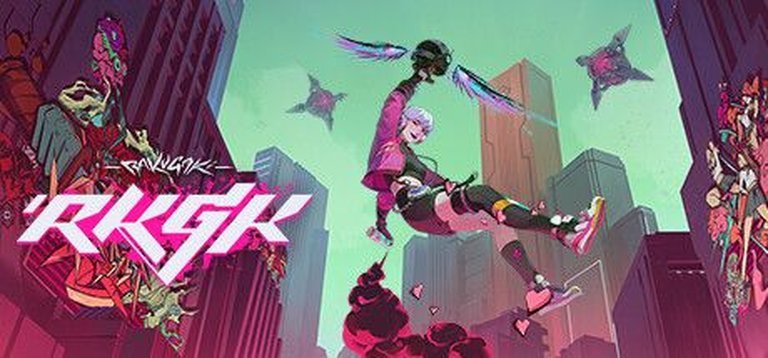
Rakugaki: RKGK is an anime-inspired 3D platformer set in the vibrant, futuristic metropolis of Cap City, blending fantasy and sci-fi elements. Players control Valah, a graffiti artist, who uses her unique paint-based abilities to perform fluid movements, tag surfaces, and navigate challenging environments, emphasizing artistic expression and fast-paced gameplay.
Gameplay Videos
Rakugaki: RKGK Cracks & Fixes
Rakugaki: RKGK Mods
Rakugaki: RKGK Guides & Walkthroughs
Rakugaki: RKGK Reviews & Reception
metacritic.com (76/100): RKGK is an astounding debut game from Wabisabi Games.
thegamer.com : RKGK’s creative use of spray paint makes it a feast for the eyes.
butwhytho.net : RKGK / RAKUGAKI doesn’t hide its inspirations, but it also never loses itself.
pixeldie.com : RKGK at its core is a collect-a-thon platformer with speed-infused techniques and combat.
Rakugaki: RKGK: The Graffiti Revolution That Painted Over 3D Platforming’s Gray Areas
Introduction: A Vibrant Insurrection in a Dull Genre
In an era where the 3D platformer often feels like a nostalgic echo of the PS2 generation, Rakugaki: RKGK explodes onto the scene not with a whimper, but with a kaleidoscopic burst of spray paint and synth beats. This 2024 debut from Mexico’s Wabisabi Games is more than a homage; it is a vibrant, kinetic manifesto for a genre that has been systematically drained of color by corporate bloat and formulaic design. Its thesis is radical in its simplicity: what if the core loop of a platformer wasn’t just about reaching a goal, but about creating—leaving an indelible, artistic mark on a world desperate for it? With a MobyScores of 7.5 and a critical average of 76%, RKGK stands as a critically acclaimed cult phenomenon, a game that understands the soul of platforming lies in flow, expression, and rebellion. This review will argue that RKGK succeeds precisely because it weaponizes its inspirations—from Jet Set Radio to Sonic Adventure to 90s anime—to forge a unique mechanical and thematic identity, even as it stumbles under the weight of its own ambitious collection mechanics and a storyline that serves only as a scaffold for its true passion: movement.
Development History & Context: A Studio Forged in Cultural Crossfire
RKGK is the singular vision of Wabisabi Design, Inc., a Mexico-based indie studio whose very existence is a testament to the power of targeted support. The game was nurtured under the wing of the Riot Games Underrepresented Founders Program, a crucial initiative that provided the foundational funding for a team deeply outside the traditional Western gaming pipeline. This context is not merely biographical; it is fundamental to the game’s DNA. As CEO Anwar Noriega revealed in an interview with But Why Tho?, the team’s formative media diet was disproportionately shaped by Japanese anime and manga, not US pop culture, despite the latter’s regional dominance. “Without this influence, we are 100% sure we would not be here,” Noriega stated. This cultural confluence—a Latin American team obsessed with Japanese stylization and Mexican graffiti culture—is the engine of RKGK’s aesthetic. The technological constraints of being a small studio (the credits list 455 individuals, but core development was a tight-knit group) were transformed into a design philosophy: rather than aim for a bloated 40-hour campaign, they crafted a dense, replayable 6-10 hour experience focused on mastering a tight moveset across intricately designed stages. Published by Gearbox, the game represents a strategic bet on stylish, niche indies, positioning RKGK as a spiritual successor to the graffiti-platforming lineage of Jet Set Radio and Bomb Rush Cyberfunk, but with a distinct, personal voice.
Narrative & Thematic Deep Dive: Art as a Weapon Against Gray Conformity
The plot of RKGK is refreshingly minimalist, a deliberate choice that prioritizes gameplay momentum over narrative complexity. Set in the neo-brutalist dystopia of Cap City, the story posits a world drained of color and soul by the evil B Corporation, led by the cartoonishly capitalistic Mr. Buff. Using omnipresent “screens,” B Corp broadcasts subliminal messaging that turns citizens into mindless drones. The protagonist, Valah, captain of the rebellious graffiti crew “RKGK” (from the Japanese rakugaki, meaning “doodle” or “graffiti”), fights back not with guns, but with spray cans. Her mission is to physically paint over these screens, restoring color—and by extension, free will—to the city.
Thematically, RKGK is a punk-rock anthem for creative resistance. Graffiti here is not vandalism but a vital, almost magical, act of reclamation. As Noriega explained, “Graffiti is the perfect vehicle to ignite this fight and express our feelings because it is super punk and a universal art form.” The narrative’s simplicity is its strength; it avoids heavy-handed political lecturing, instead framing the conflict as a timeless struggle between individual expression and systemic control. The societal commentary on how technology (the screens) can be used for oppression is lightly touched upon, with the game wisely keeping its tone closer to a Saturday morning cartoon than a dystopian thriller. Valah is bubbly and determined, her motivation rooted in a pure love for art and community. The villain, Mr. Buff, with his one-liners reminiscent of Crash Bandicoot’s Neo Cortex, is a caricature of bland corporate evil, making the rebellion feel morally unambiguous and energetically clear. The story is delivered through static, comic-book-style panels—a choice that, while efficient, feels like a missed opportunity for the animated vibrancy seen in the gameplay. It serves its purpose: to provide just enough context for the player’s anarchic tagging spree, making the act of painting over each screen feel like a triumphant strike against conformity.
Gameplay Mechanics & Systems: The Flow State is the True Protagonist
RKGK’s genius lies in its movement-first design philosophy. Valah’s core toolkit is deceptively simple: jump, double jump, slide, melee attack, and a dash. But the true star is her Drone companion, Ayo, which enables two paint-based abilities that redefine traversal:
1. Paint Hover: Spraying paint beneath her while jumping creates a temporary cloud, allowing for extended aerial control and hovering over hazards like electrified floors.
2. Paint Surf: The signature mechanic. By spraying forward while moving, Valah summons a flowing ribbon of paint she can surf on at high speed, leaving a vibrant trail and automatically tagging enemies in her path.
These abilities are not mere gimmicks; they are the language of the game’s levels. The core gameplay loop involves navigating a stage from start to exit, tagging all mandatory “control screens,” and optional objectives (Ghosts, coins, enemy eliminations). The true magic happens when players chain these abilities. A typical expert route might involve: a jump into a Paint Surf to gain speed, a dismount into a slide under an obstacle, a wall-jump, another Paint Hover to cross a gap, and a grind on a rail—all in one fluid, uninterrupted motion. This creates a rhythm and momentum that reviewers consistently compared to the best of Sonic Adventure’s open-ended 3D zones.
This fluidity is amplified by Defacer Mode. By performing stylish moves and chaining tags, players fill a meter that, when activated, supercharges Valah’s speed and imbues her Paint Surf with an automatic melee, turning her into a chromatic bulldozer. It’s a classic “risk/reward” power trip that encourages aggressive, showy play. However, the game’s other systems are less refined.
* Combat is roundly criticized as an afterthought. Enemies, mostly B Corp’s robotic drones, are functionally identical obstacles that exist primarily to interrupt flow. Their meager health means they are dispatched with one or two hits, but their placement in narrow corridors can cause frustrating knockback, breaking the player’s rhythm. As TheGamer noted, it “doesn’t add much to the experience beyond slowing you down.”
* Level Design & Progression is a double-edged sword. The six areas (each with 5-6 stages and a boss) are purposefully bleak, monolithic neo-brutalist structures that serve as a blank canvas for Valah’s art. This aesthetic consistency is thematically sound but leads to a sense of visual repetition. As GameSpot and TheGamer both observed, levels can “blur together” due to their “lifeless design” and lack of unique gimmicks. While a few stand out—a gravity-flipping stage, a dark sewer navigated by painting light sources—the template feels similar. Yet, this very simplicity is what makes the replayability so compelling. The lack of gimmicks means mastery is about learning the geography and perfecting your personal route. The game explicitly supports this with time trials, Ghost hunts, and “no damage” challenges, transforming each stage into a speedrunning puzzle box. The difficulty curve is praised as “spot-on,” steadily introducing mechanics (like timed disappearing platforms) that feel fair but demand precision.
World-Building, Art & Sound: Where Latin America Meets Tokyo Via the Spray Can
RKGK’s world is its most undeniable triumph. The visual direction is a masterful fusion of influences that somehow feels cohesive. Cap City is a monochromatic, oppressive concrete hellscape—a direct visual metaphor for B Corp’s control. Valah’s graffiti is the antidote: each tagged screen erupts into a stunning, fully 3D-animated mural. These are not simple stickers; they are dynamic, elaborate pieces with depth and motion, each one a unique piece of digital street art. The styles pull from Japanese anime (mecha, magical girl transformations), classic cartoons, and unmistakably Mexican muralism. This is where the developer’s heritage shines through, creating an aesthetic that is neither purely Japanese nor purely Western, but a vibrant, original hybrid.
Character design extends to Valah’s extensive cosmetic system. Earned via in-game currency (coins and rare Ghosts), her outfits are a love letter to anime and gaming culture—with nods to Dragon Ball, Hunter x Hunter, and Akira—but adapted to fit the game’s world. This isn’t just fan service; it’s player expression as a core mechanic, allowing you to project your own identity onto the rebellious hero.
The soundtrack, composed by Mexican electronic artist Trasto Nueve Vidas, is a pulsating, psy-trance/techno score that directly channels the inspirations cited by the developers. They specifically referenced the Wipeout series as a gateway to artists like The Chemical Brothers and The Prodigy. The intent was to create “non-game music” that felt propulsive and cool. While many critics (TheGamer, ScreenRant) found it repetitive and lacking in melodic memorability, its functional purpose—as a relentless 120bpm heartbeat for the action—is undeniable. It perfectly underscores the high-speed traversal, even if it doesn’t linger in the memory.
Reception & Legacy: A Niche Masterpiece with Room to Grow
RKGK’s reception is a study in critical consensus versus more divided user sentiment. Critics (76/100 on Metacritic/MobyGames) largely praised its stylish execution, tight controls, and heartfelt vision. Top scores came from Thumb Culture (100%) and But Why Tho? (95%), the latter calling it “an astounding debut” that “wears its inspirations on its sleeves but never once feels like a derivative.” Common accolades included its “excellent fast-paced 3D platforming” (God is a Geek) and the way it “lets you take your time exploring each level, then challenges you to rush out” (Checkpoint Gaming).
However, the consensus criticisms are consistent and significant:
1. Environmental Repetition: The “purposefully lifeless” level design, while thematically appropriate, leads to visual monotony.
2. Simplistic Combat & Bosses: Both are seen as chores that disrupt the flow. Edge magazine noted bosses are “unconventional” but some found them “disappointing.” Voxel called them “cansativos” (tiresome).
3. Forgettable Story: Universally described as “thin,” “basic,” or “frothy” (Metro.co.uk). It serves its purpose but lacks depth.
4. Repetitive Soundtrack: A frequent point of critique.
5. Overwhelming Collectibles: Some felt the sheer number of objectives could sap satisfaction (Gazettely, PixelDie).
User scores on Steam (76% “Mostly Positive”) and Metacritic (5.6) are notably lower than critic scores, reflecting a cracks in the experience for less patient players. PixelDie’s scathing 6/10 review captured a common sentiment: the game is “not great” due to “compulsive stuffing of genre staples,” yet it’s “addictive” because of its S-Rank time trials. This dichotomy defines its legacy: RKGK is a cult hit for completionists and speedrunners, but a more average experience for casual players.
Its influence is already being felt as a touchstone for modern indie 3D platformers. It proves that a small team can create a mechanically deep, visually distinct game without the budget of a AAA studio. By integrating graffiti not as a skin-deep mechanic but as the core of its movement and progression, it has carved a unique niche. It joins Hi-Fi Rush and Teenage Mutant Ninja Turtles: Shredder’s Revenge in demonstrating that rhythm-based, stylish action is a fertile ground for innovation. Furthermore, as a Latino-led project openly celebrating Japanese anime and Mexican street art, it expands the cultural vocabulary of the industry.
Conclusion: A Flawed but Essential Blueprint for Expression
Rakugaki: RKGK is not a perfect game. It stumbles with a forgettable narrative, simplistic combat, and stages that can feel visually monotonous. Its soundtrack, while effective, is unlikely to be playlist material. Yet, these flaws are almost beside the point. What Wabisabi Games has achieved is something profound: they have built a 3D platformer where the primary joy is not in collecting stars, but in painting the world. The movement is so fluid, the act of tagging so visually and mechanically satisfying, that the game transcends its structural shortcomings. It captures the pure, exhilarating flow state that defines the classics of the genre, from Jet Set Radio’s grind-happy freedom to Super Mario Sunshine’s joyful environmental interaction—while adding a fiercely independent, anti-capitalist streak that feels utterly contemporary.
In the pantheon of 3D platformers, RKGK does not dethrone Super Mario 64 or Psychonauts. Instead, it occupies a crucial, vibrant space as a loving, unapologetic, and culturally specific evolution of the form. It is a testament to the idea that a game’s soul is found in its mechanics’ harmony with its theme. Here, the mechanics of swift, paint-based traversal are the theme of artistic rebellion. For that reason, Rakugaki: RKGK is more than a hidden gem; it is a significant, debut landmark. It proves that the 3D platformer is not dead, merely waiting for a new generation of creators to pick up a spray can and redefine its canvas. A flawed masterpiece? Perhaps. But an essential one, absolutely.
Final Verdict: 8/10 – A Must-Play for Platformer Aficionados and Rebels with a Cause.