
- Release Year: 2010
- Platforms: Windows
- Publisher: Studio 100 NV
- Developer: Thepharmacy B.V.
- Genre: Adventure, Detective, Mystery
- Game Mode: Single-player
- Gameplay: Exploration, Puzzle
- Setting: Ancient Egypt
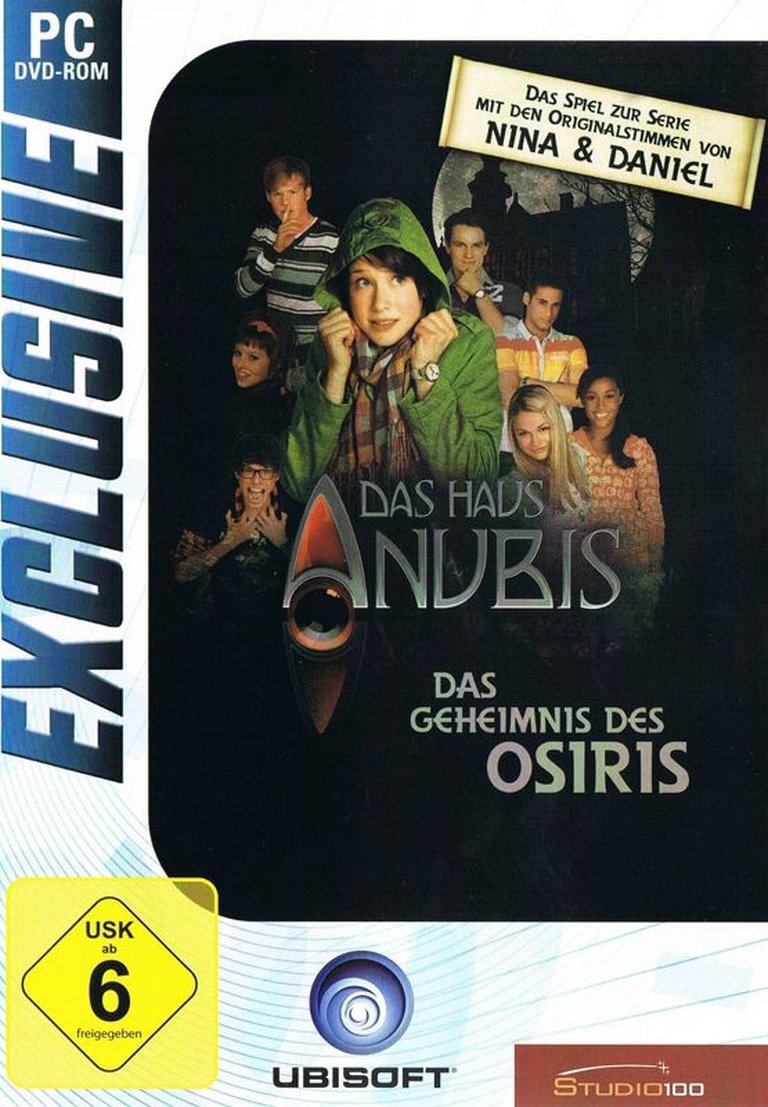
Description
Het Huis Anubis: Het Geheim van Osiris is an adventure game based on the TV series, where players travel back in time to ancient Egypt to locate a missing famous archaeologist. With the help of series characters Nina and Daniel, they solve riddles, find hidden treasures and hints, and unravel the mystery of Osiris across diverse settings including an abandoned inn and a garden filled with ancient artifacts.
Gameplay Videos
Het Huis Anubis: Het Geheim van Osiris: A Forgotten Key to a Locked Door
Introduction: A Time Capsule of Regional Licensed Gaming
In the sprawling museum of video game history, certain exhibits are grand, marble-hewn cathedrals—The Legend of Zelda, Final Fantasy, Half-Life. Others are intimate, hand-crafted lockets, meaningful primarily to a specific time, place, and community. Het Huis Anubis: Het Geheim van Osiris is one such locket. A product of the potent European “tween” media wave of the late 2000s, it is a digital extension of the immensely popular Dutch-Belgian television series Het Huis Anubis. To the uninvolved observer, it is a footnote: a straightforward, episodic adventure game for children. But to examine it closely is to undertake a fascinating archaeological dig into the mechanics of licensed game development, the ambition of regional cultural exports, and the very specific, often overlooked, ecosystem of educational (“edutainment”) adventure gaming at the dawn of the 2010s. This review argues that while Het Geheim van Osiris may not rank among the greats of the medium, it serves as a perfectly preserved artifact of its particular niche—a competent, sincere, and culturally significant bridge between television narrative and interactive puzzle-solving, whose legacy is measured not in sales charts but in the fond memories of a generation of Dutch and Flemish players.
1. Development History & Context: The Pharmacy’s calculated冒险
Studio & Vision: The game was developed by thePharmacy B.V., a Dutch studio whose name itself hints at a calculated, formulaic approach to game development. Unlike the auteurs of the industry, thePharmacy operated within a clear, commercial mandate: translate the world of Het Huis Anubis into an interactive experience that would satisfy the show’s massive fanbase. The vision was not one of groundbreaking innovation but of translation and extension. The goal was to let players “step into” the boarding school, to handle its artifacts, and to solve a mystery that felt canonical to the series’ blend of historical puzzle-box storytelling and teen drama. The creators at thePharmacy understood their audience—children aged 8-14—and designed an experience that prioritized accessibility, clarity, and a tangible connection to beloved characters over complexity or challenge.
Technological Constraints & Landscape: Released for PC (Windows) in 2008 and Nintendo DS in 2009, the game existed at a fascinating technological crossroads. The PC version, distributed on CD-ROM, likely utilized a simple 2D or basic 2.5D point-and-click engine, common for budget-friendly adventure games of the era. The Nintendo DS port, handled by Engine Software (as noted on Metacritic), represents a crucial adaptation. The DS’s dual screens, touch interface, and limited horsepower necessitated a complete rethinking of UI and puzzle design. This was not a simple port but a tailored experience, a common practice for licensed games targeting handheld platforms. The year 2008/09 was a period where classic adventure game design (inventory-based puzzles, dialogue trees) was being revitalized for casual and younger audiences, but still within a low-budget, licensed framework. It stood in stark contrast to the big-budget cinematic adventures of the time (like Heavy Rain) or the rise of indie games on emerging digital storefronts. It was a game for the retail shelf, for the after-school hour, to be played on a family computer or a handheld between television episodes.
Licensing & Business Model: The game was a commercial, full-price product (as per its CD-ROM status and retail presence) carrying the PEGI 7+ and USK 0 ratings, firmly targeting the “all-ages” demographic. Published by Studio 100 NV, the powerhouse Belgian-Dutch media company behind the TV series, it was a textbook example of vertical integration: a TV show produced toys, books, music, and games to create a immersive consumer ecosystem. The existence of a sequel, Het Huis Anubis: De Donkere Strijd (2011) for DS, confirms that this first game was seen as a successful enough venture to warrant a follow-up, cementing its role as a reliable, if modest, revenue stream within the larger Anubis franchise.
2. Narrative & Thematic Deep Dive: Echoes of the Original Inhabitants
Plot Synopsis & Structure: The game’s narrative is a direct sequel/spin-off scenario. Following the inciting incident hinted at in the series—the protagonists being grounded for spraying a garden hose—the player is thrust into adventure. The core premise, as summarized across sources, is the search for a missing famous archaeologist. This journey is not confined to the titular “House Anubis” but involves a miraculous journey through time to ancient Egypt. The player is explicitly joined by series staples Nina and Daniel, indicating the game positions itself as a continuation of the show’s core “Sibuna” club adventures. A crucial, lore-expanding element is the introduction of “the world of the original inhabitants of the house Anubis: the Winsbruggen-van Hennegouwen couple and their daughter.” This ties the modern-day mystery to a deeper, generational secret rooted in the house’s own history, a classic Anubis trope where the past constantly invades the present.
Thematic Underpinnings: The narrative is built on three pillars central to both the game and the TV series:
1. Historical Mystery: The Egyptian theme and the figure of Osiris (the god of the underworld and resurrection) point directly to the series’ love for historically-anchored conspiracies. The “Secret of Osiris” is the MacGuffin, a puzzle that requires understanding ancient symbols, artifacts, and mythology. The game acts as an interactive history lesson, wrapped in a thriller.
2. Friendship & Teamwork: The explicit partnership with Nina and Daniel reinforces the show’s core message. The player is not a lone wolf but a member of a team, a value-driven theme for its young audience.
3. Legacy & Inheritance: The focus on the “original inhabitants” elevates the plot from a simple treasure hunt to a story about uncovering buried family secrets and fulfilling a duty to the past. The player isn’t just finding a lost person; they are reconciling history with the present.
Dialogue & Characterization: Given the source material and target audience, dialogue is almost certainly functional and expository, delivered in a clear, friendly tone matching the TV show. The absence of written critical reviews suggests the narrative was not a point of critique—it was likely seen as a faithful, if simplistic, extension of the television writers’ world. The depth comes not from character arcs but from environmental storytelling: the artifacts in the “beautiful garden full of ancient artifacts” and the “abandoned inn” are the true characters, each holding a piece of the Osiris puzzle.
3. Gameplay Mechanics & Systems: The Puzzle-Centric Loop
As a genre-labeled Adventure game with strong Puzzle and even RPG tags (on Backloggd), Het Geheim van Osiris follows a classic, logic-driven structure.
- Core Loop: The gameplay is a linear, location-based progression. The player travels from a hub (likely the House Anubis itself) to the “abandoned inn,” the “garden,” and finally to “distant Egypt.” Within each location, the loop is: explore environment -> examine objects and clues -> collect inventory items -> solve puzzles to unlock new areas or items -> advance the plot. The stated objective—”solve riddles and find hidden treasures and hints”—defines 90% of the interaction.
- Puzzle Design: Puzzles are the game’s lifeblood. They are almost certainly environmental and logic-based: aligning symbols, decoding hieroglyphs, manipulating objects based on Egyptian mythology, and using items found in one location (the inn) to overcome obstacles in another (the garden). The time-travel element suggests puzzles may involve altering past events to affect the present, a mechanic seen in other adventure games (e.g., Day of the Tentacle). The educational (“edutainment”) label from Wikipedia implies some puzzles may require learning factual tidbits about ancient Egypt to progress.
- Character Progression & RPG Elements: The faint RPG tag is intriguing. It likely refers not to stat-based progression but to narrative progression and “inventory-as-character-growth”. Finding treasures and hints makes the player character (and by extension, Nina and Daniel) more knowledgeable and closer to solving the mystery. There may be simple dialogue choices that branch slightly, or “collectible” facts that fill a journal, giving a light sense of completionism.
- UI & Interface: For a 2008 PC/2009 DS game aimed at children, the interface was almost certainly icon-driven and intuitive. The PC version likely used a point-and-click cursor. The DS version, per Metacritic’s listing under “Hidden Object,” may have incorporated hidden-object scenes as a subset of its puzzle design, a popular casual genre mechanic at the time. The UI would prioritize clarity over immersion, with large, readable text and obvious hotspots.
- Innovation & Flaws: Innovation was not the goal. The game’s potential flaw, common to licensed children’s adventures, is linearity and lack of failure states. Puzzles have one solution, and the path is rigid. This ensures frustration-free play for its target audience but offers no replayability or systemic depth. Its strength lies in thematic cohesion—every puzzle reinforces the Egyptian mystery theme, making the world feel consistent and purposeful.
4. World-Building, Art & Sound: Capturing the Anubis Aesthetic
Setting & Atmosphere: The game’s world is a trilogy of distinct spaces: the modern, mysterious boarding school (the House Anubis itself), the decayed, puzzle-filled abandoned inn, and the sun-drenched, monumental landscapes of ancient Egypt. This progression from confined, modern mystery to vast, historical epic mirrors the show’s tonal shifts. The atmosphere is one of curious exploration, not horror or intense peril. It’s spooky enough to be intriguing (the “abandoned” inn), but ultimately welcoming—a puzzle playground.
Visual Direction: Art style is a direct translation from the TV series’ production design. The PC version likely used pre-rendered 2D backgrounds with 2D sprite-based characters, a cost-effective method that allowed for detailed, painterly environments (the “beautiful garden”). Character representations would be simplified but recognizable versions of the actors. The DS version, constrained by hardware, would feature chibi-style or simplified 3D models on 2D backgrounds, or a fully 2D top-down view. Color palettes would be bright and clear for younger eyes, with Egyptian sections using golds, blues, and sandy tans.
Sound Design & Music: The soundtrack was almost certainly printed, melodic, and thematic. It would feature a main theme recognizable to fans of the show, with leitmotifs for locations (spooky music for the inn, majestic/period-inspired music for Egypt). Sound effects would be functional and clear: the click of an inventory item, the whoosh of a solved puzzle, the distant echo of an Egyptian temple. Voice acting, if present (more likely on DS than PC given the medium’s trends), would have been provided by the original Dutch/Flemish voice actors from the series, a major selling point and authenticity-giver for the core fanbase.
Synthesis: The audiovisual package’s primary function is instant recognition and immersion in the Anubis universe. It doesn’t strive for artistic innovation but for brand fidelity. A fan of the show booting up the game would immediately feel at home, a critical factor for licensed products.
5. Reception & Legacy: The Quiet Success of a Regional Treasure
Contemporary Reception: The critical landscape for this game is a void. On Metacritic, it has no critic or user scores. On MobyGames, it has no reviews. Its presence on sites like Kotaku and Backloggd is minimal, mere metadata listings. This is not a sign of a notorious failure, but of its targeted, regional nature. It was not reviewed in international mainstream gaming press (IGN, GameSpot). Its reception was almost entirely within Dutch and Flemish media outlets, children’s magazines, and among the show’s fan community. commercially, its continued listing on retailers like GOG.com (on a user “Dreamlist”) and preservation in archives like the Nationaal Archief Educatieve Games suggests it was a solid, if unspectacular, seller in the Benelux region. The fact that it received a DS port and a sequel confirms it met Studio 100’s commercial expectations.
Evolution of Reputation: Its reputation has evolved into one of cult nostalgia and archival curiosity. For the generation that grew up with Het Huis Anubis, the game is a cherished memory—a way to “live” in the house. Outside that demographic, it remains an obscure footnote. Its current value is as a cultural artifact, demonstrating the reach of European children’s media franchises into interactive space during a time when such tie-ins were often of notoriously low quality. Its relatively clean, puzzle-focused design (compared to many rushed licensed games) may be re-evaluated positively by preservationists and fans of the adventure genre.
Influence & Industry Place: Het Geheim van Osiris had no discernible influence on the broader games industry. It did not pioneer mechanics or shift trends. Its legacy is franchise-specific and regional. It contributed to the Het Huis Anubis brand ecosystem, reinforcing the show’s themes and providing transmedia storytelling. It shares DNA with countless other children’s licensed adventure games—from the Harry Potter series to American Girl titles—that formed a vast, low-profile ecosystem of “safe,” puzzle-oriented gaming for young audiences. It represents a strand of game development that is less about art and more about service—serving a pre-existing fanbase with a competent, themed experience. In the grand history, it is a single, well-preserved brick in the wall of 2000s edutainment and licensed gaming.
6. Conclusion: A Definitive Verdict on a Time-Locked Experience
Het Huis Anubis: Het Geheim van Osiris cannot be judged by the standards of timeless masterpieces. It was never intended to be a Mystery Case Files for hardcore hidden-object aficionados or a Professor Layton for global puzzle enthusiasts. It was a product of its time, its medium, and its community.
As a game, it is a solid, unpretentious point-and-click/puzzle adventure. Its mechanics are clear, its pacing appropriate for children, and its thematic integration is commendable. Its flaws—linearity, lack of depth, technical simplicity—are features within its target context.
As a licensed work, it is exemplary. It respects its source material, features its characters authentically, and expands the lore in a way that feels canonical. It accomplishes the primary goal of such projects: to let fans spend more time in a beloved world.
As a historical artifact, it is invaluable. It captures a specific moment when European children’s television could spawn a multimedia empire that included PC games, when “edutainment” carried less stigma and more simple, clear educational goals (historical discovery, logical reasoning), and when regional markets had the power to produce and sustain their own niche gaming products.
Final Verdict: Het Huis Anubis: Het Geheim van Osiris deserves a ★★★☆☆ (3/5) rating not as a condemnation, but as an accurate calibration. It is a “good” game for what it set out to be, and an “important” game for those seeking to understand the full tapestry of video game history beyond the canon. It is not a lost classic waiting to be rediscovered by the world, but a perfectly preserved memory waiting to be acknowledged by the region that created it. For scholars of licensed gaming, Dutch media history, or the adventure genre’s evolution into casual markets, it is a small, essential, and genuinely enjoyable piece of the puzzle. For everyone else, it remains a delightful secret, hidden in plain sight, much like the treasures within the House of Anubis itself.