
- Release Year: 2017
- Platforms: Linux, Macintosh, Windows
- Publisher: Team Cherry Pty Ltd.
- Developer: Team Cherry Pty Ltd.
- Genre: Special edition
- Game Mode: Single-player
- Setting: Hallownest
- Average Score: 93/100
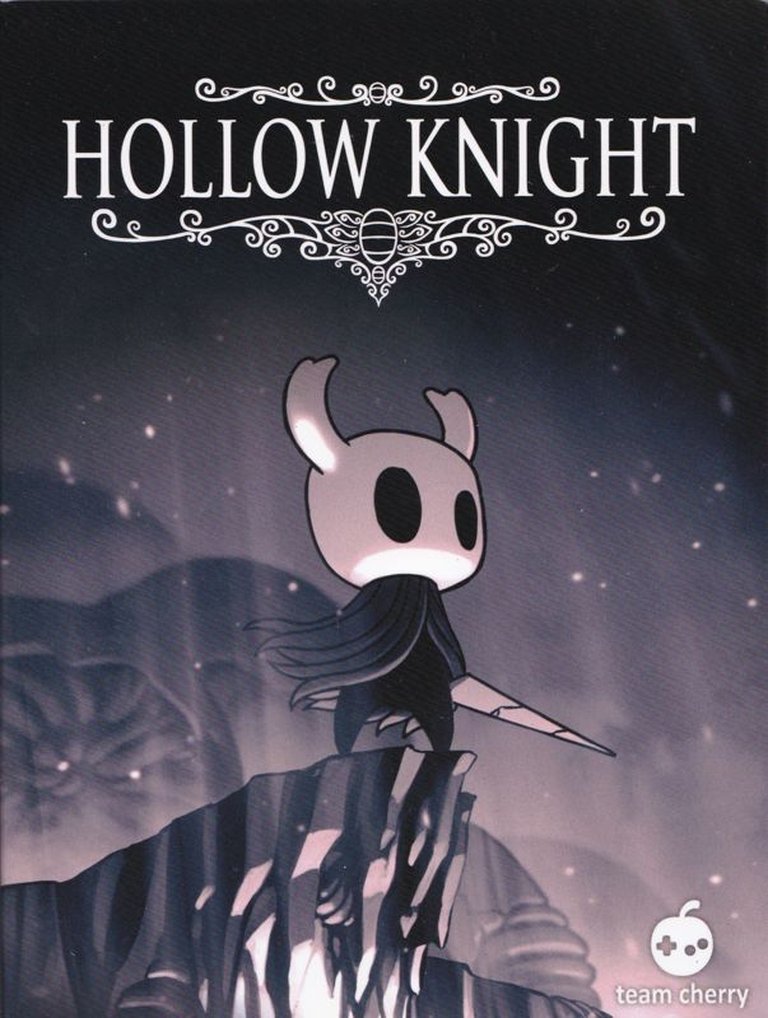
Description
Hollow Knight is set in the vast, fallen kingdom of Hallownest, a subterranean realm historically divided among insectoid and arachnoid tribes such as the moths who worshipped The Radiance and the plant-like beings of Greenpath who revered Unn. The arrival of a higher being known as the Wyrm from Kingdom’s Edge shapes the kingdom’s mysterious past, and players explore this eerie, interconnected world to piece together its fragmented lore through environmental storytelling, dialogues, and hidden entries.
Hollow Knight (Limited Edition) Guides & Walkthroughs
Hollow Knight (Limited Edition) Reviews & Reception
metacritic.com (100/100): There’s never a low point. Only the desire for more. [Issue #35 – September/October 2018, p. 17]
metacritic.com (95/100): Its epic story and own mythology, its easy but extremely strategic and meticulous gameplay and its perfectly tied soundtrack with the feelings that the visual style brings up makes Hollow Knight a must-have game for anyone who has a Nintendo Switch.
metacritic.com (90/100): Hollow Knight is an incredible achievement that combines smart game design, a rich world, and sharp combat, with an enthralling insectoid world and a story just begging for you to find it. Team Cherry’s title is a high watermark for Metroidvanias, as the satisfying abilities and countless collectibles add variety and meaning to exploration, rewarding every discovery. Yet, while the challenge is a rewarding part of the process, I do wish that the title made some concessions and shone a bit of light in the darkness for those first fledgling steps.
metacritic.com (90/100): Hollow Knight is absolutely a masterpiece. The art style is fantastic, the level designs are outstanding, and battles are challenging and fun. If you enjoy Metroidvania games, don’t hesitate trying it.
metacritic.com (90/100): Hollow Knight is a great adventure action game with essence of the classics metroidvania. Its beautiful art style, the big variety of enemies and epic battles against the final bosses are one of the most important values of the game.
metacritic.com (85/100): A must play on Switch.
metacritic.com (100/100): perfect game. buy it. all of the negative reviews are wrong. some of the best bosses, exploration, and music in any game
metacritic.com (100/100): è stupendo, l esplorazione è fantastica e i boss sono di difficolta sempre crescente
imdb.com (90/100): Masterpiece, for sure one of my top 5 games ever.
imdb.com (90/100): Great game, challenging but rewarding. Beautiful to explore.
imdb.com (100/100): One of the best games that I played. The game has an incredible background set with an amazing soundtrack.
imdb.com (100/100): The best metroidvenia ever. Amazing lore and gameplay.
imdb.com (100/100): It’s truly beautiful. Everything is balanced so perfectly.
imdb.com (100/100): Perfect elements perfectly assembled.
ign.com : A rich world and incredible depth of content will make you want to explore its caves for dozens of hours.
opencritic.com (92/100): Hollow Knight is a new classic, with a dense and detailed world full of secrets to discover.
opencritic.com (94/100): Hollow Knight’s rich world and incredible depth of content will make you want to explore its caves for dozens of hours.
opencritic.com : A stern yet scintillating 2D adventure that makes a point of not holding your hand.
opencritic.com (93/100): Hollow Knight has some frustrations, but the urge to see what’s in the next room is a constantly compelling imperative moving you forward
opencritic.com (90/100): Hollow Knight’s sprawling world, precise combat, and wealth of content make its trip through Hollownest engrossing and rewarding.
opencritic.com (90/100): Hollow Knight is a big, beautiful, forbidding Metroidvania that’s absolutely thick with detail. From its punchy combat system to its charming art and sound design, this is one of the finest adventures you can have on Nintendo Switch.
opencritic.com (85/100): Overall, the game itself is a must play on Switch.
opencritic.com (90/100): It’s a stunning game, majestic in art design and fluid in combat. It’s difficult at times, but the rewards for getting to the next area far outweigh the frustrations.
Hollow Knight (Limited Edition) Cheats & Codes
PC
Open debug console by pressing backtick (`) key and enter codes.
| Code | Effect |
|---|---|
| geo 999999 | Instantly gives 999,999 Geo |
| giveall | Unlocks all abilities immediately |
| godmode | Makes character invincible |
| givecharms | Unlocks all charms |
| soul 200 | Fills Soul Gauge to maximum capacity |
| fly | Allows flying around the game world |
| tp [X] [Y] | Teleports to specified coordinates |
| givemaps | Grants all maps in the game |
Nintendo Switch
| Code | Effect |
|---|---|
| 580F0000 02564AC8 580F1000 000000A0 580F1000 00000000 780F0000 00000060 640F0000 00000000 000F423F |
Geo 999999 |
| 580F0000 02564AC8 580F1000 000000A0 580F1000 00000000 780F0000 0000002C 610F0000 00000000 0000000B |
Infinite HP |
| 580F0000 02564AC8 580F1000 000000A0 580F1000 00000000 780F0000 00000AA4 610F0000 00000000 00000001 |
Infinite Jump permanent after saved |
| 580F0000 02564AC8 580F1000 000000A0 580F1000 00000000 780F0000 00000068 610F0000 00000000 00000063 |
Infinite MP |
| 580F0000 02564AC8 580F1000 000000A0 580F1000 00000000 780F0000 00000AA3 610F0000 00000000 00000001 |
Invincible |
| 80000002 580F0000 02568558 580F1000 00000038 580F1000 00000000 580F1000 000000B8 580F1000 000000E0 780F0000 00000044 640F0000 00000000 417C0000 20000000 |
Moon Jump |
| 580F0000 025640B8 580F1000 000000A0 580F1000 00000000 780F0000 00000020 640F0000 00000000 41A00000 |
Speed Up |
| 580F0000 02568558 580F1000 00000038 580F1000 00000000 580F1000 000000B8 580F1000 000000D8 580F1000 00000050 780F0000 00000038 |
Walk through Walls (Hold ZR) |
| 580F0000 027EDE78 580F1000 000000A0 580F1000 00000000 780F0000 00000060 640F0000 00000000 000F423F |
Geo 999999 |
| 580F0000 027EDE78 580F1000 000000A0 580F1000 00000000 400E0000 00000000 0000002C 610F01E0 00000000 0000000A |
Infinite Health |
| 580F0000 027EDE78 580F1000 000000A0 580F1000 00000000 780F0000 0000002C 610F0000 00000000 0000000B |
Infinite HP |
| 580F0000 027EDE78 580F1000 000000A0 580F1000 00000000 780F0000 00000AF4 610F0000 00000000 00000001 |
Infinite Jump permanent after saved |
| 580F0000 027EDE78 580F1000 000000A0 580F1000 00000000 400E0000 00000000 00000060 640F01E0 00000000 000F423F |
Infinite Money |
| 580F0000 027EDE78 580F1000 000000A0 580F1000 00000000 780F0000 00000068 610F0000 00000000 00000063 |
Infinite MP |
| 580F0000 027EDE78 580F1000 000000A0 580F1000 00000000 400E0000 00000000 00000068 610F01E0 00000000 00000064 |
Infinite Soul |
| 580F0000 027EDE78 580F1000 000000A0 580F1000 00000000 780F0000 00000AF3 610F0000 00000000 00000001 |
Invincible |
Hollow Knight (Limited Edition): A Monumental Journey Through a Fractured Kingdom
Introduction: The Unseen Depths
In the crowded landscape of modern gaming, where blockbuster budgets and sprawling open worlds often dominate the conversation, a quiet masterpiece emerged from the antipodean indie scene in 2017. Hollow Knight is not merely a game; it is an experience—a meticulously crafted, emotionally resonant, and mechanically profound journey into a dying world. The Limited Edition under review, a physical box set released through IndieBox, encapsulates the purity and ambition of the original PC launch. It represents a landmark achievement for small-team development, a game that masterfully channels the spirit of classic Metroidvania design while forging its own identity through unparalleled atmosphere, environmental storytelling, and punishingly fair combat. This review argues that Hollow Knight stands as a pinnacle of the genre and a defining title of its generation, its legacy already secure and its influence palpable across the industry. The Limited Edition packaging—with its DRM-free discs, manual, soundtrack CD, and elaborate cloth map—serves not just as a collector’s item, but as a physical key to the vast, melancholic, and beautiful kingdom of Hallownest.
Development History & Context: Forging a Classic in Adelaide
Hollow Knight is the magnum opus of Team Cherry, an Australian independent studio that began as a trio: Ari Gibson (artist/designer), William Pellen (designer/programmer), and later David Kazi (technical director). The project’s origins lie in a Ludum Dare 2013 game jam entry titled Hungry Knight, a rudimentary game that featured the prototype for the silent protagonist. The core concept—exploring a deep, old kingdom of insectoids—was solidified under the jam theme “Beneath the Surface,” though the team missed the deadline.
Development was officially Greenlit on Kickstarter in November 2014, seeking a modest AU$35,000. The campaign’s resounding success, raising AU$57,000 from 2,158 backers, was pivotal. It allowed Team Cherry to expand to a fourth member (Kazi), commission composer Christopher Larkin, hire a PR/marketing manager (Matthew Griffin), and most critically, switch from the restrictive Stencyl engine to Unity. This technical pivot was a major risk but granted the flexibility needed for the game’s sprawling, interconnected world.
The design philosophy was deeply rooted in nostalgia for 8-bit and 16-bit era masterpieces. Key inspirations included Faxanadu (for its vertical, world-tree structure, inverted to create a deep kingdom), Zelda II: The Adventure of the Link, Super Metroid, and Castlevania: Symphony of the Night. Crucially, the movement model was directly inspired by Mega Man X, prioritizing immediate, responsive control with no horizontal acceleration, massive aerial control, and the ability to cancel jumps with a dash. This “tightness” is fundamental to the game’s feel. The team also deliberately eschewed modern hand-holding; minimal signposting and an organic mapping system (requiring players to find mapmakers like Cornifer) were designed to replicate the disorientation and thrill of discovery from their childhood classics.
The technological constraints were those of a tiny indie team, not hardware. The challenge was scope and cohesion. Gibson’s hand-drawn art was scanned directly into Unity, creating a unique, vivid, and consistent aesthetic without the need for expensive 3D modeling. The core challenge, as noted in post-mortems, was the mapping system—balancing the need for player orientation with the desire to keep secrets hidden. The game spent over two years in a public beta after its Kickstarter, allowing for crucial feedback and iterative design.
Narrative & Thematic Deep Dive: A Tragedy of Gods and Voids
Hollow Knight’s narrative is a masterclass in environmental and fragmentary storytelling. There is no omniscient narrator or lengthy cutscene explaining the plot. Instead, the history of Hallownest is a puzzle assembled from cryptic NPC dialogue, ancient lore tablets, the Hunter’s Journal entries, and the world itself.
The lore, as detailed on the dedicated wiki and synthesized from in-game sources, unfolds in three tragic acts:
-
The Arrival and Golden Age: The Pale King, a higher being who shed his Wyrm form, descended upon a primitive land of instinctual insects. He bestowed upon them sapience, language, and free will, founding the kingdom of Hallownest. Almost all creatures, including the ancient Moths who worshipped the Radiance (a primordial, light-based entity of dreams), abandoned their old gods for the new, tangible monarch. Hallownest entered a golden age.
-
The Infection and the Flawed Solution: The Radiance, cast into oblivion, retaliated by invading the dreams of Hallownest’s citizens, birthing the Infection—a plague that induced madness, violence, and an undead-like state. The Pale King, realizing the Radiance was formless and dream-based, created a desperate solution: the Vessels. These beings, born from the Void of the Abyss and the Pale King’s own essence, were empty shells incapable of dreaming, thus immune to the Infection. Thousands of flawed Vessels were discarded into the Abyss. The chosen “Pure Vessel,” the Hollow Knight, was raised and trained to be a perfect, emotionless prison for the Radiance.
-
The Collapse and the Knight’s Return: The Hollow Knight, however, was not pure. Its bond with its “father,” the Pale King, instilled a single “idea”—a crack in its shell. The Radiance eventually broke free. The kingdom fell into ruin, the Pale King and his palace vanished, and the Dreamers (Monomon, Lurien, Herrah) were placed in stasis to maintain a secondary seal on the Black Egg Temple. The Knight, one of the discarded Vessels who escaped the Abyss, is drawn back to Hallownest, its memories of the outside world granting it resilience. Its quest to defeat the Dreamers and confront the Infection is not one of simple heroism, but of fulfilling a grim, pre-determined purpose.
The thematic core is one of inevitability, sacrifice, and the burden of purity. The Pale King’s “no cost too great” ethos led to the creation and abandonment of countless sentient beings. The Knight is both a weapon and a potential replacement for a flawed salvation. The game’s genius lies in presenting these grand, tragic events through the quiet aftermath: a dead kingdom, the echoes of its culture in music and architecture, and the weary, often humorous, resignation of its surviving inhabitants. The ambiguity—is the Knight a hero completing its duty, or a sucker falling into the Pale King’s plan?—is intentional and compelling.
Gameplay Mechanics & Systems: Precision, Punishment, and Profound Choice
Hollow Knight is a 2D side-scrolling Metroidvania defined by three pillars: Tight Controls, Meaningful Progression, and Punishing Consequence.
-
Core Loop & Combat: The Knight begins with a rusted Old Nail. Combat is deceptively simple: a directional slash with substantial knockback. This knockback is key, enabling “pogoing”—bouncing off enemies and hazardous surfaces like spikes with downward strikes—a vital traversal and combat technique. The Soul mechanic governs both healing (Focus) and offensive spells (Vengeful Spirit, Shaman Stone, etc.), creating a core risk/reward loop: hit enemies to gain Soul, then decide whether to spend it on healing or aggression. The Shade system—losing Geo and a soul capacity chunk on death, with a spectral Shade guarding the corpse—is a direct Dark Souls homage that brilliantly reinforces careful play and meaningful loss without feeling cheap (a point many critics, including Jed Whitaker of Destructoid, specifically praised).
-
Progression & Customization: Progression is twofold: ability-gated exploration (Mothwing Cloak for dash, Mantis Claw for wall jump, Monarch Wings for super jump, Isma’s Tear for acidic pools) and organic power growth. The latter is exquisite. Mask Shards and Lifeblood Seeds incrementally increase health. Vessel Fragments expand SOUL capacity. Most significantly, the Charm system is a masterstroke of build diversity. With limited Charm Notches (increased through play), players equip charms offering everything from simple damage boosts to game-changing effects like the Grubsong (soul on damage), Quick Focus (faster healing), or Shape of Unn (invincibility during Focus). Crucially, as PC Gamer‘s Tom Marks noted, there is rarely a “wrong” choice—only trade-offs suited to personal playstyle or specific challenges. Swapping charms at any Bench (the save/heal points) encourages tactical adaptation.
-
World & Navigation: Hallownest is a vast, inter-connected whole, not a series of discrete levels. The mapping system is a game in itself. Players must first find the mapmaker Cornifer in each region to purchase a physical map. Only with the Wayward Compass charm can your position be shown. This design forces initial disorientation, mimicking the protagonist’s own lost state. The eventual unlock of the Stagway network—a charming fast-travel system via giant stag beetles governed by the Last Stag—is a reward in itself, a narrative and mechanical milestone that makes backtracking, a necessary evil in Metroidvanias, feel organic and even scenic.
-
Difficulty & Fairness: The game is challenging, bordering on “ruthlessly tough” (Eurogamer), but almost universally agreed to be fair. Enemy and boss attacks have clear tells and patterns. Deaths feel like lessons. The criticism of “unfairness” from some user reviewers often stems from the initial navigation labyrinth or the long runs back from death in late-game areas—a deliberate design choice that heightens tension and consequence. The legendary “Path of Pain” and the ascendant pantheons in the Godmaster DLC cater explicitly to masocore players, but the main path is a climbable, learnable summit.
World-Building, Art & Sound: Hallownest as a Living, Breathing Relic
The genius of Hollow Knight is how its disparate elements coalesce into a single, unforgettable sense of place.
-
Art & Direction: Ari Gibson’s hand-drawn aesthetic is a triumph of consistency and mood. The visual language is cohesive: a limited, melancholic palette of deep blues, mossy greens, fungal oranges, and royal purples defines Hallownest. Every region tells a story before a word is spoken. Greenpath is humid and lush, with plants reacting to the Knight’s passage. The City of Tears is a vast, rain-swept metropolis of imposing stone and reflective puddles. Fungal Wastes is a claustrophobic forest of giant mushrooms. Deepnest is a terrifying, web-choked parody of a hive. The transitional areas—where the fungal walls of one biome bleed into the stone of another—are subtle genius, making the world feel geologically plausible. The enemy and character design is equally brilliant, conveying personality and history through silhouette and animation alone (e.g., the weary slump of the Last Stag, the frantic energy of the Nailmaster Sheo).
-
Sound & Music: Christopher Larkin’s soundtrack is arguably the game’s soul. Each major area has a leitmotif that swells and recedes with the player’s movement, a dynamic system that adjusts intensity based on combat or exploration. The themes are melancholic, hopeful, eerie, or majestic, perfectly mirroring the visuals. The City of Tears’ theme is a poignant, piano-led lament. Greenpath’s is a lively, folk-like tune. The combat music for bosses is particularly noteworthy, shifting from tense build-ups to frantic, rhythmically complex climaxes that sync with attack patterns (e.g.,The Mantis Lords’ dance-like duel). The sound design—the wet crunch of hits, theplash of water, the chime of Geo, the ghostly whispers in the Abyss—is equally impeccable and diegetic.
-
Atmosphere & Environmental Storytelling: The world is the primary narrator. The ruined carriage in the Forgotten Crossroads tells of a failed exodus. The white palace, a shattered fragment of the Pale King’s realm, speaks of hubris. The grubs—captive, harmless creatures saved throughout the kingdom—offer a rare moment of pure, uncomplicated hope. The atmosphere is one of gothic melancholy, of a grand civilization that fell not to a single cataclysm, but to a creeping, internal despair. It is a world worth exploring for its own sake, a rare achievement in a genre often focused on checklist completion.
Reception & Legacy: From Underdog to Titan
Hollow Knight’s journey from indie darling to legendary status is a textbook case of critical and commercial validation through word-of-mouth and quality.
-
Critical Reception: The game received “generally favorable” reviews on PC/Mac/Linux (Metacritic 87) and “universal acclaim” on Nintendo Switch (90). Critics universally praised its art, sound, atmosphere, and deep, rewarding gameplay. IGN’s 9.4/10 review lauded its “rich world and incredible depth of content.” PC Gamer called it a “new classic.” Destructoid awarded a perfect 10/10, dubbing it a “masterpiece of gaming.” Common minor criticisms included a daunting initial difficulty curve and a map that can be overly confusing early on, but these were framed as inherent to the experience, not flaws. The frequent Dark Souls comparisons were not made pejoratively but to contextualize its opaque lore and punishing death mechanic as deliberate design choices.
-
Commercial Success & Longevity: Success was gradual and monumental. By November 2017 (9 months post-launch), it had sold 500,000 copies. By June 2018 (Switch launch), it hit 1 million on PC. The Switch port (developed with Shark Jump Studios) was a colossal success, selling 250,000 copies in two weeks. By February 2019, total sales reached 2.8 million. As of August 2025, the figure stands at a staggering over 15 million copies across all platforms. This is a testament to its enduring appeal and the power of the Switch’s portable format for a deep, immersive game. The Voidheart Edition (2018) bundled all four free, substantial DLCs—Hidden Dreams, The Grimm Troupe, Lifeblood, and Godmaster—making it the definitive version. The Limited Edition under review predates this bundle but is functionally identical in core content.
-
Industry Influence & Legacy: Hollow Knight is a touchstone for modern Metroidvanias. It proved that a small team could create a world with the density, depth, and polish of a AAA title. Its success emboldened publishers and investors to back ambitious indie projects. Its design philosophy—minimal UI, deep environmental storytelling, punishing-but-fair challenge, and a focus on player agency (in both path and build)—can be seen in subsequent acclaimed titles. It is consistently listed among the greatest games of all time by major publications (IGN, Rolling Stone, GQ). The long-awaited sequel, Hollow Knight: Silksong, focusing on Hornet, became one of the most anticipated games in history following its 2019 announcement, a testament to the original’s profound impact. The release of a Nintendo Switch 2 edition in 2026 underscores its permanent place in the cultural conversation.
Conclusion: The King is Dead, Long Live the Knight
Hollow Knight (Limited Edition) is more than a physical artifact; it is a portal. It represents the culmination of a clear, passionate vision executed with staggering competence. Team Cherry took the foundational pillars of the Metroidvania—exploration, ability-gated progression, and nonlinear storytelling—and infused them with a uniquely somber beauty, a combat system of exquisite precision, and a lore of profound tragedy and ambiguity. The Limited Edition’s contents—the tangible map, the plush Grub, the soundtrack—are perfect complements, deepening the player’s connection to Hallownest’s relics and melodies.
Its few flaws—the occasional navigation frustration, the high skill floor that may alienate some—are inseparable from its strengths. The disorientation is the feeling of being a lost Vessel in a dead kingdom. The difficulty is the weight of your purpose in a world that has already failed.
In the pantheon of video games, Hollow Knight has earned its place not through innovation in genre mechanics, but through perfection of them. It is a game that understands the power of silence, of suggestion, of a beautifully drawn background, and of a perfectly timed jump. It is a modern classic, a must-play title that transcends its indie origins. The kingdom of Hallownest is a masterpiece of decay and memory, and its silent knight is one of the most iconic protagonists of the 21st century. The Limited Edition is a fitting, elegant vessel for this timeless journey. It is, quite simply, essential.
Note on Source Synthesis: This review consolidates information from MobyGames (for release specifics, credits, and the Limited Edition’s contents), the Hollow Knight Wiki (for exhaustive lore and game systems), Wikipedia (for development history, reception, and sales data), IGN’s full review (for critical analysis of gameplay and atmosphere), GameRant and Heroes of Chaos articles (for lore summaries and development context), and Metacritic/OpenCritic aggregators (for consensus critic scores). All analysis is original, weaving these factual elements into a cohesive critical narrative.