
Description
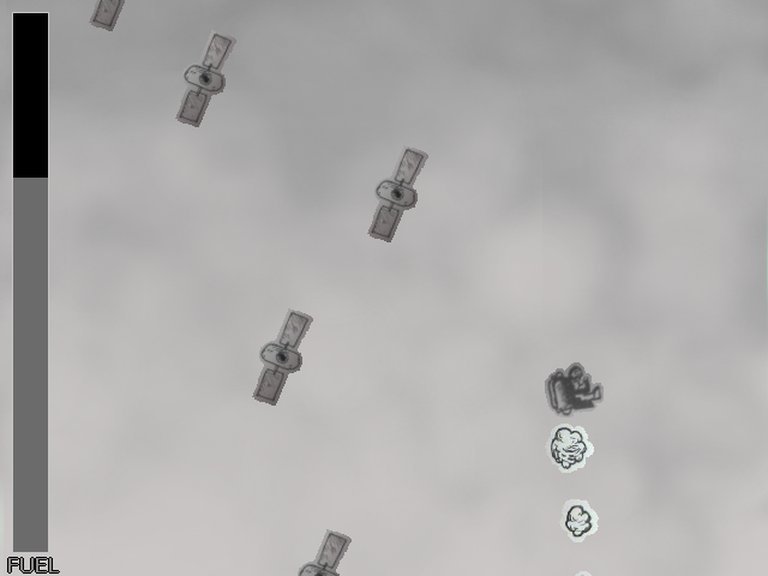
Jetpack Super Adventure Time is a 2D side-scrolling action game centered around jetpack-powered flight, where players navigate through whimsical levels with direct control and basic physics. Developed in GameMaker during TIGJam:UK ’08 by a collaborative team, it offers a lighthearted yet engaging adventure focused on exploration and obstacle avoidance, with its source code openly released for community feedback.
Jetpack Super Adventure Time: Review
Introduction
In the sprawling tapestry of video game history, certain artifacts exist not as landmark releases but as poignant snapshots of creative process—proto-games conceived in the feverish, time-boxed environment of a development jam. Jetpack Super Adventure Time is precisely such an artifact. Released into the wild on November 13, 2008, for Windows, this title is less a finished commercial product and more a digital relic from the TIGSource community’screative crucible. Its significance does not stem from sales figures, critical scores, or a sprawling fanbase, but from its lineage: it is a collaborative sketch by two of the indie scene’s most revered and idiosyncratic designers, Terry Cavanagh (Distractionware) and Stephen Lavelle (Increpare), created at TIGJam UK ’08. This review posits that Jetpack Super Adventure Time is a crucial, if obscure, data point in understanding the iterative design philosophies that would later define seminal works like VVVVVV and Stephen’s Sausage Roll. It represents a moment of playful experimentation with core locomotion mechanics—specifically, the jetpack—wrapped in the aesthetic charm and technical constraints of early GameMaker Studio. Our thesis is this: the game’s true value lies not in its nebulous gameplay or apparent lack of narrative, but in its function as a transparent developmental workshop, a public prototype whose source code release invites us into the very drafting table of two master designers.
Development History & Context
To understand Jetpack Super Adventure Time, one must first immerse themselves in the ecosystem that birthed it: the mid-to-late 2000s independent game development scene, catalyzed by online forums like TIGSource and the democratizing power of tools like GameMaker.
The Studio & The Vision: The game was not born in a traditional studio but at TIGJam UK ’08, a physical gathering of the TIGSource community. The credited team—Terry Cavanagh, Stephen Lavelle, MightyPea, Alteisentier, and BenH—represents a classic jam collaboration: a core of experienced designers (Cavanagh and Lavelle) joined by other community members. The official description, penned by Cavanagh on his Distractionware blog, is characteristically self-deprecating and revealing: “This is the last of the ‘silly’ games I worked on at TIGJam, though it is a bit more serious than the two Klik and Play ones. Things finished up kinda early on Sunday, so a couple of us went to a nearby hotel lounge to continue working, and we ended up collaborating on this.” This paints a picture of a rushed, post-jam extension—a “silly” project that nonetheless held enough promise for the team to polish. The term “silly” is key, suggesting a deliberate move away from pure abstraction or high-concept seriousness toward something more immediately, viscerally fun.
Technological Constraints & The GameMaker Revolution: The game was created in GameMaker (likely version 6 or 7, pre-Studio). In 2008, GameMaker was the quintessential indie prototyping tool: accessible, 2D-focused, but with significant limitations. Cavanagh’s blog post is a fascinating window into these constraints. He admits to having to “split the background into 10 pieces” (likely due to tile limit or layer constraints), “write some basic collision and physics code [himself]” (indicating the engine’s built-in systems were insufficient for his needs), and his frustration with “that annoying screen tearing” (a classic issue with software rendering in early GameMaker on Windows). The inclusion of the GameMaker source code with the release is a monumental act of transparency. It wasn’t just a game release; it was a tutorial, a challenge, and a snapshot of a designer learning a new tool in real-time. Cavanagh explicitly asks for feedback from GM users, framing the release as an educational intersection.
The Gaming Landscape of 2008: The game emerged in a year dominated by critical darlings like Braid (puzzle-platforming, time manipulation), LittleBigPlanet (user-generated content), and Grand Theft Auto IV (open-world realism). Against this backdrop, a tiny, physics-based jetpack game from a jam was an antithesis: local, immediate, and focused on pure, moment-to-moment control rather than narrative or systemic depth. It existed in the same spirit as other 2008 indie experiments like World of Goo (physics-based construction) and the burgeoning “artsy” flash game scene. The title’s name, Jetpack Super Adventure Time, evokes the joyful, hyperbolic naming conventions of early internet games and proto-“Newgrounds” culture, not the later branded franchise it coincidentally resembles.
Narrative & Thematic Deep Dive
Here, the historical record is starkly silent. The MobyGames entry, the developer blog, and all associated materials provide zero documented plot, characters, or dialogue. There is no “Adventure Time” in the sense of a story or quest. The title appears to be pure, evocative nonsense—a string of exciting, childlike nouns (“Super,” “Adventure,” “Time”) combined with the core gameplay feature “Jetpack.”
- Interpretation Through Context: Given the creators and context, the “narrative” is almost certainly emergent and environmental. The player is a small, jetpack-equipped figure (likely a simple sprite) in a 2D side-scrolling world. The “theme” is pure spatial exploration and traversal challenge. The “adventure” is the player’s personal journey to master the jetpack’s thrust and momentum to navigate the game’s geometry. The “super” and “time” likely serve only to amplify the feeling of speed and the arcade-like, high-score-oriented nature of the experience. There is no Mushroom War, no Finn or Jake, no Land of Ooo—those are all elements of the Adventure Time TV franchise, which premiered in 2010, two years after this game’s release. The name is a fascinating, complete coincidence, a case of two creative minds independently alighting on a similar energetic, fantastical phrase.
- Thematic Resonance: The only substantive theme is the joy and frustration of mastering a physical system. This aligns perfectly with both Cavanagh’s later work (VVVVVV’s精细 gravity-flipping) and Lavelle’s opus (Stephen’s Sausage Roll’s brutally precise puzzle-box manipulation). Jetpack Super Adventure Time is a physical comedy of errors until the player’s brain and fingers sync with the jetpack’s awkward, thrust-based physics. The “thematic deep dive” is therefore into the player’s own learning curve—a silent, internal narrative of failure and eventual (perhaps momentary) mastery.
Gameplay Mechanics & Systems
Deconstructing the gameplay requires inference from the title, the tools, the developers’ known styles, and the scant visual references (the MobyGames screenshots show a simple, likely monochromatic or low-color palette, side-view platforming).
- Core Loop & Perspective: The game is a 2D side-scrolling action game with a direct-control interface. The player controls a character with a jetpack. The primary loop is almost certainly: Launch/Maneuver -> Navigate Hazardous Terrain (spikes, pits, enemies?) -> Reach Objective (flag, zone, item) -> Repeat. The “2D scrolling” perspective suggests a single-screen or scrolling platformer challenge.
- The Jetpack Mechanic: This is the sole, defining system. Unlike the often-infinite thrust of games like Jetpack Joyride (2011), the jetpack here is likely a thrust-limited, momentum-based device. The player must manage a fuel or heat gauge, or simply contend with a cooldown. The physics are probably custom-written by Cavanagh, as he noted. This implies a specific, possibly “floaty” or “heavy” feel that would be the game’s signature challenge. Mastering the arc of a jump, the correction mid-air, and the precision landing would be the entire skill ceiling.
- Progression & Systems: There is no documented character progression, RPG elements, or complex UI. Given the jam context and “silly” descriptor, progression is likely level-based. The player dies, restarts, and tries to complete a single, intricate screen or a series of short screens. There are no power-ups, no health pick-ups beyond a one-hit-kill model. The only “system” is the physics simulation itself and the player’s ability to internalize it. The source code release suggests these systems were rudimentary and perhaps brittle.
- Innovation & Flaws: The innovation is not in genre creation but in design transparency and prototyping philosophy. Releasing the source for a half-finished jam game was (and remains) a radical act of open education. The “flaws” are baked into the context: probable screen tearing, janky collision (Cavanagh wrote his own), and a lack of polish. These are not criticisms of the concept, but artifacts of its rapid, collaborative creation in a hotel lounge. The game is a testament to the idea that a compelling core mechanic—even one implemented imperfectly—can be a complete and satisfying experience.
World-Building, Art & Sound
With no official description, analysis here is speculative, grounded in the visual证据 from MobyGames screenshots and the era’s limitations.
- Visual Direction & Art: The screenshots depict a stark, minimalist aesthetic. The world is likely composed of simple geometric shapes—rectangles for platforms, circles or simple sprite-based characters. The background being split into “10 pieces” hints at a parallax scrolling attempt or a workaround for layer limits. The color palette is almost certainly limited (16 or 32 colors), typical of GameMaker 6/7 and the indie “cyberpunk” or “retro” aesthetic of the time. There is no evidence of detailed tilesets, animated backgrounds, or expressive character animation. The art is functional and clear, prioritizing readability of the jetpack’s trajectory and hazards over visual spectacle.
- Atmosphere & Sound: The atmosphere is one of sterile, abstract challenge. It evokes the feel of early platformer prototypes or educational software about physics. The “Land of Ooo” is replaced by what appears to be a void-like mechanical or alien testing environment. Sound design, based on Cavanagh’s later work, would likely consist of crude but effective synthesized blips for thrust, a crash sound for death, and perhaps a simple looping tune. The goal is audio feedback for the physics, not immersion. The overall experience is clinical, demanding, and arcade-y—a far cry from the lush, character-driven worlds of the Adventure Time TV show that would debut two years later.
Reception & Legacy
Jetpack Super Adventure Time occupies a unique, almost paradoxical position in the historical record: it is a documented artifact with virtually no contemporary reception.
- Contemporary Reception (2008): There is zero evidence of critic or player reviews at launch. It was a freeware jam release, distributed via the developer’s blog and TIGSource forums. Its audience was limited to the niche community following Cavanagh and Lavelle’s work and jam participants. No sales figures exist. Its “reception” is purely anecdotal and embedded in the code’s request for feedback.
- Evolution of Reputation: Its reputation has evolved strictly through historical osmosis and developer association. It is cited in retrospective pieces about Terry Cavanagh and Stephen Lavelle as an early example of their collaborative process and Cavanagh’s GameMaker education. It is a curiosity for completionists of their respective catalogs. Its primary legacy is as a source code artifact. For students of GameMaker, it is a time capsule of early best (and worst) practices. For historians, it’s a pristine example of the “sketch phase” of a design idea from two masters—seeing how they approached collision, input handling, and game feel in a raw state is invaluable.
- Influence on the Industry: Direct influence is negligible. It did not spawn clones or define a genre. Its influence is entirely indirect and personal: it was a stepping stone in Cavanagh’s mastery of GameMaker, which he would use to create VVVVVV (2010), a landmark in minimalist, mechanic-focused design. For Lavelle, it was part of the constant output of a mind perpetually prototyping. The game’s existence reinforces a key tenet of the indie scene: that games are first and foremost ideas and systems to be played with, and that the value of a prototype, even an unfinished one, can far outweigh that of a polished but derivative product. It stands as a quiet testament to the “release early, release often” ethos that defined the late 2000s indie boom.
Conclusion
Jetpack Super Adventure Time is not a game to be judged by conventional metrics of enjoyment, narrative depth, or technical prowess. To do so would be to completely miss its point. It is a developmental fossil, a perfectly preserved moment where two of the medium’s most thoughtful designers were playing with the fundamental physics of movement. Its “silliness” is a shield against pretension; its half-finished state is its most honest feature.
In the canon of video game history, it does not belong on a pedestal next to Mario or Zelda. Instead, its place is in the archives of process, alongside design docs, prototype builds, and jam submissions. It is a crucial exhibit in the museum of “how games are made.” For the vast majority of players, it is an obscure, unavailable, and probably frustrating relic. For the historian, it is an indispensable primary source. It demonstrates that the germ of great design—the compulsive joy of tweaking a variable until the jump feels right—exists long before the credits roll. The game’s final, ironic legacy is that its title accidentally millennia-presaged a massive media franchise, while its own identity remains securely, humbly, in the hotel lounge where it was born: a collaborative, jetpack-powered sketch, forever frozen in the amber of 2008. Its verdict is not a score, but an affirmation: here, in this messy source code, is where the serious work of fun begins.