
- Release Year: 2017
- Platforms: Windows
- Genre: Adventure
- Perspective: First-person
- Game Mode: Single-player
- Gameplay: Visual novel
- Average Score: 50/100
Description
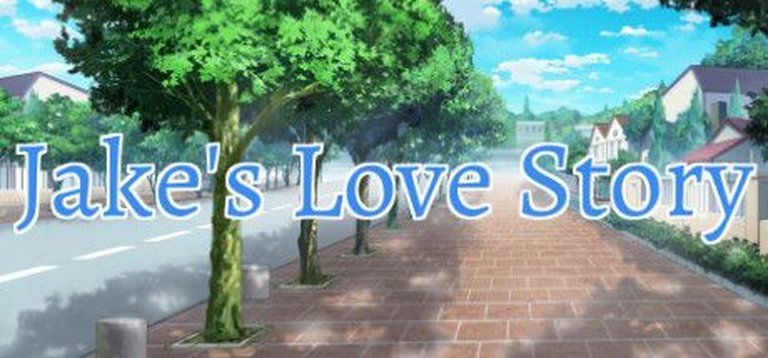
Jake’s Love Story is a visual novel set in a high school environment where players assume the role of Jake, an average student, interacting with characters like the cheerful Emma, cold Alice, and friendly Mike. Blending comedy and romance with anime-style art, the game focuses on choice-driven storytelling that branches into multiple endings based on player decisions, all within a family-friendly, everyday life setting.
Gameplay Videos
Where to Buy Jake’s Love Story
PC
Jake’s Love Story Guides & Walkthroughs
Jake’s Love Story Reviews & Reception
336gamereviews.com (50/100): The entire experience is far too unfocused with the content featured in the span of three years being nowhere near enough to achieve what they were going for.
Jake’s Love Story: A Case Study in Ambitious Tropes and Accidental Subtext
Introduction: The Curious Case of a $3 Visual Novel
In the sprawling, democratized ecosystem of Steam’s indie visual novel section, thousands of titles compete for attention, most fading into the digital ether within weeks. Jake’s Love Story (2017), a Ren’Py-engineered title by Polish solo developer Mikołaj Spychał, should have been among the most forgettable. Priced at a mere $2.99, marketed with a stock-art aesthetic, and promising a parodic take on high-school romance anime tropes, it arrived with little fanfare. Yet, a decade later, it persists not as a beloved classic, but as a fascinating, divisive, and strangely discussed artifact. Its legacy is a paradoxical knot of intentional comedy and unintentional narrative dissonance, a game where the most compelling story exists not in its scripted romance routes, but in the critical debate it sparked over a seemingly minor supporting character. This review will argue that Jake’s Love Story’s historical significance lies precisely in this tension: it is a textbook example of how constrained indie development can produce a text that, through its imbalances and ambiguities, reveals more about player expectation, queer reading, and the cultural baggage of its chosen genre than its polished contemporaries. To engage with Jake’s Love Story is to engage with the uncanny valley of visual novel storytelling, where parody bleeds into unintentional subversion, and marketing promises outpace narrative delivery.
Development History & Context: The Solo Dev’s Ren’Py Crucible
Jake’s Love Story emerged from the same global, low-barrier indie boom that saturated Steam with visual novels. Developer Mikołaj Spychał was, and remains, a quintessential solo hobbyist-turned-indie, using the accessible, Python-based Ren’Py engine—the industry standard for amateur and professional VNs alike. This context is non-negotiable for understanding the game’s texture. The technological constraints were not those of a AAA studio, but of an individual: limited art assets (with clear reuse and “hiding hands” techniques), a stock or simple music library, and scripting bound by the developer’s time and skill. The gaming landscape of October 2017 was post-Doki Doki Literature Club! (September 2017), a game that had catastrophically deconstructed the dating sim genre just one month prior. Jake’s Love Story’s stated goal—a “parody of anime clichés”—was thus launched into a world suddenly hyper-aware of the genre’s darker underpinnings and narrative possibilities.
Spychał’s vision, as gleaned from store descriptions and post-release comments, was straightforward: a short, comedic, multiple-ending slice-of-life about an “average” student navigating friendship and potential romance. The ambition was contained to a single high school year, with ~20 decision points leading to 9 endings. Yet, the execution reveals the cracks of solo development. The disparity in asset allocation—Emma having “about double the unique sprite assets” of Alice, as meticulously documented by a dataminer—speaks to a developer’s personal investment bleeding into the narrative balance. This wasn’t a considered artistic choice about character popularity; it was a symptom of resource allocation in a project where every sprite is a manual creation. Similarly, the use of animated backgrounds (moving clouds) shows a desire for dynamism within technical limits, while the occasional “bizarre” CG editing points to rushed or outsourced work. The game exists in a liminal space: professionally packaged on Steam, but bearing the unmistakable marks of a passionate, constrained, one-person production.
Narrative & Thematic Deep Dive: Trope, Parody, and the Ghost in the Gallery
The plot, on paper, is archetypal. Protagonist Jake, an “average” student (a self-aware nod to anime blandness), befriends the cheerful, anime-obsessed Emma, the cold, secretly-glasses-wearing guitarist Alice, and the friendly wingman Mike. Three years of high school are compressed into a series of vignettes: group projects, field trips, tutoring sessions. The player’s ~20 choices determine which girl Jake pursues for prom, with endings ranging from successful romances to disastrous double-booking failures. It is, by design, a lightweight, comedic examine of trope application.
Emma vs. Alice: A Tale of Two Tropes (and Asset Budgets)
The two romantic routes are pure, distilled archetype. Emma is the hyper-aware, fourth-wall-breaking otaku, whose humor derives from explicit references to anime and visual novel conventions. She is the game’s meta-commentary engine, a role that grants her disproportionate dialogue and scene presence. Alice is the classic tsundere, her “secret” being corrective lenses and a guitar—revelations meant to signal vulnerability beneath a harsh exterior. Thematically, the game explores the performative nature of high school identity (Alice hiding her glasses) and the social bonding power of shared niche interests (Emma’s anime fandom). However, both characters remain stubbornly one-dimensional. Their “secrets” are not shattering revelations but simple costume changes; the emotional payoff is minimal. This is not necessarily a failure of writing, but possibly a feature of the parody format—these are types, not people. Yet, the imbalance in their presentation (Emma’s vastly greater screen time and sprite variations) fundamentally skews the narrative, making the “love story” feel less like a balanced choice and more like a preference for one genre of comedy over another.
Mike and the Abjected Narrative: The Central Conundrum
Here lies the game’s profound, unintentional complexity. Mike is the “friendly wingman,” a narrative device to move plots along when the heroines are inconveniently unavailable. By all metrics of the game’s own systems, he should be a non-entity. Yet, he is not. The evidence of his anomalous status, as dissected by critic “CoolerMudkip” in the seminal Indie Hell Zone review, is overwhelming and meticulously documented:
1. Marketing Footage: The trailer places Mike on nearly equal visual footing with Emma and Alice.
2. Gallery Anomaly: He has his own dedicated page in the in-game CG gallery, which is conspicuously sparse.
3. The Confession Scene: A pivotal moment where Mike’s dialogue and the jarring “record scratch” sound effect strongly imply an aborted love confession to Jake, only for him to clumsily reframe it moments later.
4. Ending CG Pattern: In the 9 possible ending CGs, the romantic partner is placed on the right. In Ending 9 (the bad ending where both girls hate you), Mike is on the right—the position of the romantic interest.
5. Developer Commentary: When confronted, creator Mikołaj Spychał stated the scene was “one joke too far” and “not suitable in current times,” while insisting Mike was “never intended as romance option” and was “more like a plot device.”
This collision between textual suggestion (the marketing, the gallery, the scene, the CG composition) and authorial intent (the denial) creates a fascinating void. It is a classic case of what literary theorist Wolfgang Iser might call a “gap” in the text, a space the reader is compelled to fill. Players and critics, particularly those sensitive to queer subtext (as the analyzing critic was), filled this gap with the possibility of a hidden, suppressed gay romance route. The scene’s awkwardness, Jake’s defensive “Whoa! Wait, wait, wait! I didn’t know you were… You are not going to say you want to go with me, right?” reaction, and the developer’s defensive clarification about “old movie” jokes, all combine to cast a long, peculiar shadow. Was this a clumsy, dated joke about homophobia that backfired? Was it a开发者 privately exploring a queer narrative through subtext and then retreating? Or was it simply inconsistent writing that accidentally created a haunting narrative ghost? Jake’s Love Story’s narrative cannot be divorced from this controversy; it becomes the central interpretive lens through which its thematic emptiness is viewed. The “love story” title rings either hollow or poignantly ironic, depending on whether one sees Mike as a discarded fourth romantic option or a victim of the genre’s assumed heteronormativity.
Gameplay Mechanics & Systems: The Illusion of Choice
As a Ren’Py visual novel, gameplay is minimal: reading text and clicking to advance, with decision points presenting a menu of choices. The systems are straightforward:
* Branching Narrative: ~20 decision points lead to 9 distinct endings. The “choices matter” promise is technically true, but the branches are narrow. Most choices are binary (be nice/be mean, help/don’t help) with immediate, minor consequence (a character’s mood changes, a scene is accessed or locked). True divergence only occurs at key junctures (prom invitation timing, who you help).
* Choice Legacy: A noted feature is that characters will occasionally reference past choices, creating a thin sense of continuity (“Remember when you did X?”). However, this rarely alters fundamental character trajectories.
* Replay Structure: The game encourages multiple playthroughs with an auto-skip function for previously read text, reducing the 1-1.5 hour playtime per run. Achieving all 9 endings is the primary replay driver.
* UI and Presentation: The interface is standard Ren’Py, functional but unadorned. The “partially animated backgrounds” (moving clouds) are a pleasant, low-cost touch that adds minor life to scenes.
The systems are competent for their scope but reveal the genre’s inherent limitations at this budget level. There is no stats management, no complex relationship meter, no mini-games. The “gameplay” is pure narrative navigation. The flaw is not in the simplicity, but in the illusion of depth created by the marketing (“9 endings!”) versus the reality of the tightly scripted, short paths. Many player reviews note the predictability and lack of meaningful branching, a common critique of early/amateur VNs. The mechanics serve the tightly controlled narrative, not an emergent simulation.
World-Building, Art & Sound: A Patchwork Aesthetic
The game’s presentation is a study in contrasts between effective minimalism and palpable amateurishness.
* Art & Sprites: The character art is anime-styled but uneven. The “hiding hands” technique (placing arms behind backs, in pockets, or off-screen) is a dead giveaway of asset limitations. Emma’s significantly larger sprite set (multiple outfits, expressions) versus Alice’s sparse one highlights the developer’s focus. The background art is arguably the strongest visual element; as suggested, they are likely stock or purchased resources, but are competently chosen and the subtle animation (clouds, water) is an effective, low-overhead way to create atmosphere. However, some CGs are notoriously “rushed” or poorly edited, with obvious artifacts (like Mike’s misaligned sleeve in one cited example) that break immersion.
* Sound Design: The music is explicitly described as “stock,” and this is accurate. The tracks are generic, royalty-free轻度 atmosphere pieces—calm, repetitive loops. Their function is purely to underscore mood (upbeat for comedy, somber for drama) and they succeed adequately without ever being memorable. The sound design, including the jarringly loud “record scratch” in Mike’s confession scene, is sporadic and sometimes tonally inconsistent.
* Atmosphere & Tone: The game attempts a “calm and relaxing” slice-of-life vibe, punctuated by comedic beats (often fourth-wall-breaking from Emma). This tone is frequently undermined by the art inconsistencies and the profound narrative weirdness of the Mike subplot. The world feels less like a lived-in high school and more like a series of disconnected, trope-laden sets (classroom, hallway, beach) with characters moving between them.
The cumulative effect is a game that looks and sounds like dozens of other cheap Ren’Py games, but whose narrative oddities make it stand out in memory. The aesthetic is a serviceable vehicle for the story, but the story’s flaws make the aesthetic shortcomings more glaring.
Reception & Legacy: The “Very Positive” Enigma
At launch and in the years since, Jake’s Love Story has maintained a “Very Positive” Steam rating (81% positive from ~144 reviews). This reception is itself a key part of its story. Analyzing the review corpus (via aggregated sites like Steambase and individual critiques) reveals a polarized but strangely tolerant consensus:
* Positive Reviews: Champion the game’s humor, its cozy nostalgia, its high replayability for the low price point, and its “family-friendly” charm. It is often recommended as a “quick, funny, casual” distraction.
* Negative Reviews: Cite weak story development, predictable and shallow characters (especially Alice), poor grammar/spelling (a noted issue in non-English translations), and the feeling that the “9 endings” are not substantially different. Many explicitly state the game is not worth its full $3 price, only its sale price.
* The Mike Effect: A significant subset of both positive and negative reviews, and the most detailed critical essays, circulate around the Mike subplot. It is the game’s defining talking point—the thing that makes it discussable. For some, it’s a hilarious, bizarre, or unsettling quirk that elevates it above generic fare. For others, it’s a fatal tonal flaw or an unintentionally homophobic moment that mars the experience.
Its commercial performance is modest but persistent, likely buoyed by inclusion in the developer’s “Love Stories Bundle” and occasional deep discounts. Its legacy is not one of influence on major titles, but of becoming a cult object of analysis within niche VN discourse. It is frequently cited in discussions about “hidden gay routes” in games, the pitfalls of amateur storytelling, and the gap between marketing promise and narrative delivery. It exists in a strange space: a game reviewed not just for what it is, but for what its perceived flaws accidentally suggest. While it did not shape the industry, it perfectly encapsulates a specific indie VN moment—the era of the $3 Ren’Py game that, through sheer accidental strangeness, refused to be ignored.
Conclusion: A Flawed Artifact of Unresolved Narratives
Jake’s Love Story is not a good visual novel by conventional metrics. Its characters are thin, its plot is rushed, its art is inconsistent, and its central romantic premise feels undercooked. The developer’s vision of a lighthearted parody of anime romance is, in its execution, often lost.
Yet, to dismiss it as merely bad is to miss its curious value. Its historical significance lies in the accidental subversion of its own genre. The narrative vacuum left by the underdeveloped heroines was filled by the specter of Mike, a character who became a canvas for queer readings and a focal point for critiques of heteronormative assumption. The game’s most discussed element is not a choice, a route, or a joke, but a single, awkward scene and its resultant gallery placement—a ghost in the machine of its own making.
In the canon of video game history, Jake’s Love Story will not be remembered for its storytelling craft, but as a pristine case study. It demonstrates how developer bias (asset imbalance), constrained resources, dated humor, and marketing misprision can collide to create a text richer in interpretive possibility than intentional design. It is a game that asks not “who will Jake love?” but “what does it mean when a game’s marketing, gallery, and a single scene collectively suggest a romance its creator denies?” Its place in history is secured not by quality, but by this profound and unsettling ambiguity. For the professional historian, it is invaluable; for the casual player, it is a $3 curiosity best enjoyed on sale with a critical,而不是沉浸式, mindset. It is, ultimately, a love story whose most passionate debates have nothing to do with Jake, Emma, or Alice, and everything to do with the space left for Mike.