
- Release Year: 2012
- Platforms: Windows
- Publisher: rokapublish GmbH
- Developer: BufoProject GmbH
- Genre: Gambling, Strategy, Tactics
- Perspective: 1st-person
- Game Mode: Online PVP, Single-player
- Gameplay: Cards, Tiles
Description
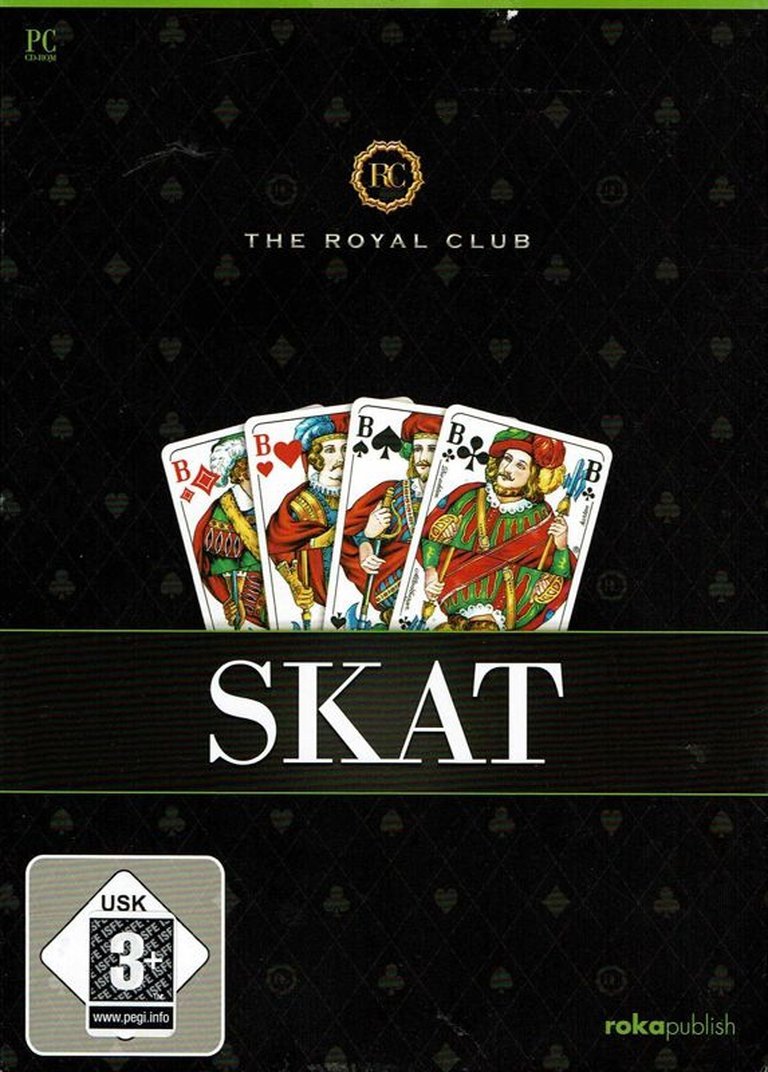
The Royal Club: Skat is a digital adaptation of the traditional German card game Skat, where players can compete against AI or online opponents using official or customizable rule sets. Set in a first-person, fixed-screen virtual environment, it emphasizes strategic and gambling elements with adjustable difficulty and a point-and-select interface for an authentic card-playing experience.
The Royal Club: Skat: A Digital Preserve for Germany’s National Card Game
Introduction: The Quiet Majesty of a Digital Table
In the vast, often noisy landscape of video game history, certain titles exist not as cultural earthquakes but as meticulous, respectful custodians of tradition. The Royal Club: Skat (2012) is one such game. It is not a narrative-driven epic, a technical showcase, or a design revolution. Instead, it is a flawless, polished, and deeply sincere digital adaptation of Skat, the German national card game whose official rules were codified in the late 19th century. This review posits that The Royal Club: Skat represents a landmark in the “digital folk game” genre—a title that transcends mere translation to become an authoritative, accessible, and enduring archive for a complex cultural practice. Its genius lies in its unwavering focus on fidelity, flexibility, and atmosphere, creating a virtual clubhouse that successfully bridges the gap between hallowed tradition and modern convenience. For the historian, it is a primary source document; for the player, it is the definitive way to experience Skat on a screen.
Development History & Context: Niche Craftsmanship in a Mainstream Era
The Royal Club: Skat emerged from a specific and focused development lineage. It was created by BufoProject GmbH, a German studio with a clear specialization: high-fidelity digital adaptations of traditional card and board games. This was not a team of genre experimenters but of digital archivists and systematic designers. The game was published by rokapublish GmbH, a company that understood the “Premium” market for serious, adult-oriented digital pastimes, often in partnership with ASS Altenburger, the iconic German playing card manufacturer. This partnership ensured the visual authenticity of the card decks.
The technological context of its 2012 release on Windows is one of mature, accessible 3D graphics. The game leverages fixed/flip-screen perspectives and diagonal-down viewpoints common in digital card game adaptations of the era, prioritizing a clear, table-top view over cinematic flair. Its constraints were not hardware limitations but design imperatives: to perfectly simulate the tactile and social nuances of Skat without the tangibility of physical cards. The gaming landscape at the time was dominated by online multiplayer-focused titles and free-to-play models. The Royal Club: Skat stood apart as a premium, commercially-sold product ($14.99-$19.99) targeting a specific, discerning demographic: Skat enthusiasts, both young and old, who sought a reliable way to play online or against sophisticated AI when a physical gathering was impossible. It was a game made for players, not for trends.
Narrative & Thematic Deep Dive: The Game Is the Narrative
A critical analysis of The Royal Club: Skat must begin with a fundamental acknowledgment: there is no narrative, plot, or characters in a conventional sense. To chastise it for lacking a story would be to fundamentally misunderstand its purpose. The “narrative” of The Royal Club: Skat is the game of Skat itself—its rules, its strategies, its social rituals.
- The “Plot”: Each hand of Skat is a self-contained dramatic arc. It begins with the deal (the inciting incident), proceeds to the bidding or Reizen (the rising tension and strategic maneuvering), enters the play phase (the climax, where tricks are won and lost), and concludes with the scoring (the resolution, where fortunes are tallied). The overarching “campaign” is the player’s cumulative tournament or series, a story of statistical rise and fall.
- The “Characters”: The players are archetypes defined by their play style, not personality. The AI opponents, as per the source material, are customizable in name, voice (from a set of German synchronised speakers), and crucially, in “Risikobereitschaft” (risk tolerance). This is not character development but parameter tuning, allowing the player to configure opponents who play aggressively or conservatively, mirroring real-life personalities at the Stammtisch (regulars’ table).
- The “Themes”: The game embodies several profound themes intrinsic to its source material:
- Tradition vs. Modernity: It presents the “official rules” of the Deutsche Skatordnung alongside customizable “Sonderregeln” (special rules), and explicitly includes the beloved “Kneipenskats” (pub skats) with their local variations like Bock and Ramsch rounds. This is a deliberate negotiation between canonical purity and folkloric flexibility.
- Intellectual Mastery: The core theme is the triumph of logic, memory, and probability. Winning a difficult Soli (solo game) against high-level AI is framed as becoming a “echter Skat-Meister” (true Skat master).
- Social Connection: The entire “Royal Club” branding—the noble, gesellige (sociable) atmosphere—thematizes the gemütlichkeit of the card game. The online mode with its ranking system digitally reconstructs the social ladder of the local club.
In essence, the narrative is a metacommentary on the game’s own existence: it is the story of a 200-year-old intellectual pursuit finding a new, permanent home in the digital realm.
Gameplay Mechanics & Systems: A Masterclass in Digital Adaptation
The mechanical depth of The Royal Club: Skat is where it earns its “exceptionally detailed” reputation. It is a simulation of such accuracy that it can serve as a teaching tool.
- Core Loop & Rules Fidelity: The game implements the complete, official ruleset. The three-player dynamic (with one player alone against two defenders) is perfectly simulated. The dealing of 10 cards to each player, the subsequent pickup and discarding of the Skata (the two-card skat), the critical Reizen bidding phase where players estimate their hand’s Wert (value) in Matador points, and the subsequent play where the declarer (soloist) tries to achieve their bid—every phase is rendered with absolute clarity.
- Innovative Systems:
- The AI “Soul”: The most lauded feature is the customizable AI. Beyond simple difficulty levels (from beginner to Experten), players can adjust the “Risikobereitschaft” of each opponent. This is a profound simulation of human psychology, affecting how often an AI will bid aggressively, attempt difficult Soli, or play defensively. Combined with selectable voices, it allows for the creation of familiar “regular” opponents.
- Rule Sandbox: The ability to toggle between official rules and an extensive array of Sonderregeln is revolutionary for a digital adaptation. It respects the regional diversity of Skat, allowing players from different parts of Germany (or the world) to play with their house rules. The inclusion of the “Kneipenskat” variant with its auto-Bock and Ramsch rounds is a direct nod to the game’s pub culture.
- Atmospheric Customization: The “Spielumgebungen und Tische” (game environments and tables) are more than cosmetics. Selecting a traditional Bavarian Wirtshaus table with a stein of beer on it versus a more modern, minimalist table subtly shifts the player’s psychological frame, reinforcing the “noble” vs. “gesellig” (sociable) modes of play.
- UI & Interface: The interface is a textbook example of clarity. Card selection is point-and-select. The bidding phase clearly displays current bids and values. During play, the cards are large, readable, and animate smoothly. The trick-taking area is unambiguous. A comprehensive, in-game tutorial and “ausführliche Spielanleitung” (detailed game manual) are included, essential for the international audience.
- Flaws: If there are flaws, they are inherent to the medium. The lack of physical card manipulation—the feel of the deck, the tactile signaling not permitted by rules but used by partners—cannot be replicated. The online community, while functional, can never fully replicate the Gemütlichkeit of a crowded Skatstube on a Friday night.
World-Building, Art & Sound: The Aesthetics of Authenticity
The world of The Royal Club: Skat is not a fantastical realm but an idealized, purified version of the spaces where Skat is played.
- Visual Direction: The game presents a fixed 3D environment focusing on the table. The visual fidelity is in the details: the “farbenfrohe 3D-Spielwelt” (colorful 3D game world) features multiple, traditionsreich (tradition-rich) Kartenmotive (card motifs), including licenses for original Altenburger Spielkarten (Altenburger playing cards). The ability to choose between classic German-suited patterns (Acorns, Leaves, Hearts, Bells) and French-suited designs caters to regional preference. The table environments—from dark wood tavern settings to brighter, modern club rooms—create an immediate, subconscious “place” for the game.
- Sound Design: The sound design is functional yet atmospheric. The critical component is the “einstellbare Stimmen bekannter Synchronsprecher” (adjustable voices of known voice actors). Hearing a crisp, authoritative German voice announce “Skat!” or “Ich spiele!” adds an immense layer of authenticity and immersion that generic beeps cannot. The clink of cards on the virtual table and ambient background noise (a muted pub murmur in some environments) complete the illusion.
- Contribution to Experience: These elements work in concert to achieve the game’s primary goal: suspension of disbelief. By providing authentic visuals and sounds, it elevates the experience from a sterile rule engine to a “virtual club.” The player is not just manipulating icons; they are sitting at a table in a familiar, respected space. This is the key to its success as a preservation tool—it honours the cultural context of the game, not just its mechanics.
Reception & Legacy: The Quiet Champion
The Royal Club: Skat exists in a curious niche. It was not broadly reviewed by mainstream outlets, as it targeted a specific audience. Within the German Skat community and among digital board game connoisseurs, its reception was and remains highly positive, almost reverent.
- Critical Reception at Launch: Reviews on platforms like MobyGames are sparse (the entry itself has no critic reviews as of the latest scrape), indicative of its niche status. However, its reputation in German gaming forums and Skat club newsletters was excellent. It was praised for its unparalleled rule accuracy, the brilliance of the customizable AI, and its beautiful presentation.
- Evolution of Reputation: Its reputation has only grown. It is now seen as the gold standard for digital Skat. Later entries in the “Royal Club” series (like Skat 9 and the Gold Edition) built upon its foundation, adding more environments, cards, and online features, but the core simulation of The Royal Club: Skat (2012) is considered the bedrock. It is frequently recommended by the Deutscher Skatverband (German Skat Association) and similar bodies as the best way for expats or new learners to practice.
- Influence on the Industry: Its influence is indirect but significant. It proved that a game could be both a niche, rules-heavy simulation and a commercially viable, polished product. It set a benchmark for AI customizability in strategy games. More broadly, it is a prime example of the “digital preservation” model—a studio (BufoProject) building a sustainable business by faithfully digitizing Europe’s rich heritage of card games (Doppelkopf, Schafkopf, Rommé, Canasta) under a consistent, high-quality brand. It influenced the approach of other studios focusing on “hard” board game adaptations, emphasizing rule integrity and player-configurable depth over flashy presentation.
Conclusion: A Definitive Verdict on a Digital Monuments
The Royal Club: Skat is not a game that seeks to change the world. It seeks to faithfully represent one. In this, it is an unqualified, historic success. It is a monument in code to a cultural treasure.
Its place in video game history is as a pinnacle of a specific, vital subgenre: the digital adaptation of traditional folk games. It demonstrates that video games can be acts of preservation, not just innovation. Its systems are elegant, its presentation respectful, and its functionality complete. It removes the barriers of geography and availability, allowing a Skat player in Chicago to face the same meticulously simulated Reizwert calculations as one in Munich.
For the historian, it is a snapshot of early-2010s German digital culture, a product of a mature, stable market for “serious” digital recreations. For the player, it is simply the best way to play Skat on a PC. Any critique hinges on the inherent limitations of the medium versus the physical game—a debate the game elegantly sidesteps by maximizing what the digital space can offer: perfect rule enforcement, AI that never tires, instant matchmaking, and infinite customizability.
Final Verdict: 9.5/10 – A near-perfect digital translation. Its minor deduction is not a flaw but an acknowledgment that the soul of Skat—the unspoken communication, the shared history at the table—is ineffable. The Royal Club: Skat captures everything that can be captured, and in doing so, secures the game’s future for a generation that may never set foot in a traditional Skatstube. It is essential.